
Plywood walnut usually means a decorative walnut veneer over a plywood core, not a solid walnut board. Natural walnut offers individual grain, while engineered walnut-look veneer helps buyers repeat an approved pattern. Compare face, core, dimensions, finishing and shipment documents before requesting a factory quotation.
What is plywood walnut and how is it constructed?
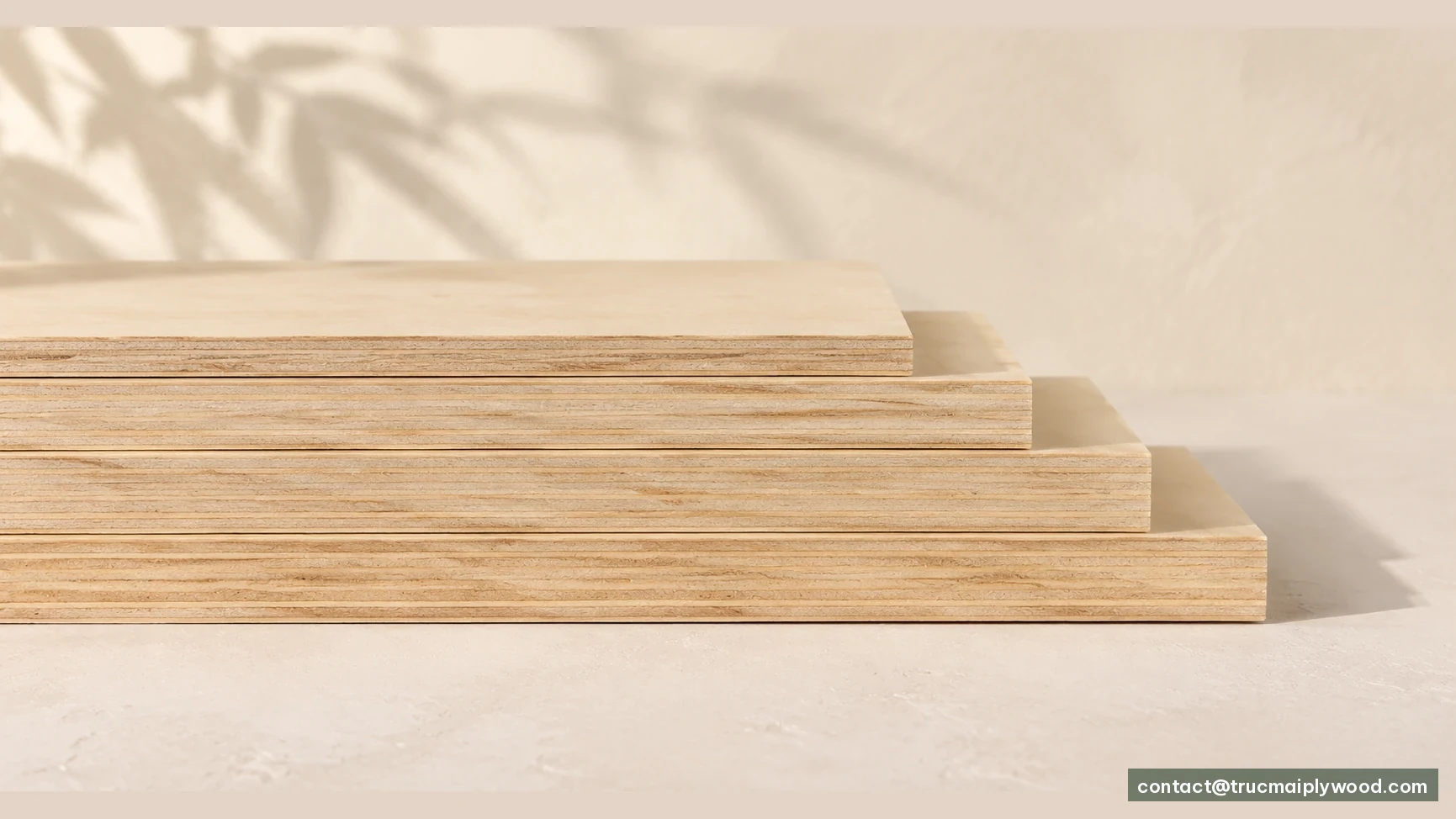
Walnut plywood is an interior plywood panel with a decorative walnut veneer face bonded over a separately specified core. The core consists of cross-laid wood veneers, not solid walnut. Buyers specify the natural walnut face, reverse face, core species, sheet thickness and finishing preparation separately because each affects the finished furniture component.
The phrase plywood walnut describes the visible surface rather than the species of every layer. In a typical decorative panel, thin walnut veneer is bonded to a cross-laminated plywood construction. The face provides the colour and grain that a cabinet maker sees; the underlying veneers provide the panel body. This distinction matters when comparing quotations: two sheets described as walnut plywood can have different cores, back faces, thickness control and preparation for finishing.
Natural walnut veneer comes from walnut timber. It can show the dark brown heartwood, paler sapwood and individual figure associated with the species. A walnut-look panel instead uses a designed decorative surface to achieve a similar appearance. Neither description tells a buyer whether the sheet has a veneer core, what the reverse face looks like or whether the surface is ready for the intended coating.
For furniture production, the useful specification separates three layers of choice: the decorative face, the inner construction and the reverse face. The reverse face may be selected for a matching appearance or for the less visible inside of a cabinet. The core is selected for the machining, weight and surface requirements of the finished component. A dark face does not turn an ordinary plywood core into solid walnut.
Truc Mai Plywood manufactures furniture and commercial plywood in Ha Hoa, Phu Tho, Vietnam. Its established face range includes engineered veneer, poplar, birch-faced and other decorative options, while natural walnut faces are available on request. Vietnamese veneer-core choices include Styrax, Acacia, Eucalyptus and Pine, including combined-species constructions. The engineered veneer plywood product provides a starting point for buyers whose priority is a repeatable decorative pattern rather than a particular natural walnut log.
For origin-related purchasing requirements, the EUDR dates for plywood buyers and FSC licence verification guide explain two different document checks.
How do natural walnut and engineered walnut-look veneers differ?
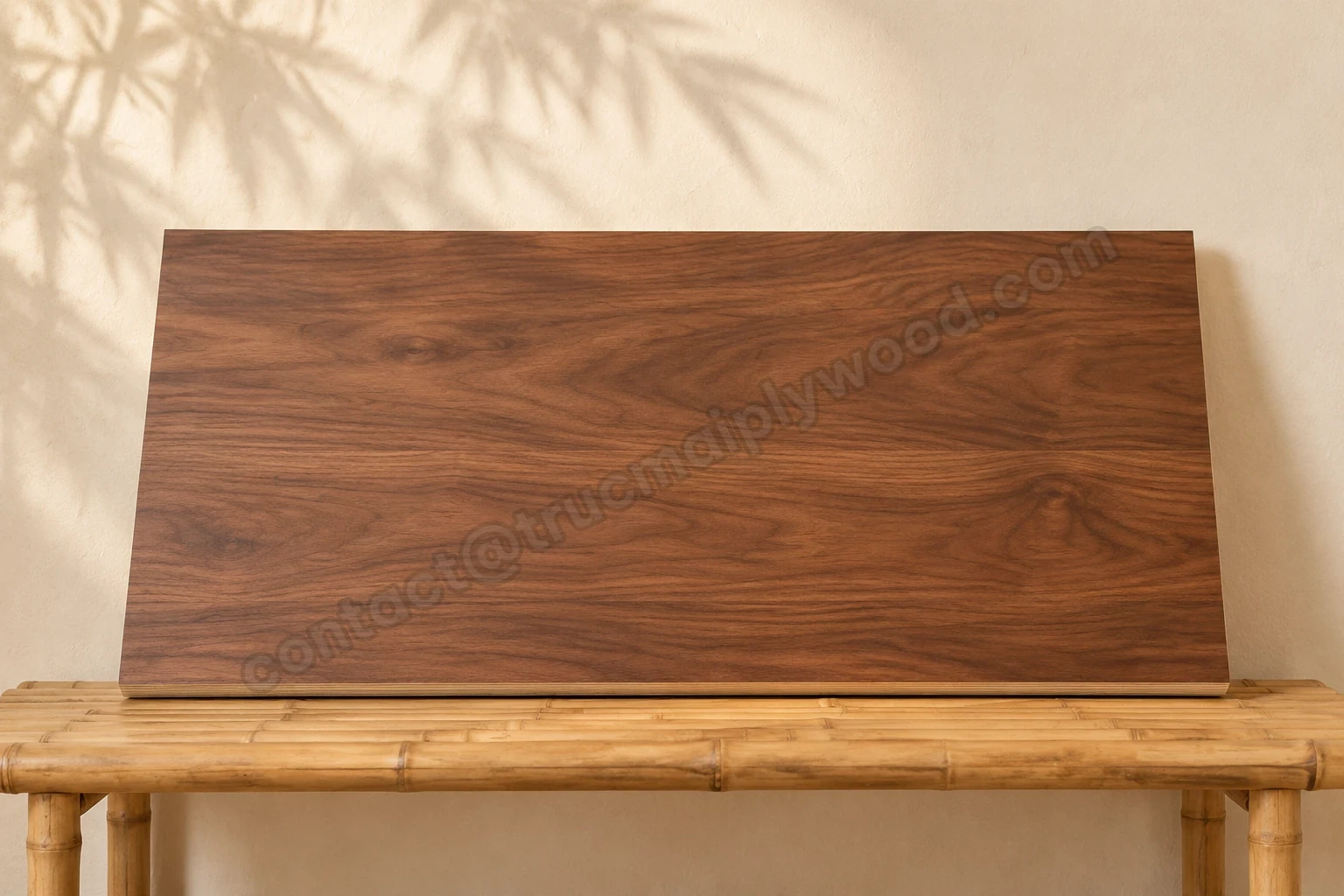
Natural walnut is sliced from walnut timber; engineered walnut-look veneer reproduces a selected grain design on a reconstituted wood face.
Both are wood-based decorative surfaces, but they solve different design problems. Natural walnut retains the visual variation of the source tree. Colour, figure, mineral marks and the relationship between heartwood and sapwood can change between leaves. That individuality is desirable when the furniture design deliberately celebrates the timber. It also means a buyer must think about how adjacent doors or wall panels will look together.
Engineered veneer, often abbreviated EV, is made by processing wood veneers into a reconstituted structure and slicing it to produce a controlled decorative pattern. A walnut-look EV design can resemble walnut without being cut from walnut timber. The distinction belongs on the purchase order and sample label: walnut-look EV is a design description, not a botanical species declaration. Buyers should never assume that the word walnut in a design name identifies the source wood.
The mill’s established EV face material includes reconstituted plantation poplar imported as face veneer. For a walnut-look order, the approved design sample and its material description should identify the requested appearance. Natural walnut veneer is a separate on-request face option. These routes should not be combined into one generic line item because their grain matching and replenishment requirements differ.
| Buyer decision | Natural walnut veneer | Engineered walnut-look veneer |
|---|---|---|
| Source of visible pattern | Grain formed in walnut timber | Selected pattern produced in reconstituted wood |
| Variation between sheets | Individual colour and figure | More controlled repetition of the approved design |
| Matching approach | Select and arrange leaves from a coordinated batch | Retain the approved design reference for repeat production |
| Design emphasis | Character and natural variation | Consistency across many components |
| Critical sample detail | Veneer cut, colour range and leaf arrangement | Design reference, tone and direction of grain |
For a single feature cabinet, natural variation can be the main reason to choose walnut. For a long run of wardrobe doors, the ability to repeat a walnut-look pattern may be more important. A specification can also deliberately combine the two: a natural feature surface in a focal area and engineered faces on repeated furniture components. The finished room can then retain a coherent colour direction without requiring every panel to display the same grain.
The face veneer origin files guide explains why the species and source of a decorative face are separate from those of its core. The 18 mm plywood specification covers the underlying panel decisions that remain relevant whichever face is chosen.
Which walnut grain cuts and colours suit furniture?
Plain-sliced walnut creates cathedral figure, while quarter-sliced veneer tends towards straighter grain.
The cut changes how the wood’s growth rings appear on the face. Plain slicing can create broad, arching grain that draws the eye towards the centre of a cabinet door. Quarter slicing generally produces a more linear appearance, which can suit tall doors, narrow rails and furniture designed around long vertical lines. Neither cut is automatically a higher grade: the right choice depends on the visual composition and how the pieces are arranged.
Walnut colour is another independent selection. Natural veneer may show dark brown heartwood beside much lighter sapwood, with variations between individual leaves. Some furniture designs welcome that contrast. Others need a narrower approved colour range so neighbouring doors do not appear to come from unrelated sets. Ask for a sample that demonstrates acceptable light and dark areas rather than approving only a particularly attractive single sheet.
For a continuous run of cabinet fronts, grain direction is as important as species. Vertical grain can make a tall door appear more unified, while horizontal grain can connect adjacent drawer fronts. A book-matched arrangement uses neighbouring veneer leaves opened like a book to create a mirrored pattern. A sequence-matched arrangement follows the order of leaves to preserve a related progression across several surfaces. Both need a layout plan before panels are cut.
| Desired visual result | Face instruction to put on the sample approval |
|---|---|
| Broad decorative arches | Plain-sliced natural walnut, agreed figure range |
| Calm, linear doors | Quarter-sliced natural walnut, agreed grain direction |
| Mirrored feature panels | Book-matched leaves and a numbered layout |
| Repeated wardrobe fronts | Walnut-look EV design reference and grain orientation |
| Coordinated exposed interiors | Face and back appearance approved together |
Face veneer is a thin decorative layer, so the buyer’s intended sanding and coating process should be considered at the sample stage. The mill’s decorative face veneers are generally specified within a 0.2–0.5 mm range; a 0.3 mm face is a common European furniture specification. Confirm the actual face build through the order specification rather than trying to infer it from grain depth.
Where is walnut-faced plywood used in interiors?
Walnut-faced plywood is used for cabinet fronts, wardrobes, furniture and decorative interior panels.
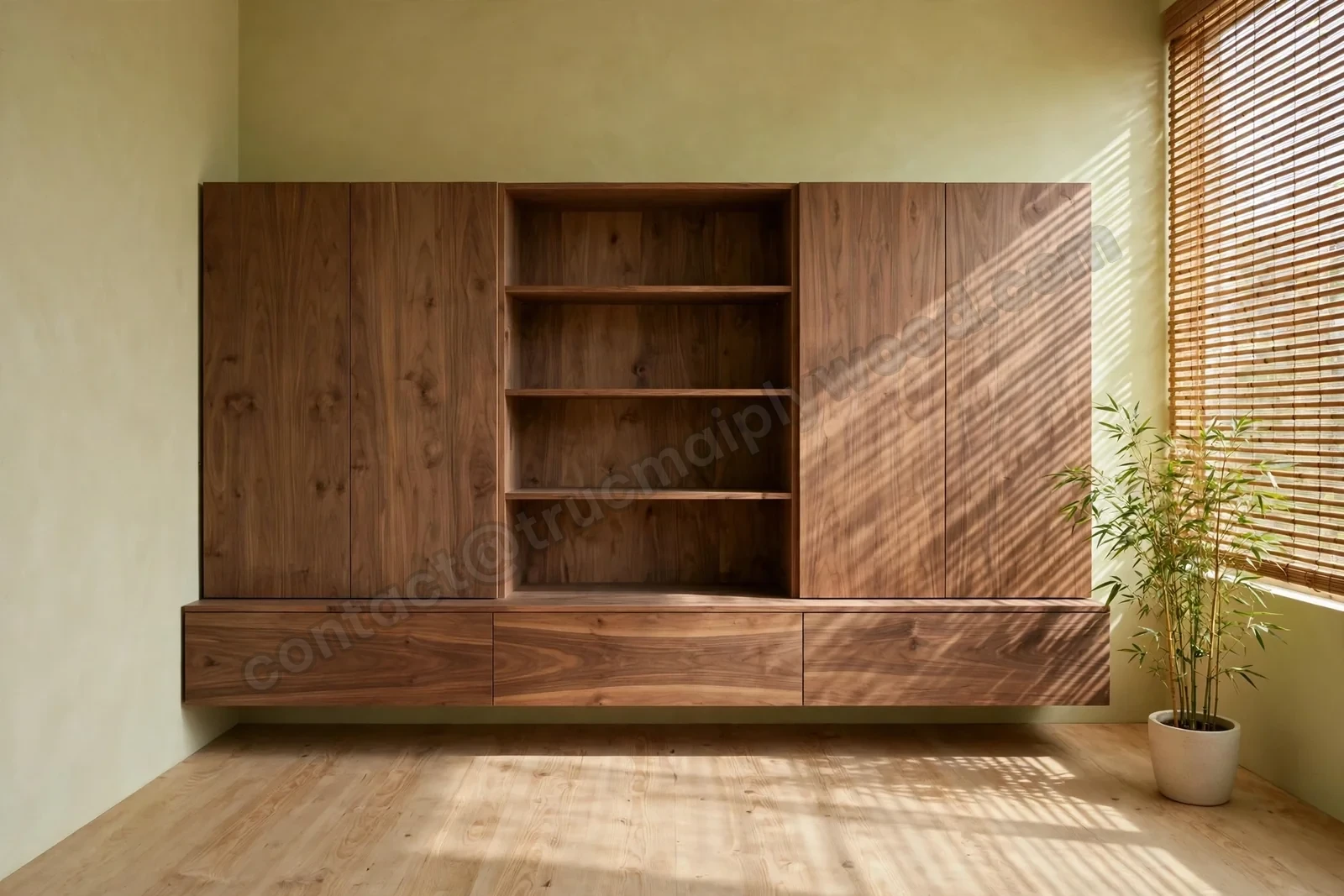
The decorative surface is most valuable where the plywood remains visible. Cabinet doors, drawer fronts, wardrobe shutters, furniture side panels and wall features can all use a walnut face to bring the grain into the finished design. In these applications, the buyer is selecting a complete component material: the appearance of the face, the construction beneath it and the way its edges will be treated.
For cabinet fronts, begin with the appearance of a whole set rather than an isolated sample. A door beside another door is viewed as part of one composition. Natural walnut may need a planned leaf sequence and a controlled range of colour variation. Engineered walnut-look veneer is useful when many fronts must follow the same design direction. Specify the grain orientation on the cutting schedule so doors are not assembled with inconsistent patterns.
Wardrobes introduce another consideration: tall, uninterrupted faces make changes in grain direction conspicuous. A selected vertical pattern can create continuity across the height of the door. Where the reverse side is visible when the door opens, approve the back face as well. A decorative front with an unspecified reverse face can produce a finished cabinet that looks inconsistent from different viewing positions.
For desks, shelving and freestanding furniture, edge appearance deserves equal attention. A veneered face may meet an exposed plywood edge, an applied wood edge or a separate matching edge treatment. These produce different visual results. The cutting and edge-finishing plan should be settled before the production panels are allocated, particularly when the same walnut-look design is used on several component sizes.
The mill supplies sanded and calibrated furniture faces, with polished preparation on request. UV-ready means the faces are prepared for the buyer to apply a UV coating; it does not mean a UV finish has already been applied at the mill. Specify the coating process separately from the plywood face. A surface prepared for one finish should not be treated as an automatically finished furniture component.
Walnut-faced decorative plywood belongs in the furniture and interior category discussed here, rather than being selected as a structural or marine building panel. The best plywood for interiors guide compares interior applications and selection priorities. Buyers checking documented forest-product claims can use the FSC licence code guide alongside the approved panel specification.
Which core should a walnut-look plywood buyer specify?
Styrax, Acacia and Eucalyptus are three available Vietnamese veneer-core choices for walnut-look furniture panels.
The core influences sheet weight, machining behaviour and the construction offered beneath the decorative surface. It should be named on the purchase order even when the face is the main reason for choosing walnut-look plywood. A supplier’s photograph of a brown face cannot tell a buyer which core veneers were used or how the layers were joined.
Styrax is a useful starting point for furniture buyers who want a relatively light panel and a clean decorative face. Acacia offers another construction choice where the buyer’s specification calls for its particular weight and handling characteristics. Eucalyptus provides a denser core option. Pine and combinations of the available Vietnamese core species can also be specified. A mixed core should be described by its constituent species rather than sold under a vague hardwood label.
The mill’s furniture/interior construction uses an A-grade core with stitched veneers and sanded faces. Stitching joins core veneer pieces across and along the sheet, helping create a more orderly inner lay-up before pressing. The outer core plies are commonly stitched, with stitching of all plies available on request. These details matter for visible furniture parts because a decorative face works best over a carefully prepared underlying construction.
| Core choice | Practical discussion for the buyer | What to write in the specification |
|---|---|---|
| Styrax | Lighter furniture-oriented construction | Styrax veneer core and approved face/back |
| Acacia | Alternative core for the required handling and build | Acacia veneer core and core grade |
| Eucalyptus | Denser construction option | Eucalyptus veneer core and machining requirements |
| Pine | Additional available veneer-core option | Pine veneer core and approved sample |
| Combined species | Construction tailored from the available core veneers | Named species, lay-up and sample reference |
Core grade and veneer joining method deserve attention alongside species. A stitched furniture core is different from the loose-laid or jointed AB construction used for many commercial panels. The difference can be hidden beneath an attractive face, yet it affects how confidently a buyer can specify the same construction for repeated cabinet components. Ask for the core grade and joining method as separate lines, not as a single phrase such as premium walnut plywood.
What sheet sizes and thicknesses can buyers order?
Truc Mai offers furniture plywood from 3 to 40 mm in standard sheets up to 1250 × 2500 mm.
For a plywood walnut specification, choose the parent sheet before fixing the cabinet cutting schedule. The main formats are 1220 × 2440 mm, 1220 × 2280 mm and 1250 × 2500 mm. The shorter format can reduce trimming on furniture components designed around that length. The European format offers a different yield for tall doors or long interior panels. Neither is automatically more economical: the useful output is the number of acceptable finished pieces, not merely the parent sheet area.
The listed thicknesses are 3, 4, 5, 6, 9, 12, 15, 18, 21, 25, 30 and 40 mm. Select thickness against the furniture drawing, hardware and expected span. A decorative walnut-look face does not determine panel stiffness. The core construction, panel thickness and support arrangement do. For tall wardrobe doors, check hinge selection and panel flatness together rather than increasing thickness without reviewing the door assembly.
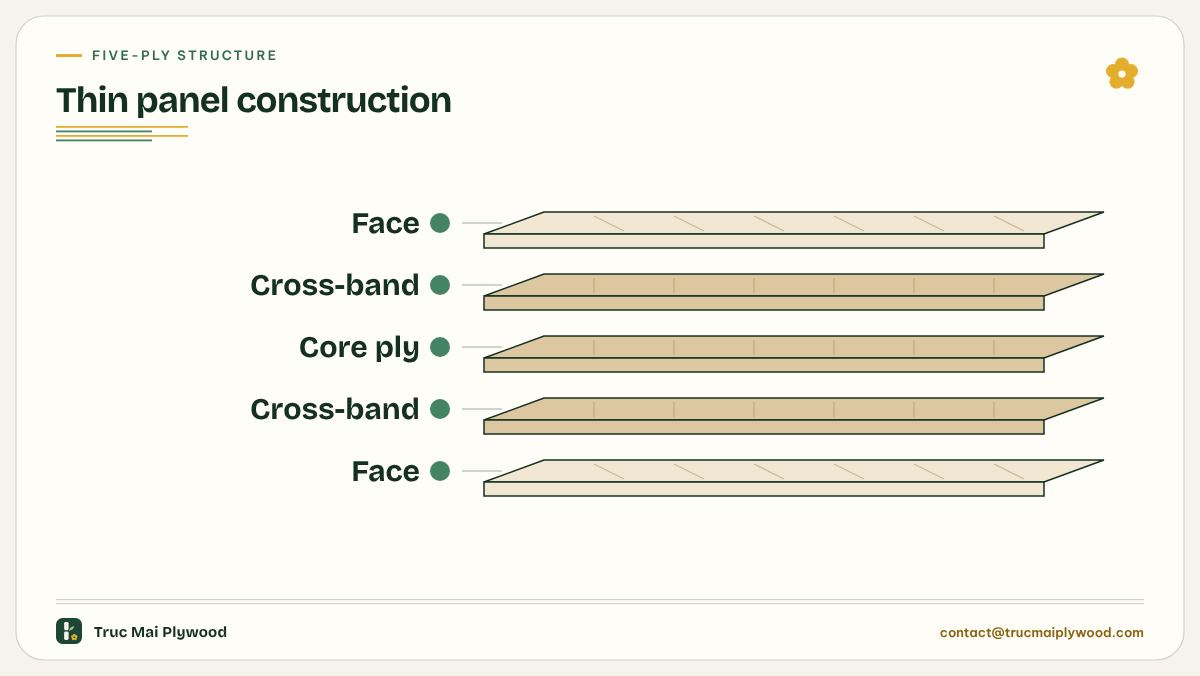
Thin 3–5 mm panels use five plies. The 3 mm construction has one core ply, two cross-bands and two faces; 4 and 5 mm constructions use three core plies and two faces. The ply count for 6 mm is specified by order. These details matter when thin panels are routed, grooved or fitted into a frame: a drawing that leaves little material beneath a groove needs its own sample trial.
Thickness tolerance belongs on the purchase specification alongside nominal thickness. Sanded and calibrated furniture panels can be ordered to ±0.3 mm; other furniture specifications are agreed within the stated ±0.3–0.5 mm range. Length and width tolerance is ±2 mm. State where thickness will be measured and whether the critical dimension is the supplied panel or the finished assembly after coating.
A cabinet-grade plywood specification is a useful companion to the dimensional schedule. Buyers comparing alternative core constructions can also consult the Baltic birch alternative guide without treating a walnut decorative face as a structural grade.
How are face grades, back grades and samples agreed?
Face and back appearance are agreed as a grade pair against an approved physical sample.
The sample should show the actual walnut-look design, the acceptable colour range and the visible surface quality. A single letter grade cannot convey all three. For a row of cabinet fronts, a small colour difference can be more conspicuous than a minor isolated mark. For concealed backs, the appearance requirement may be different. Write the pair explicitly so the factory and receiving inspector judge the same two surfaces.
Record the approved sample reference on the order and keep a retained piece for incoming inspection. Photograph it under consistent lighting as a useful supplementary record, but use the physical piece to settle questions about grain, texture and the finish response. When a natural walnut face is requested, identify the desired grain sequence and the permitted variation across adjacent panels. For engineered walnut-look faces, record the design reference and acceptable shade range so repeat orders are compared against a stable target.
Inspect sample edges for face continuity, glue-line appearance and repairs, and examine both faces in raking light. If the buyer will apply a transparent finish, coat a trial piece before approving the visible face: raw veneer and finished veneer can appear quite different.
A practical approval set contains a full-face sample, a cut edge, a finished trial and the written face/back grade pair. For a cabinet programme, include a pair of adjacent doors rather than a single isolated panel. That reveals whether the grain direction and colour variation work across the assembly. Agree which side is the show face and how the backs should be oriented before pieces are labelled.
New buyers can receive free samples and arrange their own courier. The courier charge can be credited against a real order. Use the sample stage to settle visible details before committing production capacity; commercial payment arrangements are covered separately in the deposit and balance terms. The interior plywood selection guide helps place the decorative face decision alongside the underlying furniture use.
Can walnut-look panels be cut to cabinet dimensions?
Yes, standard sheets can be cut into labelled pieces to an agreed cut list before packing.
Send the cutting schedule as a table with finished length, width, quantity, grain direction, face orientation and part identification. A dimension without grain direction is incomplete for visible walnut-look cabinet components. A door cut with the grain running across its width will not match a neighbouring vertically grained door, even when both came from the same approved face design.
Start by nesting the parts on the selected parent sheet. Account for saw kerf, edge trimming and the need to preserve grain orientation. A nominal fit on paper can fail once the saw allowance and any rejected visual areas are included. Mark which dimensions are finished sizes and which still require trimming by the cabinet maker.
Cut-to-size work can divide a parent sheet into four or six pieces before packing. Other agreed cutting patterns can be supplied from standard sheets. This is particularly useful for repeat furniture components where the same dimensions recur across many units. Give each piece a part code and show the required quantity per finished furniture unit, not just the aggregate number of pieces.
Labels should distinguish show face, grain direction, part code and pack destination. Separate packs by assembly or production batch where that improves unloading. Protect decorative surfaces with the agreed packing arrangement and identify pieces that must remain paired. When left and right cabinet fronts form a visible set, the cutting file should retain that relationship rather than treating the pieces as interchangeable rectangles.
A first cutting trial should test the edge quality and fit in the buyer’s actual machining sequence. Routing, drilling and edge finishing can reveal a problem that is invisible on an unmachined sheet. Record any required machining allowance before releasing the repeat cut list. For practical component planning, see plywood for kitchen cabinets. The EU plywood import guide covers the separate paperwork workflow when cut components are sourced internationally.
What finishing and edge details matter?
A walnut-look plywood specification should identify sanding, intended finish and matching edge treatment.
Start with the finish the furniture maker will actually apply. A transparent lacquer, stain or oil can emphasise grain contrast differently, so approve the decorative face with a representative finishing trial. For repeat work, record the coating system and the visual target on a finished reference piece. The raw panel alone is an incomplete colour standard for a visible cabinet run.
The supplied faces can be sanded and calibrated, with polishing available on request. UV-ready panels have faces prepared for the buyer’s own UV coating operation. This distinction affects process planning: the buyer should schedule coating and curing in its finishing line rather than assume a finished decorative coating arrives with the plywood.
Edge treatment needs its own specification. Exposed plywood layers can be an intentional design detail, while a solid-colour or matching wood edge band can create a more continuous walnut appearance. Identify edge band material, colour, thickness, corner treatment and which edges remain visible after installation. A matching face pattern does not automatically mean that a separately purchased edge band will match the face under the same light.
For veneered edges, test adhesive compatibility and finishing response on a production-representative piece. For routed profiles, check how much decorative face remains at the corner and whether the cutter exposes a cross-band. Avoid specifying deep decorative grooves solely from a face photograph. The edge section and the machining drawing should be reviewed together.
Sanding deserves particular attention with thin decorative faces. Excessive resurfacing can change colour or expose the layer below. Specify the expected condition at delivery and let the finishing trial establish any further sanding step. A consistent factory preparation can reduce unnecessary work on the buyer’s line, especially for repeated flat cabinet fronts.
The cabinet-grade plywood guide covers the panel beneath the decorative surface, while first order to monthly supply explains how approved specifications support repeat purchasing.
How do adhesive and formaldehyde requirements differ?
Adhesive bond performance and formaldehyde emissions are separate specifications and require separate evidence.
For interior walnut-look furniture panels, the adhesive line can be specified as UF glue at E0 emission under the agreed buyer specification. State the adhesive system, the required service conditions and the emission test method on separate lines. The description of a resin does not supply an emission test result, and a decorative veneer name does not identify the bond performance of the plywood beneath it.
A buyer planning ordinary dry interior furniture should describe the actual service environment. A project with more demanding moisture exposure calls for a different bond specification and supporting test evidence. The surface finish and sealed edges are also part of the furniture design. They should be considered alongside the panel rather than used as substitutes for the required adhesive performance.
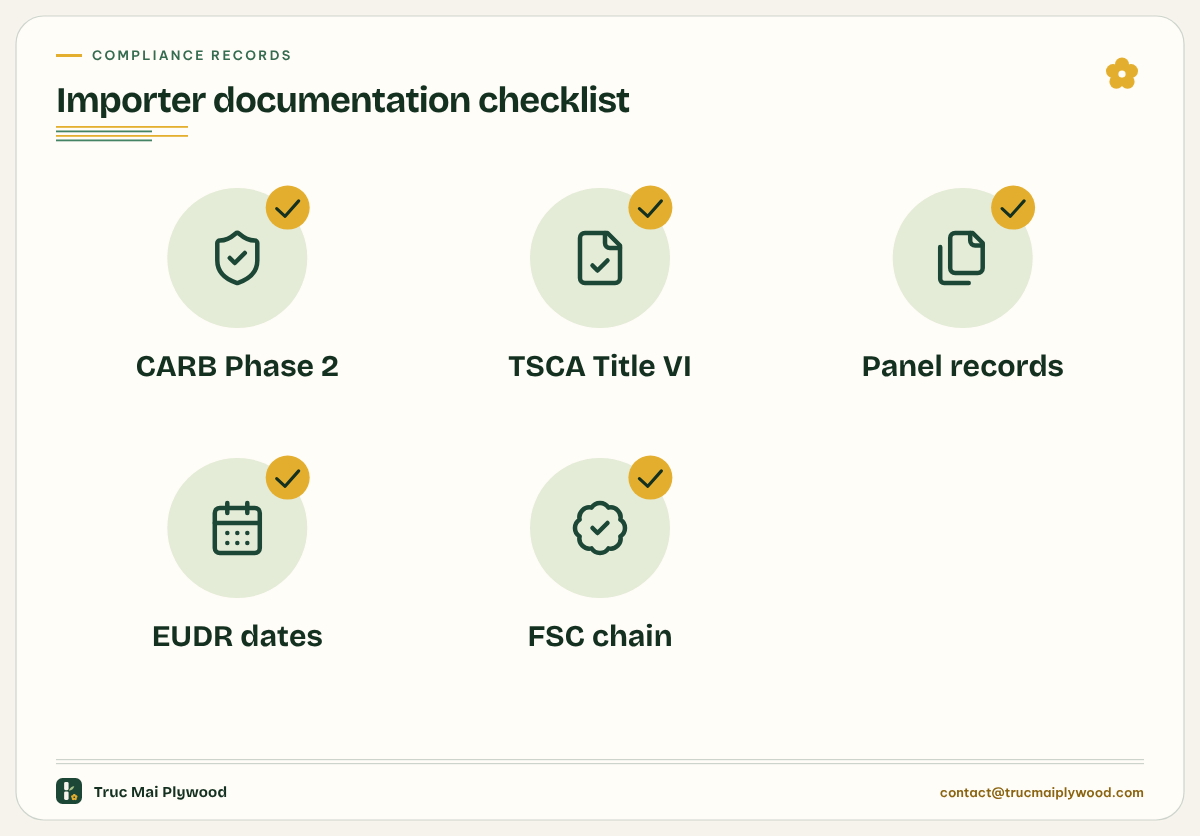
For the United States, the relevant federal rule is 40 CFR Part 770. Its hardwood plywood emission limit is 0.05 ppm for veneer-core products under the specified testing framework. Truc Mai’s CARB Phase 2 and EPA TSCA Title VI third-party certification covers hardwood plywood with veneer core from 3 to 25 mm, with certificate CARB/EPA 26053 and mill identification ICTT-26053. Match the quoted panel construction and thickness to that scope when preparing the purchase file.
For EU furniture applications, the formaldehyde restriction in REACH Annex XVII entry 77 addresses emissions from furniture and wood-based articles. Its 0.062 mg/m³ limit applies under the specified chamber conditions from 6 August 2026. This is a different measurement framework from the US ppm requirement; write the applicable method and limit into the buyer’s specification rather than treating the numerical results as equivalent.
A useful RFQ separates the information into two lines:
| Purchase specification | What to record |
|---|---|
| Adhesive and bond | Resin system, intended interior service conditions, requested bond test and panel construction |
| Formaldehyde emission | Destination-market requirement, test method, limit, certificate scope and matching panel thickness |
Ask for the documents corresponding to the ordered construction and keep them with the approved sample and shipment specification. The distinction matters particularly when a purchaser changes core species, thickness or surface treatment between orders. The commercial steps for obtaining a comparable factory offer are discussed in FOB Hai Phong prices, and the deposit and balance guide covers the order stage after the technical specification is agreed.
What documentation supports US and EU importers?
US buyers should check the certified panel scope, while EU buyers need the agreed origin and due-diligence file set.
Begin with the exact walnut-look construction being purchased. A decorative face, veneer core and finished panel should all appear consistently in the purchase specification, invoice and supporting technical records. This matters when a shipment contains more than one face design or core species: a certificate referring to a different product configuration is difficult to reconcile with the goods on the packing list.
For US furniture-panel orders, request the emission documentation for the actual hardwood plywood construction and match the product identification against the order. Truc Mai Plywood lists CARB Phase 2 and TSCA Title VI credentials under CARB/EPA26053. Buyers can consult the Phase 2 formaldehyde limits alongside the panel-specific records. The shipment paperwork should distinguish the decorative surface from the tested panel build, including its core. An importer should also retain the approved sample reference so receiving staff can check the finish-ready appearance independently of the regulatory file.
For EU-bound walnut-look panels, organise the origin file around both the face veneer and the core. The manufacturer’s EUDR data set includes geolocation for each. Record the wood species, production country, production plots, quantities and relevant dates in a form that can be matched to the purchased lot. The European Commission’s due-diligence guidance describes the information required of the upstream operator, including plot geolocation and evidence of lawful production.
The Commission’s EUDR overview lists the applicable dates: 30 December 2026 for large and medium operators and relevant smaller operators already covered by the EU Timber Regulation, and 30 June 2027 for other micro and small operators.
FSC is a separate transaction-level matter. For a product sold with an FSC claim, the sales document identifies the seller’s certificate code and the claim attached to that line. Truc Mai holds FSC licence FSC-C196493 and Chain of Custody certificate SA-COC-014545, as recorded in its certificate file. Use the FSC Chain of Custody standard for sales-document claim requirements and the FSC public certificate search to look up the certificate. Match the claim to the goods rather than assuming that every decorative face carries the same status.
A working shipping pack contains a commercial invoice, packing list, bill of lading and applicable origin documents, plus the product certificates agreed for that order. Under CIF terms it also contains insurance documentation. Review certificate files before confirming the order, then review draft shipping documents after loading. The EU importing guide provides the next procedural steps; the pricing explanation helps keep freight and document requirements in the same commercial comparison.
How many walnut-look panels fit a 40HC container?
The planning sheet count for a 40HC depends on thickness, core density, packing and the booked payload.
The table uses one consistent 1220 × 2440 mm sheet footprint, four thicknesses and three veneer-core options. It is a planning model for panels, rather than a record of a dispatched container. It allows a buyer to compare the space and mass consequences of a core choice without confusing a visually identical walnut-look face with an identical shipping weight.
| Core | Thickness (mm) | Packs | Sheets/pack | Sheets | Volume (m³) | kg/sheet | Panel mass (kg) | Weight-capped |
|---|---|---|---|---|---|---|---|---|
| Styrax | 12 | 18 | 83 | 1494 | 53.4 | 17.9 | 26680 | No |
| Acacia | 12 | 16 | 83 | 1328 | 47.4 | 20.7 | 27510 | No |
| Eucalyptus | 12 | 15 | 80 | 1200 | 42.9 | 23.2 | 27860 | Yes |
| Styrax | 15 | 18 | 66 | 1188 | 53.0 | 22.3 | 26520 | No |
| Acacia | 15 | 16 | 66 | 1056 | 47.2 | 25.9 | 27350 | No |
| Eucalyptus | 15 | 15 | 64 | 960 | 42.9 | 29.0 | 27860 | Yes |
| Styrax | 18 | 18 | 55 | 990 | 53.0 | 26.8 | 26520 | No |
| Acacia | 18 | 16 | 55 | 880 | 47.2 | 31.1 | 27350 | No |
| Eucalyptus | 18 | 15 | 53 | 795 | 42.6 | 34.8 | 27690 | Yes |
| Styrax | 21 | 18 | 47 | 846 | 52.9 | 31.3 | 26440 | No |
| Acacia | 21 | 16 | 47 | 752 | 47.0 | 36.3 | 27270 | No |
| Eucalyptus | 21 | 15 | 45 | 675 | 42.2 | 40.6 | 27430 | Yes |
Calculation basis: 40HC planning model; 1220 × 2440 mm sheets; approximately 1,000 mm pack height; Styrax 18 packs at 500 kg/m³, Acacia 16 packs at 580 kg/m³ and Eucalyptus 15 packs at 650 kg/m³. Sheets per pack follow the model’s rounded-down height allowance and weight cap. Its assumed cargo payload is 28,000 kg, excluding container tare; actual carrier and route limits govern dispatch. The panel masses shown are the model values and exclude separate packaging weight.
For purchasing, the key difference is not simply the number of sheets. A Styrax-core order occupies more planned cubic metres at a lower sheet mass, while an Eucalyptus-core order reaches the model’s weight cap sooner. That affects how many finished cabinet components can be sourced from one shipment and how many packs the receiving warehouse must handle. The pallet arrangement, protective wrapping, dunnage and actual weighed panels belong in the final load plan.
A mixed load requires a new pack-by-pack calculation, not the addition of separate full-container rows. Allocate each face design and thickness to a labelled pack, record the panel count and keep the packing list aligned with the purchase-order lines. For recurring orders, retain the actual load tally beside the original model so subsequent planning uses observed packing results. See first-order to monthly supply for repeat-order organisation and the Vietnam plywood import guide for shipment preparation.
Where can Canadian buyers source walnut plywood?
Two sourcing routes are available to Canadian buyers: locally stocked walnut veneer plywood and factory-direct imported walnut-look panels.
For a small joinery run, a local stockist offers immediate inspection of individual sheets and the ability to buy only the number needed. Ask whether the advertised walnut plywood has a natural walnut face, what the back looks like, and which core is supplied. The phrase walnut plywood suppliers Canada covers several buying situations, from a single furniture repair to a repeat cabinet-production programme. Those situations call for different purchasing checks.
A Canadian cabinet shop matching an existing installation may favour locally inspected natural walnut because individual grain character is central to the design. A production buyer making coordinated doors and wall panels can instead evaluate an approved engineered walnut-look face against a repeatable colour and grain reference. The factory-direct route is particularly relevant when many panels must share a controlled visual specification, or when a cut list and labelled packs will reduce work at the receiving workshop.
Compare physical samples under the lighting and finish used in the intended room. Place the sample beside existing doors or veneer edging, then inspect the back and exposed edge. A catalogue image alone does not show how a dark face behaves beside the adjoining furniture. Ask for the face design reference and record which sample the purchasing team approved; this makes a later reorder easier to check.
For imported goods, put the landed purchasing scope on paper: panel specification, pack quantity, port, inland delivery, documentation and receiving inspection. The Canada Border Services Agency’s commercial import guide sets out the customs process, including classification, origin and accounting. Keep those administrative steps separate from the appearance approval. A low-friction import begins with a consistent bill of materials, not merely a product name.
If comparing domestic stock with a shipment from Vietnam, use the same usable-panel yield and defect acceptance rules for both offers. A locally purchased sheet and an imported sheet may have different backs, core make-up or cutting allowances even when their front faces look similar. The FOB Hai Phong guide explains the shipping-term starting point, while laminated plywood cost helps frame the separate costs of surface preparation and finishing.
How should buyers in Johannesburg, Cape Town or Durban source walnut panels?
Two sourcing routes deserve comparison in Johannesburg, Cape Town and Durban: locally stocked natural walnut products and container-order walnut-look panels.
Start by defining the work rather than the city. A furniture maker replacing one visible door needs a close visual match and manageable minimum quantity. A distributor supplying repeated kitchen programmes needs an agreed face reference, consistent back grade and dependable pack identification. The right sourcing route follows those requirements.
In Johannesburg, request samples for workshop inspection before approving a larger furniture-panel schedule. Check whether the offered material is natural walnut veneer plywood or engineered walnut-look veneer and compare its intended finish with the design brief. For Cape Town projects, include the destination warehouse and the onward cutting or finishing location in the delivery specification. Durban buyers evaluating a container shipment should likewise identify the receiving facility, unloading arrangements and pack-handling requirements. These are procurement questions, not claims about the stock held in any particular city.
A local quote should specify whether it is for sheets available to collect, cut pieces, or delivered packs. An import quote should specify the same physical product plus the shipping term and discharge destination. Without that alignment, two offers may appear comparable while including different handling and finishing work. The plywood pricing guide provides a useful checklist of cost drivers without substituting for a product specification.
Request a full-face photograph and a labelled physical sample for each proposed design. Inspect grain direction, colour range, the face-to-back pairing and the edge after cutting. If the project requires a dark walnut appearance across a long bank of cabinets, decide how adjoining panels should be sequenced before placing the order. A single attractive sample is less useful than a clear acceptance rule that the receiving team can apply across multiple packs.
Where a buyer is considering a different decorative surface rather than veneer, compare the appearance and finishing workflow separately. The laminates for plywood guide explains that alternative surface route. For an imported walnut-look order, agree the approved sample, delivery term, packing method and receiving inspection record before choosing between the local-stock and factory-direct options.
How should an importer write a walnut plywood RFQ?
A complete walnut plywood RFQ names the application, face design, core, bond and emission requirements, dimensions, packing and destination.
An effective request for quotation is a build instruction as well as a commercial enquiry. It should let the supplier identify the intended panel without guessing whether plywood walnut means a natural walnut face or an engineered walnut-look design. Begin with the furniture application and the surface visible to the end user, then specify the construction behind it. Attach the approved physical sample reference or request samples before finalising the appearance schedule.
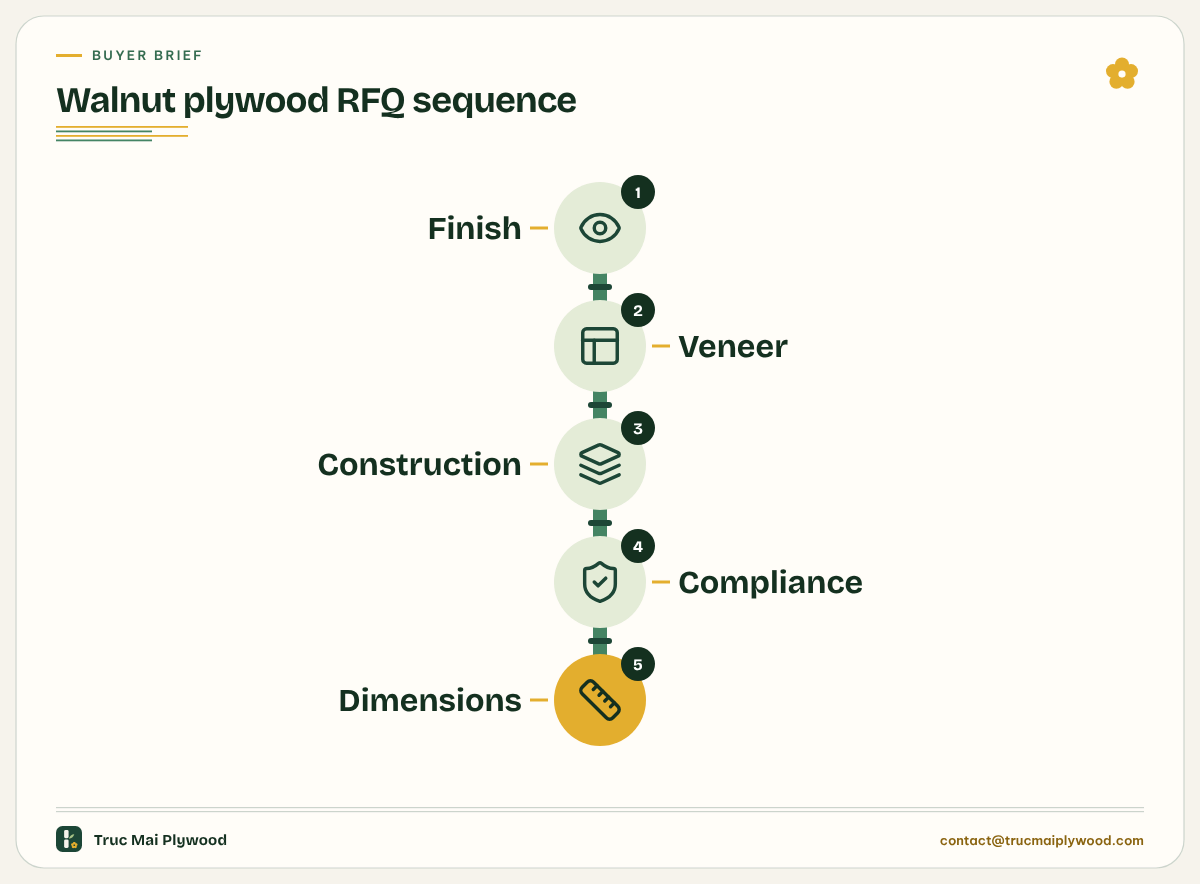
Use the following order for a comparison-ready enquiry:
- Application and visible finish. State whether the panels will become cabinet fronts, wardrobes, furniture carcasses or decorative wall components. Identify the intended finish and which surfaces remain visible.
- Face and back. Select natural walnut on request or the engineered walnut-look design; describe grain direction, colour reference, face grade, back grade and any matching requirement between adjacent pieces.
- Core and construction. Name the veneer-core species, expected core preparation and the required appearance of the cut edge. Use one construction description across drawings, samples and purchase-order lines.
- Bond and emissions. State the intended service environment and the required documentary evidence for adhesive performance and formaldehyde emissions as separate items.
- Dimensions and conversion. Give nominal sheet dimensions, thickness, tolerances, any cut list, piece labels and the orientation of the face grain on finished parts.
- Quantity and logistics. Specify sheets or cut pieces by line, pack marking, destination port, requested shipping term and the documents needed before dispatch.
A useful line-item schedule has columns for face reference, core, thickness, sheet size, quantity, back grade and packing mark. Add a separate column for the sample identifier so a receiving inspector can trace each pack to its agreed appearance. For cut-to-size orders, include a drawing revision and distinguish finished-piece dimensions from parent-sheet dimensions. This prevents an otherwise correct sheet order from being converted into pieces with the grain running the wrong way.
The standard commercial starting point is one 40HC container, with mixed-product packing agreed in advance. Standard terms include a 30% deposit and a 70% balance against the scanned bill of lading, with FOB Hai Phong, CFR or CIF as shipping-term choices. Production is typically 15–45 days after deposit under the agreed order conditions. A buyer can request free samples before committing to the final face selection; new buyers arrange the sample courier.
For a comparison across suppliers, send the identical RFQ and sample requirements to each party. Separate the base panel from any finishing, cutting, special packaging and inland transport. Record differences as specific construction or service items instead of treating every quotation labelled walnut plywood as interchangeable. The Vietnam plywood import guide covers the broader order sequence. If the furniture programme also includes engineered frame components, keep those on a distinct line and consult the LVL sections and sizes guide.
Send your specification to contact@trucmaiplywood.com or through the quotation form.
Questions buyers ask
Is walnut plywood solid walnut?
No. The decorative face can be walnut veneer while the inner plywood core uses other wood species.
Is walnut-look EV real walnut?
No. Engineered walnut-look veneer is a reconstituted wood surface made to resemble a selected walnut pattern.
Can I order a matching back face?
Yes. Specify the required face and back appearance together in the approved sample.
Is a dark walnut colour a grade?
No. Agree colour range, grain pattern and visible repairs separately from the core construction.
Can a walnut face be UV-ready?
Yes. UV-ready means the panel faces are prepared for the buyer to apply a UV finish.
Is walnut plywood suitable for outdoor construction?
This article concerns furniture and interior panels, not structural or marine plywood.
Do veneer-core and MDF-core panels have the same weight?
No. Compare the full panel construction and actual density rather than the decorative face alone.
What should be checked before ordering repeat batches?
Keep an approved physical face sample, design reference, back grade and finishing specification.
Does FSC certification apply automatically to every panel?
No. The eligible product and its FSC claim must be identified on the relevant sales documents.
Can a factory supply cut-to-size pieces?
Yes. Supply the cut list, parent sheet size, labels and packing instructions with the RFQ.