
Birch plywood · Ha Hoa, Phu Tho, Vietnam
Birch plywood by the 40HC: birch-faced sheets on eucalyptus, acacia or Styrax cores
Truc Mai birch plywood is an imported birch face veneer pressed on a Vietnamese Eucalyptus, Acacia or Styrax core, so it is birch-faced, not all-birch. The core decides the sheet weight and the container: at 18 mm a 40HC plans at about 990 sheets on Styrax and 795 on Eucalyptus. This page is for cabinet and furniture factories that reorder one birch build every month.
Truc Mai is a plywood mill in Ha Hoa, Phu Tho, making around 60,000 m³ a year, or about 5,000 m³ in an average month. Birch-faced sheets belong to its furniture and interior plywood line and are sold by the full container.
What a monthly birch buyer needs to stay the same is short: the face-and-back pair, the core, the thickness mix and the sheet count per pack. Each is written once, checked against a kept sample and repeated on the reorder.
- Imported birch veneerFace
- Eucalyptus, Acacia or StyraxCore
- 3–40 mm, ±0.3 mm sandedThickness
- 990 on Styrax, 795 on Eucalyptus (planning)18 mm per 40HC
- MOQ 1×40HC, 15–45 daysOrder
Real panels
What does a Truc Mai birch-faced sheet look like at the mill?
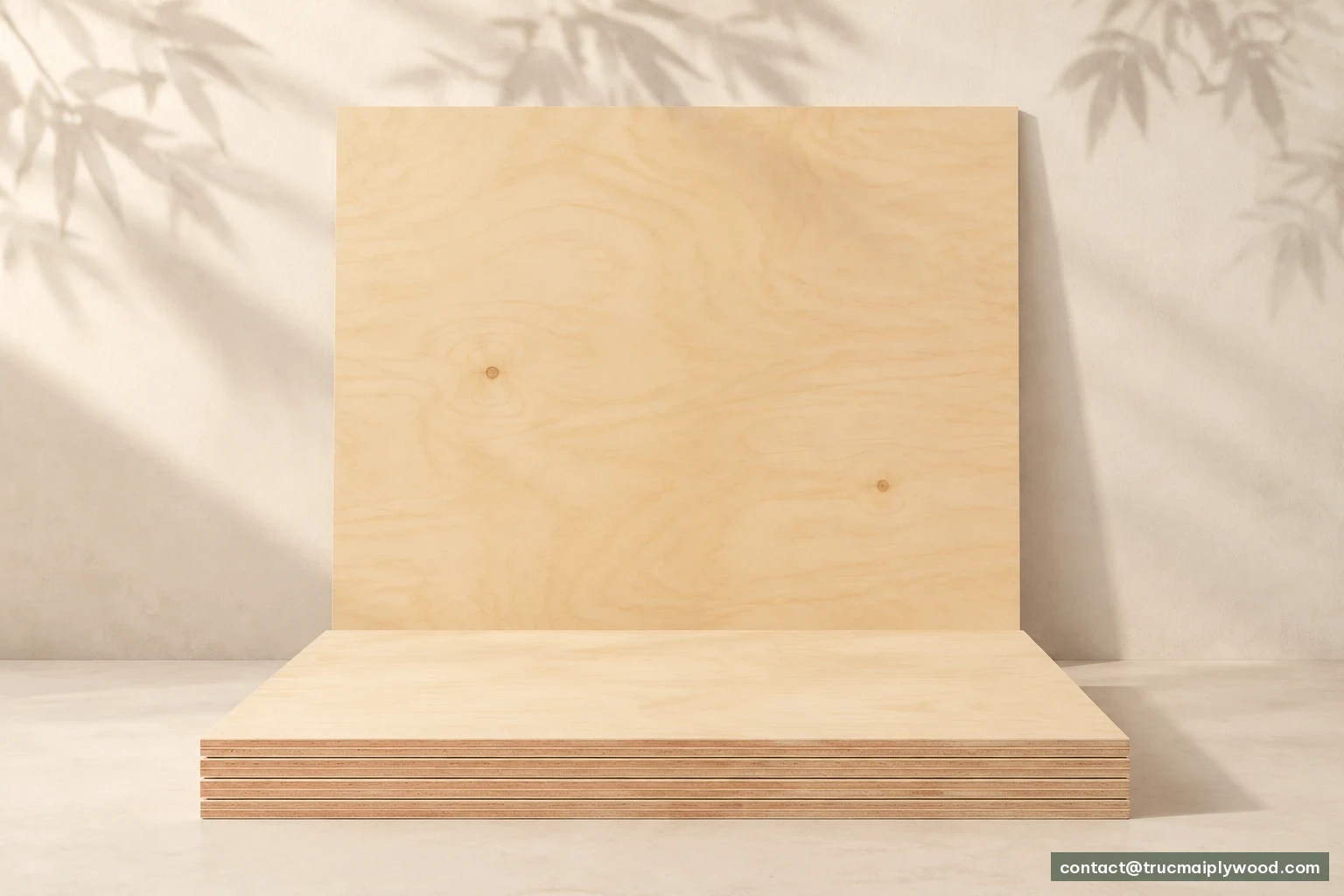
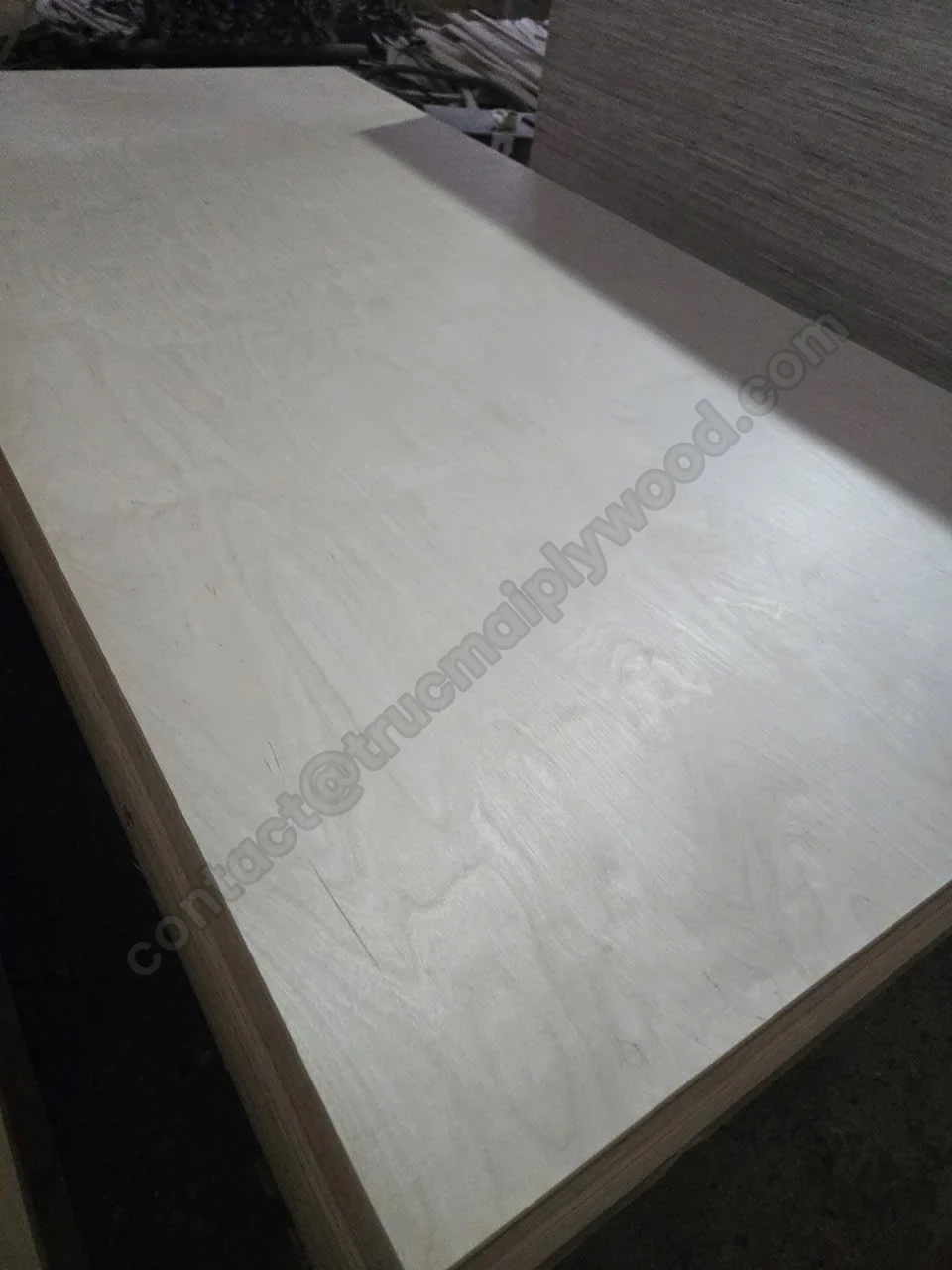
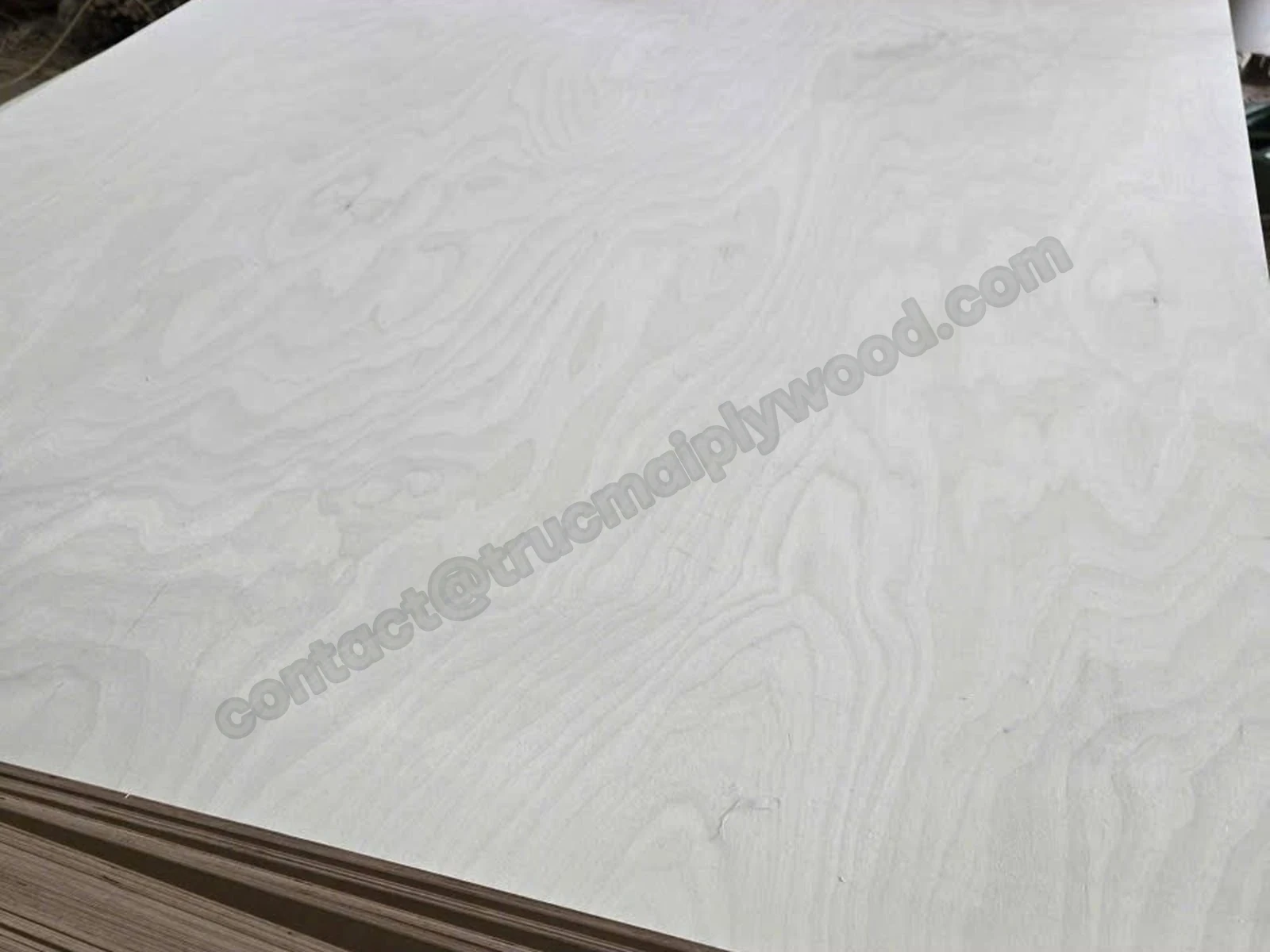
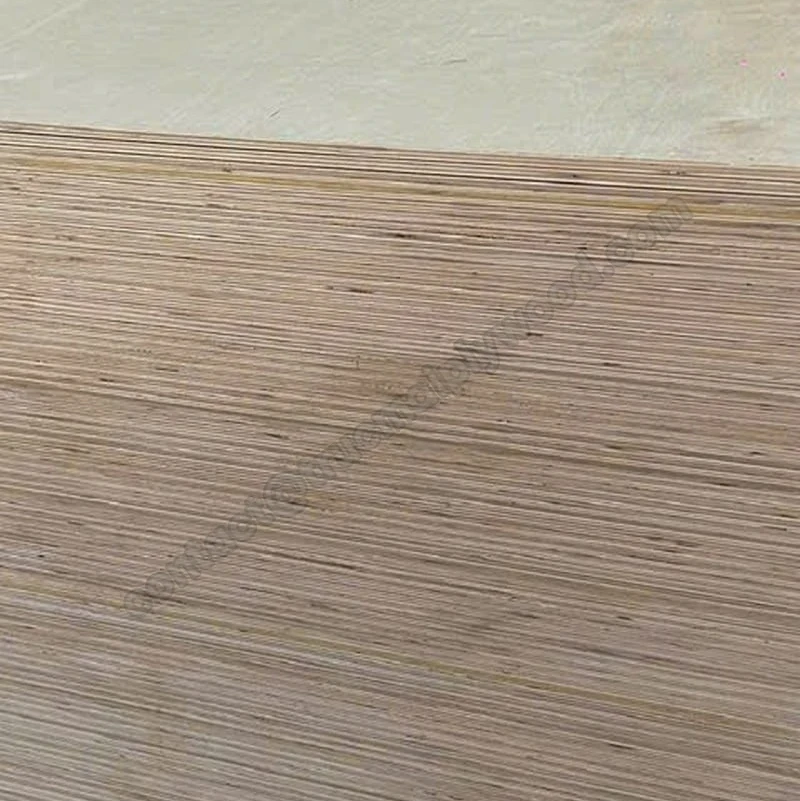
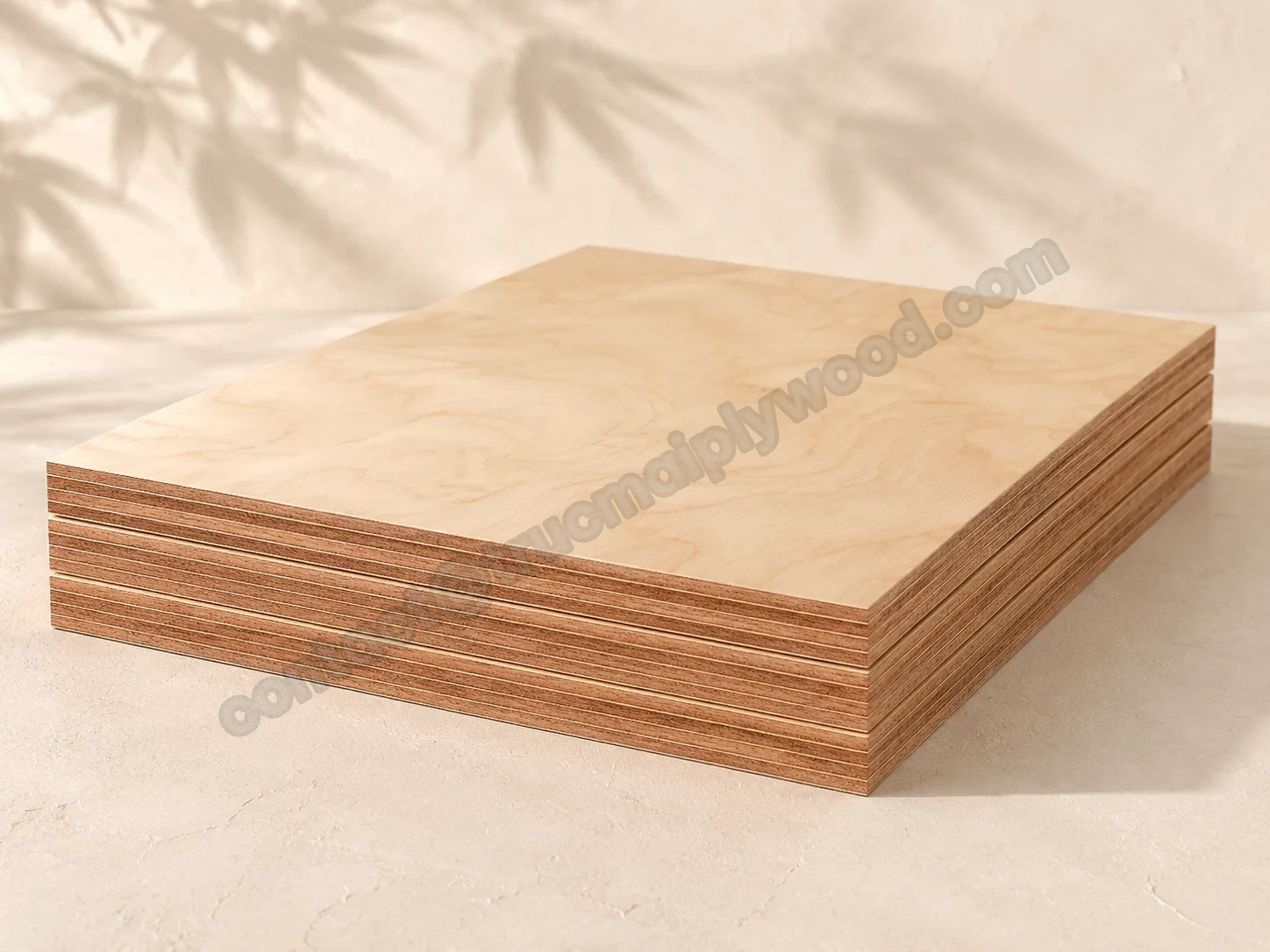
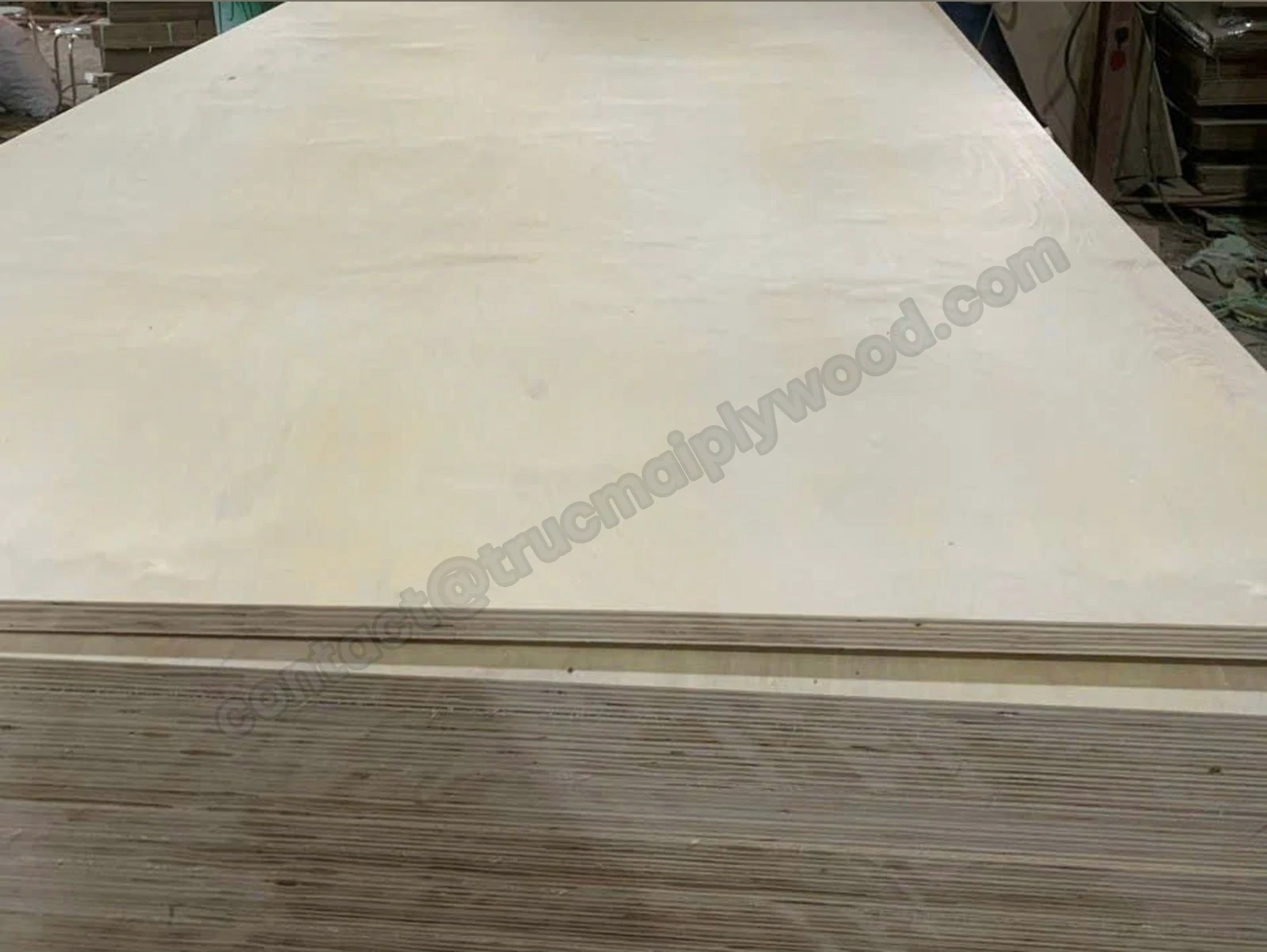
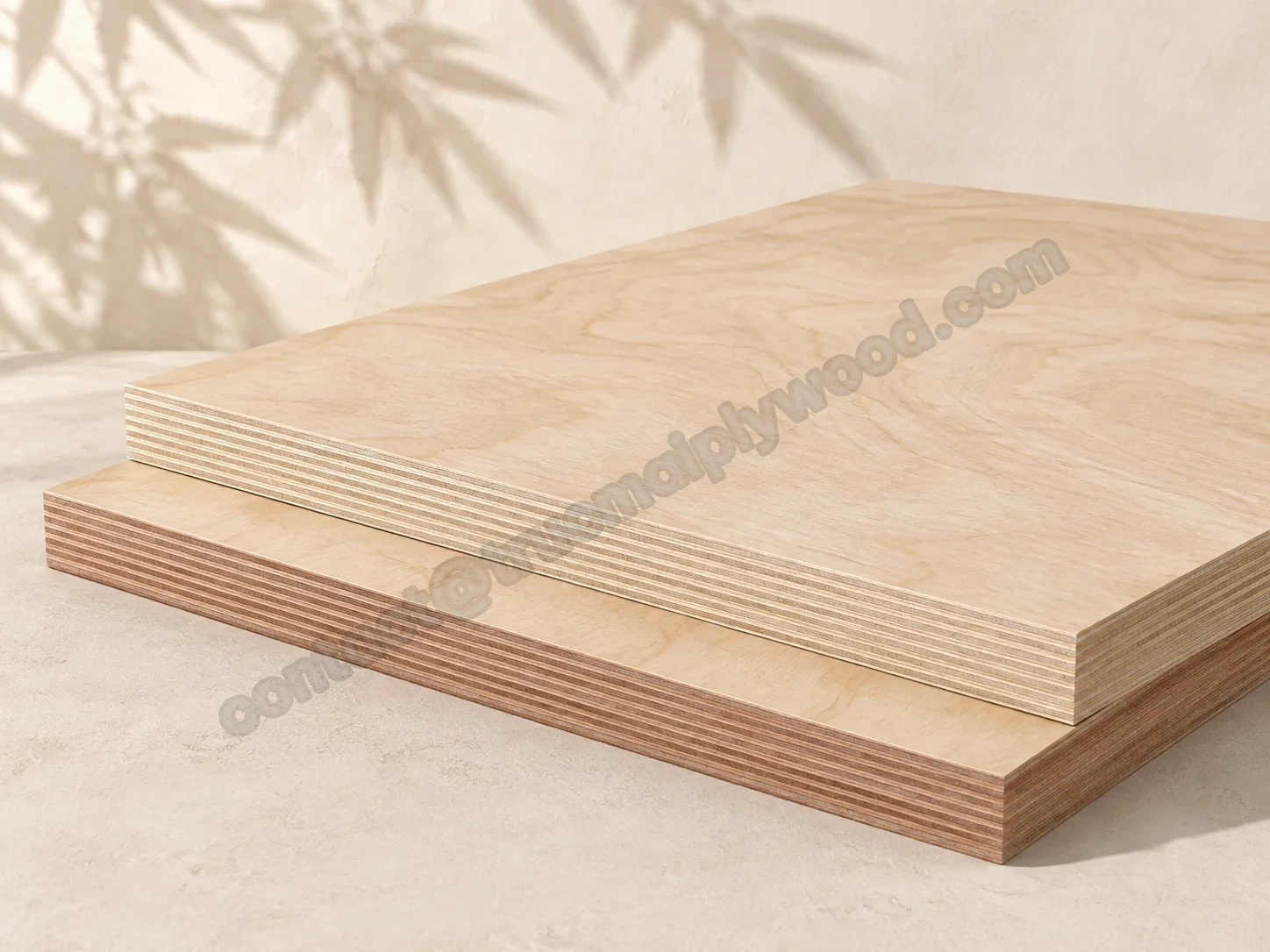
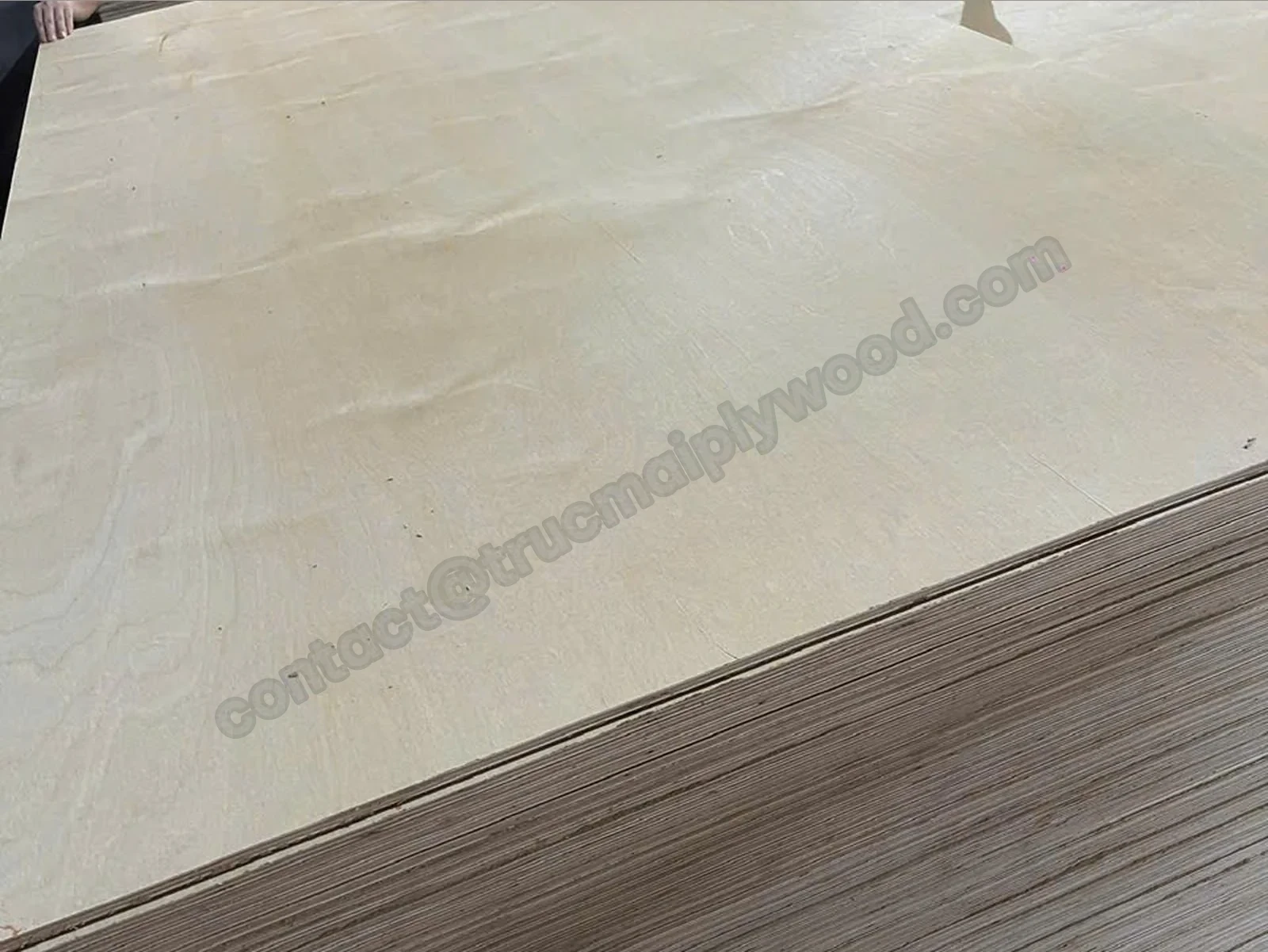
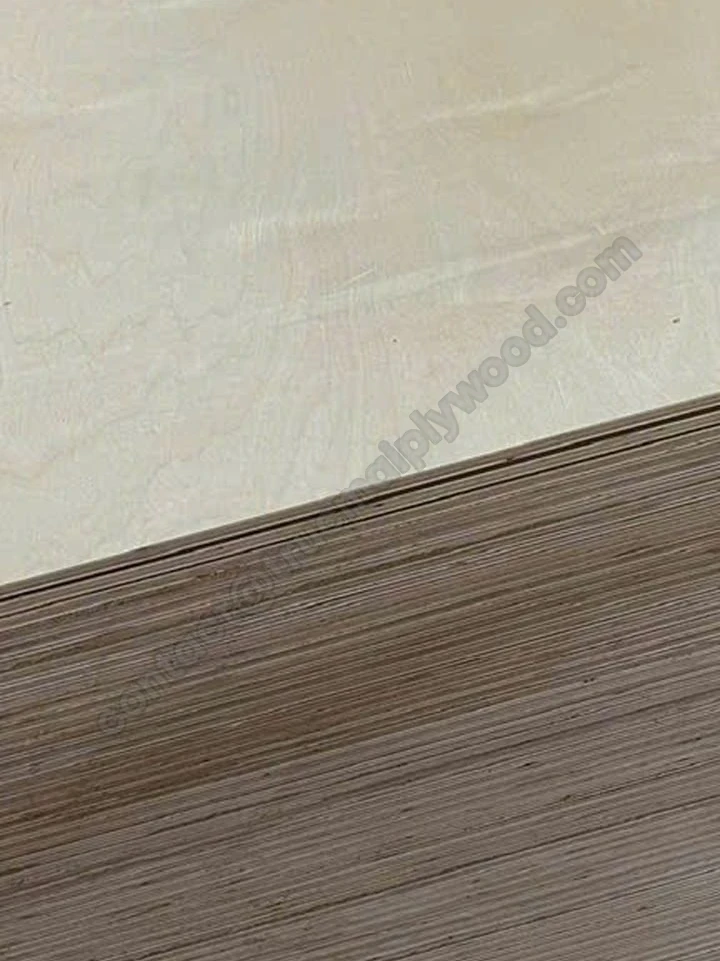
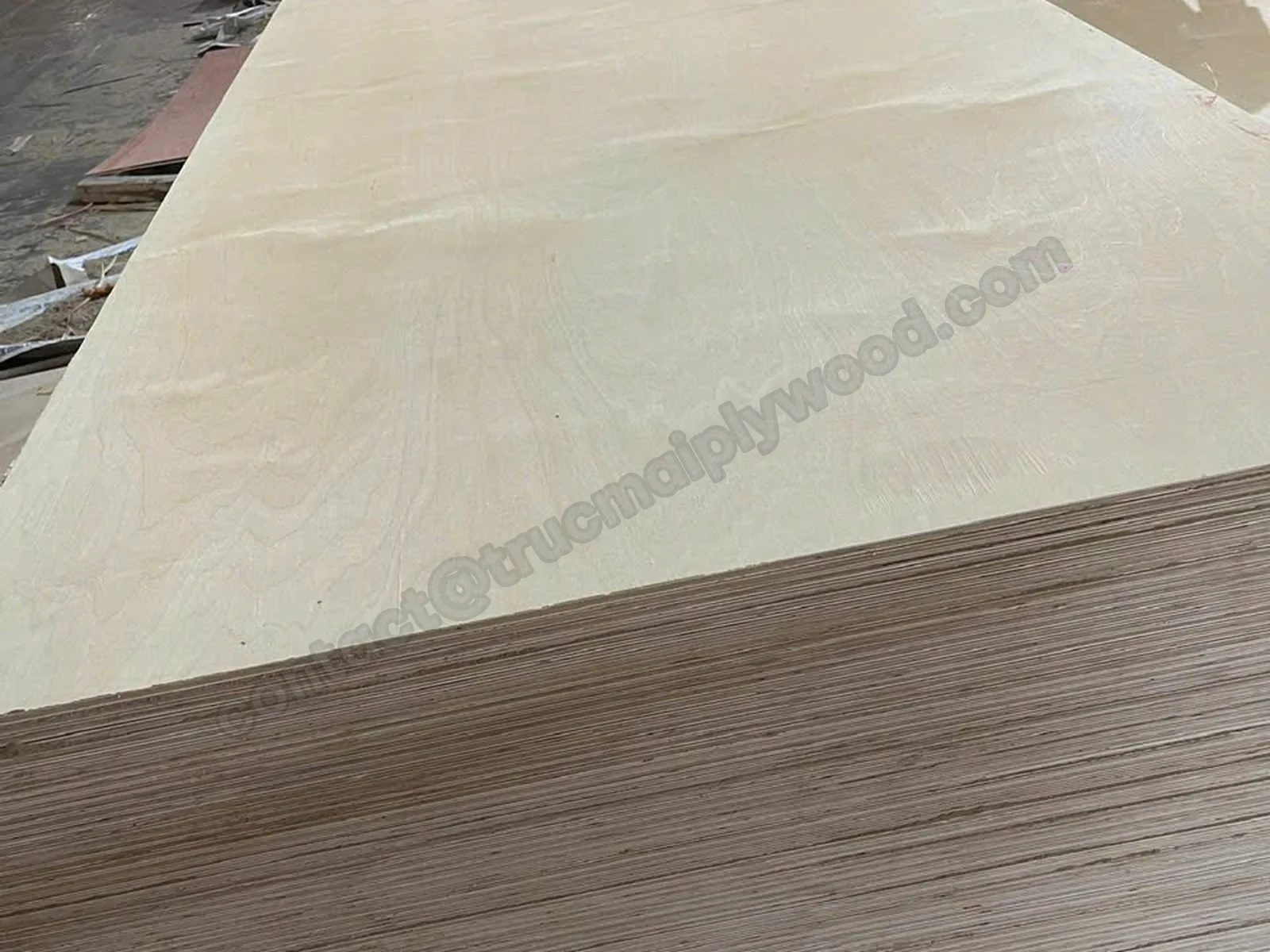
These are birch-faced sheets: a thin cream birch face with a soft, wavy figure over a cross-laid Vietnamese hardwood core. The edge is where the build shows: pink-brown plies on Eucalyptus, golden on Acacia, almost white on Styrax.
Birch is laid only as the outer veneer. The face sheet is 0.2–0.5 mm thick, and the core under it is built from Vietnamese plantation hardwood veneer of 1.4–2.0 mm. That is why the invoice, packing list and pack label all say birch-faced plywood.
Look at the face in the photos and you see what a birch buyer is paying for: a soft swirling figure, a few pin knots and a cream colour that warms slightly under lacquer. No two logs give exactly the same figure, so a container is a range, and the sample pair sets the ends of that range.
A buyer used to Baltic all-birch sheets notices two things first. The edge of a Vietnamese core is warmer in colour, and on Styrax the sheet is lighter in the hand. Both come from the core species, not the face, and both are fixed by the core line on the order.
The stack photos show what a finished pack holds: sheets of one face pair and one thickness together, edges squared by the double-end saw, faces sanded on both sides for the furniture build. A clear face pair is sorted before lay-up, not picked out of finished stacks. The route from log to loaded sheet is on how our plywood is made.
Under a clear water-based lacquer the birch face stays close to the cream in the photos; under an oil or a solvent lacquer it warms towards honey within weeks. Show your finish on the approved sample before the first container, because the sample is what every later face is sorted against, and a finish chosen after the fact cannot be sorted for.
Spec sheet
Birch plywood spec sheet for a repeat order
These are the lines Truc Mai writes on every birch-faced order. Each one is agreed before the deposit, printed on the proforma invoice and repeated word for word on the reorder.
When a line is left open on the enquiry, the quote uses the furniture build: a stitched A-grade core, faces sanded on both sides, UF glue at E0 emission and ±0.3 mm. Any line you change in writing before the deposit becomes the reference for every container after it.
Ask for a stitched core when the sheet will be CNC-routed or edge-banded. The stitch closes the joints between core veneers, so the router meets fewer gaps and the edge band sits on solid wood.
A birch face is thin and hard, which makes it forgiving under a lacquer but unforgiving of a sanding mark. Thickness is measured after calibration sanding, at several points, because that is where a sanded furniture panel either meets ±0.3 mm or does not. A commercial-line birch sheet that is not calibrated is written at ±0.5 mm, and the order says which one you are buying.
Thin birch-faced sheets for backs and drawer bottoms follow the rules on the thin panels page.
- Face and back Imported birch veneer of 0.2–0.5 mm, quoted as a face and back pair and matched to the sample you approve
- Core species Eucalyptus, Acacia or Styrax, or two of them combined; never rubberwood
- Thickness range From 3 mm to 40 mm in the steps 3, 4, 5, 6, 9, 12, 15, 18, 21, 25, 30 and 40 mm
- Plies Always five in sheets up to 5 mm; at 18 mm eleven to thirteen, eleven being normal
- Core veneer and stitching Core veneer 1.4–2.0 mm (1.3 mm in 4 mm sheets); furniture-line core is A grade, stitched both ways, with the outer 2–4 plies stitched as standard
- Tolerance on thickness Furniture panels sanded and calibrated to ±0.3 mm; other lines ±0.3–0.5 mm as stated on the order
- Formats 1220 × 2280 mm, 1220 × 2440 mm or 1250 × 2500 mm, each within ±2 mm on length and width
- Adhesive Glue and emission written as two lines; UF glue at E0 emission by default
- Faces finished Calibration-sanded on both sides, polished if asked, UV-ready for a coating line at your end
Face pairs
Which birch face and back pair should go on the order?
Pick the face pair by what the customer will see. A clear face with a sound back suits clear-coated fronts; a clear face with a lower back suits carcass sides; two lower faces suit painted or overlaid parts. The approved sample, not a letter code, fixes the grade.
Letter grades from other markets mean different things at different mills. Truc Mai quotes face and back as a pair and fixes them against a sample sheet you approve. That sample is kept at the mill and on your side, and the grade line on the order refers to it.
Faces are sorted on the face grading line before lay-up. Sheets that fall below the agreed pair are moved to a lower pair or a different order; they do not go into your pack.
Birch figure is where most disputes start, because a strong swirl that one buyer loves another rejects as wild grain. Send two samples, the calmest and the wildest face you accept, and both go on the order as the range. The mill sorts to that range, not to a word.
If two faces of one sheet must match for a clear-coated door, say so on the enquiry. The face and back are then both sorted to the face grade, and the price reflects the extra sorting.
Drawer boxes and open shelves are where the back matters most, because both faces are seen when the drawer is pulled or the shelf is empty. A cabinet line often orders two pairs in one container: a clear face over a sound back for carcass sides, and a clear pair in 12 or 15 mm for drawers and shelves. Each pair has its own packs and labels, so the assembly line never has to sort.
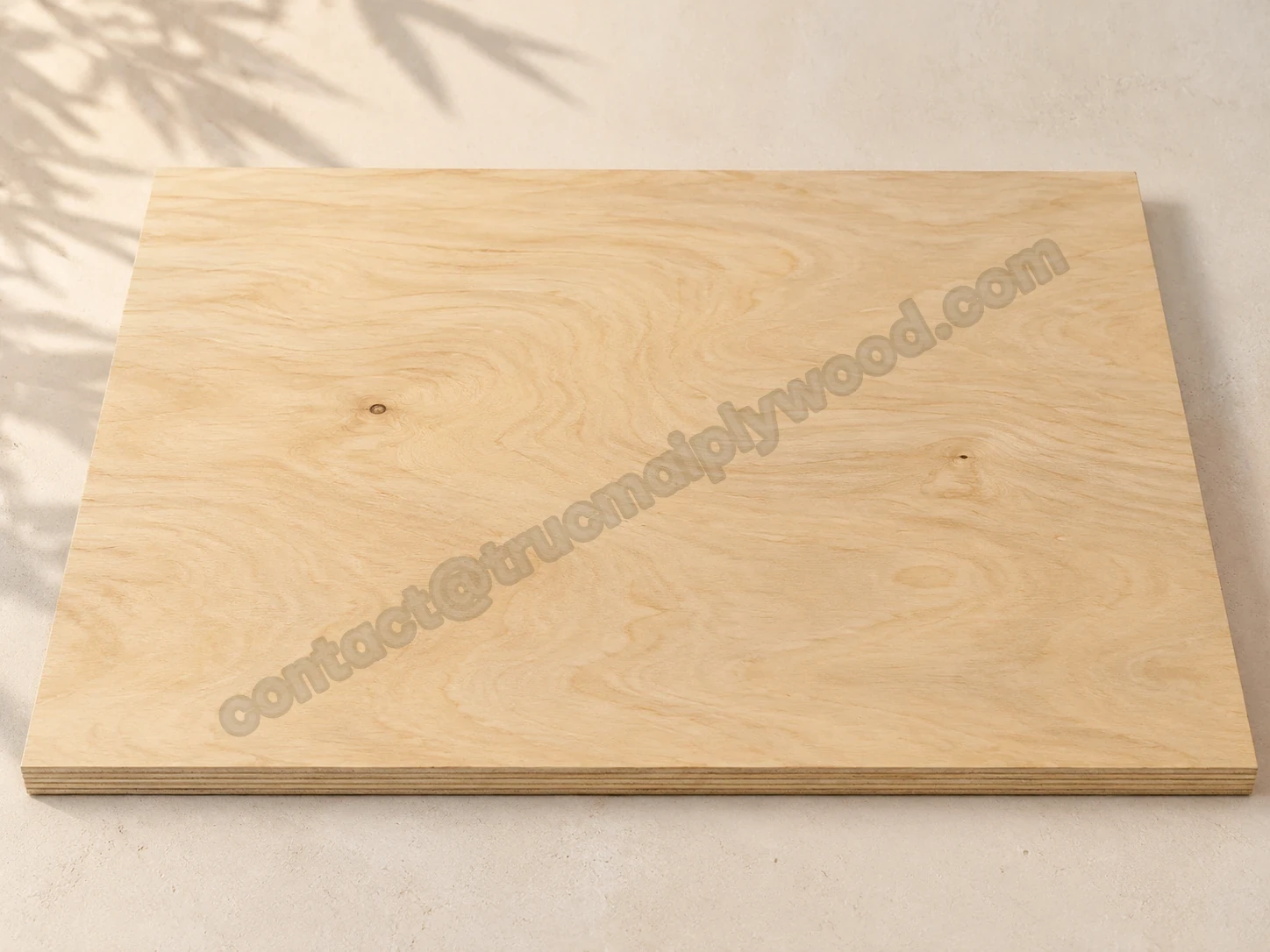 Clear face, clear back
Cream birch on both sides with soft figure, very few pin knots and no open defects or visible patches. Doors, open shelving and furniture where both faces stay visible under lacquer or oil.
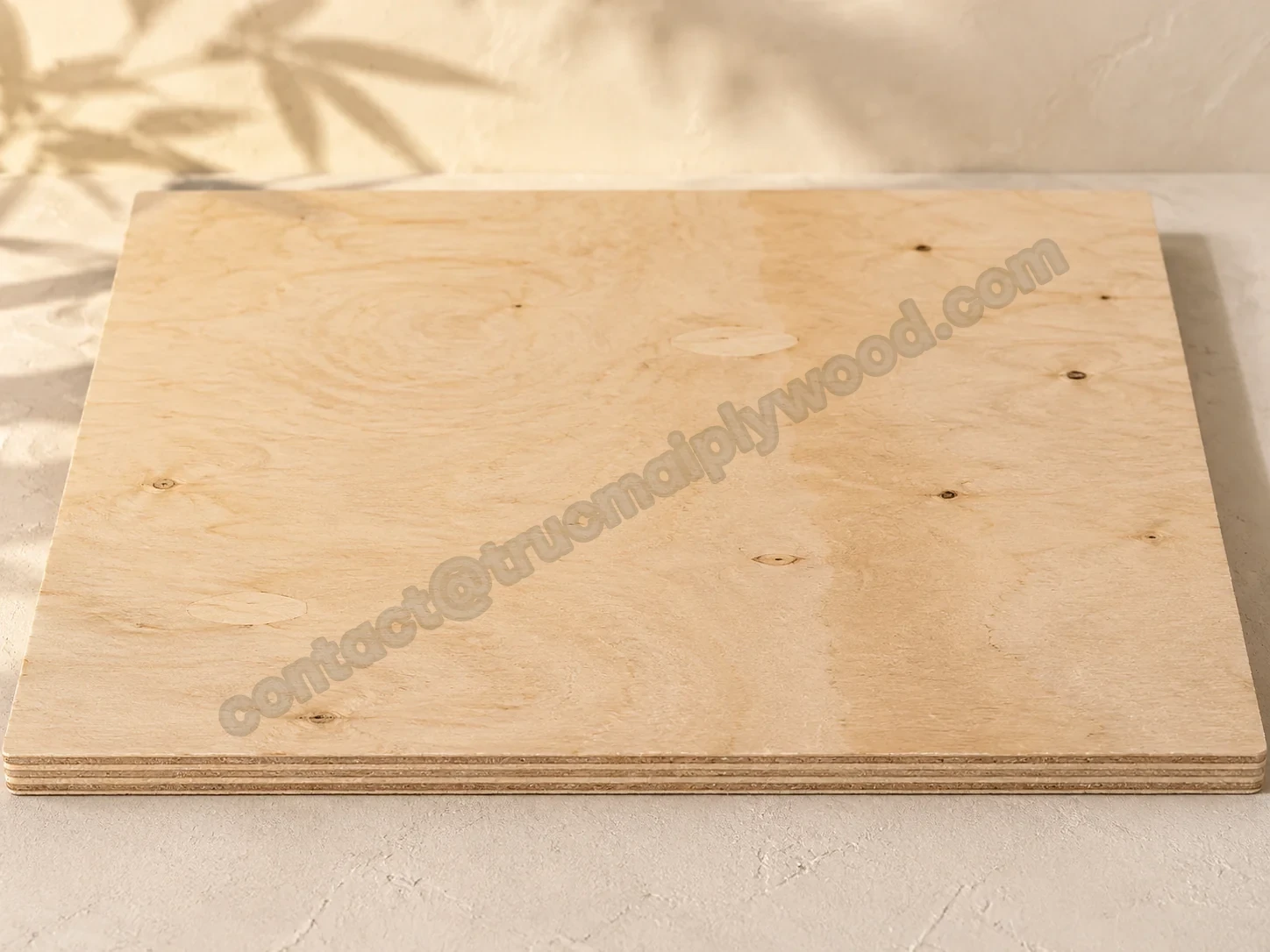 Clear face, sound back
A clear birch face; the back may carry small closed knots, colour streaks and neat patches. Cabinet carcasses, drawer sides and wall units where one face shows. The usual pair for kitchen work.
- Sound face, sound back
Both faces may show colour change, closed knots and patches, all sanded flush with no open splits. Painted parts, laminated or HPL-faced panels and hidden structure inside furniture.
Core
Birch plywood on eucalyptus core, Acacia or Styrax: which suits furniture work?
Birch plywood on eucalyptus core gives the hardest, heaviest panel; Acacia suits most cabinet and carcass work; Styrax gives the lightest sheet and the fullest container. All three are Vietnamese plantation hardwoods, and the birch face stays the same over each.
Switching a birch build from Acacia to Styrax normally brings a lighter sheet, a cleaner bed under the face and more cubic metres in each container. What you give up is screw holding near the edge, where hinges and drawer runners sit; there Acacia or Eucalyptus holds better.
Weights in the table come from reference densities and are planning figures. Measured Eucalyptus runs 650–750 kg/m³, so real sheets are weighed before final loading.
For a clear-coated cabinet line the usual core is Acacia; for a light flat-pack line shipped to a distant port, Styrax; for parts that must not dent, Eucalyptus. The face stays the same over each, so the choice is about weight, screws and the edge colour your customer sees.
A eucalyptus-faced sheet uses the same core species; the difference is only the face. A eucalyptus face is darker and harder and is usually painted, while a birch face is chosen to stay visible.
A combined core lays two species in one sheet, for example Eucalyptus plies near the faces and Styrax in the middle. The outer plies give the thin birch face a harder bed and better screw holding, while the inner plies keep the weight down. The mix is written on the order, so the reorder is laid up the same way.
Thin birch-faced sheets of 3–6 mm behave differently from 18 mm. With only five plies, the core species shows through as stiffness: a 4 mm back on Eucalyptus is stiff and flat, on Styrax it is lighter but flexes more when it is fitted into a groove. For cabinet backs that slide into a routed slot, the stiffer core saves rework at assembly.
| Core under the birch face | Reference density | 18 mm sheet, 1220 × 2440 mm | Choose it for |
|---|---|---|---|
| Styrax | 500 kg/m³ | 26.8 kg (planning) | Light furniture, pale edge, the most sheets per 40HC |
| Acacia | 580 kg/m³ | 31.1 kg (planning) | Cabinet carcasses with hinges, drawer runners and screws |
| Eucalyptus | 650 kg/m³ | 34.8 kg (planning) | Worktop bases, shelving and parts that take wear |
| Combined | Per order | Per order | Balancing weight, price and edge colour on one build |
Glue and emission
Which glue line goes under a birch face?
A birch face changes neither line, so the glue follows the cabinet's room. Glue type and emission class are two separate lines on the order.
Birch carcasses for kitchens and bathrooms are normally pressed on the melamine-fortified line. The default is UF glue at E0 emission, and a melamine-fortified glue for damp rooms usually gives E1.
Birch-faced sheets of 3–25 mm sit inside the US formaldehyde scope; 30 and 40 mm do not. How the class is chosen is on emission class per order.
UF glue holds about six hours in a boil test; melamine-fortified glue holds twelve.
| Build | Glue | Emission | Boil resistance | Where it goes |
|---|---|---|---|---|
| Standard furniture | UF | E0 | About six hours | Dry interior furniture and cabinets |
| Wet-room cabinets | Melamine-fortified UF | Usually E1 | Twelve hours | Kitchens, bathrooms and humid stores |
| US lots, 3–25 mm | UF | CARB P2 and TSCA Title VI | About six hours | Hardwood plywood, veneer core |
Sizes
Which birch sheet sizes are pressed, including 1220 × 2280 mm?
Three sizes are pressed: 1220 × 2440 mm, 1220 × 2280 mm and 1250 × 2500 mm, plus custom sizes up to 1250 × 2500 mm. Larger formats are not pressed; parts are cut from standard sheets instead.
The 1220 × 2280 mm sheet is often the better buy for a kitchen or wardrobe factory, because carcass parts come out of the shorter sheet with less waste. Check your cutting list against both lengths before you fix the size.
Parts can also be cut at the mill to your list, packed by part and labelled, which saves freight on offcuts and work in your own shop.
For a monthly programme, keep one size per product line where you can. Two sizes of the same birch build can share a container, but each size is its own pack plan, and a reorder that switches sizes resets the cutting and packing at the mill.
A typical cabinet container mixes four thicknesses of one birch build: 18 mm for carcass sides and tops, 15 mm for shelves, 12 mm for drawer boxes and 4 mm for backs. The 4 mm packs are the ones to plan earliest, because good thin core veneer is scarce and those sheets can take longer than the rest of the load.
- 1220 × 2440 mm 4 × 8 ft; standard for US and Gulf lots
- 1220 × 2280 mm Shorter furniture sheet that cuts carcass sides and doors with less offcut
- 1250 × 2500 mm European format used by most EU furniture factories
- Cut-to-size 2, 3, 4 or 6 parts from each sheet, packed at the mill before loading
| What is measured | Allowed deviation | Where it applies |
|---|---|---|
| Calibrated, sanded thickness | ±0.3 mm | Birch-faced furniture panels |
| Thickness per production line | ±0.3–0.5 mm | Stated on each order |
| Length or width | ±2 mm | All three formats |
Uses
Where does a birch face earn its price?
A birch face earns its price where it stays visible: clear-coated fronts, open shelving and furniture edges left on show. For painted or overlaid parts, a cheaper face on the same core does the same job.
Birch-faced plywood is an interior panel. Truc Mai does not make film-faced, formwork, structural or marine plywood.
A cabinet buyer usually takes two or three thicknesses of the same birch build in one container: 18 mm for carcasses, 15 mm for shelves and 3–6 mm for backs. One or two products per container is normal, and up to six can be mixed when agreed.
For CNC lines, order the sheet calibrated on both faces and say which face goes down on the router bed. A flat sheet keeps the cutting depth constant across nested parts, and a stitched core leaves fewer voids where a part edge is drilled for dowels or cam fittings.
Fit-out companies often want a face that takes their own UV lacquer. UV-ready means both faces are sanded and prepared for the buyer's coating line; the mill does not apply UV coating itself.
Where the edge is left exposed and oiled, the core is part of the look. A Styrax core reads pale and calm next to the birch face; Eucalyptus gives a striped warm edge. Choose it on a sample with the edge finished the way your customer will see it.
- Kitchen and bathroom cabinets
18 mm birch-faced Acacia core for carcasses, a clear face on the inside of open units, and 3–6 mm sheets for backs in the same container.
- Clear-coated fronts and shelving
A clear face and back pair for doors and open shelves, sanded and calibrated to ±0.3 mm so a lacquer line runs without extra sanding.
- CNC furniture parts
Stitched A-grade core for routed and drilled parts; the edge can be left visible and oiled, which is where a pale Styrax core looks best.
- Shopfitting and display
Birch-faced sheets with a UV-ready face for the fit-out company's own coating, ordered as one face batch for a whole store programme.
- Exposed-edge furniture
Tables, shelving and children's room furniture where the ply edge is sanded and oiled; ask for a Styrax or combined core so the edge reads pale and even next to the birch face.
- Drawer boxes and inner parts
12 or 15 mm birch-faced sheets with a clear pair, so both faces look finished when the drawer opens; often loaded with the carcass sheets in the same container.
Compare
Is a birch-faced sheet the right buy against Baltic birch, eucalyptus or poplar?
Buy birch-faced when the face must look like birch under a clear coat and the price of all-birch is too high. Buy all-birch Baltic sheets when every ply must be birch, for example for exposed edges in premium furniture.
Poplar and EV faces use the same cores as birch-faced sheets. The face is the only change, so a buyer can put birch on visible parts and poplar on painted parts of the same cabinet line and load both together.
Choose all-birch Baltic sheets when every ply must be birch, for example exposed edges in premium furniture where the customer reads the edge as part of the product. Choose birch-faced when the customer sees the face and the edge is banded, painted or hidden; the two thin outer veneers carry the look, and the core carries weight and screws.
Truc Mai does not press birch cores and will not describe a birch-faced sheet as all-birch. Vietnamese mills peel plantation hardwood for cores, and the invoice wording follows the build.
When the face will be painted, birch is the wrong buy: the figure disappears under paint, and a poplar or eucalyptus face on the same core does the job for less. When every door in a long series must match exactly, EV beats birch, because a natural birch log never repeats.
The usual mistake on a first birch order is to buy the best face pair for every part. Carcass sides, shelves and drawer boxes rarely need the same pair; splitting the order into two pairs on one core often saves more than changing the core or the thickness ever would.
| Panel | Face | Core | Edge look | Best for |
|---|---|---|---|---|
| Truc Mai birch-faced | Imported birch | Eucalyptus, Acacia or Styrax | Warm brown or pale plies | Clear-coated fronts and cabinets at a container price |
| Truc Mai birch-faced, combined core | Imported birch | Eucalyptus outer plies, Styrax centre | Warm outer bands, pale centre | A harder bed under the face at a lighter sheet weight |
| All-birch (Baltic type) | Birch | Birch in every ply | Even pale plies | Exposed-edge furniture where every ply must be birch |
| Eucalyptus-faced | Eucalyptus | Same Vietnamese cores | Same as birch-faced | Painted parts and utility furniture |
| Poplar or EV-faced | Poplar or engineered veneer | Same Vietnamese cores | Same as birch-faced | Painted, laminated or matched pale faces |
Checks
What is checked differently on a birch face?
Birch is checked for figure range, colour and the back, because those move between log batches; everything else runs as on any Truc Mai order.
Arrival checks and the reference sample kept for each buyer are described under repeat spec control.
Faces are sorted against the calm and the wild sample; faces outside that range move to another pair.
A new birch veneer batch is laid next to the reference sheet before it enters your build; if the shade has moved, you get a photo first.
Backs are checked for open defects and patch count against the agreed back grade.
Sanded faces are checked for sanding marks under raking light.
Certificates
Which certificates can a birch buyer verify before the first order?
FSC, CARB P2, ISO 9001 and ISO 14001, plus EU file sets.
- FSC 100% FSC-C196493 · SA-COC-014545
- CARB P2 and TSCA Title VI CARB/EPA 26053 · TPC-43
- ISO 9001:2015 W2012 · WCERT
- ISO 14001:2015 W2012E · WCERT
Container
How many 18 mm birch-faced sheets fit in one 40HC?
At 18 mm and 1220 × 2440 mm, a 40HC plans at about 990 birch-faced sheets on Styrax, 880 on Acacia and 795 on Eucalyptus. Sheet counts and weights are planning figures from our packing model, panels only, not a loading record.
A birch load on Eucalyptus is weight-capped and stops near 43 m³; on Styrax the box fills by volume first. The carrier and route decide the final payload. Cabinet lines often load 18 mm carcass sheets with a few packs of 3 mm or 4 mm backs at the door end, each pack labelled with thickness, face pair and sheet count. For other mixes use the 40HC load calculator; loading a 40HC shows how packs are placed.
| Core and thickness | Packs × sheets | Sheets per 40HC | Volume, m³ | Sheet weight, kg |
|---|---|---|---|---|
| Styrax, 18 mm | 18 × 55 | 990 | 53.0 | 26.8 |
| Acacia, 18 mm | 16 × 55 | 880 | 47.2 | 31.1 |
| Eucalyptus, 18 mm | 15 × 53 | 795 | 42.6 | 34.8 |
| Acacia, 15 mm | 16 × 66 | 1,056 | 47.2 | 25.9 |
| Acacia, 12 mm | 16 × 83 | 1,328 | 47.4 | 20.7 |
| Styrax, 25 mm | 18 × 40 | 720 | 53.6 | 37.2 |
Terms
Terms for a monthly birch plywood programme
Full containers direct from the mill; these terms apply unless the contract says otherwise.
Full terms are on MOQ, payment and FOB. A birch reorder that keeps the same face pair, core and size needs no new sample.
- Minimum order One 40HC
- Production time 15–45 days after the 30% deposit, by quantity and agreement
- Payment 30% deposit; 70% against the scanned B/L by T/T, or irrevocable L/C at sight
- Delivery terms FOB Hai Phong, CFR or CIF
- Documents Invoice, packing list, B/L, certificate of origin, phytosanitary, fumigation, order certificates
- Price Quoted per order against the written specification
Ordering
What to send for a birch plywood quotation
Four things are particular to a birch order.
Deposit, documents and balance follow from enquiry to loading.
Name the face-and-back pair and whether both faces must match.
Name the core and the thickness mix per container.
Send or approve a calm and a wild face sample.
Say whether the edge stays visible.
FAQ
Birch plywood questions from container buyers
Is this all-birch plywood or a birch face on a Vietnamese core?
A birch face on a Vietnamese core. Truc Mai presses an imported birch face and back on a Eucalyptus, Acacia or Styrax core and sands the furniture build to ±0.3 mm, so the invoice says birch-faced plywood.
How many 18 mm birch-faced sheets fit in one 40HC?
In sheets of 1220 × 2440 mm, about 990 on a Styrax core, 880 in 16 packs on Acacia and 795 on Eucalyptus. These are planning figures from the Truc Mai packing model, panels only, not a loading record.
Which core suits a birch face best for furniture work?
Acacia suits most cabinet and carcass work because it holds screws and hinges well. Styrax gives the lightest sheet and the fullest container, and Eucalyptus the hardest, heaviest panel; at Truc Mai all three are standard cores with their own load figures.
Is eucalyptus plywood as good as birch plywood?
For painted or laminated parts a eucalyptus-faced sheet does the same job at a lower price. A birch face is chosen when the face stays visible under a clear coat, because its pale, fine figure is what the customer pays for.
Can birch-faced plywood ship with an FSC claim and CARB P2?
CARB P2 and TSCA Title VI, yes, for 3–25 mm under certificate CARB/EPA 26053. The FSC 100% claim under FSC-C196493 applies only to products on the current schedule, so the birch face is confirmed in writing at enquiry.
Which sheet sizes are made, including 1220 x 2280 mm?
1220 × 2440 mm, 1220 × 2280 mm and 1250 × 2500 mm, plus custom sizes up to 1250 × 2500 mm. Nothing larger is pressed; parts are cut from standard sheets.
What thickness tolerance is written for birch-faced panels?
±0.3 mm on sanded and calibrated furniture panels and ±0.5 mm on the commercial build, written on each order. Length and width are held to ±2 mm.
How is the birch figure range agreed?
With two samples: the calmest and the wildest face you accept. Both are kept at the mill and on your side, and faces are sorted to that range before lay-up, so the tenth container is judged against the same pair as the first.
What happens when a new birch veneer batch arrives mid-programme?
A sheet from the new batch is laid next to your reference before it enters your build. If the shade or figure has moved, you receive a photo before production, not a surprise on arrival.
Does a birch face change colour under lacquer?
It warms. A water-based clear coat keeps it close to cream; oil and solvent lacquers turn it towards honey. Test your finish on the approved sample, which then becomes the reference for every later container.
Which birch face pair suits drawer boxes and open shelves?
A clear face and clear back in 12 or 15 mm, because both sides are seen. Carcass sides can take a clear face over a sound back; the two pairs load in one container in separate labelled packs.
Can I reorder the same birch-faced build every month?
Yes. The approved sample, face pair, core, glue and tolerance are written on the first order and repeated on each reorder, so the second container is checked against the same reference as the first.
Can birch-faced and poplar-faced sheets share one container?
Yes. They use the same cores and glue lines, so a cabinet line can load birch for doors and poplar for painted carcasses together; each face keeps its own labelled packs.
Does Truc Mai make film-faced or marine birch plywood?
No. Truc Mai makes no film-faced, formwork, structural or marine plywood; its birch-faced sheets are interior furniture and fit-out panels.
Quotation
Request a birch plywood quotation
Send the face pair, core, thickness, size and number of containers, and Lucy replies with a written specification and price. Write to contact@trucmaiplywood.com or use the quotation form.
Birch face on Eucalyptus, Acacia or Styrax core, 3–40 mm, face pair against your approved sample.