
Resources · sheet specs
Plywood specifications: sizes, thickness, grades guides by the container
Plywood specifications: sizes, thickness, grades guides start with three sheet sizes. Truc Mai plywood comes in 1220 × 2440, 1220 × 2280 and 1250 × 2500 mm, in 12 thicknesses from 3 to 40 mm, with thickness tolerance written per order at ±0.3 mm on calibrated furniture panels and ±0.5 mm on commercial panels. The larger sheet moves a Styrax 18 mm load from 53.0 to 55.7 m³ per 40HC.
Each spec line has an effect on the container, and this hub shows the effect next to the line. It is written for buyers who fix a specification once and reorder it every month.
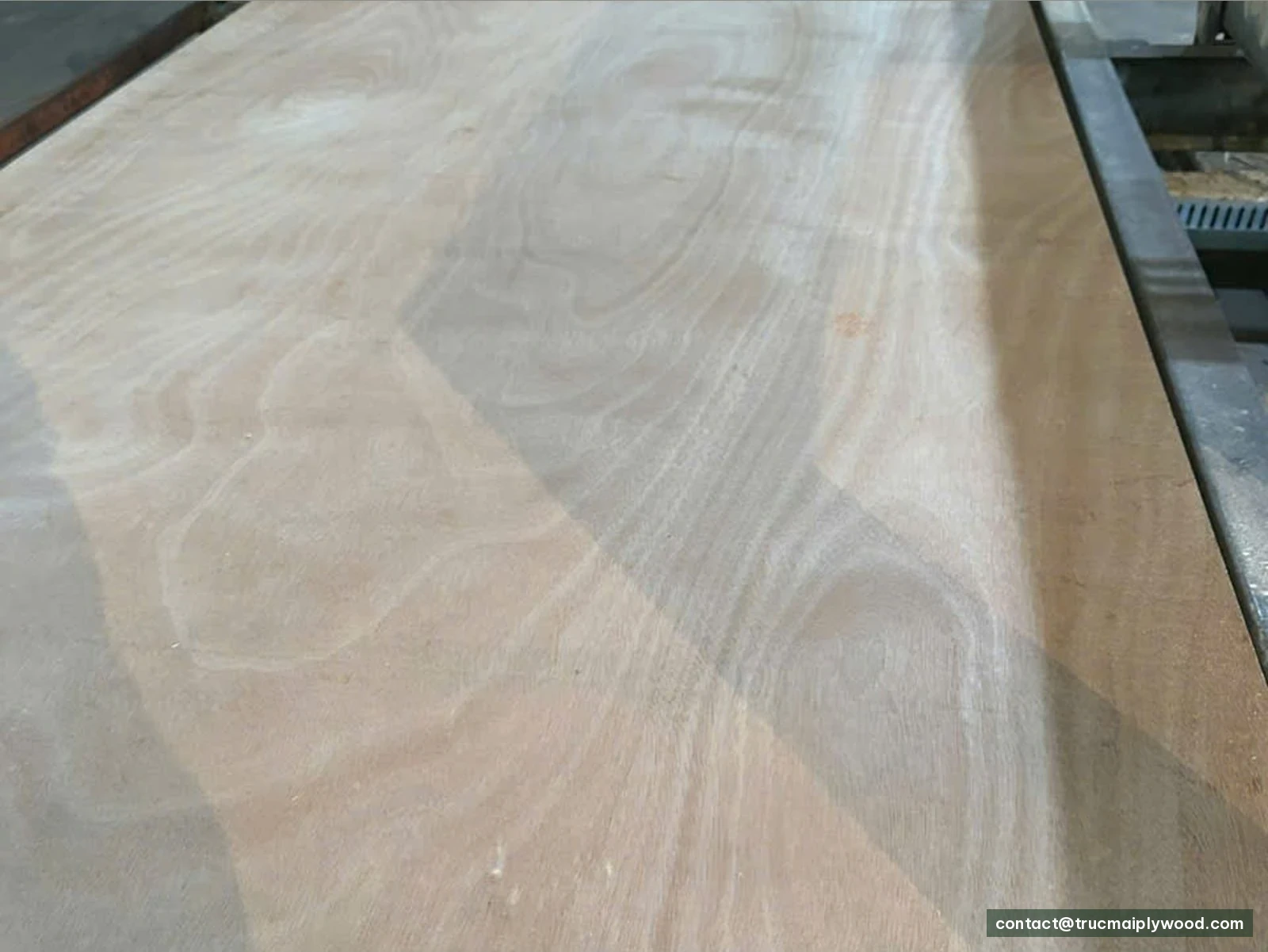
- 3 sizes1220 × 2440, 1220 × 2280, 1250 × 2500 mm
- 3–40 mm12 listed thicknesses
- ±0.3–0.5 mmtolerance by line, written per order
- 53.0 → 55.7 m³18 mm Styrax at 1220 × 2440 and 1250 × 2500 mm
Sheet counts and weights are planning figures, not a loading record.
Answer and key facts
Plywood specifications: sizes, thickness, grades guides and the lines that decide a container
Write size, thickness, tolerance, face and back grade, core and glue on every RFQ. Of these, sheet size and core change m³ per container; thickness changes sheets per container but barely changes m³; tolerance and grade change what you can inspect on arrival.
Sizes and tolerances are mill figures; certificate scope lines rest on FSC International, the California Air Resources Board and the US EPA, and EU origin rules on Regulation (EU) 2023/1115 on EUR-Lex.
| Spec line | Options | Effect |
|---|---|---|
| Sheet size | 1220 × 2440, 1220 × 2280 (shorter, for furniture parts), 1250 × 2500 mm; custom up to 1250 × 2500 mm | 1250 × 2500 mm lifts 18 mm Styrax from 53.0 to 55.7 m³ |
| Thickness | 3, 4, 5, 6, 9, 12, 15, 18, 21, 25, 30, 40 mm; none below 3 mm | Sheets per 40HC fall as thickness rises; m³ stays near 53 on Styrax |
| Tolerance | ±0.3 mm calibrated furniture; ±0.5 mm commercial; ±0.5–1.0 mm packing; length and width ±2 mm | Fit of routed parts and stacking height |
| Face and back grade | Written as a pair against an approved sample | What you can reject on arrival |
| Cut to size | One sheet split into 2, 3, 4 or 6 panels before packing | Less waste at the buyer's line |
Sizes
Standard plywood sheet sizes: which are standard, and what is the maximum?
Standard sizes are 1220 × 2440 mm (4 × 8 ft), 1220 × 2280 mm for furniture parts and 1250 × 2500 mm, the European format. Custom sizes go up to 1250 × 2500 mm. Nothing larger is made; bigger parts are cut from standard sheets instead.
The 1250 × 2500 mm sheet holds more m³ per container than 1220 × 2440 mm because each pack is larger, though the planning payload of 28,000 kg caps some loads: Styrax at 18 mm goes from 53.0 to 55.7 m³. The 1220 × 2280 mm sheet saves waste where the furniture parts are short.
Sheets can be cut to size before packing. The mill splits one sheet into 2, 3, 4 or 6 panels, which also changes pack counts, so the quotation reply gives the load for the cut size.
Thickness
Which thicknesses are listed between 3 and 40 mm?
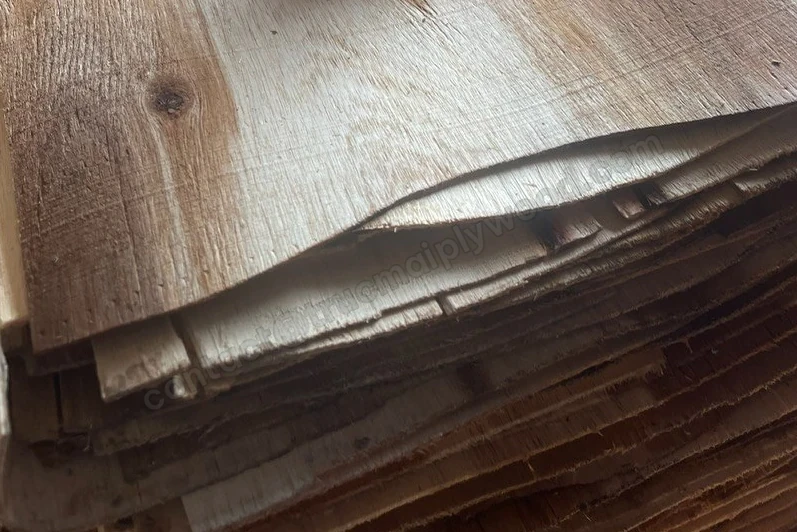
Twelve: 3, 4, 5, 6, 9, 12, 15, 18, 21, 25, 30 and 40 mm. A Styrax-core 40HC stays near 53 m³ across the range, while the sheet count falls from 5,994 at 3 mm to 450 at 40 mm. Eucalyptus hits the weight cap first.
Sheet counts and weights are planning figures from our packing model, panels only, not a loading record; the carrier and route decide the final payload. The other thicknesses, the Acacia and Eucalyptus cores and the 1250 × 2500 mm size are on the load calculator and the loading page. A buyer comparing offers should check that thickness is the actual, calibrated thickness and not a nominal one.
| Thickness | Sheets | m³ | kg per sheet |
|---|---|---|---|
| 3 mm | 5,994 | 53.5 | 4.5 |
| 18 mm | 990 | 53.0 | 26.8 |
| 40 mm | 450 | 53.6 | 59.5 |
Tolerance and grades
What thickness tolerance and which face and back grades are written on an order?
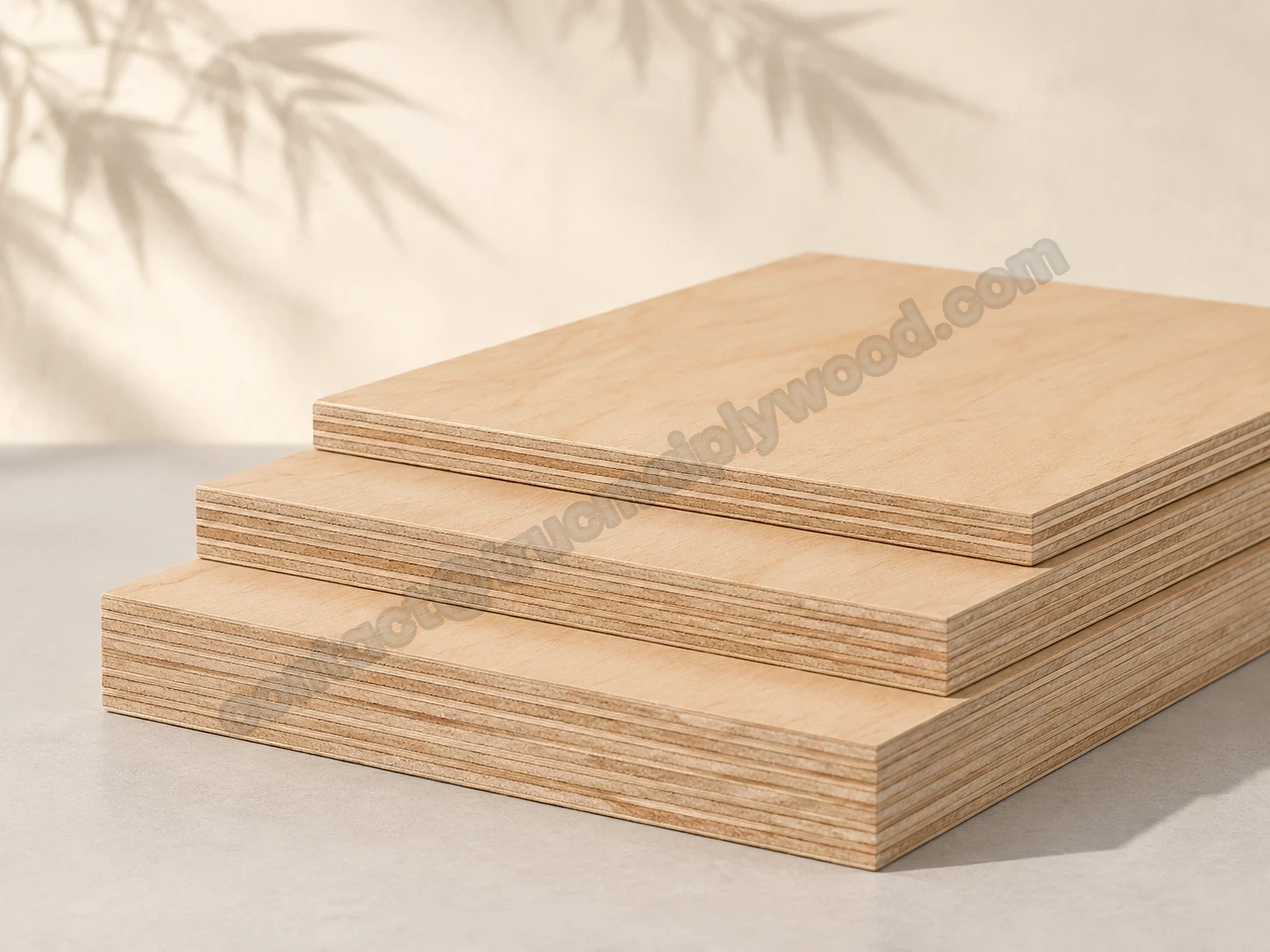
Thickness tolerance is written per order: ±0.3 mm on sanded and calibrated furniture panels, ±0.5 mm on commercial panels, ±0.5–1.0 mm on packing panels, and length and width ±2 mm. Face and back grades go on the order as a pair.
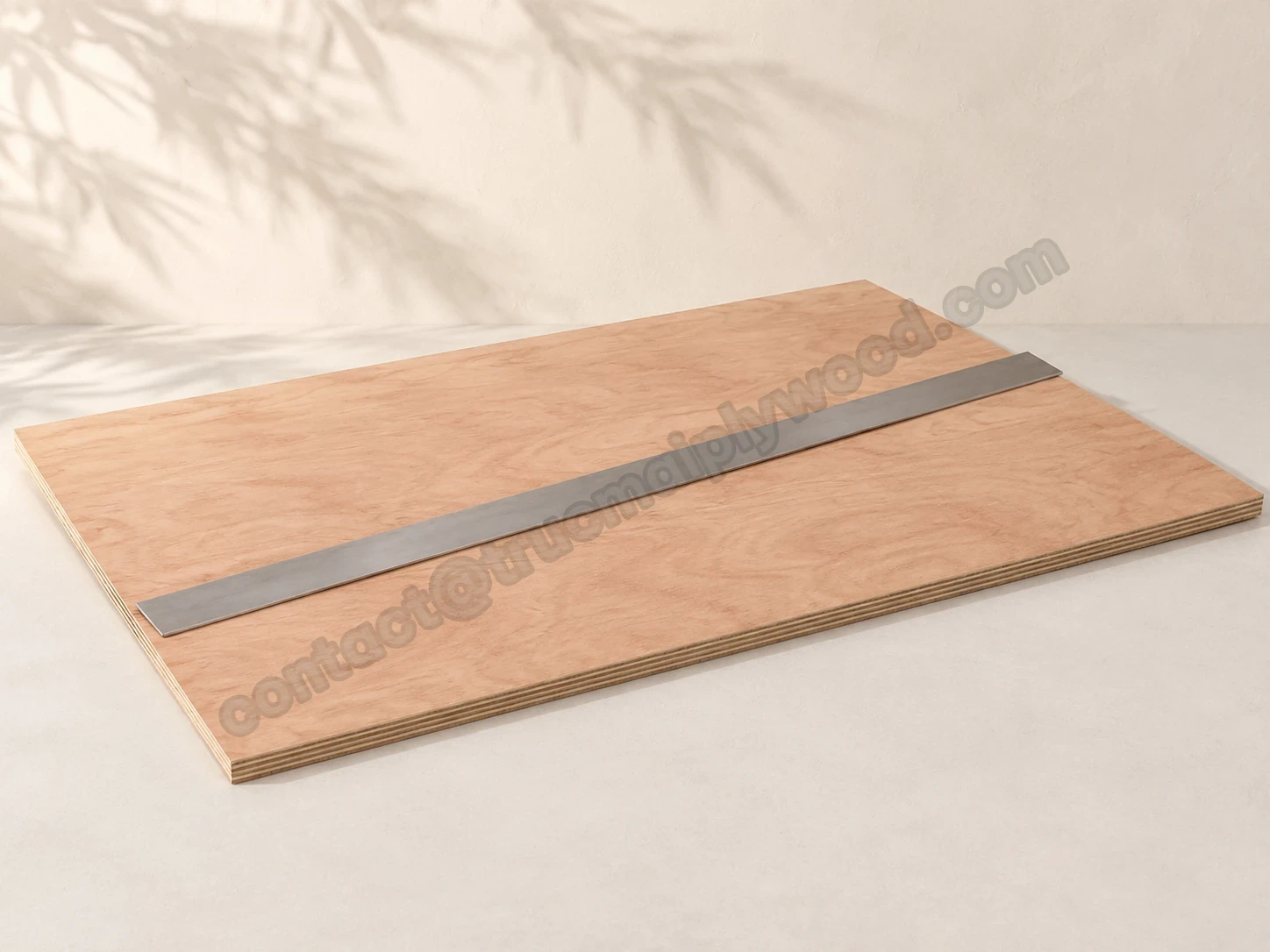
The pair is agreed against the approved sample, because letter grades differ between mills and markets. A pair such as a clean face with a cheaper back suits parts where only one side shows. Check a sample with a caliper on four edges and a straight edge across the face, and write the result against the reference sample on the order.
On arrival the same checks repeat: thickness at four points, sheet count per pack, face against the sample and flatness. The repeat spec control page lists them.
Related pages
Sheet spec guides
Guides on sizes, thickness, grades, weights and tests.
- Plywood size by the container: 1220x2440, 1220x2280 and 1250x2500
The mill presses three formats and nothing larger than 1250×2500.
- Plywood thickness from 3 to 40 mm: what each one loads per 40HC
Thickness decides both the job and the freight.
- Birch plywood grades on a repeat order: B/BB, BB/CP and CP/CP written per container
How birch face grades are written into the order, checked per crate before loading and held from one 40HC to the next (brand_facts:birch face grades offered, defect.
- Face grade letters A to D: what each one allows on a panel
The grade letters as a commercial buyer writes them on an order, with the defects each one accepts.
- Sanded or unsanded faces: S1S, S2S and what sanding costs
When to pay for sanding on commercial and furniture panels and how sanding changes thickness tolerance.
- Crate counts: sheets per crate by thickness and sheet size
Crate counts per thickness for 1220x2440 and 1250x2500 and how they add up to a container.
- CBM of a plywood order: per sheet, crate and container
The volume maths behind every plywood quote, with worked examples.
- Kg per sheet by core and thickness, with a plywood weight calculator
Kg per sheet by core species so buyers know when a 40HC hits payload before it fills by volume.
- Ten tests on a sample sheet anyone can run
Simple checks on thickness, flatness, voids, bond and moisture that tell a buyer if a panel matches the spec.
What the face/back pair means on commercial poplar and okoume panels and which pair fits each use.
- Density by core: kg/m3 for styrax, acacia and eucalyptus ply
Density ranges per core and what they mean for freight, screw hold and price per m3.
- What good ply looks like: the checks behind a quality panel
Grade, core, glue, flatness and tolerance as the five things a volume buyer can measure on arrival.
G1S builds for cabinets and shelves: face grade, back grade and the saving per m3 against two good faces.
- How much weight can plywood hold on a shelf: sag by thickness and span
Shelf sag figures by thickness and span for furniture shelves for furniture shelves only.
- Face defects on arrival: splits, patches and how to judge them
A buyer's sampling routine for face defects across a commercial container and the tolerances to agree beforehand.
Cabinet grade is a written spec, not a label: an A-grade stitched core, sanded faces at ±0.3 mm, face and back grades quoted as a pair against the approved sample, and.
- Ply 12mm for repeat containers: core, sheet count and tolerance
A 12 mm spec is often repeated every month.
At 18 mm, the core decides what fills a 40HC.
The full planning table by thickness and size.
Sheets and m³ for a mixed order.
Five plies at 3–5 mm.
2, 3, 4 or 6 panels from one sheet.
Thickness in millimetres and inches.
Arrival checks against the reference sample.
LVL sizes for non-structural parts: how a plywood mill cuts LVL rails, slats, door stock and packing runners to your drawing, with tolerance and 40HC fill.
FAQ
Sheet spec questions
Which sheet sizes are standard, and what is the maximum sheet size?
1220 × 2440 mm, 1220 × 2280 mm and 1250 × 2500 mm are standard. Custom sizes go up to 1250 × 2500 mm and nothing larger. Nothing larger is made; bigger panels are cut from standard sheets.
What thickness tolerance is written on an order for furniture, commercial and packing panels?
±0.3 mm on sanded and calibrated furniture panels, ±0.5 mm on commercial panels, ±0.5–1.0 mm on packing panels, and ±2 mm on length and width. It is written per order; ±0.3 mm is the tightest figure offered.
Which thicknesses are listed between 3 and 40 mm?
3, 4, 5, 6, 9, 12, 15, 18, 21, 25, 30 and 40 mm. No panel is thinner than 3 mm.
Does the 1250 × 2500 mm size hold more m³ per 40HC than 1220 × 2440 mm?
Yes. At 18 mm Styrax core a 40HC holds about 55.7 m³ at 1250 × 2500 mm against 53.0 m³ at 1220 × 2440 mm, as planning figures. Denser cores reach the weight cap and gain less.
How are face and back grades written on an order?
As a pair, face and back, against an approved sample. The sample is the reference for every reorder and for the arrival check.
Can sheets be cut to size before packing?
Yes. One sheet can be split into 2, 3, 4 or 6 panels at the mill before packing, which changes the pack counts and so the load, so the quotation states it for the cut size.
Quotation
Send the specification for a quotation
Size, thickness, tolerance, face and back grade, core and quantity are enough for a first reply.
State sheet size, thickness, tolerance, face and back grade, core, glue and quantity. The reply carries sheets, m³ and packs per 40HC as a planning figure.