
Bintangor plywood · Ha Hoa, Phu Tho, Vietnam
Bintangor plywood: red-brown faces on the core you choose, by the container
Truc Mai bintangor plywood is a red-brown bintangor face veneer on a Vietnamese core you choose: Styrax for a lighter sheet and about 53 m³ per 40HC, Acacia or Eucalyptus for more weight. Panels run 3–40 mm, with tolerance written per order: ±0.5 mm commercial or ±0.3 mm sanded. This page is for distributors and cabinet makers who restock bintangor by the container; it is an interior and commercial panel, not a marine one.
Bintangor is one of the faces in Truc Mai's commercial panels by the container, bought by distributors and furniture factories who restock the same build every month. Truc Mai presses around 60,000 m³ of plywood a year in Ha Hoa, Phu Tho, about 5,000 m³ in an average month.
This page answers what a container buyer asks before the first bintangor order and again before each reorder: which core, which build, how many sheets in a 40HC, what tolerance to expect, and what the mill checks before the doors close.
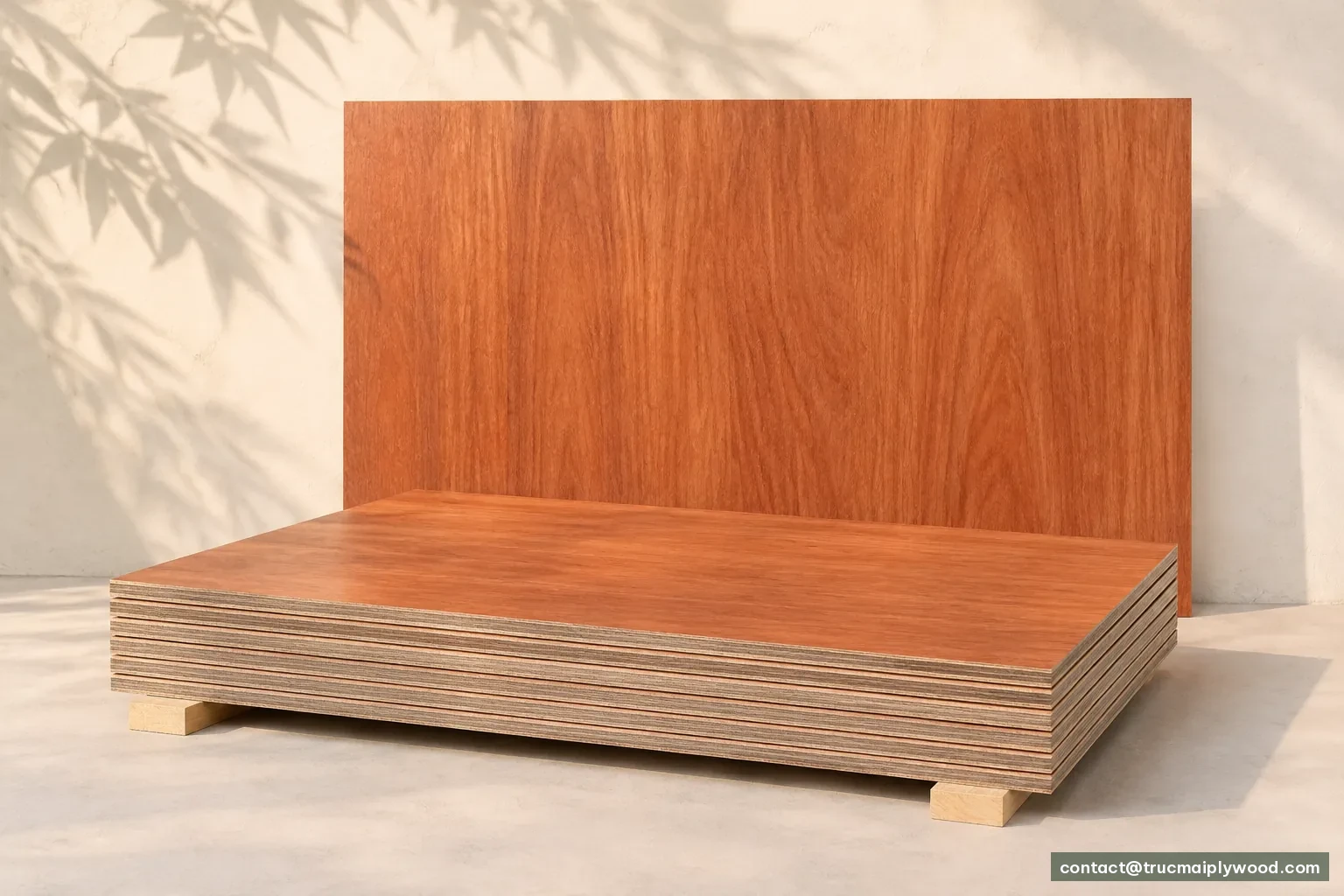
- Bintangor veneer, red-brownFace
- Styrax, Acacia or EucalyptusCore
- 3–40 mmThickness
- ±0.5 mm commercial, ±0.3 mm sandedTolerance
- About 990 sheets per 40HC (planning)18 mm on Styrax
The face
The bintangor face and the core under it
Bintangor plywood is plywood faced on both sides with bintangor veneer, a red-brown hardwood of the Calophyllum genus from South-East Asia. The face is laid over a core of other species; at Truc Mai that core is Vietnamese Styrax, Acacia or Eucalyptus.
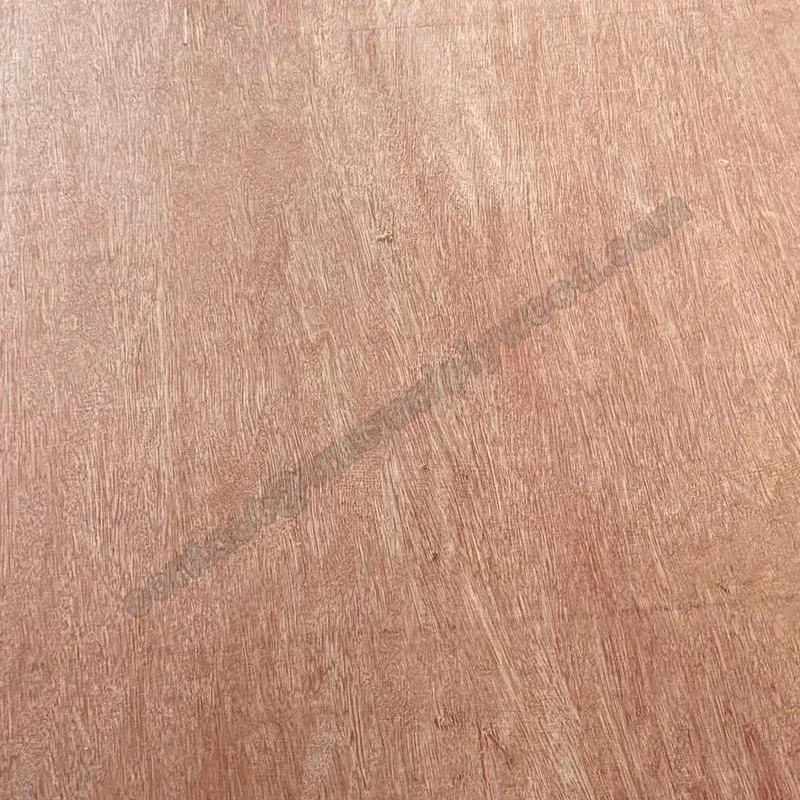
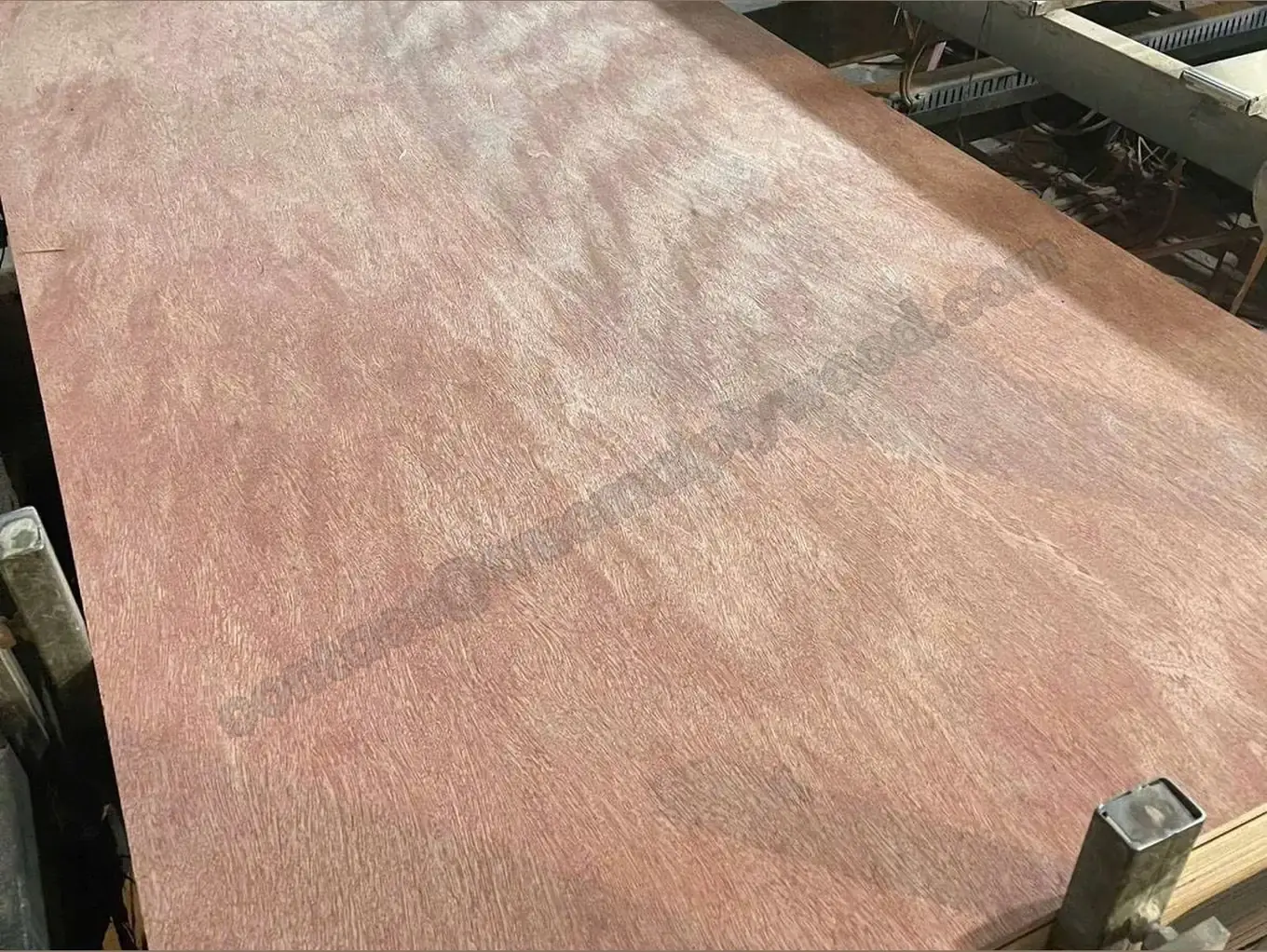
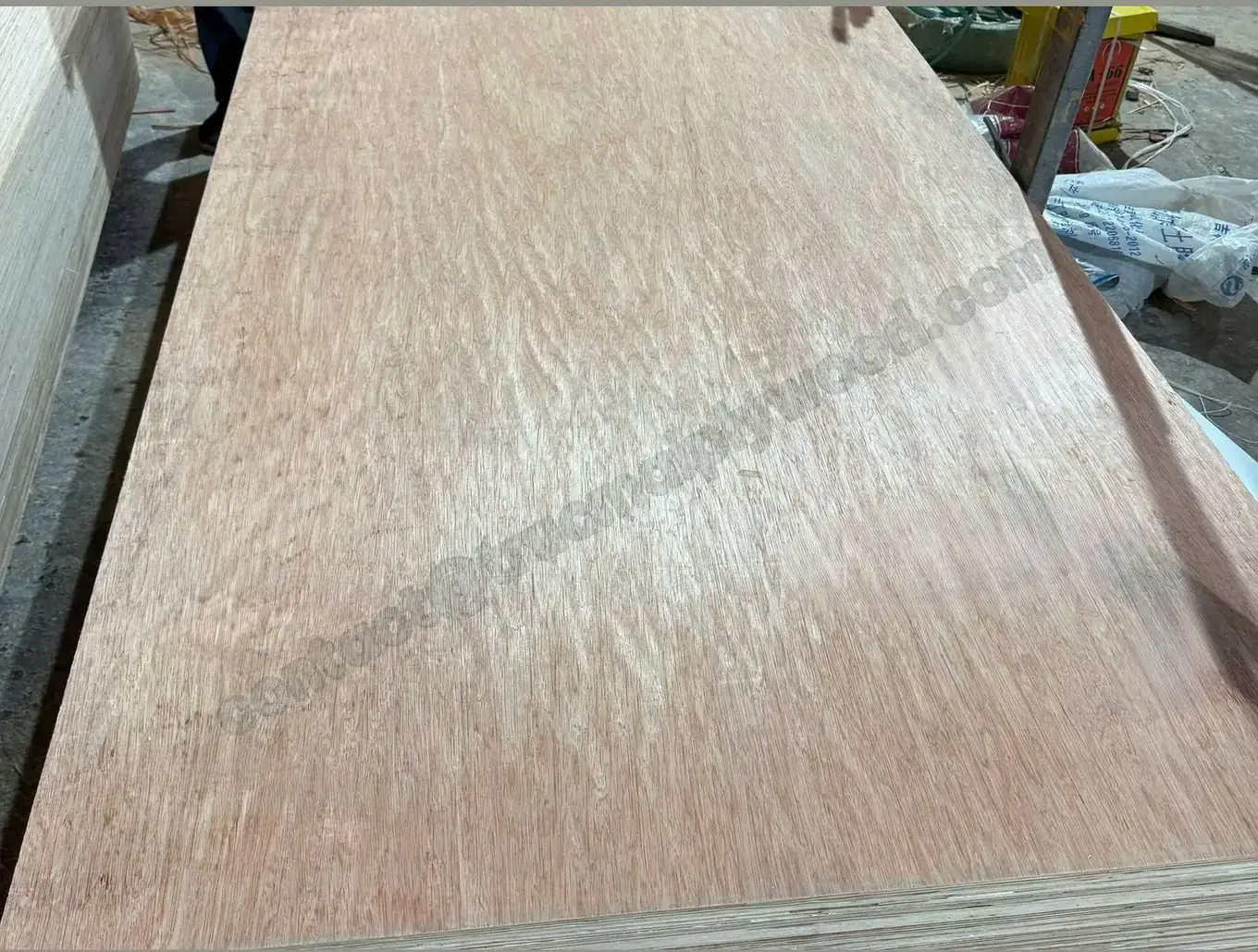
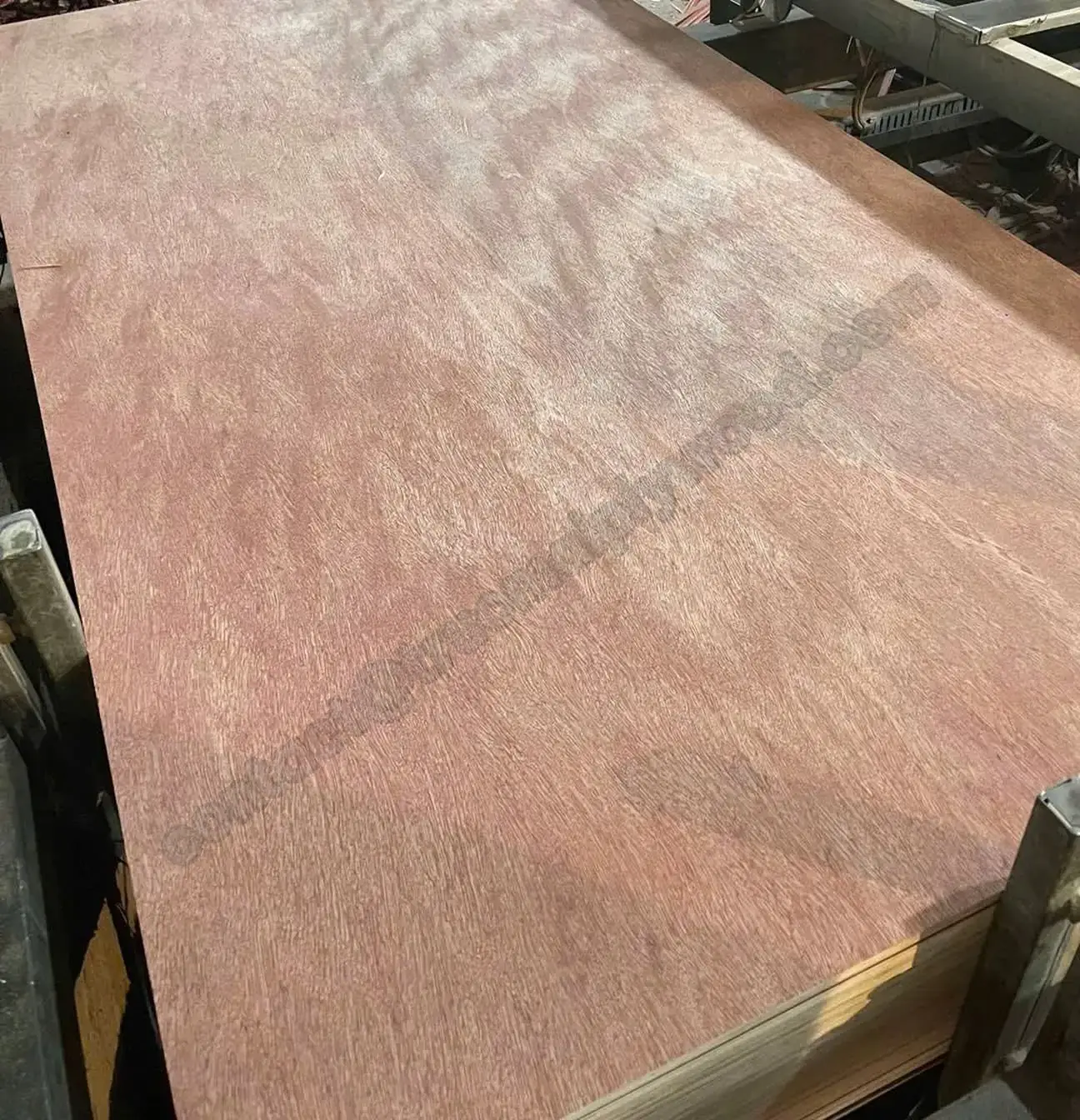
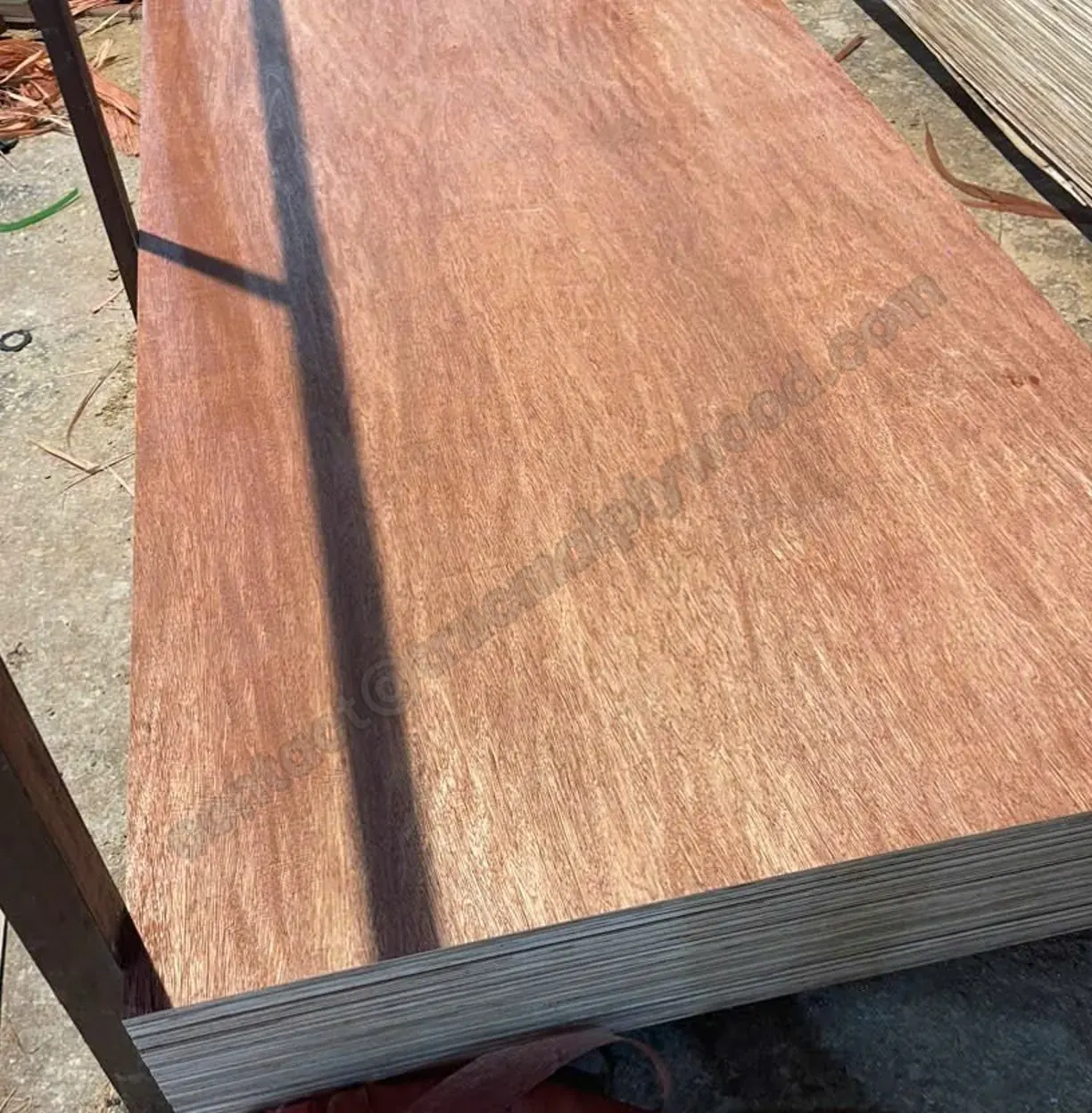
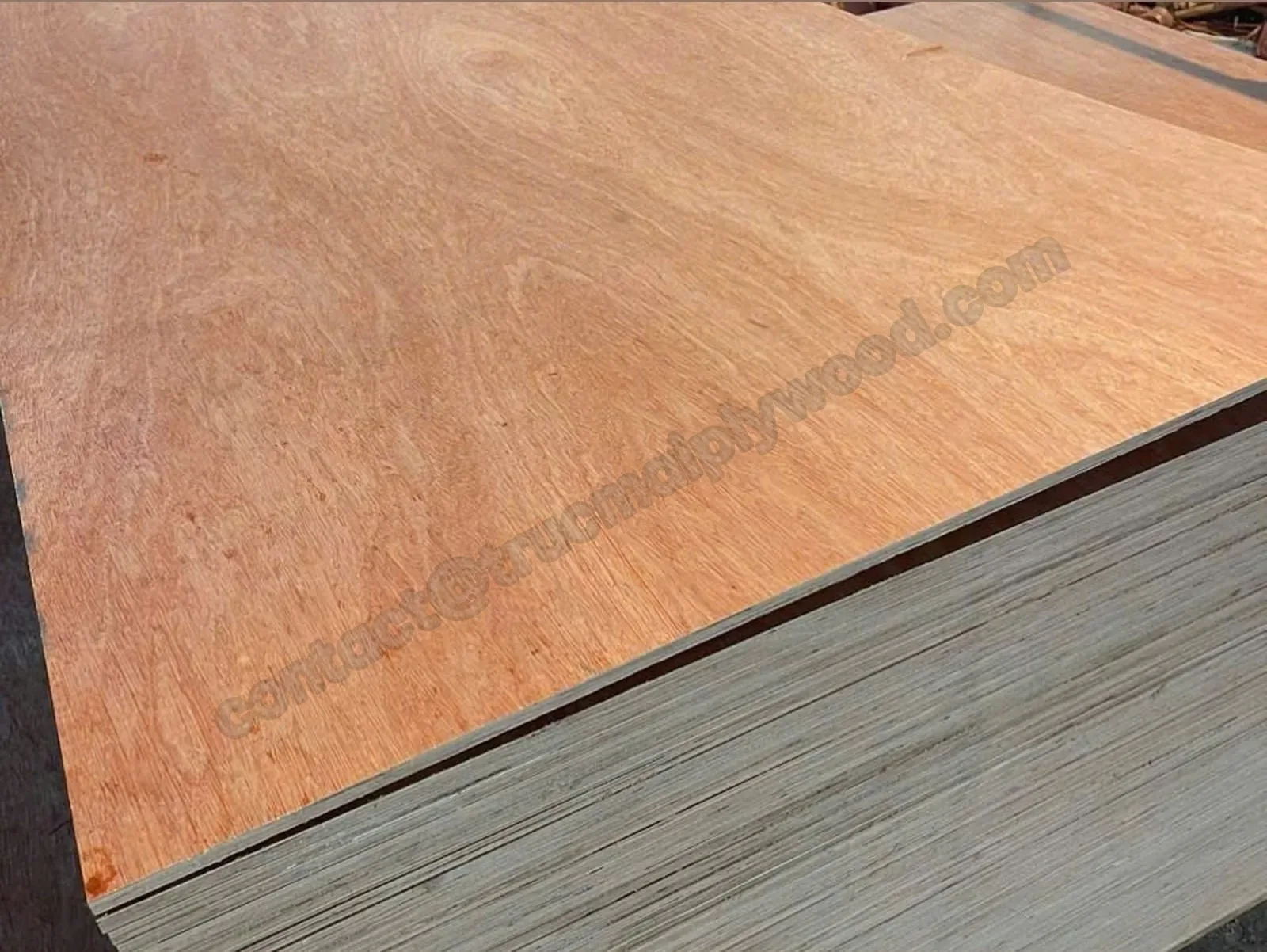
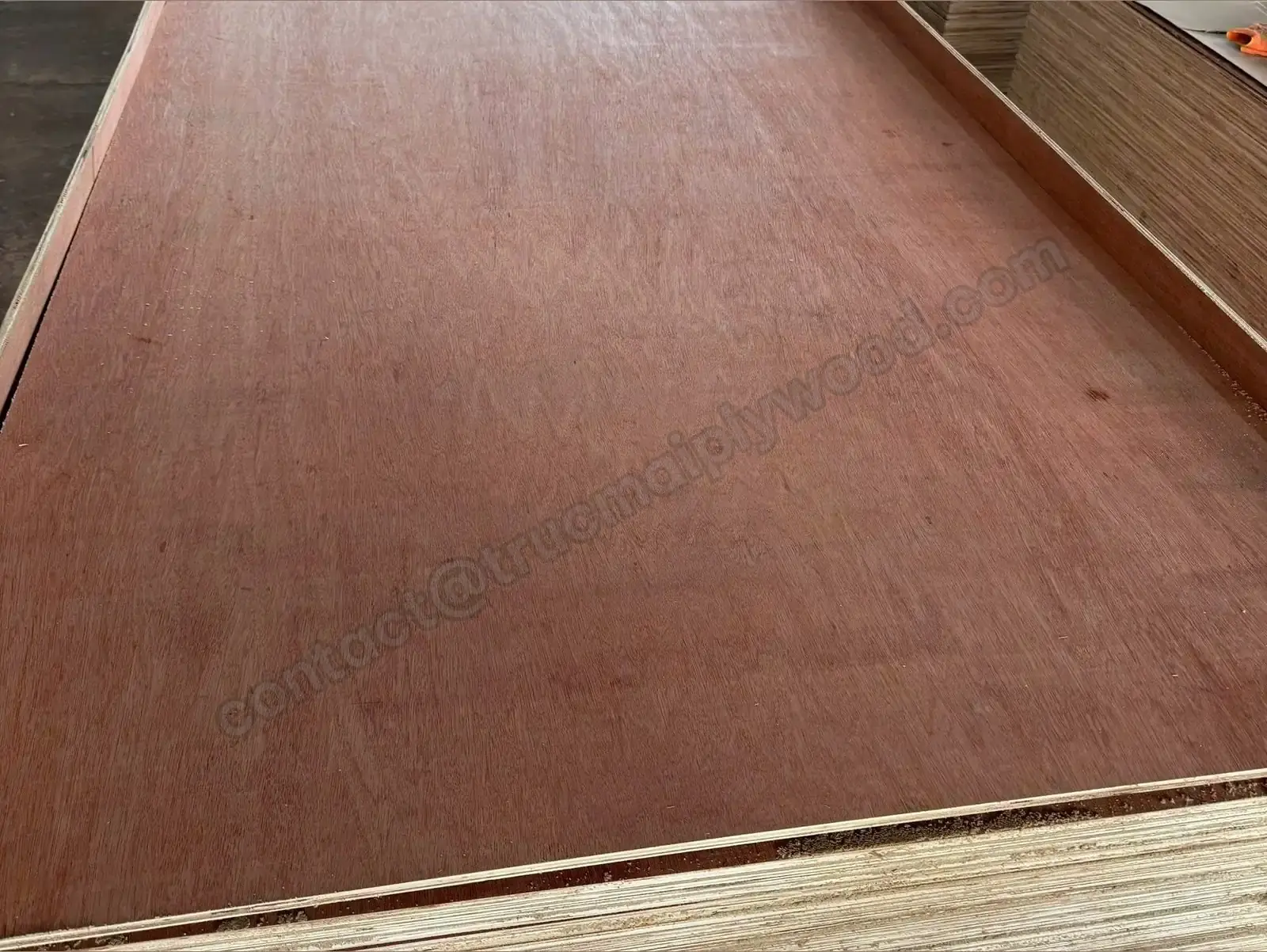
Bintangor peels into face veneer with a fine, interlocked figure and a colour that runs from pink-red to deep red-brown. It is harder than okoume and poplar, so it takes knocks in handling and on site, and its warm colour hides small marks that a pale face would show.
The name is often misspelled bingtangor. Buyers in Europe, the Gulf and the US know the panel as a commercial plywood with a red face, and the word bintangor on an offer tells them the face species, not the core.
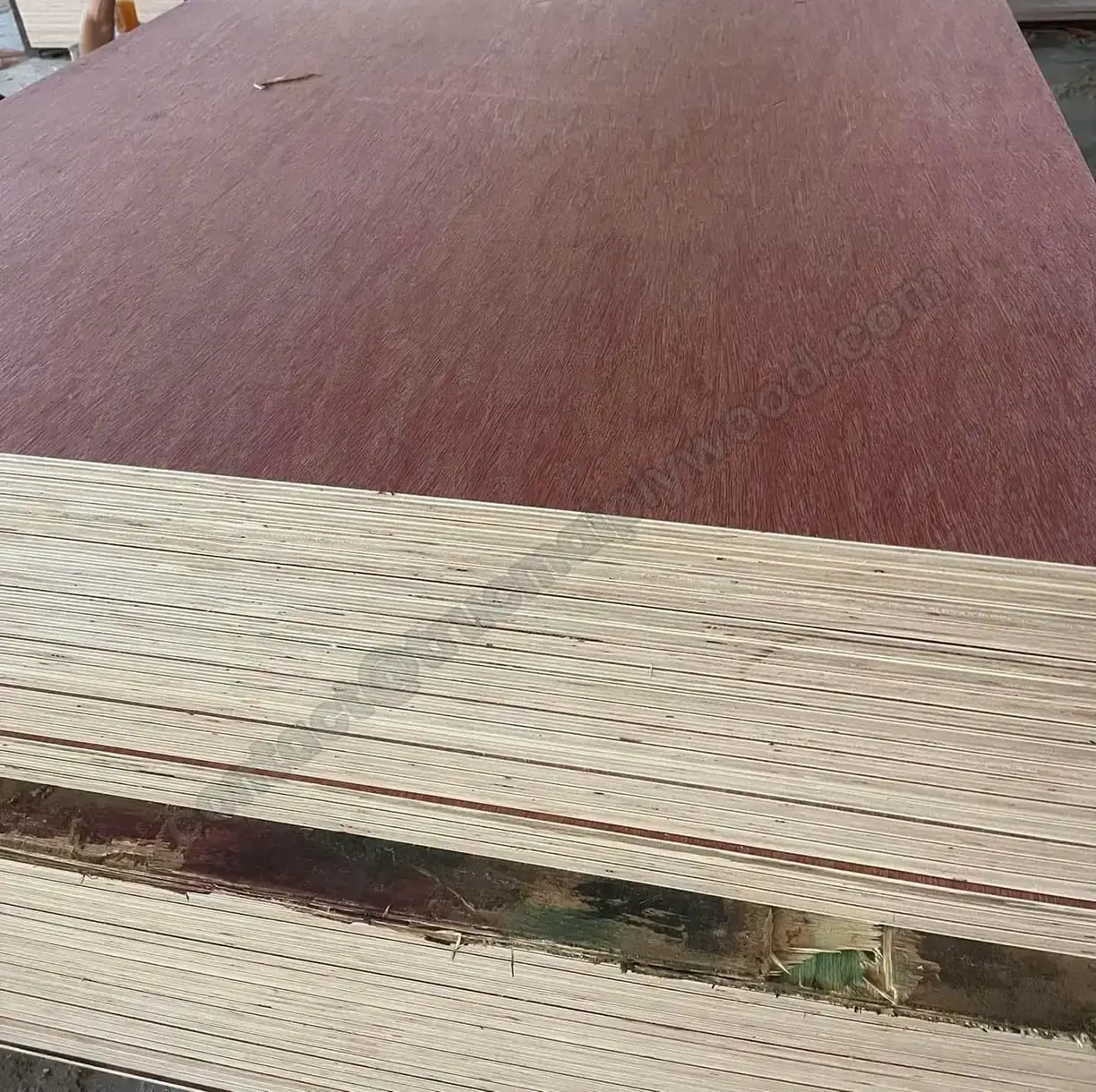
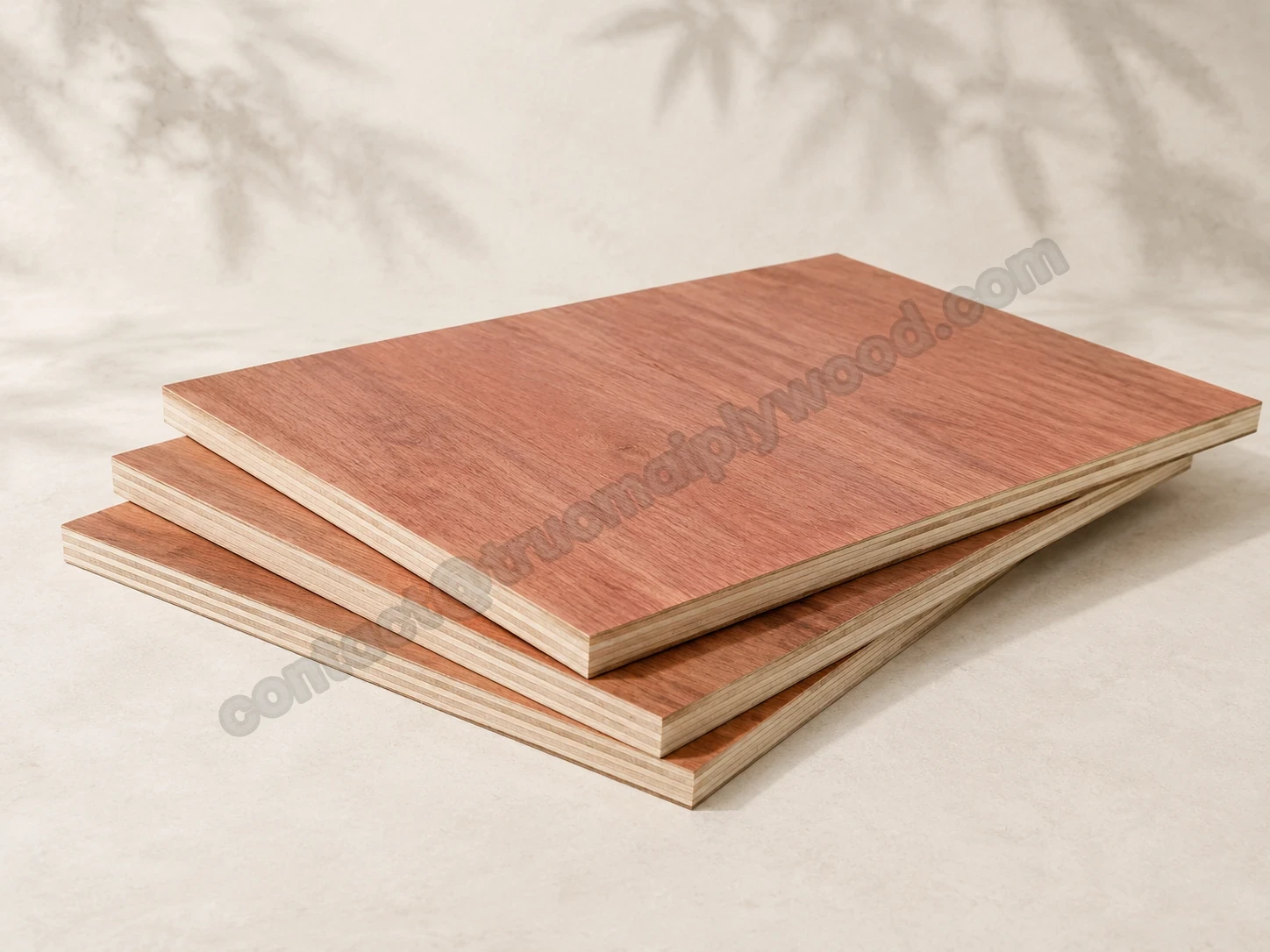
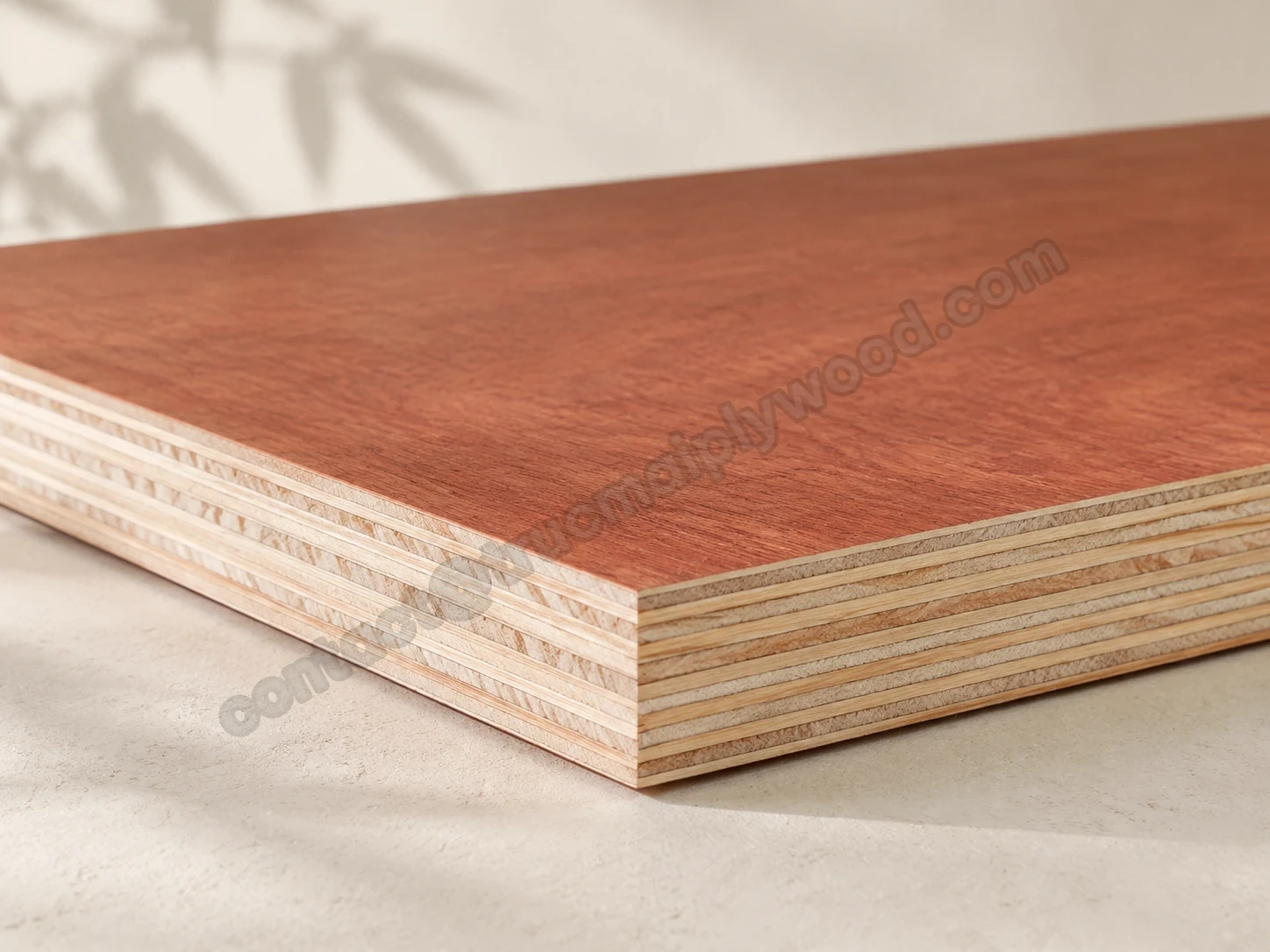
The photos below show bintangor-faced sheets at the mill: the red-brown face with its fine ribbon figure, and the thin plies of the core along the edge. Faces are sorted on the face grading line before lay-up, so one order's faces are kept together.
Bintangor in Vietnam is used only as a face. No Vietnamese mill peels it for core veneer, which is why every honest bintangor offer names a second species for the core.
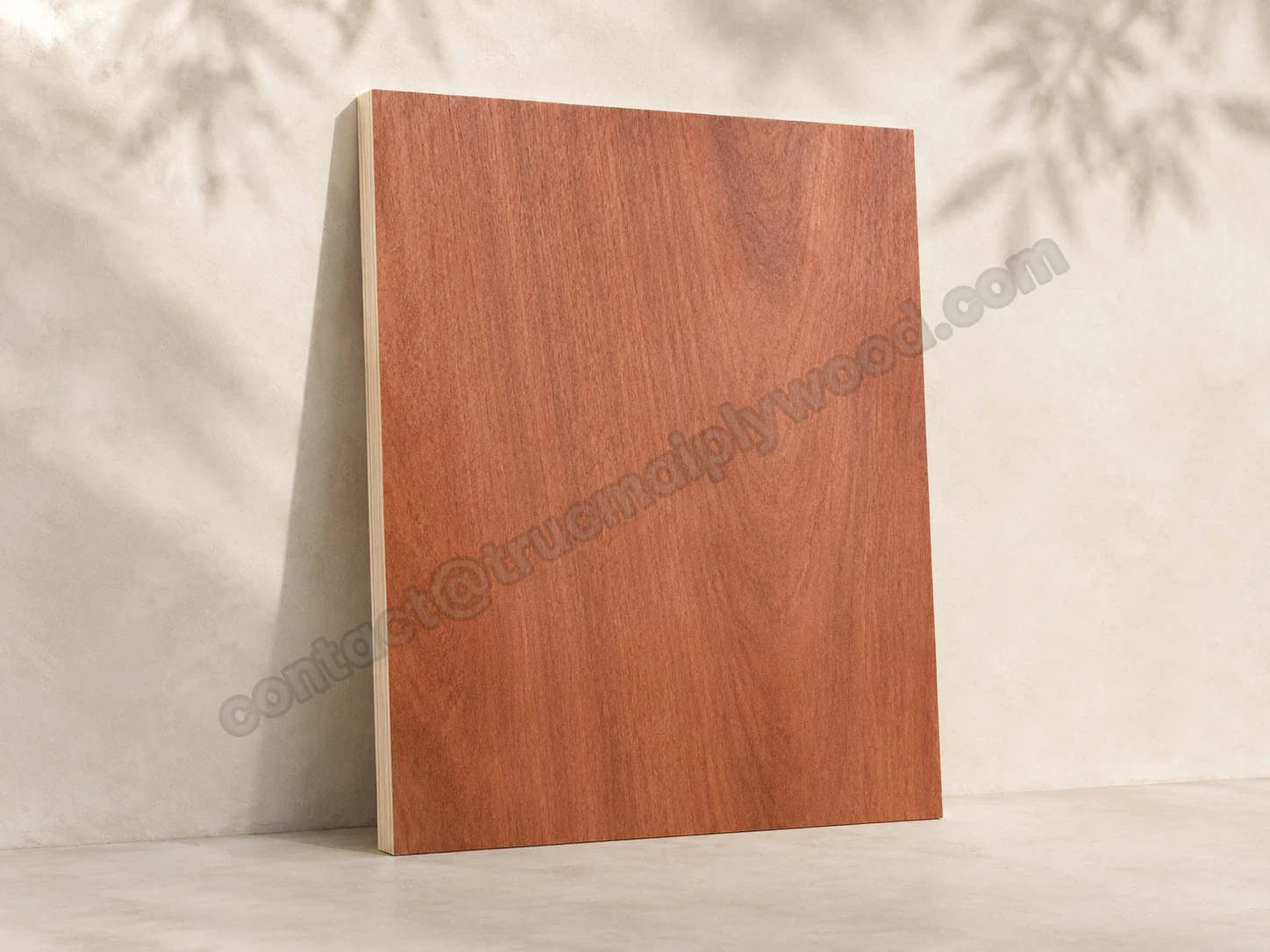
Look at a bintangor sample in daylight before judging its colour. Under warm warehouse lamps a red-brown face looks redder than it is, and two sheets that match outdoors can seem to differ indoors. Our approved sample is photographed in daylight for the same reason.
Bintangor face veneer is peeled on a rotary lathe, like okoume and birch, which gives the wide, continuous sheet needed for a 4 × 8 ft face. Its interlocked grain shows as a fine ribbon in raking light, and it sands to a smooth, closed surface that takes a clear coat without much filling.
Specification
Bintangor plywood sheets: the specification behind a quotation
A bintangor quotation names the build first, commercial or furniture, and then each line below. Every line goes onto the proforma invoice, and a monthly reorder copies the lines unchanged.
The commercial build is what most distributors stock. It is a sound, flat panel at a container price, with the faces left as pressed or given a light sanding. The furniture build costs more because the core is graded A and stitched, and both faces are calibrated.
Bintangor also appears on our packing-grade panels, where an AB loose-laid core and usually E2 emission keep the cost down for crates and pallets. That panel is a different product with its own page; this page covers the commercial and furniture builds.
Two bintangor offers can carry the same name and still be different panels. Read each offer for the core species and grade, how the core veneers are joined, whether the faces are sanded, the glue and emission class, and the thickness tolerance. A low price usually sits in one of those lines, and our quotation names each of them.
Ask for the furniture build when the face will be finished or seen, and the commercial build when it will be covered, painted or used as stock for resale. A buyer who is unsure can take one pack of each in the first container and decide from what its own customers choose.
Formats, thicknesses and builds can be mixed in one programme, but each combination is its own line on the order with its own sheet count. A clear order with few lines loads faster and is checked more easily than one with many small lines.
- Face veneer Bintangor, 0.2–0.5 mm, face and back priced as a pair and matched to the approved sample
- Core Styrax, Acacia, Eucalyptus or a combination; no rubberwood
- Commercial build AB core laid loose or jointed; faces unsanded or lightly sanded; ±0.5 mm
- Furniture build A-grade core, stitched; both faces sanded and calibrated; ±0.3 mm
- Thickness chart 3 · 4 · 5 · 6 · 9 · 12 · 15 · 18 · 21 · 25 · 30 · 40 mm
- Plies 5 in every sheet from 3 mm to 5 mm; 11–13 at 18 mm
- Formats 1220 × 2440 mm, 1250 × 2500 mm, 1220 × 2280 mm; ±2 mm
- Glue UF at E0 emission; melamine-fortified UF where a twelve-hour boil is needed (then normally E1)
- US formaldehyde scope 3–25 mm panels; 30 and 40 mm outside
- Pack marks Face, build, thickness, size and sheet count on each pack
Grades and sanding
Is bintangor plywood available sanded on both sides?
Yes. The furniture build is calibration-sanded on both faces to ±0.3 mm; the commercial build is left unsanded or lightly sanded at ±0.5 mm unless the order asks for more. The face pair is written against an approved sample.
Face and back are quoted as pairs and fixed against an approved sample, not against a letter code that means different things at different mills. Our batch checks compare sheets from each run with that sample before they are packed.
Sanding on both sides adds a step and takes a little thickness off the faces, so a sanded 18 mm sheet is calibrated to its nominal thickness from a slightly thicker pressing. That is why the sanded build holds ±0.3 mm and the unsanded build is written at ±0.5 mm.
Distributors often stock both: sanded clear pairs for joiners and furniture shops, and the commercial sound pair for builders and general use.
Patches are small pieces of veneer set into the face where a knot or split was cut out. On a sound pair they are allowed if they sit flush and match the face colour reasonably; on a clear pair they are rare. The approved sample shows how many patches your pair allows, so nobody argues about a letter after delivery.
A red face hides some colour variation that a pale face would show, which is one reason commercial buyers like bintangor. For a clear-coated product line, though, ask for faces sorted into one colour band, and the order notes it.
- Clear bintangor pair, sanded
Even red-brown on both sides, very few closed marks, calibrated flat. Furniture and joinery with both faces on show, stained or clear-coated.
- Clear face, sound back
Clear red-brown face; the back may show colour change, small closed knots and patches. Cabinet carcasses and wall units with one visible face.
- Sound pair, commercial
Colour variation and closed defects on both faces, patched and flat, no open splits. Distributor stock, painted work and general interior panels.
Cores
Which cores can carry a bintangor face?
Styrax, Acacia, Eucalyptus or a combined core. Styrax makes the lightest bintangor sheet and fills about 53 m³ of a 40HC; Acacia and Eucalyptus make a heavier, harder panel that holds screws better but loads fewer m³.
The figures in this table are planning numbers from reference densities, panels only, for the European 1250 × 2500 mm sheet. Measured Eucalyptus can run 650–750 kg/m³, so real sheets are weighed before final loading.
On a pale Styrax core, the edge under a red bintangor face shows a clear two-tone line. On Eucalyptus the plies are pink-brown and blend with the face. If edges stay visible in your product, choose the core with the edge in mind.
Gurjan-faced plywood is the other dark red-brown face buyers compare with bintangor. It sits on the same cores; the faces differ in figure and hardness, and the order names the species.
A combined core puts a harder species next to each face and a lighter one in the middle. Under bintangor, Eucalyptus outer plies over a Styrax centre give a firm face and better screw holding near the surface, at a weight between the two single-species cores. The combination is written on the order and repeated on every reorder.
Kitchen and furniture buyers moving a bintangor build from Acacia to Styrax usually gain a lighter sheet and more cubic metres per container. The cost is screw holding at the edge, so keep Acacia or Eucalyptus where hinges, runners or cam fittings sit close to it.
Whatever the core, the plies are laid cross-wise, each ply at a right angle to the next, and the outer plies of a furniture build are stitched across and along the sheet. That cross-laid, stitched core keeps a bintangor panel flat after it is cut into parts.
| Core | Reference density | 18 mm sheet, 1250 × 2500 mm | m³ per 40HC at 18 mm | Pick it when |
|---|---|---|---|---|
| Styrax | 500 kg/m³ | 28.1 kg | About 55.7 (1250 × 2500) | Weight and container fill matter most |
| Acacia | 580 kg/m³ | 32.6 kg | About 47.7 (1250 × 2500) | Carcasses need firm screw holding |
| Eucalyptus | 650 kg/m³ | 36.6 kg | About 43.0 (1250 × 2500) | Shelves and tops need a hard, heavy panel |
Glue and emission
Which glue and emission class go on a bintangor order?
Glue type and emission class are two separate lines on the order. For kitchen carcasses in humid rooms the second line matters most: the default is UF glue at E0 emission, and a melamine-fortified glue for damp rooms usually gives E1.
Bintangor panels of 3–25 mm are inside the US formaldehyde scope under certificate 26053; 30 and 40 mm bintangor panels are not.
For kitchen work, write the twelve-hour boil on the order: the glue line, not the hard face, decides how the panel survives steam and spills. How the class is chosen is on emission class per order.
| Market or room | Glue | Emission on the order | Boil test |
|---|---|---|---|
| Dry interiors, EU and Gulf | UF | E0 | About six hours |
| Kitchens and humid rooms | UF with melamine | Normally E1 | Twelve hours |
| US lots, 3–25 mm | UF | CARB P2 / TSCA Title VI | About six hours |
| Crates and pallets | Packing-grade build | Usually E2 | By order |
Thickness chart
What thickness tolerance applies to commercial bintangor panels?
Commercial bintangor panels are written at ±0.5 mm on thickness and ±2 mm on length and width. The sanded furniture build is ±0.3 mm. Thicknesses run from 3 mm to 40 mm in twelve steps.
Three formats are pressed: 1220 × 2440 mm, 1250 × 2500 mm and 1220 × 2280 mm, plus custom sizes up to 1250 × 2500 mm. Thin panels of 3–6 mm have their own page because their ply build and lead time differ.
Panels can also be cut at the mill into 2, 3, 4 or 6 parts per sheet and packed by part. That suits furniture factories that would otherwise ship offcuts across the sea.
Measure thickness at several points after the sheets have rested in your warehouse. For a commercial order, judge the sheet at ±0.5 mm; the sanded tolerance applies only to the furniture build.
The 1220 × 2280 mm sheet suits kitchen and wardrobe factories whose carcass sides fit the shorter length; it saves an offcut on every sheet. Check a typical cutting list against all three formats before fixing the size for a monthly programme.
Length and width are trimmed square on a double-end saw after pressing, and each pack carries one size only. If a container must carry two sizes of the same bintangor build, they are packed and labelled separately.
For the US, the 4 × 8 ft sheet of 1220 × 2440 mm is standard. Bintangor panels of 30 mm and 40 mm are sold without the US formaldehyde label, so a US programme stays at 25 mm and below.
- 3, 4, 5, 6 mm Thin panels for backs, drawer bottoms and linings; always 5 plies up to 5 mm
- 9, 12 mm Drawer sides, partitions and panelling
- 15, 18 mm Carcasses, shelves and the main stock thickness
- 21, 25 mm Tops and heavy shelves; inside the US formaldehyde scope
- 30, 40 mm Thick sections; outside the US formaldehyde scope
| Bintangor build | Thickness | Length and width | Written on |
|---|---|---|---|
| Commercial | ±0.5 mm | ±2 mm | Each order |
| Furniture, sanded both sides | ±0.3 mm | ±2 mm | Each order |
| Agreed between the two | ±0.3–0.5 mm | ±2 mm | Each order |
Uses
Where is bintangor plywood used: kitchen cabinets, furniture and commercial stock?
Bintangor plywood goes into kitchen cabinet carcasses and backs, furniture backs and drawer bottoms, shop and office fit-out, and general commercial stock. Buyers pick it for a hard, warm-coloured face that tolerates handling.
Bintangor-faced sheets belong to the commercial line and also to our furniture and interior plywood line when the furniture build is ordered. The face is the same; the core grade, stitching and sanding change.
A bintangor programme usually repeats one container a month with the same three or four thicknesses. Keeping the thicknesses fixed lets the mill plan face sorting ahead, so the colour of the faces stays close from one month to the next.
For kitchen work, specify where hinges and drawer runners are fixed. A screw near the edge of a Styrax-core panel holds less well than in Acacia, and the core is cheaper to change at the order stage than after the cabinets are built.
For painted furniture, a bintangor face needs a primer that blocks its red colour, especially under a white topcoat. Many buyers therefore use bintangor for carcasses, backs and shelves that stay unpainted or are clear-coated, and a poplar face for painted doors in the same container.
Shop and office fit-out companies like bintangor for counters, partitions and wall panels because the face takes the knocks of installation. A sanded clear pair on a Styrax core keeps the sheets light enough for two people to carry on site.
Buyers who make flat-pack furniture use 15 mm and 18 mm bintangor for visible carcass parts and 3–5 mm for backs, and ask for parts cut at the mill to save freight on offcuts. Each part pack is labelled by part, so the assembly line can draw from it directly.
For kitchen cabinets, the common pattern is 18 mm bintangor on Acacia for carcass sides, 15 mm for shelves and 3–5 mm for backs. All three thicknesses travel in one container, and the backs match the sides in colour because they come from the same face sorting.
- Kitchen cabinets
18 mm carcasses and shelves on Acacia or Eucalyptus core, 3–6 mm backs, and the twelve-hour boil glue for humid kitchens.
- Furniture backs and drawer bottoms
Thin bintangor panels in the same container as the carcass sheets, so the colour of back and side match.
- Commercial stock
The commercial build in 9, 12 and 18 mm for merchants who resell red-faced plywood one sheet at a time.
- Fit-out and joinery
Sanded clear pairs for shop counters, wall panels and joinery that keep the red-brown face under a clear coat.
Compare
Bintangor vs okoume plywood, and against a poplar face
Bintangor is redder, denser and harder than okoume; okoume is lighter in colour and softer. Poplar is the pale face for painted or laminated work. All three go on the same Vietnamese cores, so the face is the only change.
Our okoume plywood page covers the softer, lighter face in the same commercial and furniture builds. Many buyers stock both and let customers choose by colour.
Poplar plywood is the choice when the face will disappear under paint or laminate. On a white finish a red bintangor face can show through thin paint, so it needs a primer that a poplar face does not.
Some buyers compare bintangor plywood with MDF or particleboard. Bintangor plywood is lighter for the same stiffness, holds screws in its face and edge better and survives handling; MDF gives a flatter surface for paint and costs less. The finish decides more often than the price.
Price follows the face and the build. A bintangor face usually costs more than poplar veneer and about the same as okoume, while the sanded furniture build adds core grading, stitching and calibration to any face. Compare offers with the same build before comparing face species.
Gurjan-faced plywood is the other dark, hard face. Gurjan tends to be browner with a straighter figure, bintangor redder with a finer, interlocked figure. Both suit commercial stock; the choice is usually what the buyer's own market already knows.
A buyer switching an existing line from okoume to bintangor should expect a darker, harder face and slightly more weight per sheet only if the core changes too. On the same core, the two faces load the same number of sheets per container, because the face veneer is too thin to change the weight much.
| Face | Colour | Hardness of face | Typical finish | Stocked by |
|---|---|---|---|---|
| Bintangor | Pink-red to red-brown | Hard | Clear, stain or left as pressed | Commercial distributors, kitchen makers |
| Okoume | Salmon to pink-brown | Soft to medium | Stain or clear coat | Joiners and interior fit-out |
| Poplar | Cream to pale grey | Soft | Paint, laminate or overlay | Painted furniture makers |
| Gurjan | Red-brown | Hard | Clear or stain | Buyers wanting a dark hard face |
Checks
What is checked differently on a bintangor order?
A bintangor order is sorted by colour band and by build. The face runs from pink-red to deep red-brown from log to log, and its warm colour hides sanding faults that show later under a clear coat.
Arrival checks against the kept sample are on repeat-spec control.
Faces for one order are kept in one colour band of the approved pair; a sheet outside the band moves to another order before packing.
Faces for clear-coated lines are checked in raking daylight for sanding marks that the red colour hides indoors.
On a pale Styrax core, the two-tone edge line is checked for an even face along the sheet.
Each pack label names the commercial or furniture build, and thickness is judged at ±0.5 mm or ±0.3 mm to match.
Certificates
Bintangor plywood certificates a buyer can check
FSC, CARB P2, ISO 9001 and ISO 14001, plus EU file sets.
- FSC 100% FSC-C196493 · SA-COC-014545
- CARB P2 and TSCA Title VI CARB/EPA 26053 · TPC-43
- ISO 9001:2015 W2012 · WCERT
- ISO 14001:2015 W2012E · WCERT
Container
How many 18 mm bintangor-faced sheets fit in a 40HC?
On a Styrax core, about 990 sheets of 18 mm in 1220 × 2440 mm, filling about 53.0 m³; on Acacia about 880 and on Eucalyptus about 795. Sheet counts and weights are planning figures from our packing model, panels only, not a loading record.
A bintangor load on Styrax is volume-capped near 53–54 m³; on Acacia or Eucalyptus the heavier sheet reaches the weight limit first. The carrier and route decide the final payload. Bintangor often shares the box with okoume, the other commercial face, or with thin backs of 3–5 mm for the same cabinet line, each in its own labelled packs. Use the 40HC load calculator for other mixes; export crates shows how packs are strapped.
| Bintangor on Styrax, 1220 × 2440 mm | Packs × sheets | Sheets per 40HC | m³ | kg per sheet |
|---|---|---|---|---|
| 3 mm | 18 × 333 | 5,994 | 53.5 | 4.5 |
| 4 mm | 18 × 250 | 4,500 | 53.6 | 6.0 |
| 6 mm | 18 × 166 | 2,988 | 53.4 | 8.9 |
| 15 mm | 18 × 66 | 1,188 | 53.0 | 22.3 |
| 18 mm | 18 × 55 | 990 | 53.0 | 26.8 |
| 21 mm | 18 × 47 | 846 | 52.9 | 31.3 |
Terms
Terms for bintangor plywood by the container
Full containers direct from the mill; these terms apply unless the contract says otherwise.
Full terms are on MOQ, payment and FOB. Bintangor and okoume packs in one container appear as separate lines on the packing list.
- Minimum order One 40HC
- Production time 15–45 days after the 30% deposit, by quantity and agreement
- Payment 30% deposit; 70% against the scanned B/L by T/T, or irrevocable L/C at sight
- Delivery terms FOB Hai Phong, CFR or CIF
- Documents Invoice, packing list, B/L, certificate of origin, phytosanitary, fumigation, order certificates
- Price Quoted per order against the written specification
Ordering
Ordering from a bintangor plywood 18 mm supplier: what to send
A bintangor quotation needs four answers.
Deposit, documents and balance follow from enquiry to loading.
Commercial or furniture build, and which faces will be clear-coated.
The core under the face: Styrax, Acacia, Eucalyptus or combined.
Thicknesses and sheet size per container, including any thin backs.
A sample of each face pair you will stock, approved before production.
FAQ
Bintangor plywood questions from distributors and cabinet makers
Which cores can carry a bintangor face?
Styrax, Acacia, Eucalyptus or a combined core. Acacia is a standard third core at Truc Mai: about 880 sheets of 18 mm per 40HC at about 31.1 kg, between Styrax at 990 sheets and Eucalyptus at 795.
How many 18 mm bintangor-faced sheets fit in a 40HC?
About 990 on Styrax, 880 on Acacia in 16 packs and 795 on Eucalyptus, for 1220 × 2440 mm, as planning figures. The face veneer is too thin to change the count; the core decides it.
Is bintangor plywood available sanded on both sides?
Yes, in the furniture build: an A-grade stitched core with both faces calibration-sanded to ±0.3 mm. The commercial build is unsanded or lightly sanded at ±0.5 mm unless the order says otherwise.
What thickness tolerance applies to commercial bintangor panels?
±0.5 mm, with length and width at ±2 mm. Any build can be agreed between ±0.3 mm and ±0.5 mm, and the figure is written on each order.
Can bintangor and okoume faces share one container?
Yes. One or two products per container is normal and three to six can be mixed by agreement; each face keeps its own labelled packs and its own line on the packing list.
Is bintangor plywood good for kitchen cabinets?
Yes, for carcasses, backs and shelves. Use an Acacia or Eucalyptus core where hinges and runners are fixed, and the twelve-hour boil glue for humid kitchens.
Why does a bintangor edge look two-tone on a Styrax core?
Styrax plies are almost white and the face is red-brown, so the edge shows a sharp line. On Eucalyptus the pink-brown plies blend with the face, so choose the core with visible edges in mind.
Do 30 and 40 mm bintangor panels carry the US formaldehyde label?
No. Certificate 26053 covers hardwood plywood with veneer core of 3–25 mm and 3–15 plies; 30 and 40 mm bintangor panels are sold without that label.
Does a bintangor face need a primer under white paint?
Yes. The red face can show through a thin white topcoat, so use a stain-blocking primer, or put a poplar face on the painted doors in the same container.
Why can two bintangor containers differ in colour?
Bintangor runs from pink-red to deep red-brown from log to log. Each order's faces are kept in one band of that range, shown by the approved sample, and a sheet outside it goes to another order.
Can bintangor be ordered in the 1220 × 2280 mm sheet?
Yes. Kitchen and wardrobe factories whose carcass sides fit the shorter length use it to save an offcut on every sheet; it is a standard format next to 1220 × 2440 and 1250 × 2500 mm.
When is gurjan the better buy than bintangor?
When your market knows a browner, straighter-figured hard face. Gurjan and bintangor sit on the same cores and builds, so the choice is colour and figure, not load or price per container.
Quotation
Request a bintangor plywood quotation
Send the build, core, thicknesses, size and number of containers, and Lucy replies with a written specification and price. Write to contact@trucmaiplywood.com or use the quotation form.
Red-brown bintangor face on Styrax, Acacia or Eucalyptus core, 3–40 mm, ±0.5 mm commercial or ±0.3 mm sanded.