
CARB P2 · TSCA Title VI · Vietnam
CARB certified plywood from Vietnam: P2 and TSCA Title VI, certificate CARB/EPA 26053, 3–25 mm
Yes, Truc Mai supplies CARB certified plywood with CARB P2 and TSCA Title VI. ICTT Corporation (TPC-43) certified the mill's hardwood plywood with veneer core, 3–25 mm, under certificate CARB/EPA 26053. The certificate copy and the label details go to a US buyer with the quotation.
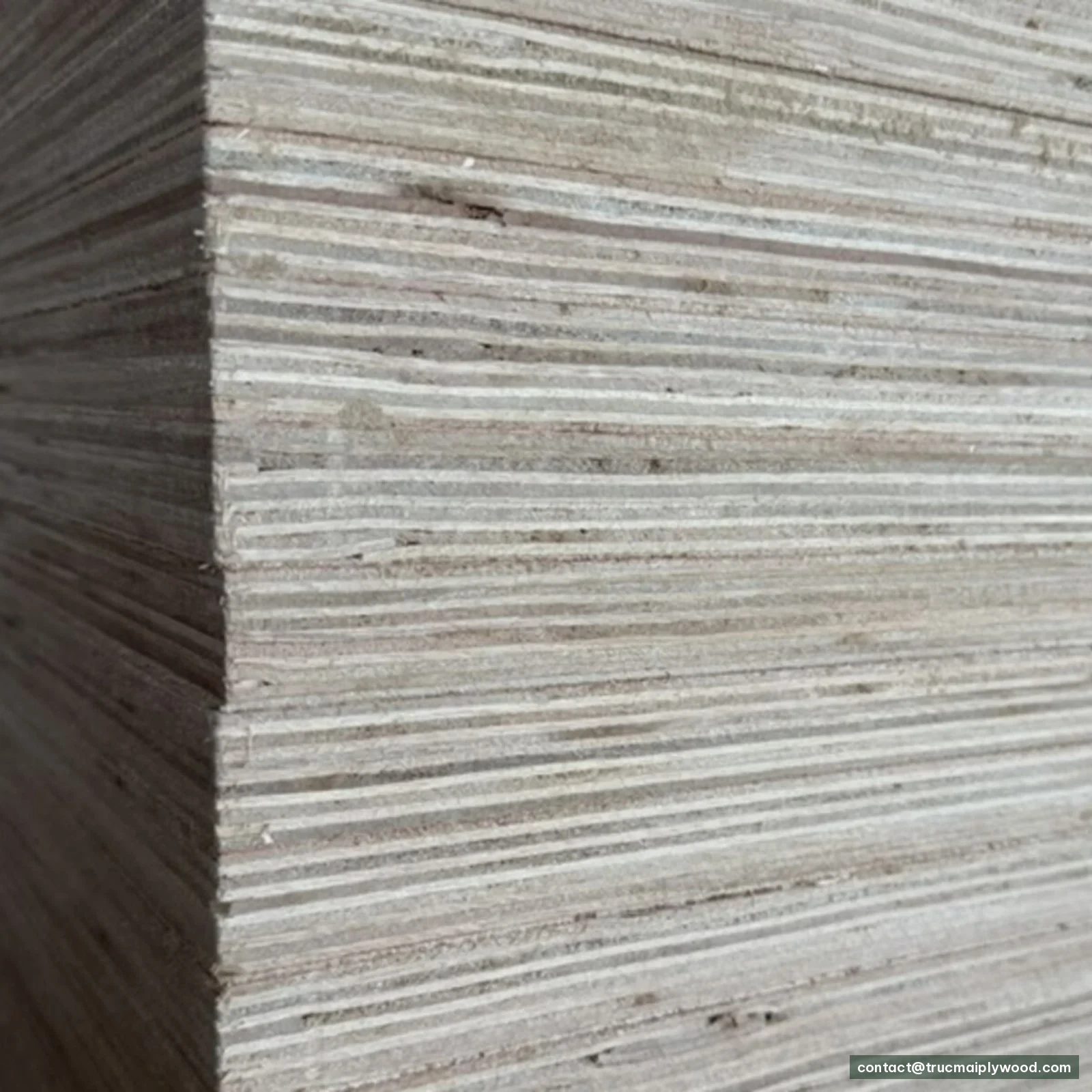
- CARB/EPA 26053certificate
- ICTT-26053mill number
- HWPW-VCproduct type
- 3–25 mmthickness scope
- 0.05 ppmlimit for this type
Updated 12 November 2026
Film
This certificate in a short film
Short answer
What is CARB P2 wood, and is Truc Mai certified?
Yes. Truc Mai holds a CARB Phase 2 and TSCA Title VI certificate, number CARB/EPA 26053, for hardwood plywood with a veneer core from 3 mm to 25 mm thick. ICTT Corporation, an approved third-party certifier, issued it in the name of Truc Mai.
CARB P2 means the plywood meets Phase 2 of the California Air Resources Board rule that limits formaldehyde released by composite wood. For hardwood plywood with a veneer core the limit is 0.05 ppm in the chamber test. TSCA Title VI is the federal version of the same rule, written by the US Environmental Protection Agency, and it sets the same limit.
A panel is certified when a third-party certifier has approved the mill's resin system and quality control, and the mill labels each pack with its producer name or number, the lot and the certifier number. The test paper alone is not the certification: the certificate, the mill's own control testing and the label work together.
For the mill in Ha Hoa the product type is HWPW-VC, which is hardwood plywood with a veneer core, from 3 to 15 plies. Thickness outside 3–25 mm, such as the 30 and 40 mm panels, is outside the scope of this certificate, and those panels are not sold as CARB or TSCA certified.
US buyers ask for the same file again and again: the certificate number, the certifier, the product type and the label. This page shows the certificate as issued, what the rule requires and how to check it yourself.
- Certificate CARB/EPA 26053
- Mill number ICTT-26053
- Certifier ICTT Corporation, third-party certifier TPC-43
- Emission level CARB Phase 2 and TSCA Title VI
- Product type HWPW-VC, hardwood plywood with veneer core
- Thickness and plies 3–25 mm, 3–15 plies
- Rules covered 17 CCR sections 93120–93120.12 and 40 CFR part 770
- Outside scope Panels thicker than 25 mm
- USA hardwood plywood
The document is shown below as issued, with the dates lightly blurred. The full copy goes out by email with the quotation.
Certificate as issued
What does the Truc Mai CARB P2 and TSCA Title VI certificate look like?
This is the certificate itself, not a logo. It carries the certificate number, the mill number, the product type and thickness range, the two rules it covers and the certifier's QR code.
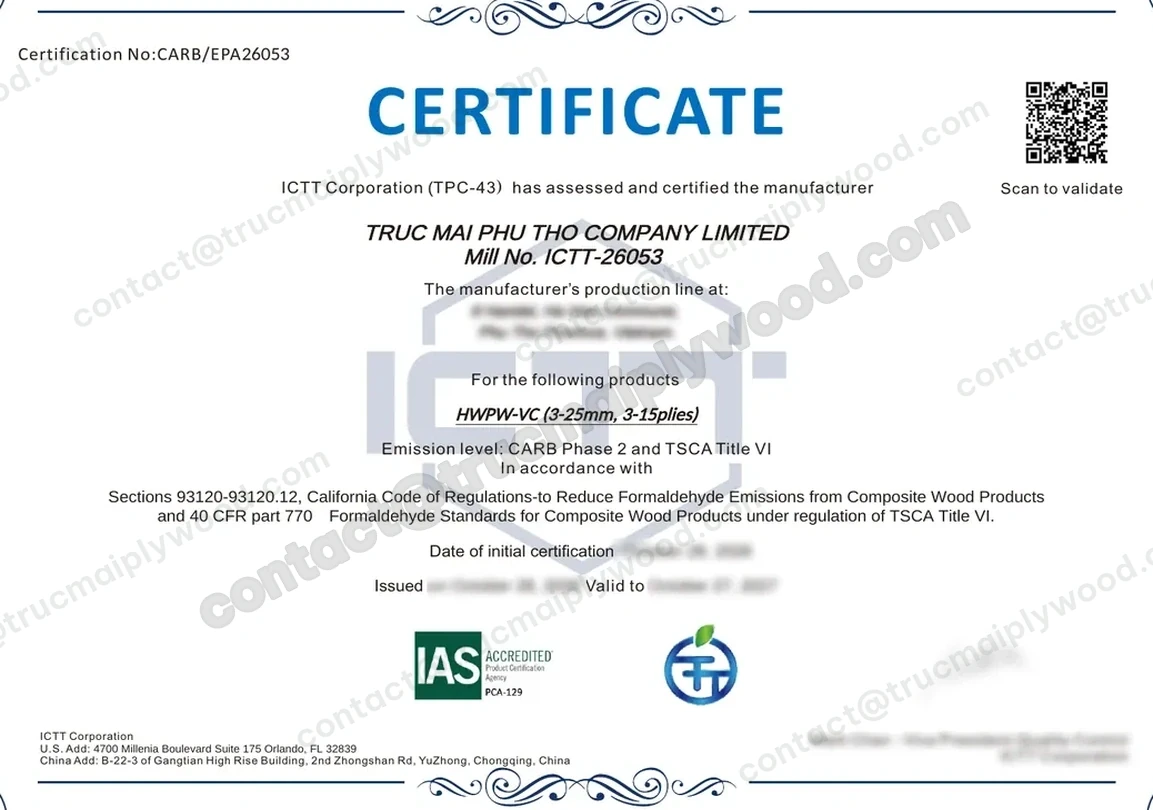 CARB Phase 2 and TSCA Title VI certificate
CARB/EPA 26053 · mill ICTT-26053 · HWPW-VC, 3–25 mm, 3–15 plies · issued by ICTT Corporation (TPC-43)
Limits and tests
What are the CARB P2 formaldehyde limits and how is plywood tested?
The limit depends on the product type, and the test is a chamber test. Hardwood plywood with a veneer core has the strictest figure of the five types, and it is the type Truc Mai is certified for.
| Product type | Limit, TSCA Title VI and CARB P2 | Test method | Truc Mai |
|---|---|---|---|
| Hardwood plywood, veneer core (HWPW-VC) | 0.05 ppm | ASTM E1333, large chamber | Certified, 3–25 mm |
| Hardwood plywood, composite core (HWPW-CC) | 0.05 ppm under the federal rule | ASTM E1333, large chamber | Not made |
| Particleboard | 0.09 ppm | ASTM E1333 | Not made |
| Medium-density fibreboard | 0.11 ppm | ASTM E1333 | Not made |
| Thin medium-density fibreboard | 0.13 ppm | ASTM E1333 | Not made |
Limits from 40 CFR 770.10 and the Phase 2 table in 17 CCR 93120.2. A second chamber method, ASTM D6007, is allowed for quality control and for certification when equivalence to E1333 is shown. Checked 12 November 2026 against the EPA page and the two regulations.
How certification works
What does a third-party certifier check before plywood is CARB P2 certified?
A mill cannot declare itself compliant. It applies to an approved third-party certifier, and the certifier checks the product, the process and the paperwork before it issues the certificate.
For a mill with no earlier certificate, the application under 40 CFR 770.15 needs the quality control manual, the name of the quality control manager, the products and the resin system used. It needs at least five emission tests run under the certifier's supervision to ASTM E1333 or ASTM D6007, and at least five quality control tests by the mill. It also needs the correlation data between the mill's own chamber and the reference method, and an on-site inspection of the mill.
After the certificate, the mill keeps testing. It runs quality control tests on production, compares them with its correlation limit, and has the certifier test regularly. If a lot fails, it is held back and treated under the rule's non-complying lot provisions; it is not shipped as certified.
The certifier then audits the mill on a fixed rhythm and keeps the certificate under review. ICTT's certificate for Truc Mai carries the accreditation mark of IAS, the product certification accreditor, so the certifier is itself accredited.
This is why the certificate number alone is not enough. A buyer should see the certificate, the product type and thickness range, and the label on the pack, and every one of them is on the document list below.
- Application
Quality manual, resin system, five supervised emission tests, five control tests, on-site inspection.
- Certificate
Product type, thickness and ply range, rules covered, mill number.
- Ongoing
Control testing at the mill, regular testing by the certifier and certifier audits.
- Label
Producer name or number, lot, certifier number, certified statement on every pack.
The standard
What do CARB P2 and TSCA Title VI require of a plywood supplier?
The two rules set identical emission levels. They differ in who enforces them and in the label, and since the end of the CARB transition in 2019 every US shipment must be certified and labelled as TSCA Title VI compliant.
| Point | CARB ATCM, Phase 2 | TSCA Title VI, 40 CFR 770 | What it means for the order |
|---|---|---|---|
| Who sets and enforces it | California Air Resources Board, 17 CCR 93120 | US EPA, with CARB-aligned limits | Same panels, two rule books |
| Plywood limit | 0.05 ppm, hardwood plywood with veneer core | 0.05 ppm, same type | One limit to meet |
| Certification | By an approved third-party certifier | By an EPA-recognised third-party certifier | A certifier such as ICTT, TPC-43, issues it |
| Label | Required in California | Panels and bundles carry producer name or number, lot, certifier number and the TSCA Title VI statement | Packs are marked before shipment |
| Who may sell | No person may sell non-complying product | Only certified product may be sold, supplied or imported | The importer of record cannot sell uncertified plywood |
| Since 22 March 2019 | Reciprocity ended for new US supply | Certified and labelled as TSCA Title VI compliant | Certificate names both rules |
Sources: 40 CFR 770.15 and 770.45, 17 CCR 93120.2, EPA page. EPA also published an update to the rule's referenced test standards in October 2026; the emission limits did not change. Checked 12 November 2026.
Markets
How does CARB P2 compare with formaldehyde rules in the EU, UK, Canada and Australia?
Each market has its own formaldehyde rule and its own test conditions. The CARB/EPA certificate answers the US rule; for other markets it sits next to the emission class written on the order.
| Market | Formaldehyde rule the importer meets | How CARB/EPA 26053 fits | What Truc Mai supplies |
|---|---|---|---|
| USA | TSCA Title VI, 40 CFR 770, and CARB Phase 2 in California | Answers the rule directly, for 3–25 mm | Certificate, label and the file set |
| EU | REACH Annex XVII entry 77: 0.062 mg/m³ for wood-based articles placed on the market after 6 August 2026 | A separate rule with its own chamber conditions: 23 °C, 45% humidity, 1 m²/m³ loading | Emission class on the order and the chamber report the buyer names |
| UK | Buyer specification and UK rules | Supports the buyer's emission requirement | Certificate copy and emission class per order |
| Canada | Federal composite wood formaldehyde rules | Supports the buyer's emission file | Certificate copy and emission class per order |
| Australia and Middle East | Buyer specification by class, E0 or E1 | Supporting file | Emission class per order |
The EU limit is a chamber result in mg/m³, not a class name. See the emission class page for how E0 and E1 are written on an order. Checked 12 November 2026 against Regulation (EU) 2023/1464.
CARB and the other papers
Does CARB P2 replace FSC, EUDR or an emission class?
No. CARB P2 and TSCA Title VI answer one question, how much formaldehyde the panel releases. A US or EU buyer asks several questions, and each has its own paper.
The FSC claim on the invoice answers the sourcing policy of a retailer or a project. The EUDR file, with plot geolocation for core and face, answers the EU deforestation rule. The emission class, E0 or E1, is a specification line that goes with the glue system and is written on every order.
For a US order the CARB/EPA certificate is the legal file, and FSC is the sourcing policy file. For an EU order the legal files are the EUDR dossier and the REACH formaldehyde limit, and the CARB/EPA certificate is supporting evidence of a controlled emission process.
Truc Mai puts these papers in one document pack per market, so a buyer's compliance team does not have to chase them one by one.
Scope
Which Truc Mai panels are covered by CARB P2 and TSCA Title VI?
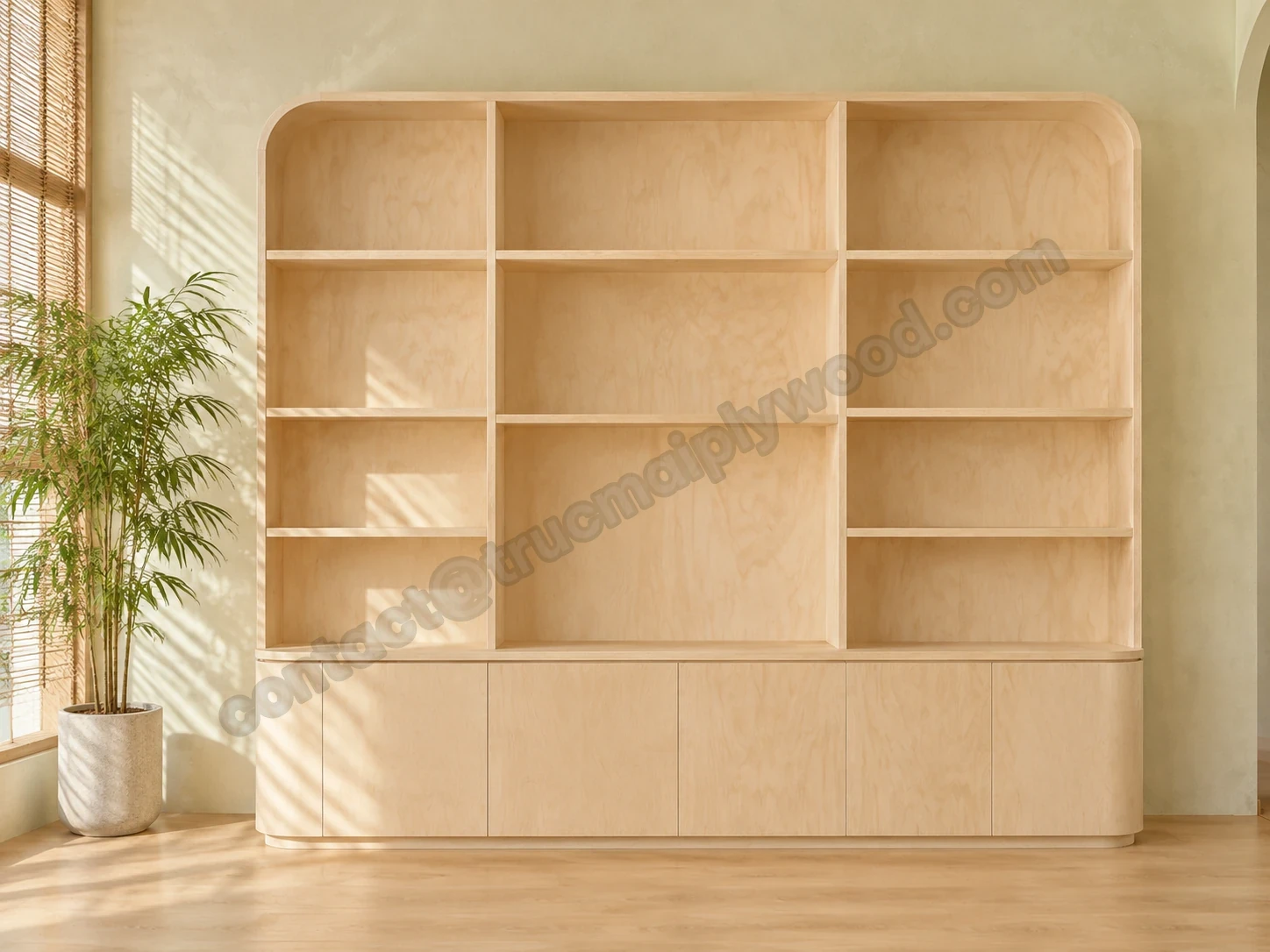
The certificate covers hardwood plywood with a veneer core from 3 mm to 25 mm thick, in 3 to 15 plies. That is the whole furniture and interior range up to 25 mm, on any of the three sheet sizes.
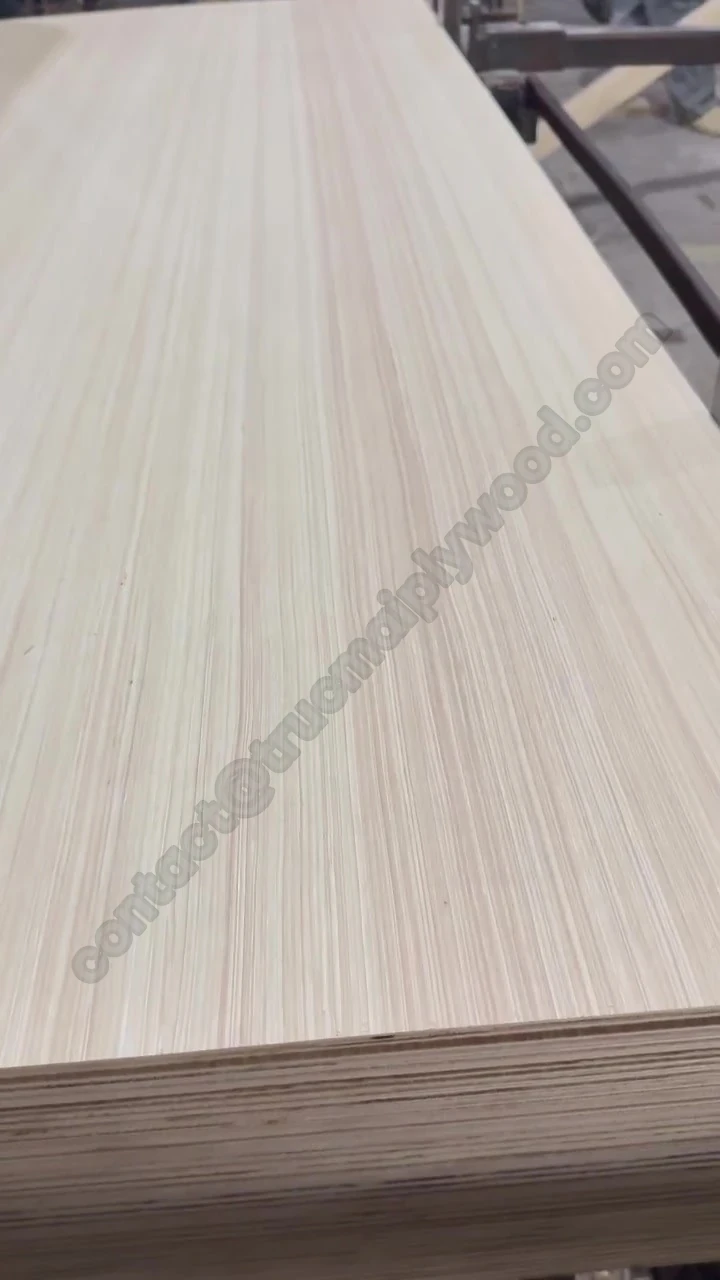
Veneer-faced panels with poplar, birch, okoume, bintangor, pine and other faces on a Styrax, Acacia or Eucalyptus core are all hardwood plywood with a veneer core. Faces such as white poplar EV sit on the same core.
The common thicknesses inside scope are 3, 4, 5, 6, 9, 12, 15, 18, 21 and 25 mm. Thin 3 to 5 mm panels are always five plies, and an 18 mm panel is most often 11 plies. The rule counts plies from 3 to 15, so these builds stay inside the certificate.
Panels at 30 and 40 mm fall outside the certificate. They ship without a CARB or TSCA claim, and a buyer who needs thick panels for the US can plan the order in two lines: certified thicknesses on one invoice line, thick panels separately.
Overlaid panels, such as melamine, HPL or paper overlay on a certified core, are quoted with the face stated and the certificate named for the plywood core. Say at enquiry which finished panel your US customer will sell.
- Faces
EV, poplar, birch-faced, okoume, bintangor, pine and others, on a veneer core.
- Cores
Styrax, Acacia, Eucalyptus or combined species.
- Thickness
3–25 mm, in 3 to 15 plies, on 1220 × 2440 mm, 1220 × 2280 mm and 1250 × 2500 mm sheets.
- Not covered
30 and 40 mm panels, and any panel type not on the certificate.
Uses
Which US uses ask for CARB P2 plywood?
Most US enquiries for certified plywood come from furniture, cabinet and fixture makers, because their finished goods are also regulated.
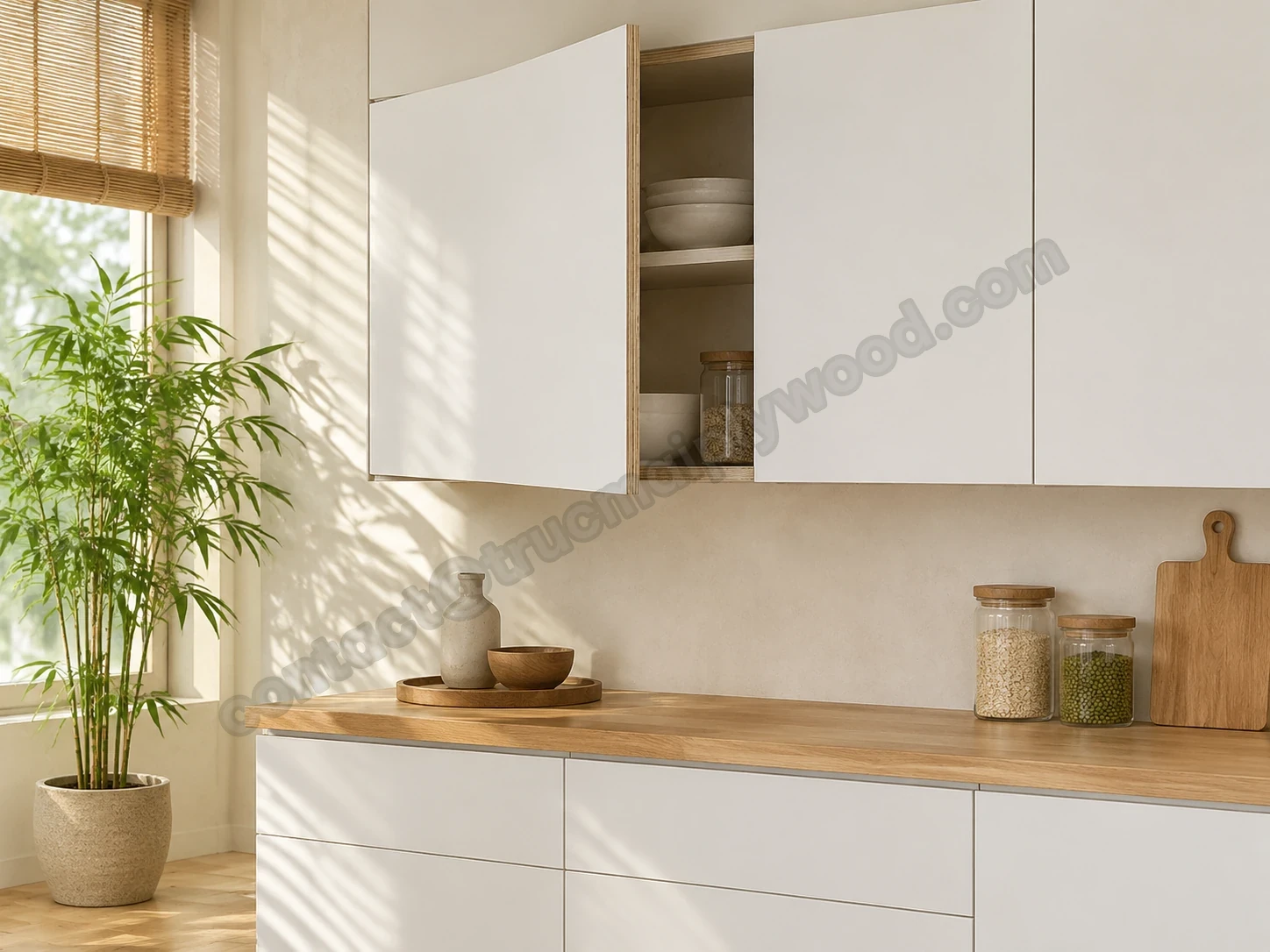
Cabinet makers use 18 mm for boxes and 12 mm for shelves. Furniture makers use 3 to 18 mm for carcasses, drawer sides and bottoms, often with a poplar or EV face for finishing. Fixture makers cut display panels and shelving from 1220 × 2440 mm sheets, and joiners use veneer-faced 6 to 15 mm panels for wall lining.
The finished-goods label under 40 CFR 770.45 is the fabricator's duty, so these buyers need the panel certificate and the lot trace from us to complete their own label.
- Kitchen and bath cabinets
Cabinet boxes in 18 mm and shelves in 12 mm, where the cabinet maker must label finished goods too.
- Casegoods and furniture
Carcasses, drawer sides and bottoms in 3 to 18 mm, often with a poplar or EV face for finishing.
- Store fixtures and shelving
Display panels and shelving cut to size from 1220 × 2440 mm sheets.
- Wall panels and millwork
Veneer-faced panels for wall lining and joinery in 6 to 15 mm.
Documents
Which CARB and TSCA documents does a CARB P2 plywood supplier for the USA hand over?
A US buyer gets the files in three steps: before the order, with the quotation and with the shipment.
- Before you order Certificate CARB/EPA 26053 with the product type, thickness range and certifier details, so your compliance team can check it
- With the quotation The panel lines named with their thickness and the statement that each line is inside the certified range of 3–25 mm
- Pack labels Producer name or number, lot number, certifier number and the TSCA Title VI statement, marked on panels or bundles
- Commercial invoice and packing list Lot numbers matched to the pack labels, so a lot can be traced after delivery
- Importer file Copy of the certificate and the label details your importer of record needs for its own records under the rule
- Shipment papers B/L, certificate of origin, and the usual export papers for the container
Verify
How do you verify the Truc Mai CARB P2 certificate?
A US buyer can check the certificate in a few minutes with the certifier, and read the rule it relies on from official sources.
- Read the certificate
Check the number CARB/EPA 26053, the mill number ICTT-26053, the product type HWPW-VC and the range 3–25 mm.
- Scan the code
The certificate has a QR code to validate it with ICTT Corporation, the certifier, TPC-43.
- Check the certifier
The certificate carries the IAS accreditation mark, so you can confirm the certifier's own accreditation with the accreditor.
- Read the limit
Open 40 CFR 770.10 and confirm 0.05 ppm for hardwood plywood with a veneer core.
- Match the label
On arrival, the pack label must show the same certifier number and a lot that appears on the packing list.
- Keep the record
Save the certificate and the label photo with the invoice for your own file under the rule.
Ask for the file: We send the certificate copy and the label sample with your quotation.
Common mistakes
Which CARB P2 claims should a buyer reject?
Most problems with CARB plywood come from a claim without a certificate behind it. These are the cases to watch for.
- A test report offered as certification
One chamber report is a test, not a certificate. Certification needs an approved certifier and continuing control testing.
- A certificate from another mill
The certificate must name the mill that makes the panel. Check the mill number against the label.
- Thickness outside the range
A certificate for 3–25 mm does not cover 30 or 40 mm panels.
- A different product type
A certificate for particleboard or MDF does not cover plywood, and the reverse.
- No label on the pack
A US sale needs the label with certifier number and the TSCA Title VI statement. A certificate in an email is not a label.
- CARB P2 sold as an EU file
The EU formaldehyde rule is a separate limit in mg/m³ with its own conditions. Ask for the emission class and chamber report your market needs.
Checklist
How to order CARB P2 certified plywood: checklist
Use this list before you order and again before the container ships.
- Name the rule
Write CARB P2 and TSCA Title VI on the enquiry, so the lines are planned inside 3–25 mm.
- Give the panel
Face, core, thickness, sheet size, glue, emission class and quantity.
- Say what you sell
Tell us if the plywood goes into cabinets or furniture, so the finished-goods label is planned with you.
- Check the certificate
Scan the QR code and read the product type and thickness range.
- Approve the sample
Approve a free sample in a thickness inside 3–25 mm. First orders: you book the courier, and we offset that cost on the order.
- Check the draft documents
After loading, match lot numbers on the packing list to the pack labels.
Terms: MOQ one 40HC, 15–45 days after the 30% deposit, FOB Hai Phong, CFR or CIF.
FAQ
CARB P2 plywood questions
Is Truc Mai plywood CARB P2 certified?
Yes. Certificate CARB/EPA 26053, issued by ICTT Corporation (TPC-43), covers hardwood plywood with a veneer core, 3–25 mm, for CARB Phase 2 and TSCA Title VI.
What is CARB P2 plywood?
It is plywood whose formaldehyde release meets Phase 2 of the California rule. For hardwood plywood with a veneer core the limit is 0.05 ppm, and the product is certified by a third party.
Is CARB P2 the same as TSCA Title VI?
The limits are the same. TSCA Title VI is the federal rule, 40 CFR part 770, and CARB is the California rule. The Truc Mai certificate covers both.
Which thicknesses are covered?
3 to 25 mm, in 3 to 15 plies. Panels of 30 and 40 mm are outside the certificate.
What limit does the plywood have to meet?
0.05 ppm of formaldehyde for hardwood plywood with a veneer core, tested by the chamber method ASTM E1333.
What is on the pack label?
The producer name or number, the lot number, the certifier number and a statement that the product is TSCA Title VI certified.
Can I get the certificate before ordering?
Yes. We send a copy with the quotation, and the number and QR code let you validate it with ICTT Corporation.
Does CARB P2 cover the EU market?
No. The EU has its own formaldehyde limit under REACH, 0.062 mg/m³ for wood-based articles. We supply the emission class for EU orders and the chamber report your buyer names.
Is the Truc Mai certificate in the mill's own name?
Yes. It names the Truc Mai mill and mill number ICTT-26053, so the label and the certificate match.
What is the minimum order?
One 40HC, the same as any other order. Production takes 15–45 days after the deposit.
Need the certificate file? Write to Lucy at contact@trucmaiplywood.com and we will send it with your quotation.
Quotation
Request CARB P2 certified plywood
Send the panel, the thickness and the quantity. We reply with a quotation that names the certificate, plus the copy.