
Resources · plywood buyers
Plywood buyer resources: specs, container loading, paperwork and landed cost
Plywood buyer resources are organised around one container. A 40HC of 18 mm plywood at 1220 × 2440 mm holds about 53 m³ on Styrax core, 47 m³ on Acacia and 43 m³ on Eucalyptus, so core and thickness are the first things to settle. Then come the spec lines, the face, the glue, the file set for the destination market and the terms.
Truc Mai makes about 60,000 m³ of furniture, interior and commercial plywood a year in Ha Hoa, Phu Tho, and about 5,000 m³ in an average month. The guides below are written for buyers who fill a 40HC every month and need the same spec to come back each time. Eight topic hubs split the subject; this page tells you which one to open first.

- ~53 m³18 mm Styrax core per 40HC, 1220 × 2440 mm (planning figure)
- 8 hubsspecs, cores, faces, mill, end products, paperwork, orders, FAQ
- ±0.3–0.5 mmthickness tolerance, written per order
- One 40HCminimum order
Sheet counts and weights are planning figures, not a loading record.
Answer and key facts
Which plywood buyer resources answer your question?
Match the question to the hub: sizes and thickness go to sheet specs, weight and m³ to cores and glue, look to faces, papers to rules and paperwork, and price, terms and days at sea to orders, freight and cost. Each hub opens with its own answer before it lists its guides.
A buyer who already knows the spec can skip straight to the calculator or the quotation page. A buyer comparing offers should read the sheet-specs and cores hubs first, because two offers with the same product name are often different constructions: the difference comes from core grade, joining method, face preparation, adhesive system and tolerance.
This resource set cites four public sources, all free to read: EUR-Lex for Regulation (EU) 2023/1115, FSC International, the US EPA and the California Air Resources Board.
| Question | Short answer | Open |
|---|---|---|
| How many sheets and m³ fit in a 40HC? | At 18 mm and 1220 × 2440 mm: 990 sheets of Styrax core (about 53 m³), 880 of Acacia (about 47 m³), 795 of Eucalyptus (about 43 m³). Planning figures. | /resources/sheet-specs/ |
| Which spec lines must every RFQ state? | Application, core, glue and emission class, face and back grade, sheet size, thickness with tolerance, packing and quantity. | /resources/sheet-specs/ |
| What files travel with an EU-bound container? | The FSC claim on sales documents, EUDR geolocation for core and face veneer, the PPWR packaging test and the EUR.1 origin certificate. | /resources/rules-and-paperwork/ |
| What does a US lot need for formaldehyde? | A CARB Phase 2 and TSCA Title VI certificate (CARB/EPA 26053) for 3–25 mm hardwood plywood with veneer core. | /resources/rules-and-paperwork/ |
| How long is the sea leg from Hai Phong? | Typically 30–40 days to Northern Europe and 35–45 days to the US East Coast, depending on carrier and route. | /resources/orders-freight-and-cost/ |
| Which faces and cores combine in one order? | Any listed face on Eucalyptus, Acacia, Styrax or Pine cores, or on combined cores. No rubberwood core. | /resources/faces-and-panels/ |
Reading order
A plywood buying guide: the reading order for a first container
Five steps take a buyer from a blank RFQ to an order the mill can quote in one reply. Each step is one hub, and the order matters because core and thickness change what the later steps cost.
- Fix the sheet
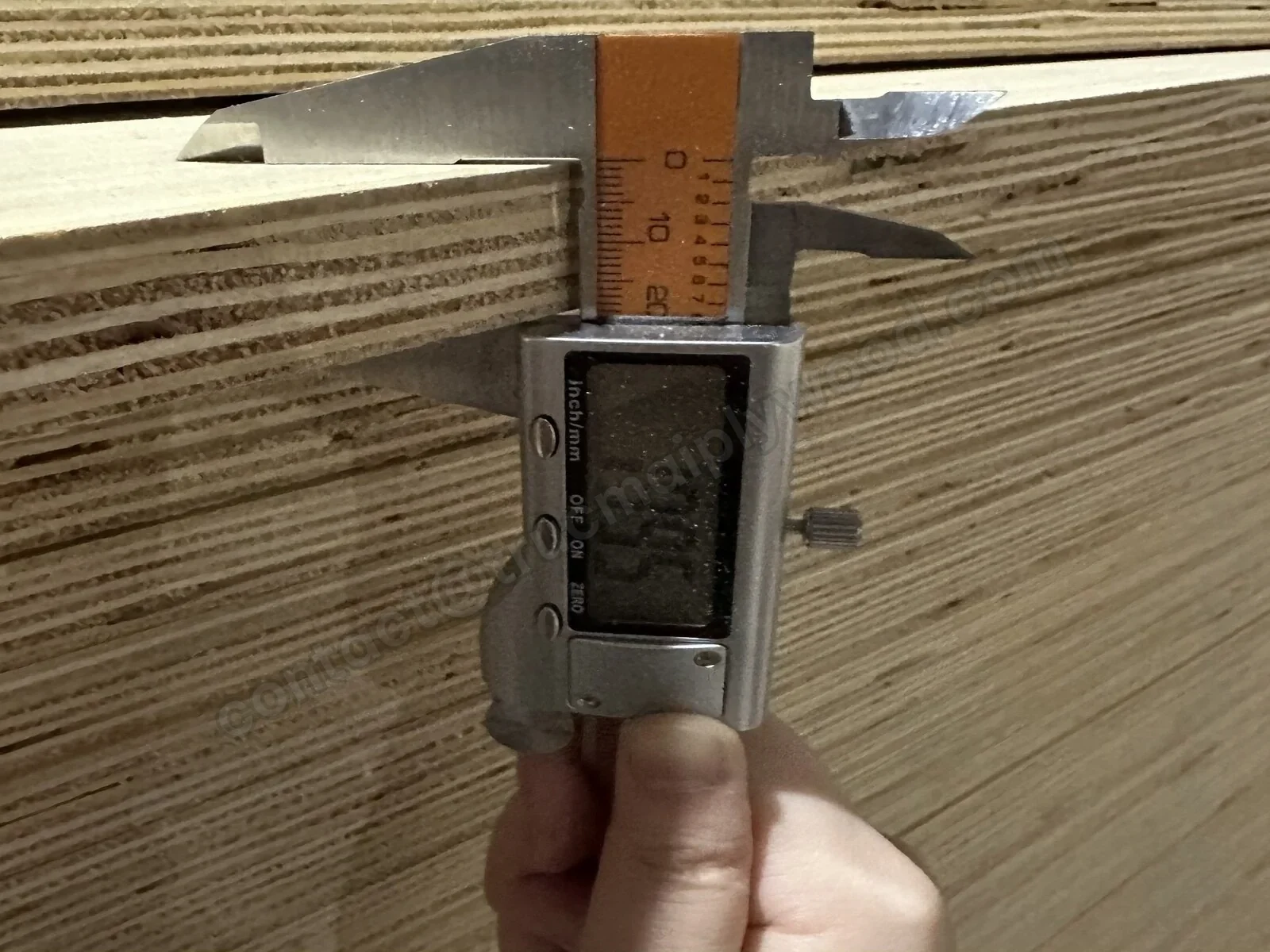
Write size, thickness and tolerance. Standard sheets are 1220 × 2440, 1220 × 2280 and 1250 × 2500 mm; thickness runs from 3 to 40 mm, with ±0.3 mm on calibrated furniture panels and ±0.5 mm on commercial panels. Sheet specs has the table.
- Choose core and glue
The core decides weight, flatness and how many m³ a container takes. Glue type and emission class are two separate lines on the order. Cores, glue and plies explains both.
- Choose the face
EV, poplar, bleached poplar, birch-faced, okoume, bintangor, pine, eucalyptus, gurjan and sapele are laid on the mill's own cores. Faces and panels shows how each one looks and what it costs per m³.
- Match the panel to the product
Furniture and cabinet parts, commercial panels and packing panels use different default builds. Panels by end product maps each to a line.
- Check papers, terms and days
The file set depends on the destination market. Rules and paperwork lists the EU and US files; orders, freight and cost covers terms, transit and landed cost.
Loading
What decides how much plywood a 40HC holds
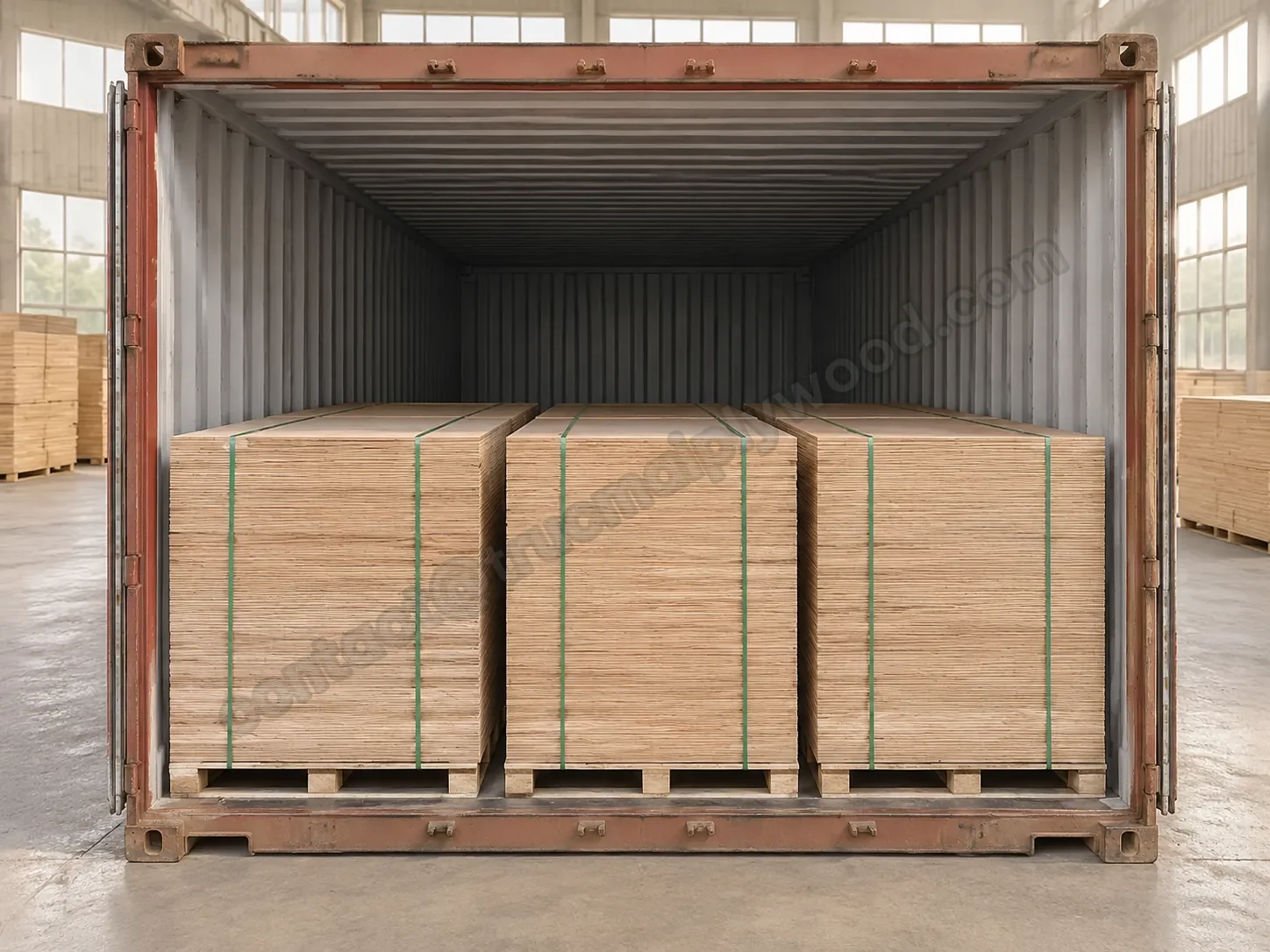
Thickness barely changes the volume a container takes: a Styrax-core 40HC stays near 53 m³ from 3 mm to 40 mm. Core density does. Denser cores reach the planning payload of 28,000 kg before the box is full.
Sheet counts and weights are planning figures from our packing model, panels only, not a loading record; the carrier and route decide the final payload. On the Truc Mai packing model, a 40HC takes at most 18 packs on Styrax core, 16 on Acacia and 15 on Eucalyptus, each pack about 1,000 mm high. Sheets per pack are 1,000 divided by the thickness, rounded down and then capped by weight. The full table by thickness and sheet size sits on the load calculator and on the loading page, not here.
| Core | Sheets | m³ | kg per sheet |
|---|---|---|---|
| Styrax (reference density 500 kg/m³) | 990 (18 × 55) | about 53 | 26.8 |
| Acacia (580 kg/m³) | 880 (16 × 55) | about 47 | 31.1 |
| Eucalyptus (650 kg/m³) | 795 (15 × 53), weight-capped | about 43 | 34.8 |
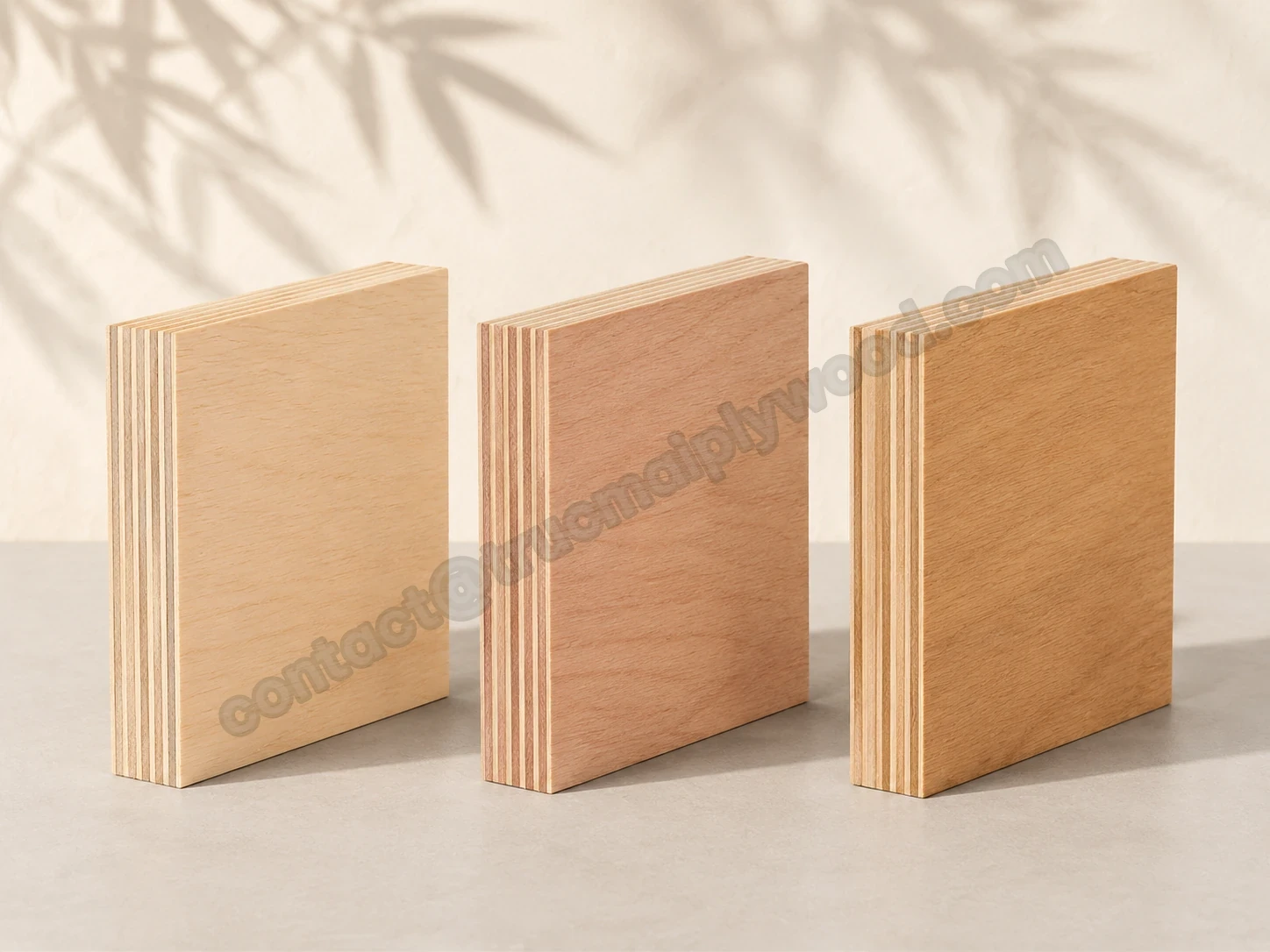
A buyer moving from Acacia to Styrax core usually gets a better face, a lighter sheet and more m³ per container.
Paperwork
Plywood import guide: two file sets, EU-bound and US-bound lots
Truc Mai supplies lots with the EU file set or the US file set. The two differ in what they prove: the EU set is about legality and origin of the wood, the US set is about formaldehyde emission.
Certificate files are sent before an order is confirmed, and draft shipping documents go to the buyer for approval after loading. Certificates are held in Truc Mai's own name: FSC 100% (FSC-C196493, SA-COC-014545), CARB Phase 2 and TSCA Title VI (CARB/EPA 26053), ISO 9001:2015 (W2012) and ISO 14001:2015 (W2012E). The FSC claim is stated on sales documents for products on the current product schedule; it does not cover every panel automatically.
| Market | Files | Detail |
|---|---|---|
| EU | FSC claim on sales documents; EUDR geolocation for core and face veneer; PPWR packaging test; EUR.1; REACH entry 77 context | /resources/rules-and-paperwork/ |
| US | CARB Phase 2 and TSCA Title VI certificate for 3–25 mm hardwood plywood with veneer core (0.05 ppm limit) | /resources/rules-and-paperwork/ |
| Both | Commercial invoice, packing list, B/L, certificate of origin, phytosanitary and fumigation papers; insurance under CIF | /resources/orders-freight-and-cost/ |
Related pages
The eight topic hubs and the tools
Each hub holds the guides for its topic. Pages that are not yet published show as plain text until they go live.
Sizes, thickness, tolerance and grade pairs.
How core and glue set weight, flatness and m³.
Every face the mill lays on its own cores, and the overlays.
Peeling to loading, with the numbers that set the spec.
Furniture, commercial and packing builds matched to the product.
EUDR, FSC, CARB P2, PPWR and REACH files per market.
Terms, days at sea and freight cost per m³ by core.
Short answers on MOQ, payment, loading and files.
Sheets, m³ and kg for a mixed order on the same packing model.
Sheets, m³ and the share of a 40HC for a container order.
Thickness in millimetres and inches for the sizes the mill lists.
Every face on the mill's own cores, linked to its sheets page.
Output, lines, certificates and trade terms.
Minimum order, deposit, balance and delivery terms in one place.
FSC, CARB P2, ISO and the checks behind them.
FAQ
Plywood buyer questions
How many sheets and m³ fit in a 40HC by thickness and core?
Core decides it more than thickness. At 18 mm and 1220 × 2440 mm the Truc Mai planning model gives 990 sheets of Styrax core (about 53 m³), 880 of Acacia (about 47 m³) and 795 of Eucalyptus (about 43 m³). Across 3 to 40 mm a Styrax load stays near 53 m³. These are planning figures with a 28,000 kg payload; the load calculator runs the full table.
Which spec lines should every plywood RFQ state?
State the application, then the core, glue type and emission class, face and back grade, sheet size, thickness with tolerance, packing and quantity. Two quotes with the same product name can differ in core grade, joining method, face preparation, adhesive and tolerance, so each line must be written.
What files come with an EU-bound container?
The FSC claim on sales and shipping documents for products on the current schedule, EUDR due-diligence data with plot geolocation for both the Vietnamese core and the face veneer, the PPWR packaging test, and the EUR.1 certificate of origin, plus the standard shipping set. The importer files its own EUDR due-diligence statement.
What formaldehyde paperwork is needed to sell hardwood plywood in the US?
A third-party certified CARB Phase 2 and TSCA Title VI certificate. Truc Mai holds CARB/EPA 26053 for hardwood plywood with veneer core, 3–25 mm, 3–15 plies. The limit for this product type is 0.05 ppm formaldehyde. Panels of 30 and 40 mm fall outside the certified thickness scope.
How long is sea transit from Hai Phong to Europe and the US?
Typical days at sea are 30–40 to Northern Europe, 25–35 to the Mediterranean, 20–30 to the US West Coast and 35–45 to the US East Coast. Carrier and route change these figures, and they exclude the 15–45 days of production after the deposit.
Which faces and cores can be combined in one order?
Any listed face can be laid on Eucalyptus, Acacia, Styrax or Pine cores, or on combined cores that balance price, weight and appearance. Gurjan, okoume and bintangor are faces only. There is no rubberwood core, and Vietnamese plywood does not use poplar or birch cores. A container usually carries one or two products; three to six can be mixed by agreement.
Quotation
Send a specification and get a container-based quotation
State the application, core, thickness, sheet size, face and destination port. The reply gives the planning load per 40HC with the quotation.
Application, core, thickness, sheet size, face and back grade, quantity and destination port. The reply carries sheets, m³ and packs per 40HC as a planning figure.