
Gurjan plywood · Ha Hoa, Phu Tho, Vietnam
Gurjan plywood by the 40HC: gurjan faces on Eucalyptus, Acacia and Styrax cores
Gurjan plywood from Truc Mai is a gurjan (keruing) face on a Vietnamese Eucalyptus, Acacia or Styrax core, made for distributors who restock the same sheet every month. Face and back grades are quoted as a pair against a sample you approve, and the core is chosen by what it does to sheets per 40HC. One written specification then repeats on every container.
This page is for timber yards, panel distributors and cabinet shops that buy gurjan ply by the container and resell it by the sheet. Truc Mai presses around 60,000 m³ of commercial and furniture plywood a year at Ha Hoa, Phu Tho, about 5,000 m³ in an average month, so a monthly gurjan programme is one line in a steady production plan, not a special run.
Three things must stay the same between your containers: the red-brown face, the core under it and the sheet count in the box. Each is written down on the first order and copied onto every reorder.
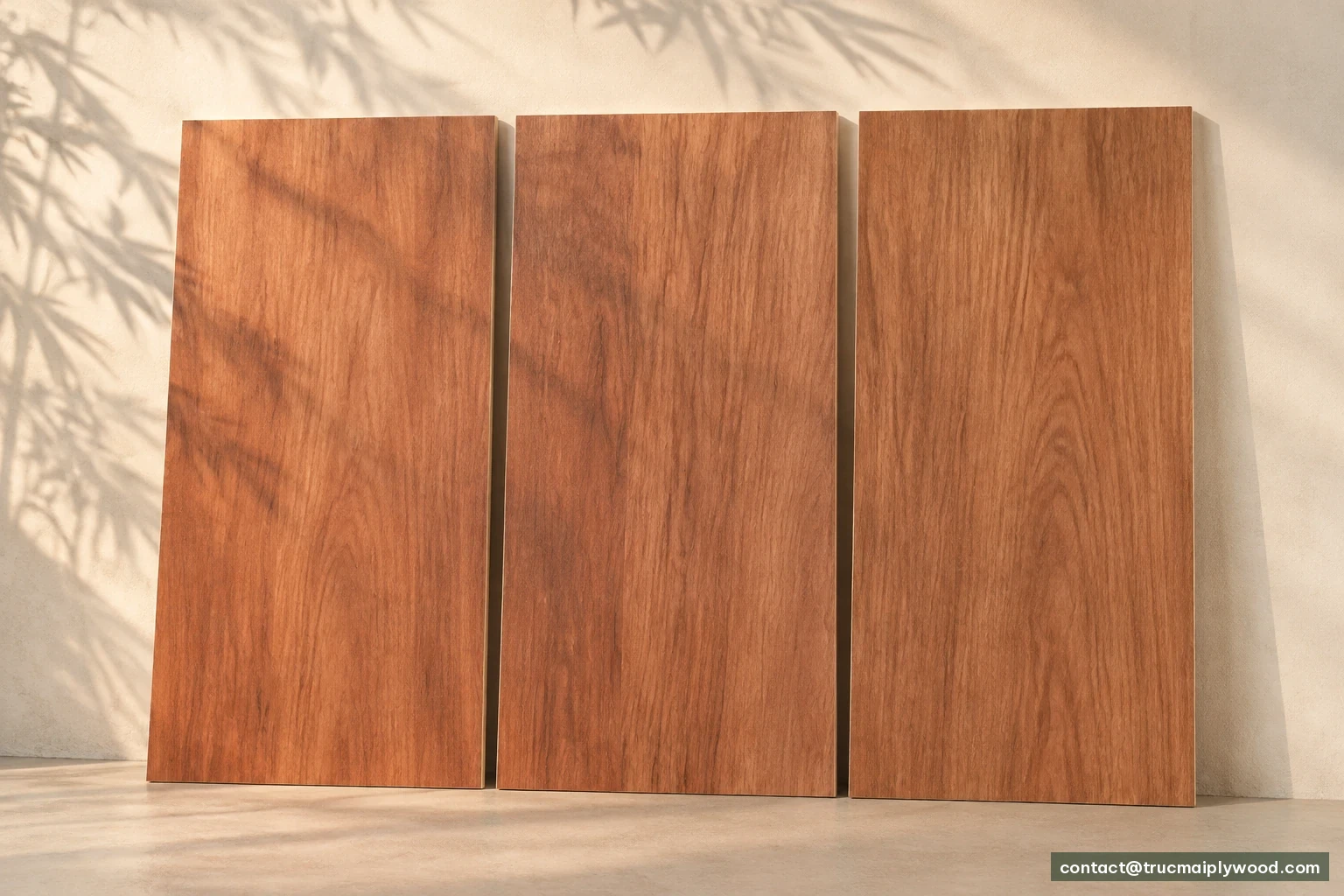
- Gurjan (keruing), sample-gradedFace
- Eucalyptus, Acacia, Styrax or combinedCore
- 3–40 mmThickness
- 795–990 sheets by core (planning)18 mm per 40HC
- MOQ 1×40HCOrder
On arrival
What should a gurjan pack look like when you open it?
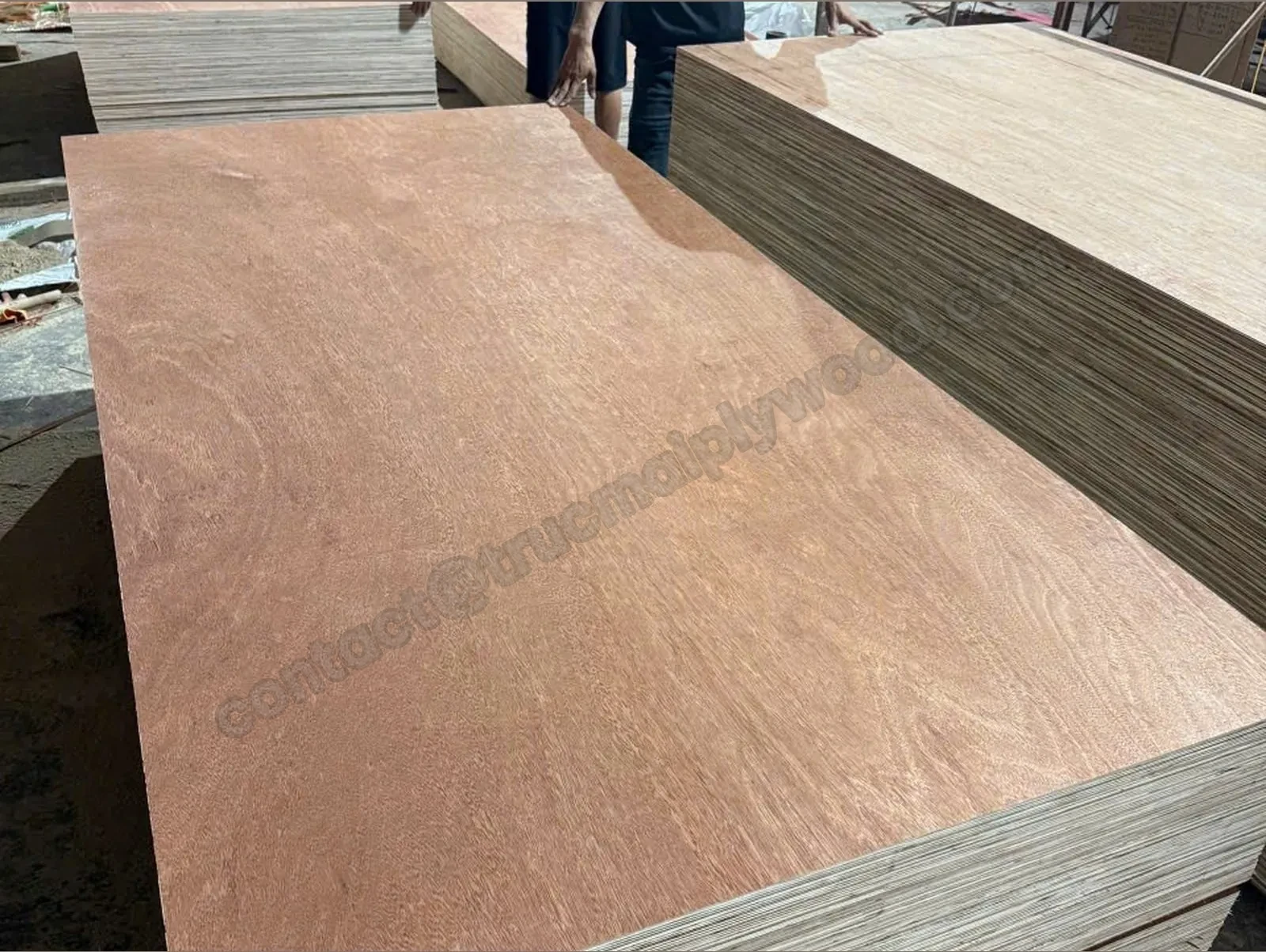
Open one pack from the door end and one from the back of the container, and compare three things with your retained sample: the colour band of the faces, the back grade, and the edge that shows the core species.
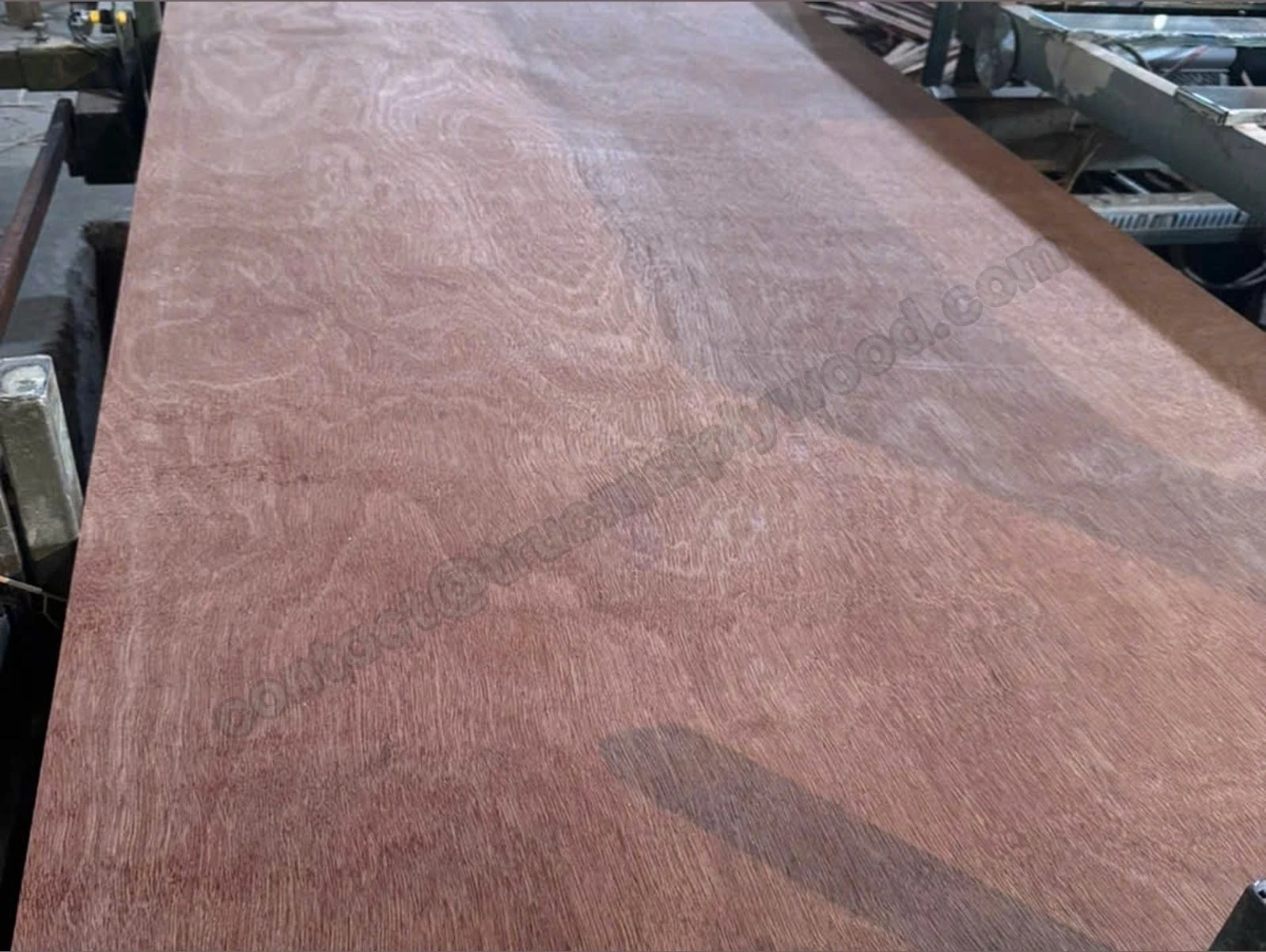
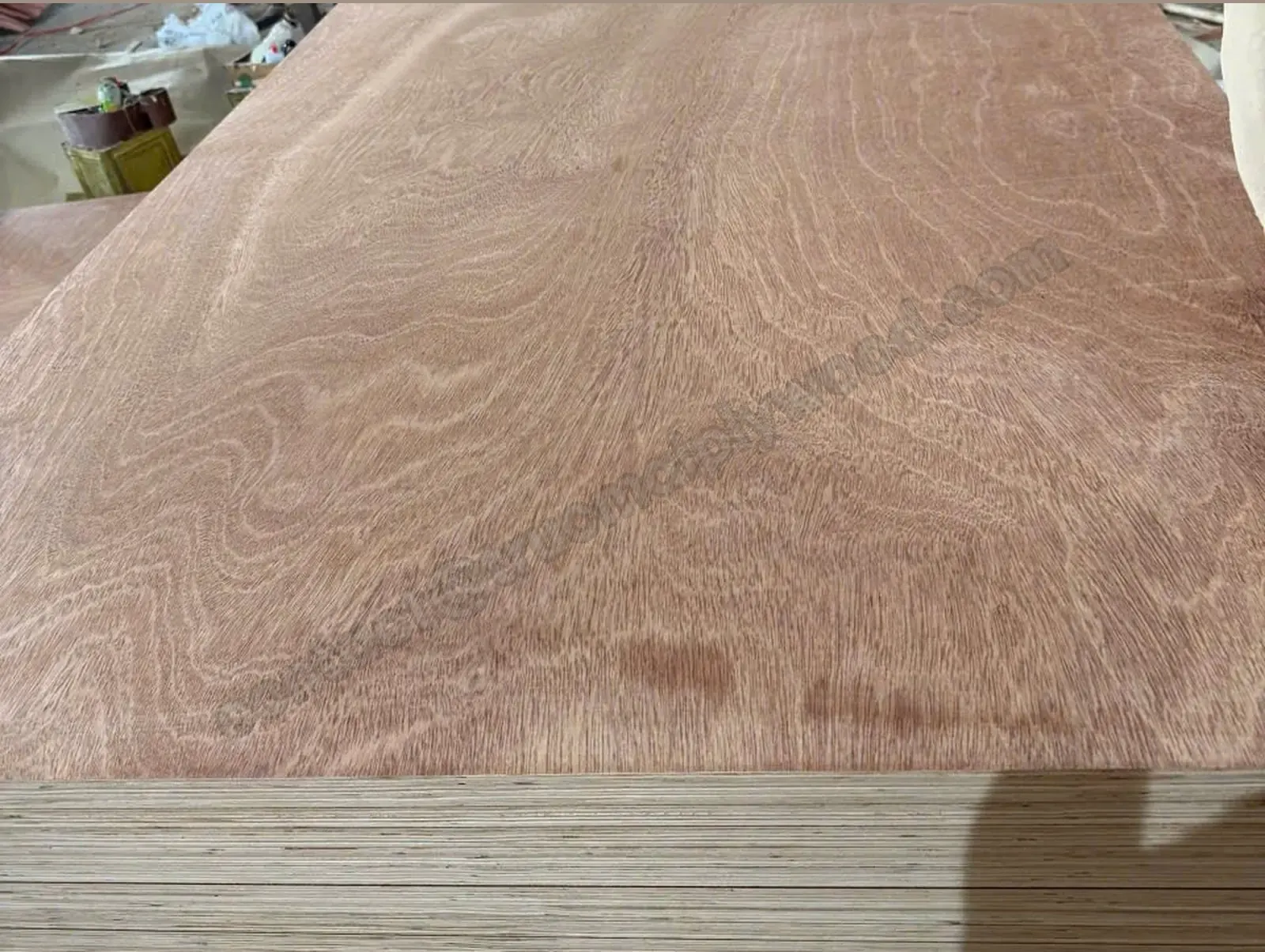
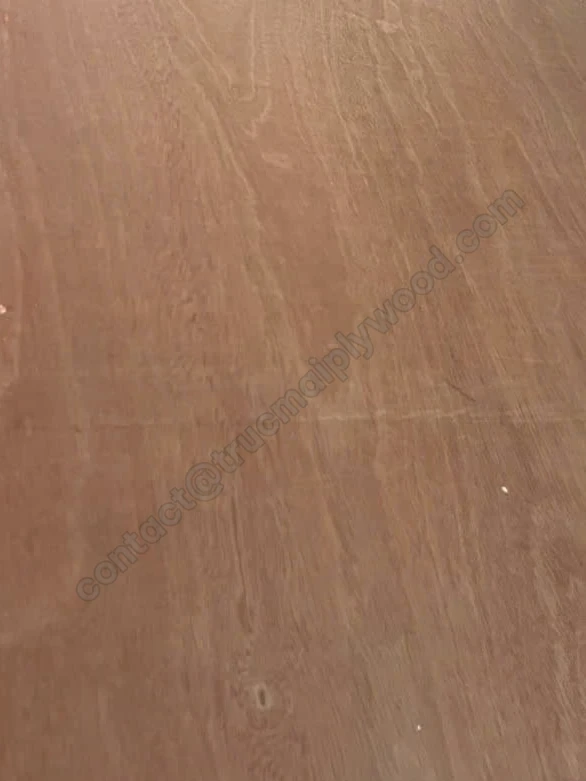
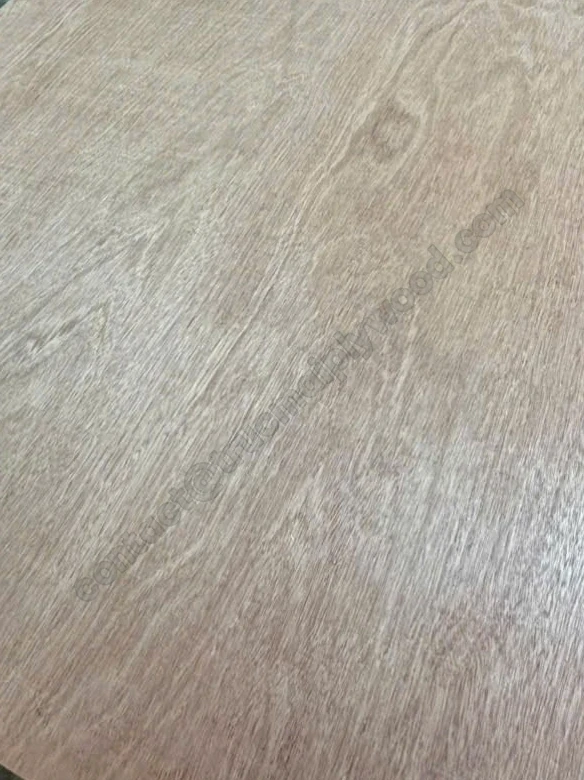
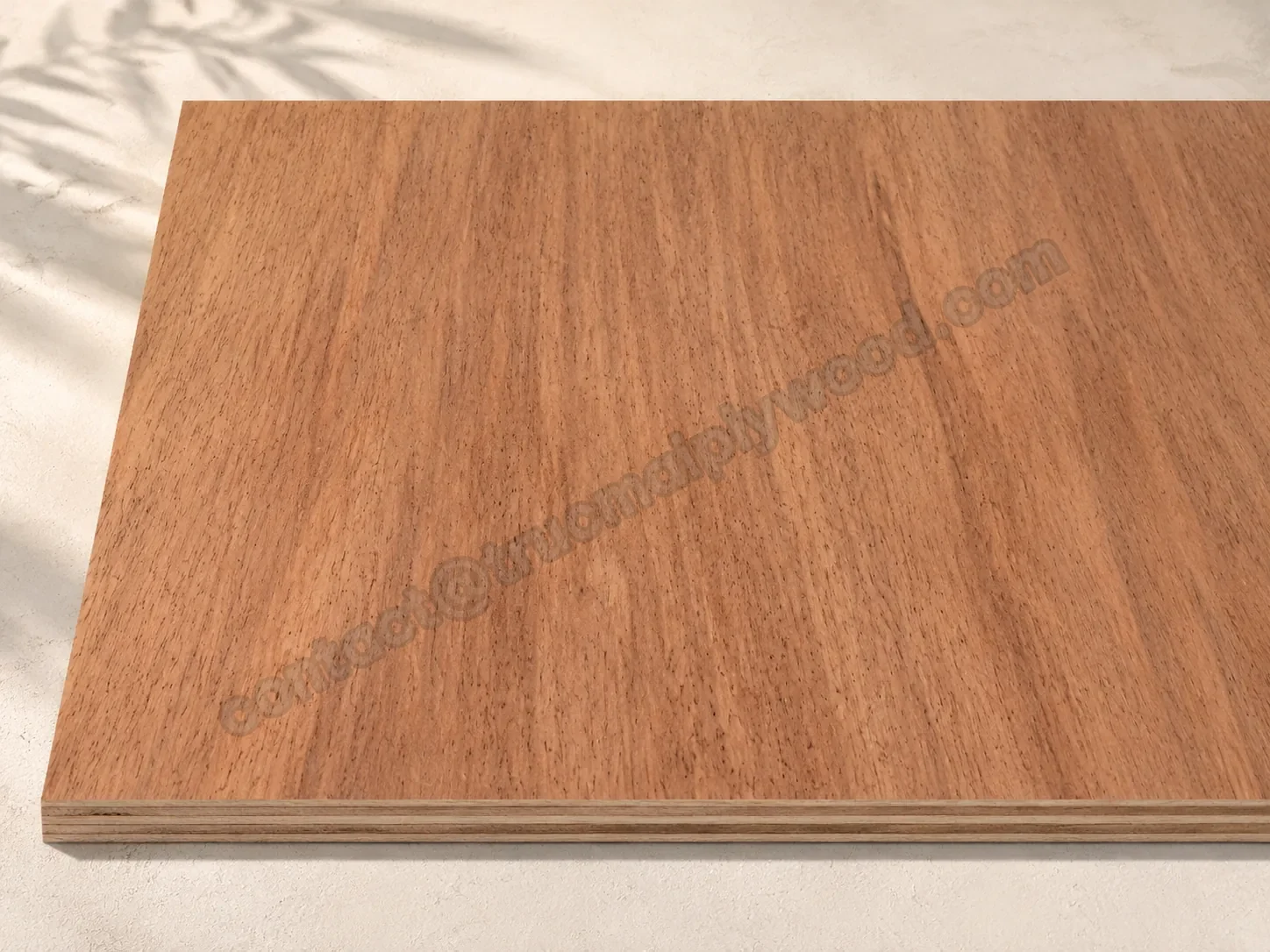
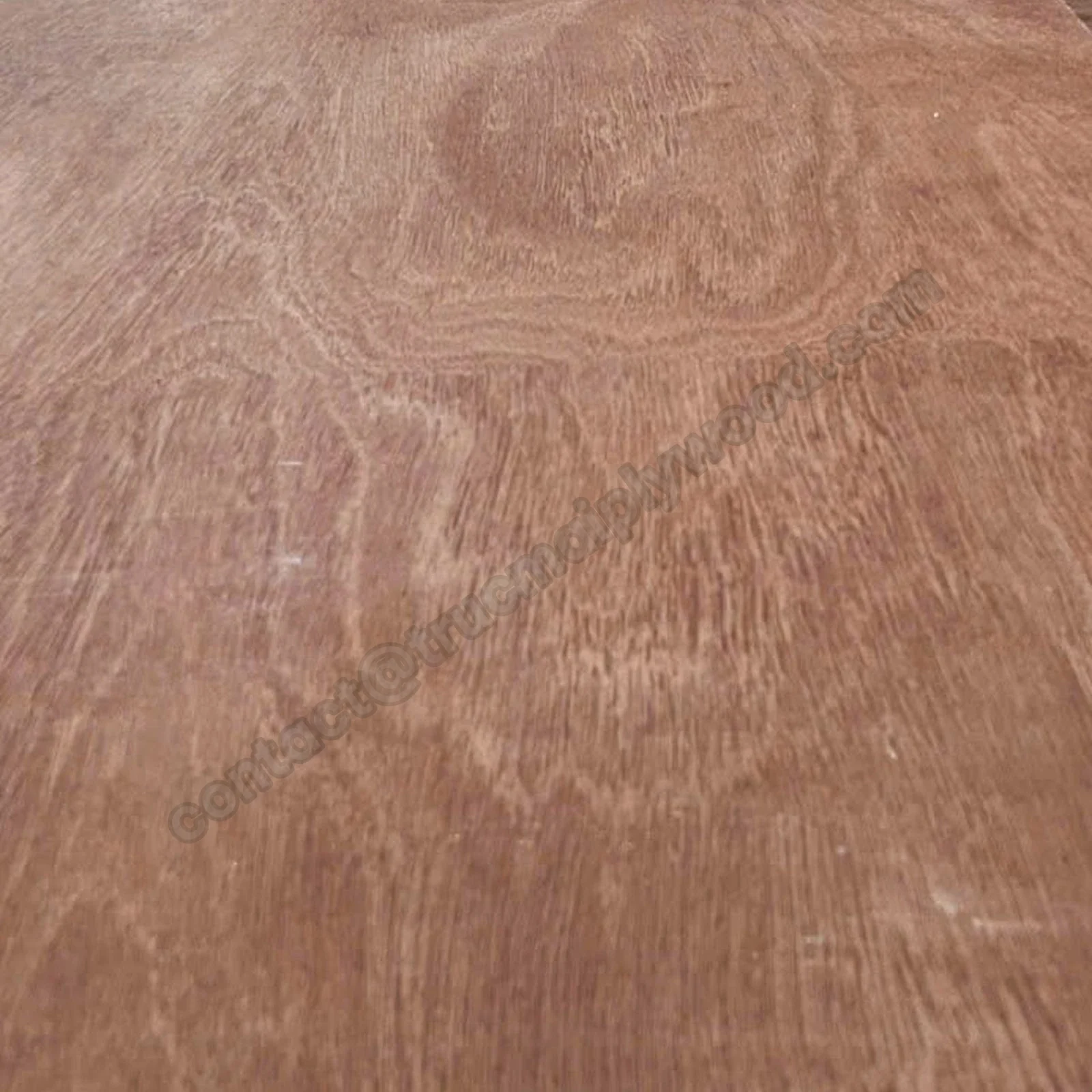
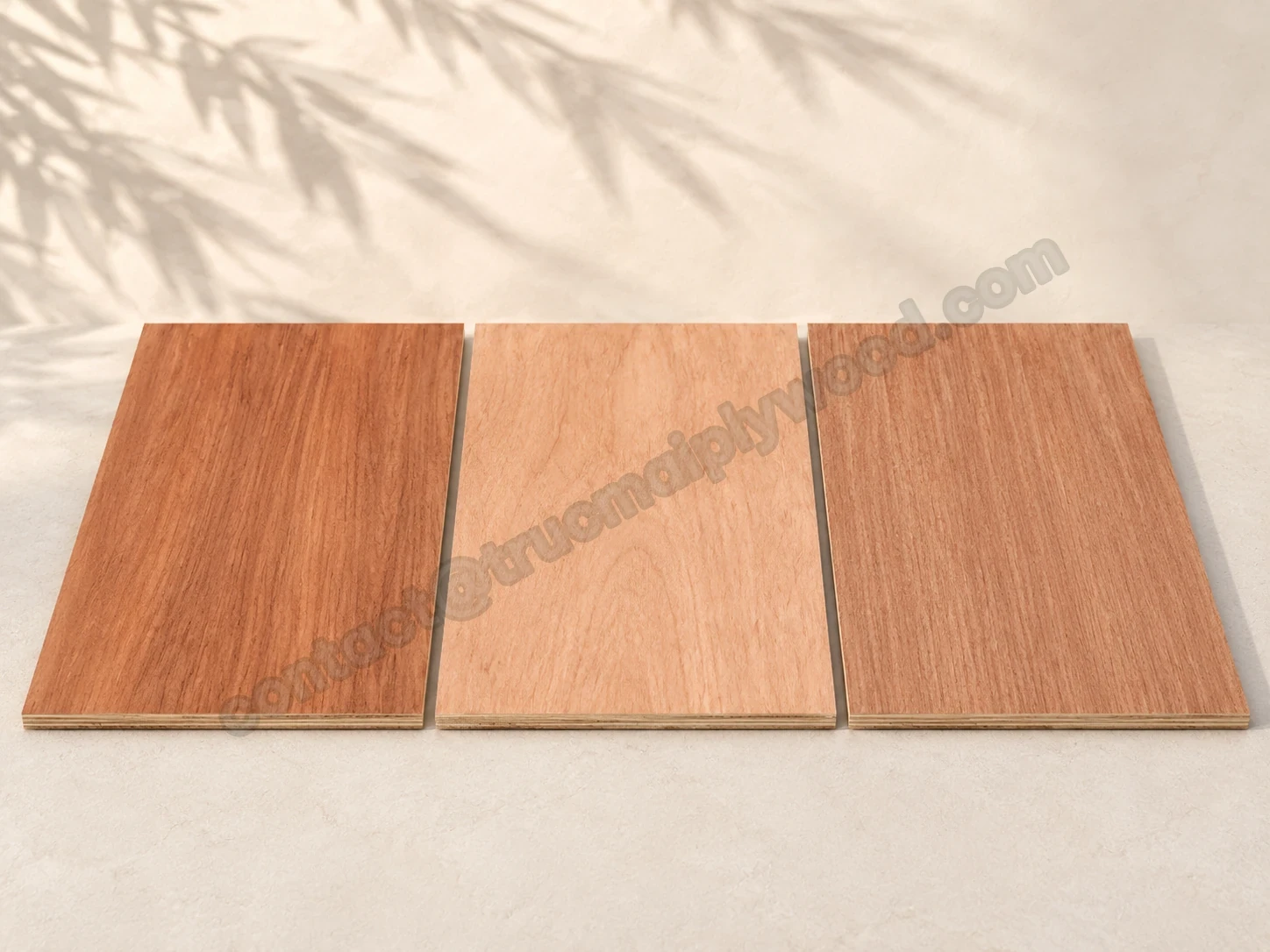
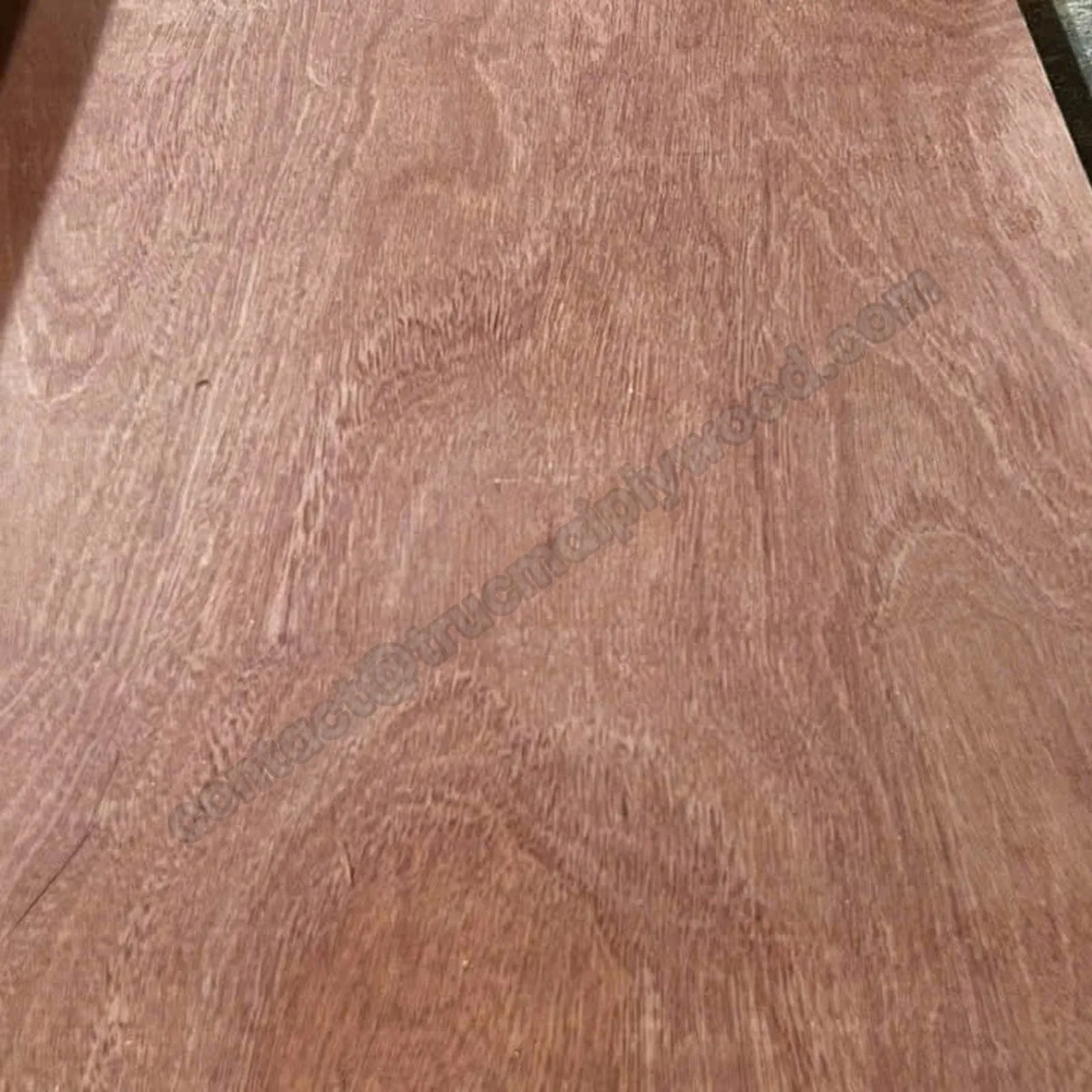
Gurjan faces run from a lighter brown to a deep red-brown, and a sheet can carry both. A good pack shows faces inside the band of your sample, with resin streaks and closed pin knots where the grade allows them, and no open splits on the show face.
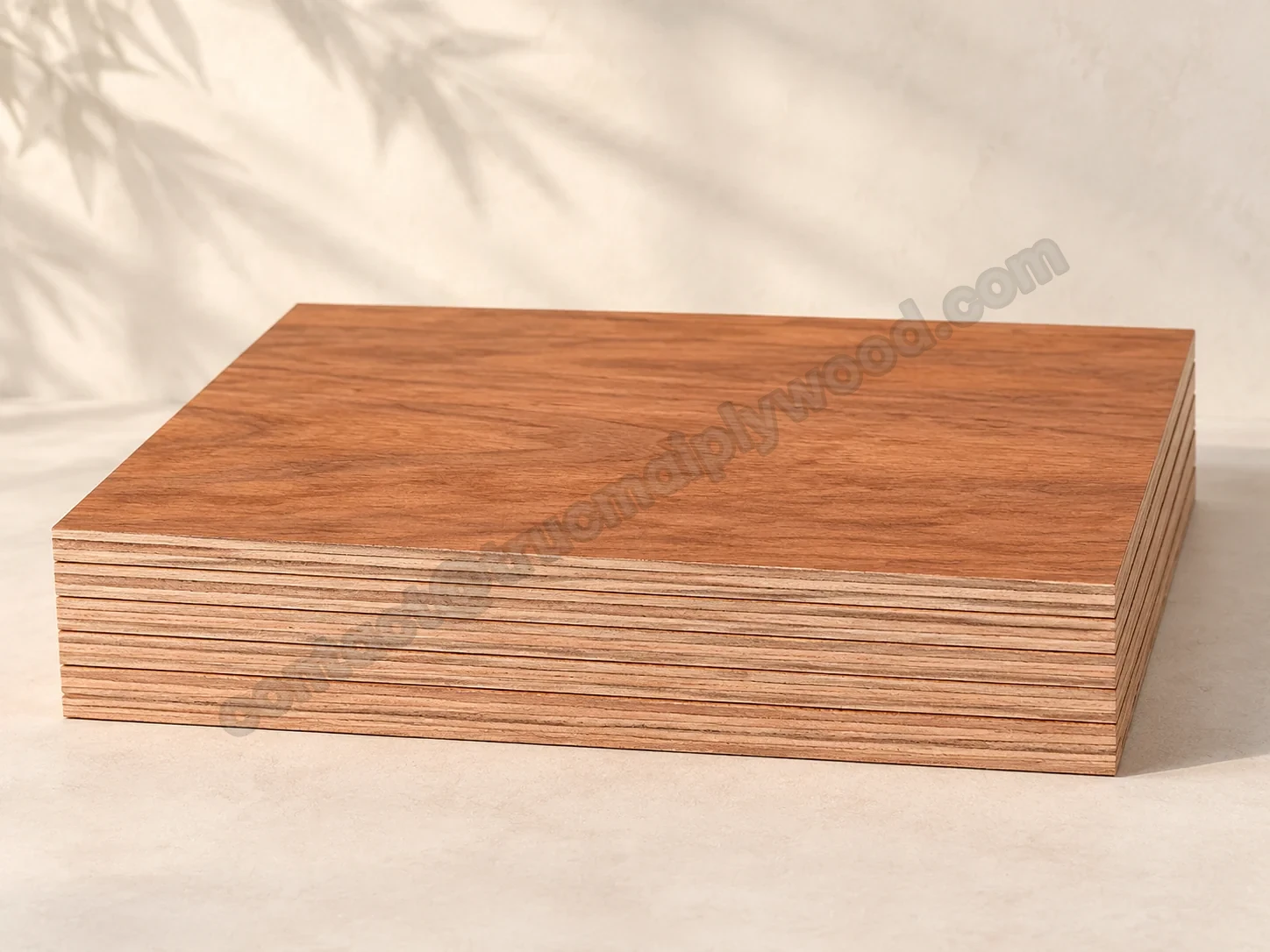
The edge tells you the core at a glance. Eucalyptus shows pink-brown bands, Acacia light brown bands and Styrax a pale cream edge. If the edge colour is not the one on your order, the core was changed, and that is a matter for the mill before the next container, not a detail.
Look along the face under a raking light before you sign the delivery note. A gurjan face that has been sanded through shows as a pale patch where the core colour comes up; a small patch on the back is allowed by the utility grade, but one on the show face is not, and it belongs in your arrival report with a photo.
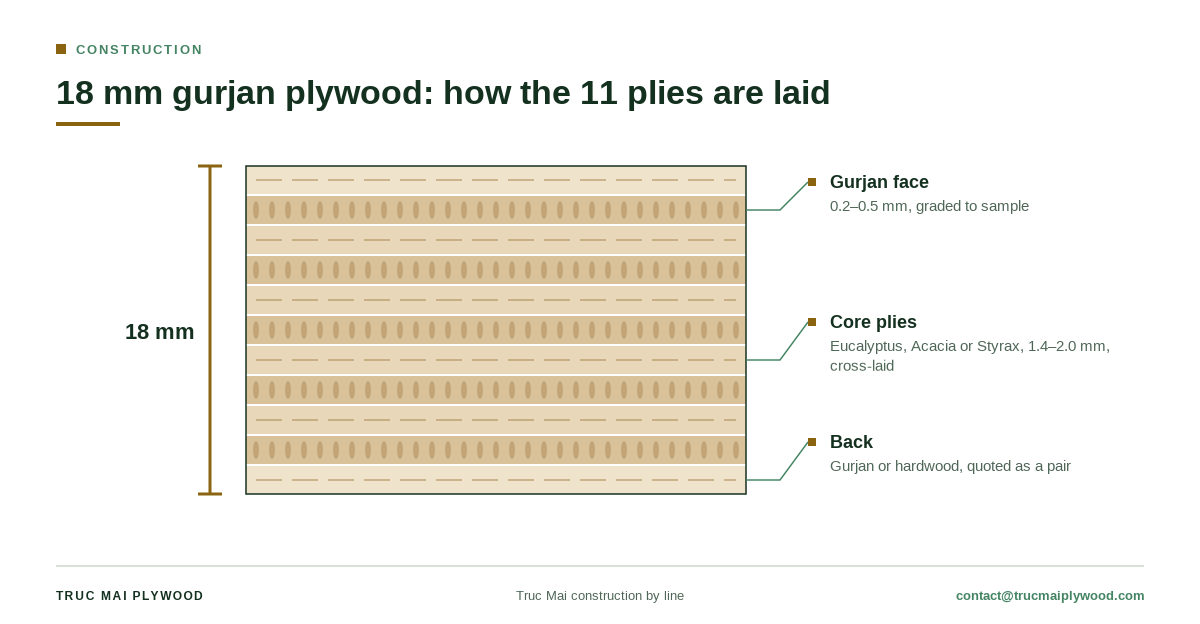
Count plies on a corner of an 18 mm sheet: eleven is the usual build. Then weigh one sheet. A Eucalyptus-core sheet that weighs like Styrax tells you something has moved, and the same is true the other way round.
Photos of the packs in your order, with your labels, can be sent with the draft shipping documents before the balance is paid.
Specification
Gurjan ply specification: the twelve lines a repeat order fixes
A gurjan plywood order is fixed by twelve lines. Once the first container is approved, the same lines go onto every repeat order, and a change to any of them is agreed in writing before production.
Most gurjan quotes differ in the core line, not the face line. Two offers both called 18 mm gurjan plywood can carry an AB loose-laid core in one case and a stitched A-grade core in the other, and the price gap between them is the core. Ask every supplier to fill in the same twelve lines, and the offers become comparable.
The surface line matters more on gurjan than on pale faces. Many distributors sell gurjan unsanded or lightly sanded, because their customers laminate or veneer over it. If you sell it as a show face for lacquer, write sanded and calibrated, and the tolerance tightens to ±0.3 mm with it.
Moisture content and density follow from the core and the glue. They are written as planning values and checked by weighing real sheets from your order before the container is closed.
- Face veneer Rotary-cut gurjan (keruing, Dipterocarpus), 0.2–0.5 mm
- Back veneer Gurjan or another hardwood back; face and back grades quoted as a pair
- Core species Eucalyptus, Acacia, Styrax or a combined core; core veneer 1.4–2.0 mm
- Core build Commercial line: AB core, loose-laid or jointed. Furniture line: A-grade core, stitched
- Stitching Across and along the sheet; outer 2–4 plies, every ply on request
- Plies 11–13 at 18 mm, most often 11
- Thickness list 3, 4, 5, 6, 9, 12, 15, 18, 21, 25, 30 and 40 mm
- Thickness tolerance Written per order at ±0.3–0.5 mm; ±0.5 mm usual on the commercial line
- Sheet size 1220 × 2440 mm, 1220 × 2280 mm or 1250 × 2500 mm; length and width ±2 mm
- Glue line UF at E0 emission by default; melamine-fortified on request
- Surface Unsanded, lightly sanded, or sanded and calibrated
- 18 mm sheet weight About 34.8 kg on Eucalyptus, 31.1 kg on Acacia, 26.8 kg on Styrax (planning figure)
Face grades
How gurjan face and back grades are paired and held
Gurjan face and back grades are quoted as a pair against two physical boards you approve: the lightest and the darkest face you accept. Gurjan varies more from log to log than okoume or bintangor, so one board is not enough to hold a colour band across a year of containers.
The usual pair for a stock programme is a standard gurjan face over a utility back. A select face over a standard back costs more and suits sheets sold for lacquer. Write the pair on the order as two words, face first, so the next container is sorted the same way.
Colour drift is the commonest reorder problem with gurjan. A new log lot can come in a shade lighter, and a buyer who approved one board has no written limit to hold it against. With a light and a dark limit board, the face grading line sorts every face into or out of the band, and a sheet that falls outside drops to the next grade pair before it reaches your pack.
Keep one or two grade pairs for a monthly programme. Each extra pair splits the face sorting into smaller runs and makes the next container harder to match.
Resin is part of the gurjan face. Keruing veneer carries natural oleoresin in its pores, and on a select face it shows as fine dark streaks along the grain rather than as blobs. Under a clear lacquer those streaks read as figure; under a pale stain they can bleed, so a buyer who stains wipes the face with a solvent first or asks for the standard face, which is sold mostly for overlay anyway.
Gurjan faces darken a little in daylight over the first weeks. Store the limit boards out of the sun, or compare a fresh sheet with a board that has aged on a shelf, and the colour check stays fair.
Thin skins follow the same rule. A door skin cut from a different log lot from the carcass sheets shows the difference the moment the door is hung, so skins and main sheets on one order are sorted against the same pair of limit boards and packed with the grade written on the label.
 Select gurjan face
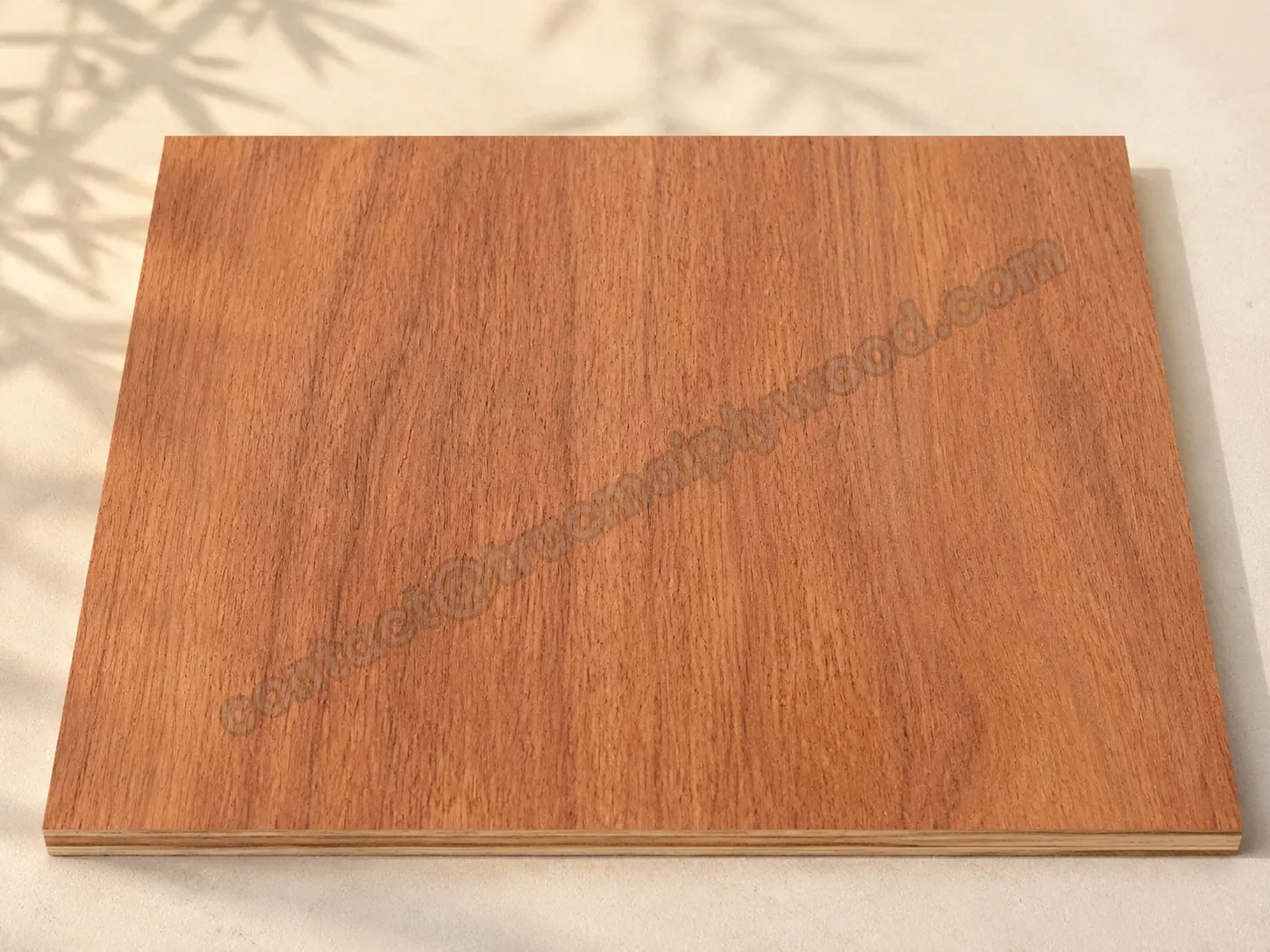
Deep, even red-brown across the sheet, straight grain, no patches, only small closed pin knots. Sheets sold as a show face: clear-coated counters, shop fittings and doors.
 Standard gurjan face
Lighter to darker brown within one sheet, resin streaks, a few neat patches. The usual stock sheet for cabinets, wardrobes and partitions that are laminated, veneered or painted.
- Utility back
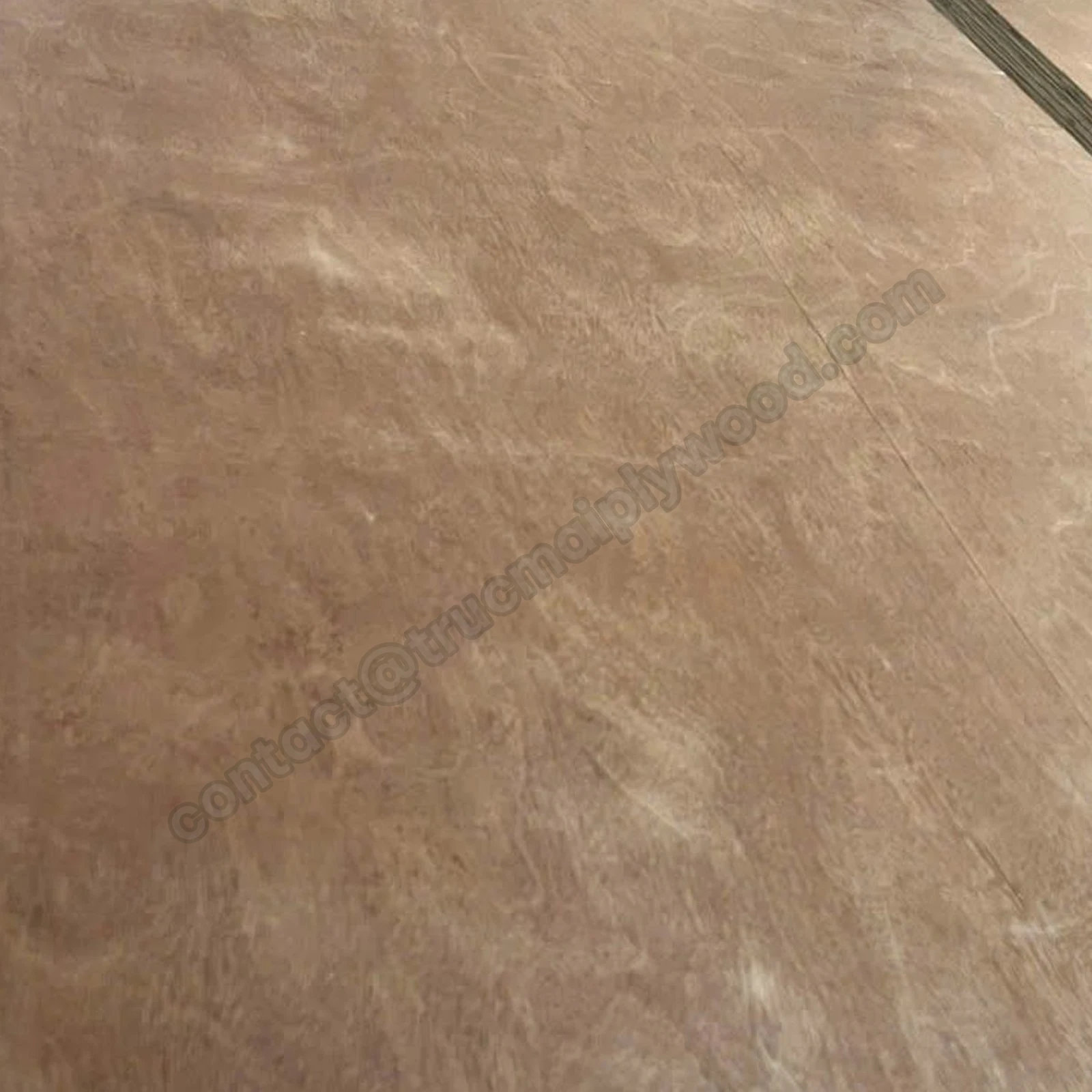
Gurjan or mixed hardwood, filled splits, more patches and a wider colour spread. The hidden side of carcass parts and sheets that are overlaid on both faces.
Core
Which core goes under the gurjan face, and what it changes
Under a gurjan face the core decides weight, screw holding, edge colour and sheets per 40HC. Eucalyptus gives the heaviest, hardest sheet and the feel many gurjan buyers expect; Acacia sits in the middle; Styrax gives the lightest sheet and the most sheets per container.
Gurjan is a face only. The inner plies are Vietnamese plantation wood peeled near the mill in Phu Tho, laid so the grain of each ply runs across the one beside it. That is why a gurjan-faced sheet from Vietnam costs less than a board with gurjan right through, and why the core line on the order carries most of the price.
Many buyers who know gurjan ply from other origins expect a heavy, dense sheet. A Eucalyptus core comes closest. Read Eucalyptus plywood for that core on its own. If your customers cut and laminate, and freight is your largest cost, an Acacia core gives 85 more sheets per 40HC at 18 mm for the same face, and Styrax gives 195 more.
A combined core is a good middle way for gurjan: a Eucalyptus ply under each face for hardness at the surface and screw holding at the edge, with lighter plies inside. Write the order of species on the specification, so the reorder is laid the same way.
Core stitching runs across and along the sheet, usually on the outer two to four plies. Ask for every ply stitched when the sheets go to CNC routing, so the cutter meets fewer joints.
Match the core to how the sheet is sold. A yard that sells gurjan by the piece to carpenters who carry it by hand often takes Acacia, which keeps the hard face and saves weight; a fit-out buyer who cuts counters and doors with hinges in the edge usually stays with Eucalyptus. Whichever core is chosen, it is written on the order and repeated on every container, because a gurjan buyer notices a change of core in the weight of the sheet before anything else.
| Core | Reference density | Edge colour | 18 mm sheet weight | Pick it when |
|---|---|---|---|---|
| Eucalyptus | 650 kg/m³ (measured 650–750) | Pink-brown | 34.8 kg | Your customers judge gurjan ply by its weight and hinge holding |
| Acacia | 580 kg/m³ | Light brown | 31.1 kg | You want weight, screw holding and price in balance |
| Styrax | 500 kg/m³ | Pale cream | 26.8 kg | Freight per sheet matters most and the sheet is overlaid |
| Combined | Per order | Mixed bands | Per order | A dense ply under each face with a lighter inside |
Glue and emission
Can gurjan-faced plywood take a 12-hour boil test?
Yes, with a melamine-fortified glue line; the gurjan face does not change the boil result, the glue line does.
Gurjan-faced sheets from 3–25 mm fall inside Truc Mai's CARB P2 and TSCA Title VI scope, number 26053; 30 and 40 mm do not. See emission class per order for how each class is written.
| Glue line | Emission class | Boil test | Gurjan use |
|---|---|---|---|
| UF (default) | E0 | About 6 hours | Dry interior stock sheets, fit-out |
| Melamine-fortified UF | Usually E1 | 12 hours | Kitchen and bathroom carcasses |
Sizes
Gurjan plywood sizes and the thickness mix of a stock programme
Gurjan plywood comes in 1220 × 2440 mm, 1220 × 2280 mm and 1250 × 2500 mm sheets from 3 to 40 mm. Nothing larger is pressed; bigger parts are cut from standard sheets.
A gurjan stock load is usually built around 18 mm with one or two thinner lines in the same face sorting, so the colour of the backs and skins matches the main sheets. Each thickness has its own packs and labels.
The thinner lines are where colour matching pays off. Wardrobe backs, drawer bottoms and door skins sit next to the 18 mm carcass in the finished piece, so they are pressed from faces graded in the same band, not from whatever gurjan face is left over at the end of a run.
Distributors who resell part sheets can take panels cut at the mill. Thin backs and skins of 3–6 mm are covered on thin panels.
- 1220 × 2440 mm The 8 × 4 ft sheet held on most distributor racks
- 1220 × 2280 mm A shorter sheet for cabinet sides and doors, with less offcut
- 1250 × 2500 mm The European format, for EU orders
- Cut-to-size Up to 1250 × 2500 mm; one sheet split into 2, 3, 4 or 6 panels before packing
| Thickness | Share of a typical stock load | What it sells as |
|---|---|---|
| 18 mm | The main share | Carcass sides, shelves, doors, counters |
| 12–15 mm | A second line | Shelves, drawer sides, partitions |
| 6–9 mm | Smaller packs | Panel inserts, overlay base, backs |
| 3–5 mm | Optional | Door skins and drawer bottoms in the same face |
| 21–25 mm | On request | Worktops, heavy shelving, table tops |
Applications
Where gurjan-faced plywood is used, and when another face is the better buy
Gurjan-faced plywood is bought as a strong-looking interior and commercial sheet: cabinets, wardrobes, shop and office fit-out, doors and partitions. It is a non-structural panel.
Choose gurjan when the customer wants a dark, hard, even face and will pay for it. When the sheet is painted, laminated on both sides or hidden, a cheaper face on the same core does the same job, and the money is better spent on the core.
Gurjan takes glue and lacquer well once the surface resin is cleaned off, and it machines cleanly along the grain. Across the grain the hard face can chip at the saw exit, so shops cutting it on a panel saw use a scoring blade, and doors with exposed edges are banded rather than left raw.
For a paint-grade or laminate base, okoume or a commercial face saves cost. For a sheet that must stand up to damp, the glue line matters more than the face; see exterior plywood.
- Distributor stock sheets
18 mm gurjan ply in 1220 × 2440 mm sold to carpenters by the piece. A steady colour band keeps returns low and lets the yard mix packs from two containers on one rack.
- Cabinets and wardrobes
Carcass sides, shelves and doors, often laminated or veneered after cutting. A Eucalyptus or Acacia core holds hinge screws in the edge.
- Shop and office fit-out
Counters, display units and wall panels where the red-brown face is lacquered. Order the select face over a standard back for these.
- Doors and partitions
Door skins at 3–5 mm and partition panels at 9–12 mm, sorted with the main sheets so the colours match.
- Counter and table tops
21–25 mm gurjan-faced sheets on a Eucalyptus core for shop counters, desks and heavy shelving, where the hard face takes knocks better than a soft okoume face and the edge is lipped or banded.
Comparison
Gurjan, bintangor, okoume or pine on the same Truc Mai core
Gurjan is the darkest and hardest of the four faces and holds the most even red-brown; bintangor gives a red-brown look at a lower face cost; okoume is the palest and softest; pine gives a softwood look.
A distributor who sells two price points often carries gurjan as the top sheet and bintangor plywood as the second. Both sit on the same cores and sheet sizes at the Ha Hoa mill, so they can share a 40HC with their own packs and labels, without changing the load plan.
Okoume plywood is the choice when the customer paints or wants a light face. It is softer, so it dents more easily on counters and door edges than gurjan.
Pine plywood sits at the other end of the range: a soft, light softwood face for shelving and rustic fit-out on the same hardwood cores. A buyer who stocks gurjan for counters and pine for shelving can fill one container with both, packed and labelled by face.
Truc Mai does not make film-faced, formwork, structural or marine plywood.
| Face | Colour and figure | Face hardness | Why a distributor picks it | Same cores and sizes |
|---|---|---|---|---|
| Gurjan (keruing) | Red-brown, straight grain, resin streaks | Hard | A dark, strong-looking stock sheet | Yes |
| Bintangor | Light red-brown, fine ribbon stripe | Medium-hard | Red-brown look at a lower face cost | Yes |
| Okoume | Pale pink-beige, soft wavy figure | Softer | Smooth, light face for paint or lacquer | Yes |
| Pine | Honey-yellow, open cathedral grain | Soft | A softwood look on a hardwood core | Yes |
Checks
What is checked differently on a gurjan order
On gurjan the extra work is in the face: colour band, resin streaks and back pairing.
The full route and check records are on repeat spec control.
Face veneer is sorted under steady light between the light and the dark limit board before lay-up.
Resin streaks and pin knots are judged against the grade pair on the order, not removed by sanding.
Face and back sheets for one order are kept together, so the pair stays matched in every pack.
After sanding, faces are checked again against the limit boards and thickness against the order.
Certificates
Certificates and files that cover gurjan plywood
FSC, CARB P2, ISO 9001 and ISO 14001, plus EU file sets.
- FSC 100% FSC-C196493 · SA-COC-014545
- CARB P2 and TSCA Title VI CARB/EPA 26053 · TPC-43
- ISO 9001:2015 W2012 · WCERT
- ISO 14001:2015 W2012E · WCERT
Packing
How many sheets of 18 mm gurjan plywood fit in a 40HC?
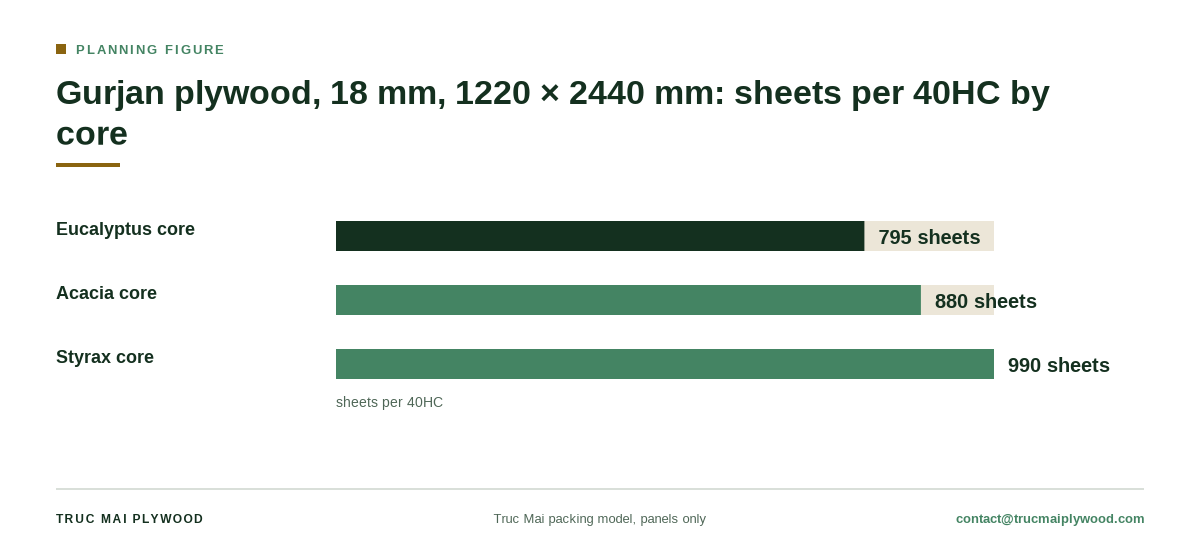
About 795 sheets of 18 mm gurjan plywood at 1220 × 2440 mm on a Eucalyptus core, 880 on Acacia and 990 on Styrax.
Sheet counts and weights are planning figures, not a loading record.
A Eucalyptus-core gurjan load is weight-capped: the box reaches its payload before it is full, so an 18 mm and 12 mm mix loads about the same sheet count as a single thickness. Use the 40HC load calculator for other mixes, and see loading a 40HC for how the packs are placed.
| Core, thickness | Sheets per pack | Packs | Sheets per 40HC | About m³ | kg per sheet |
|---|---|---|---|---|---|
| Eucalyptus, 18 mm | 53 | 15 | 795 | 42.6 | 34.8 |
| Acacia, 18 mm | 55 | 16 | 880 | 47.2 | 31.1 |
| Styrax, 18 mm | 55 | 18 | 990 | 53.0 | 26.8 |
| Eucalyptus, 12 mm | 80 | 15 | 1,200 | 42.9 | 23.2 |
| Acacia, 12 mm | 83 | 16 | 1,328 | 47.4 | 20.7 |
| Acacia, 6 mm | 166 | 16 | 2,656 | 47.4 | 10.4 |
Terms
Terms for gurjan plywood by the container
Full containers direct from the mill; these terms apply unless the contract says otherwise.
Full terms are on MOQ, payment and FOB. A gurjan quote is priced on the face grade pair and the core line together, so both are named on it.
- Minimum order One 40HC
- Production time 15–45 days after the 30% deposit, by quantity and agreement
- Payment 30% deposit; 70% against the scanned B/L by T/T, or irrevocable L/C at sight
- Delivery terms FOB Hai Phong, CFR or CIF
- Documents Invoice, packing list, B/L, certificate of origin, phytosanitary, fumigation, order certificates
- Price Quoted per order against the written specification
How to order
Starting a gurjan plywood programme
Four things fix a gurjan programme; reorders change only the thickness mix and month.
Deposit, draft documents and B/L follow from enquiry to loading.
Send the sheet you sell today: face look, core feel, thicknesses, size and monthly volume.
Receive the twelve-line specification and a quotation.
Approve a light and a dark gurjan limit board; one set stays at the mill.
Confirm the core order and grade pair; every reorder copies them.
FAQ
Gurjan plywood questions from distributors
Is gurjan plywood solid gurjan or a gurjan face on another core?
At Truc Mai it is a gurjan face and back on a Vietnamese hardwood core of Eucalyptus, Acacia or Styrax, peeled near the mill in Phu Tho. Gurjan is never the core. The core is written on the order with a thickness tolerance of ±0.3–0.5 mm, so the reorder carries the same build.
Can gurjan-faced plywood take a 12-hour boil test?
Yes, with a melamine-fortified UF glue line, which passes twelve hours and is then usually E1. The default UF glue line at E0 resists about six hours. For the US, gurjan-faced sheets from 3–25 mm ordered at E0 sit inside Truc Mai's emission scope number 26053.
How is the face grade kept the same on repeat orders?
You approve a light and a dark gurjan limit board, and one set stays at the mill. Every face is sorted into or out of that band before lay-up and again after sanding, under the mill's quality system, registration W2012. Faces outside the band move to a lower grade pair.
Is keruing the same wood as gurjan?
Yes. Both names describe Dipterocarpus species. Gurjan is the name used in South Asia and the Gulf trade, keruing the name used in South-East Asia. On a Truc Mai order the face is written as gurjan (keruing) so both readings match.
Why does gurjan colour vary more than okoume or bintangor?
Gurjan veneer comes from several Dipterocarpus species and from logs of different ages, so the red-brown ranges from light to deep. That is why a gurjan order is held with two limit boards, a light and a dark one, instead of a single sample.
What usually goes wrong on a gurjan reorder?
Colour drift from a new face lot, and a core change that nobody wrote down. The limit boards catch the first; checking edge colour and sheet weight on arrival catches the second. Both are cheaper to stop at the mill than to argue about after delivery.
Can one 40HC carry gurjan ply and a second face?
Yes. Gurjan, bintangor and okoume use the same cores and sheet sizes, so they share one load plan, each with its own packs and labels. A distributor with two price points often loads gurjan as the top sheet and bintangor as the second.
How much does an 18 mm gurjan-faced sheet weigh?
About 34.8 kg on a Eucalyptus core, 31.1 kg on Acacia and 26.8 kg on Styrax, for 1220 × 2440 mm, as planning figures from reference densities. The face adds little weight; the core decides it.
Does a gurjan face need sanding before laminating?
Not always. Many stock sheets go out unsanded or lightly sanded and are laminated by the customer. For lacquer or a clear coat, order sanded and calibrated faces, which also tightens the thickness tolerance to ±0.3 mm.
Can the back be a different veneer from the gurjan face?
Yes. A utility back in gurjan or mixed hardwood is the usual choice and costs less. The back is written on the order as the second half of the grade pair, so it stays the same on every reorder.
How many plies does an 18 mm gurjan sheet have?
Usually eleven: the gurjan face, nine cross-laid core plies and the back. Depending on the core veneer written on the order, it can be up to thirteen.
Which core makes gurjan ply feel heaviest?
Eucalyptus, at a reference density of 650 kg/m³ and measured 650–750 kg/m³. It gives the hard, heavy sheet many gurjan buyers expect, at the cost of fewer sheets per container than Acacia or Styrax.
Quotation
Request a gurjan plywood quotation
Send the face look, core, thicknesses, size and monthly volume, and Lucy will reply with a written specification and price. Write to contact@trucmaiplywood.com or use the quotation form.
Gurjan face on Eucalyptus, Acacia or Styrax core, 3–40 mm, graded to your limit boards, one repeat spec.