
Exterior plywood · Ha Hoa, Phu Tho, Vietnam
Exterior plywood: what a WBP or melamine glue line lets a panel do outside
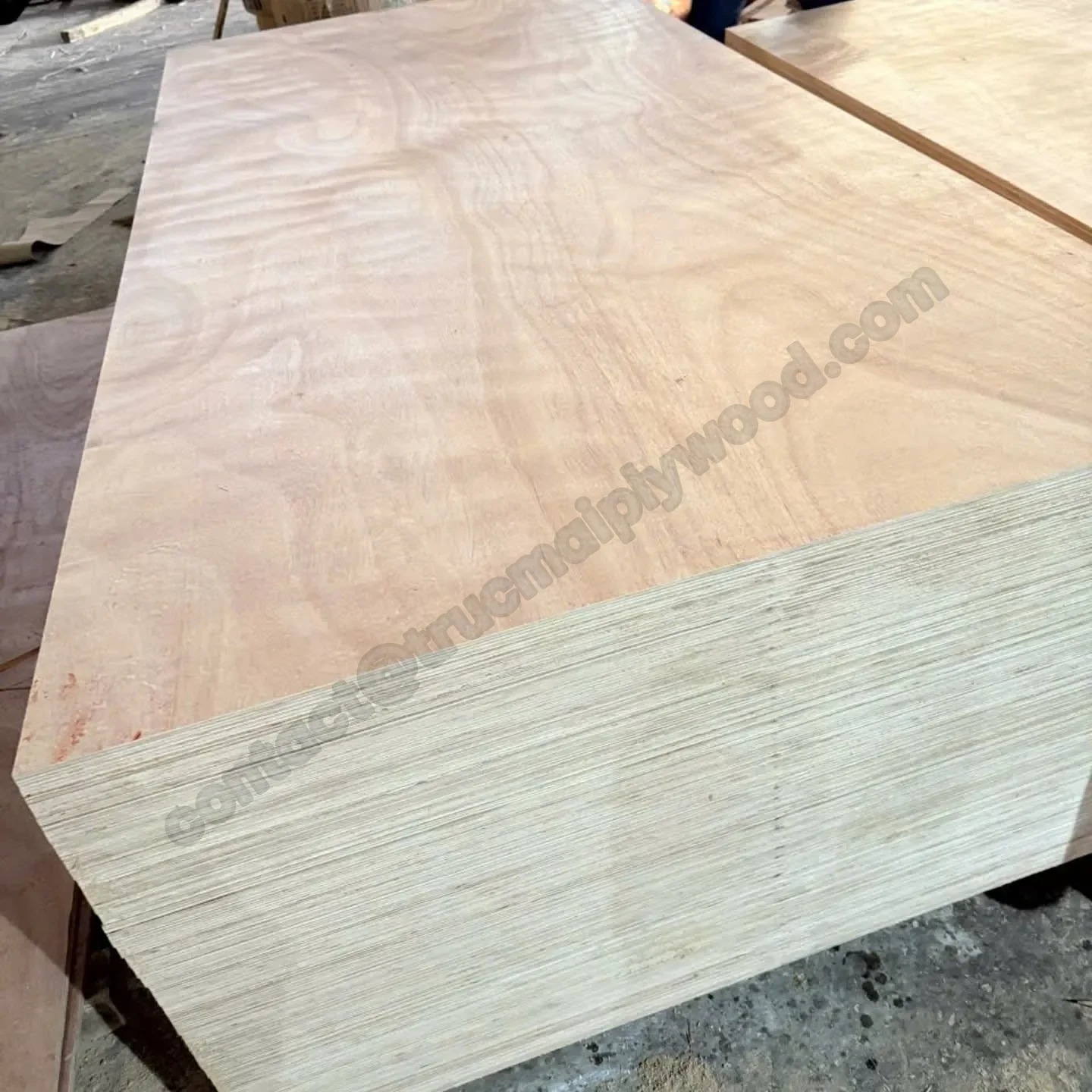
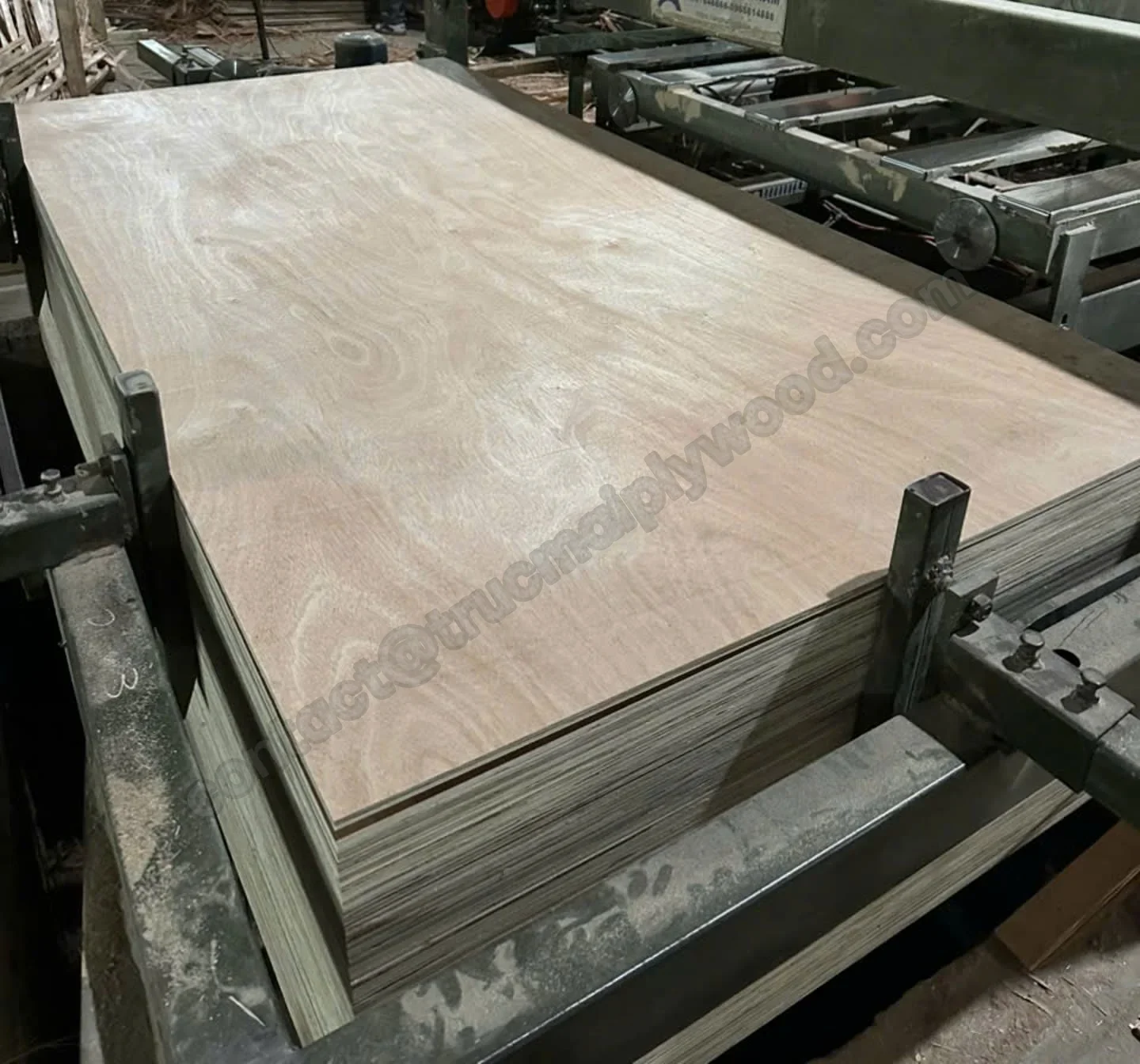
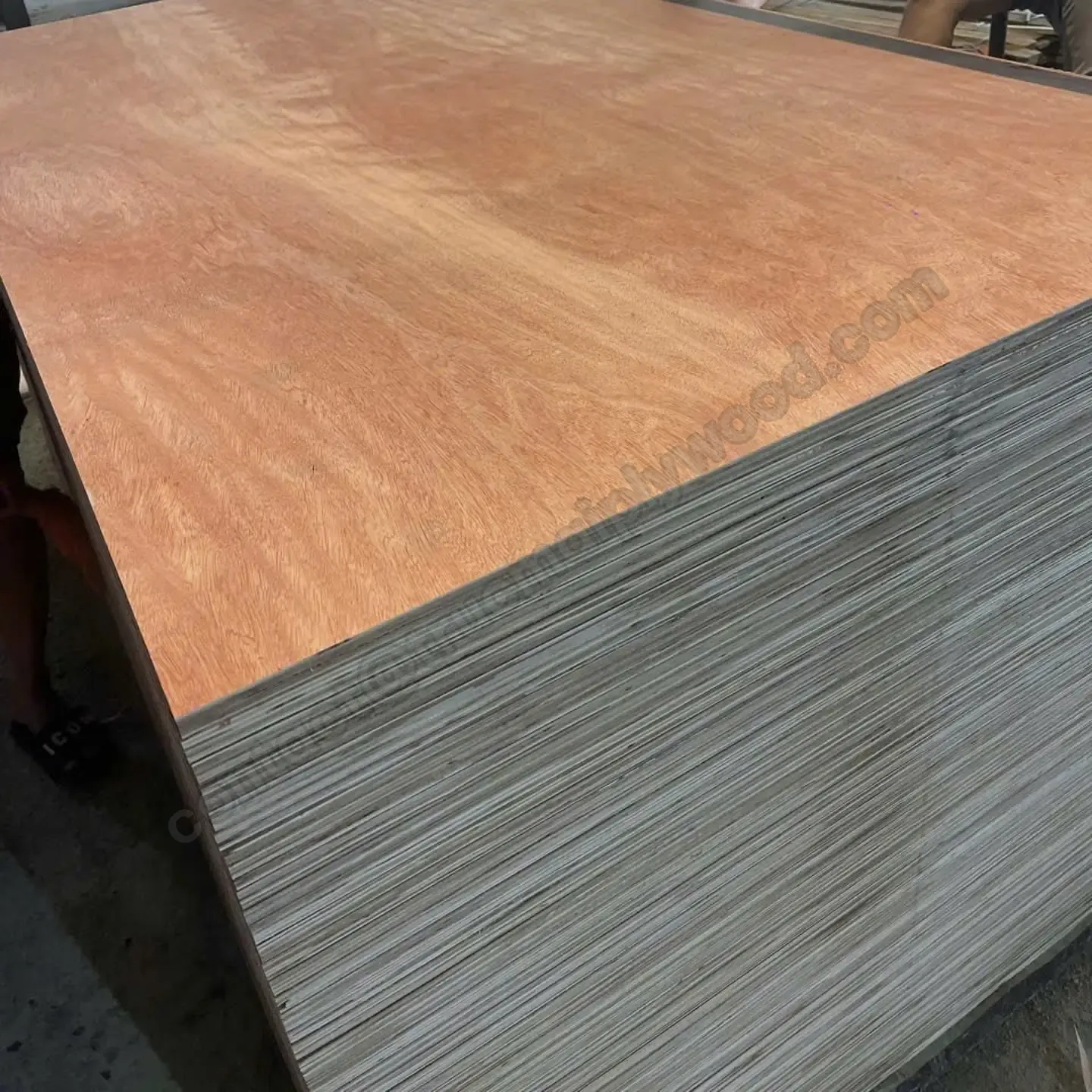
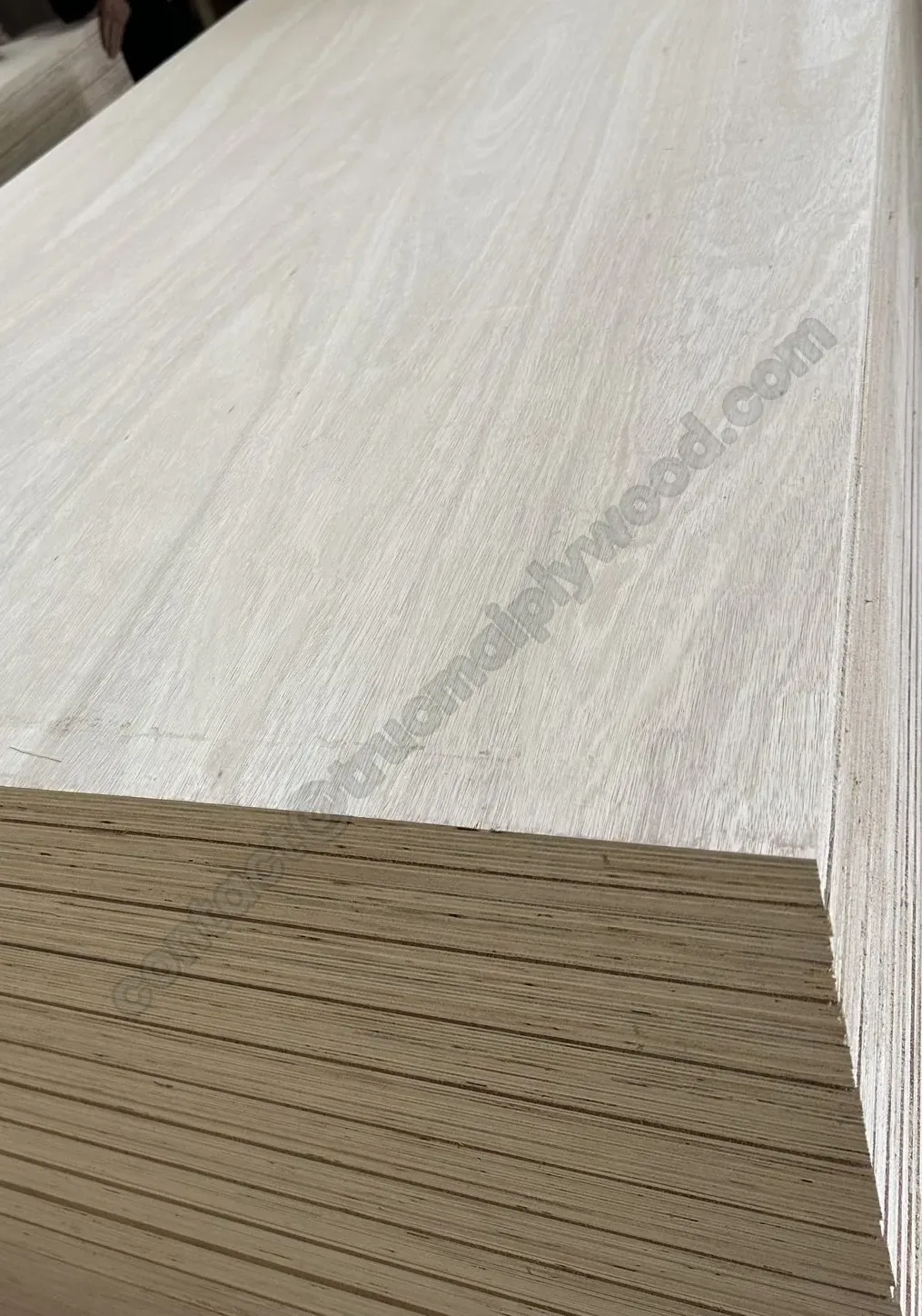
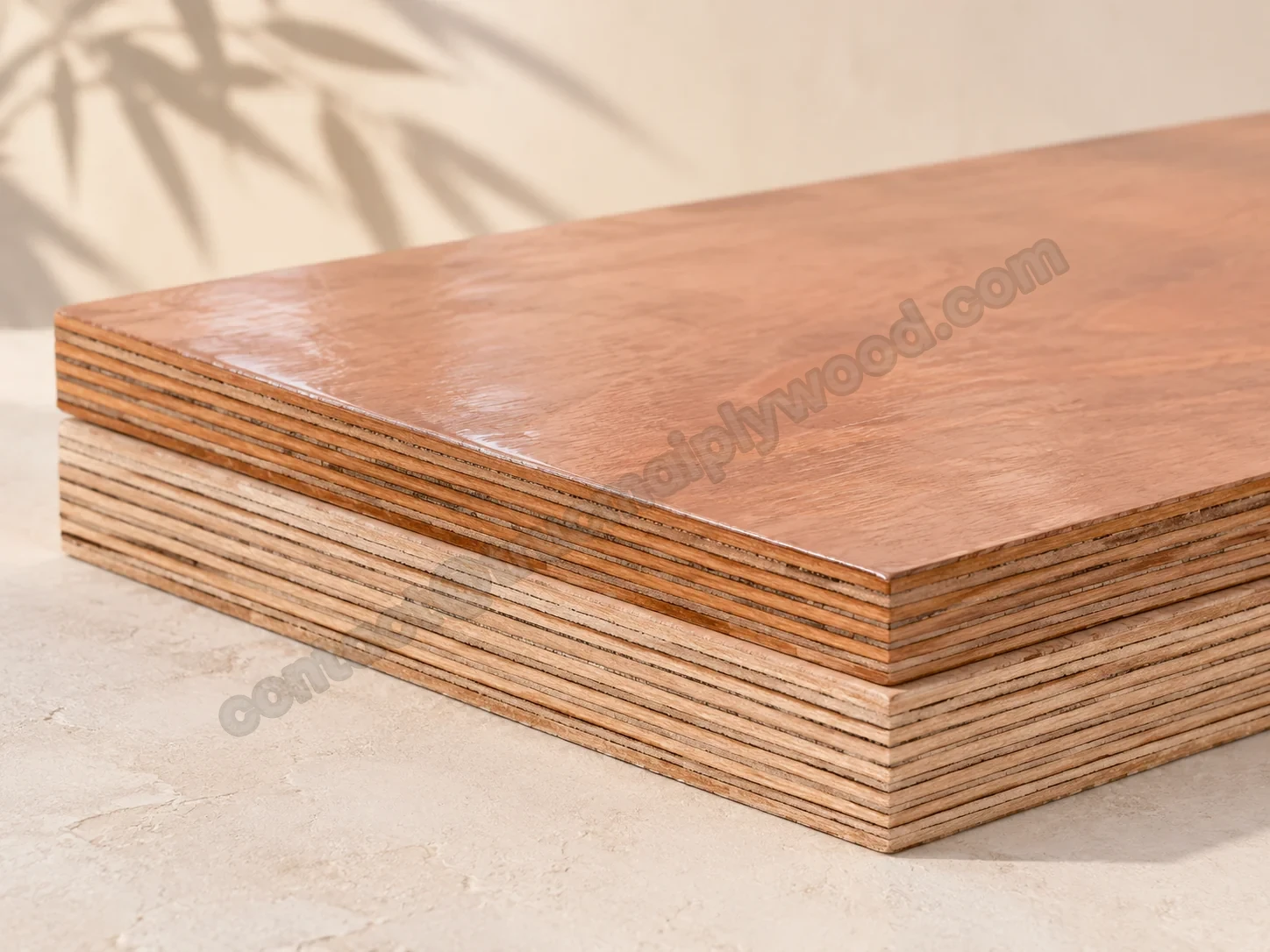
Exterior plywood from Truc Mai is a hardwood-faced panel whose glue line is built for weather: melamine-fortified UF that passes a 12-hour boil, or a WBP line pressed hotter. It is made for non-structural outdoor and semi-exposed uses, such as signboards, covered furniture and kiosks. Every order states the glue line and the emission class as two separate lines.
This page is for distributors and fabricators who buy outdoor-grade sheets by the container and reorder on the same specification. Truc Mai presses around 60,000 m³ of plywood a year at Ha Hoa, Phu Tho; exterior-glue panels share the cores, faces and sizes of the commercial range and differ in one thing: the bond between the plies.
For outside use the glue line and its boil test decide how long a panel holds together. The face, the edge sealing and the way the panel is fixed decide how good it looks while it does. This page covers all three, and is plain about what an exterior-glue panel is not.
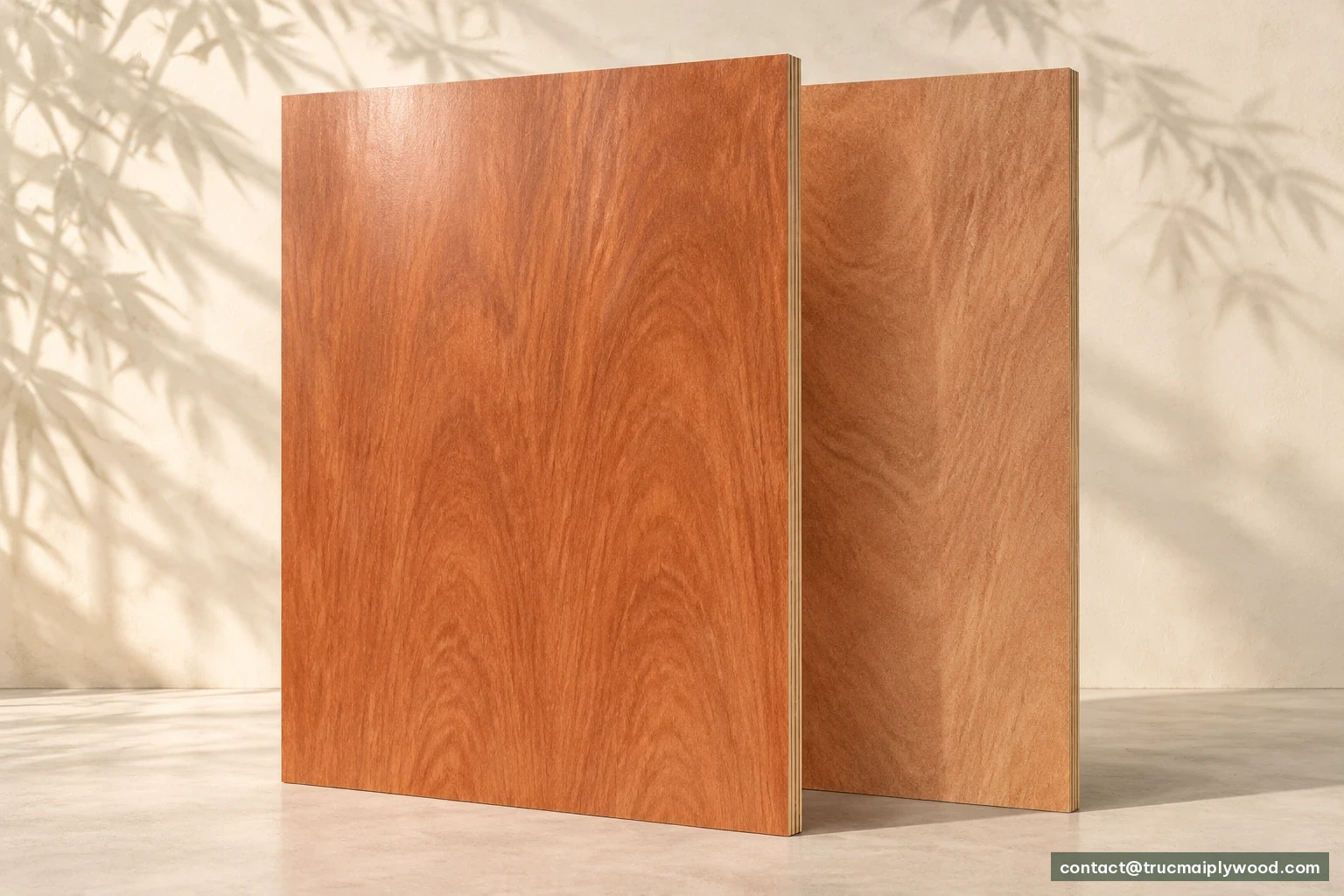
- Melamine-fortified UF or WBPGlue line
- 12 hours (melamine-fortified)Boil test
- Written per order, usually E1Emission
- 3–40 mmThickness
- Non-structural outdoorUse
On arrival
How to check an exterior-glue container yourself
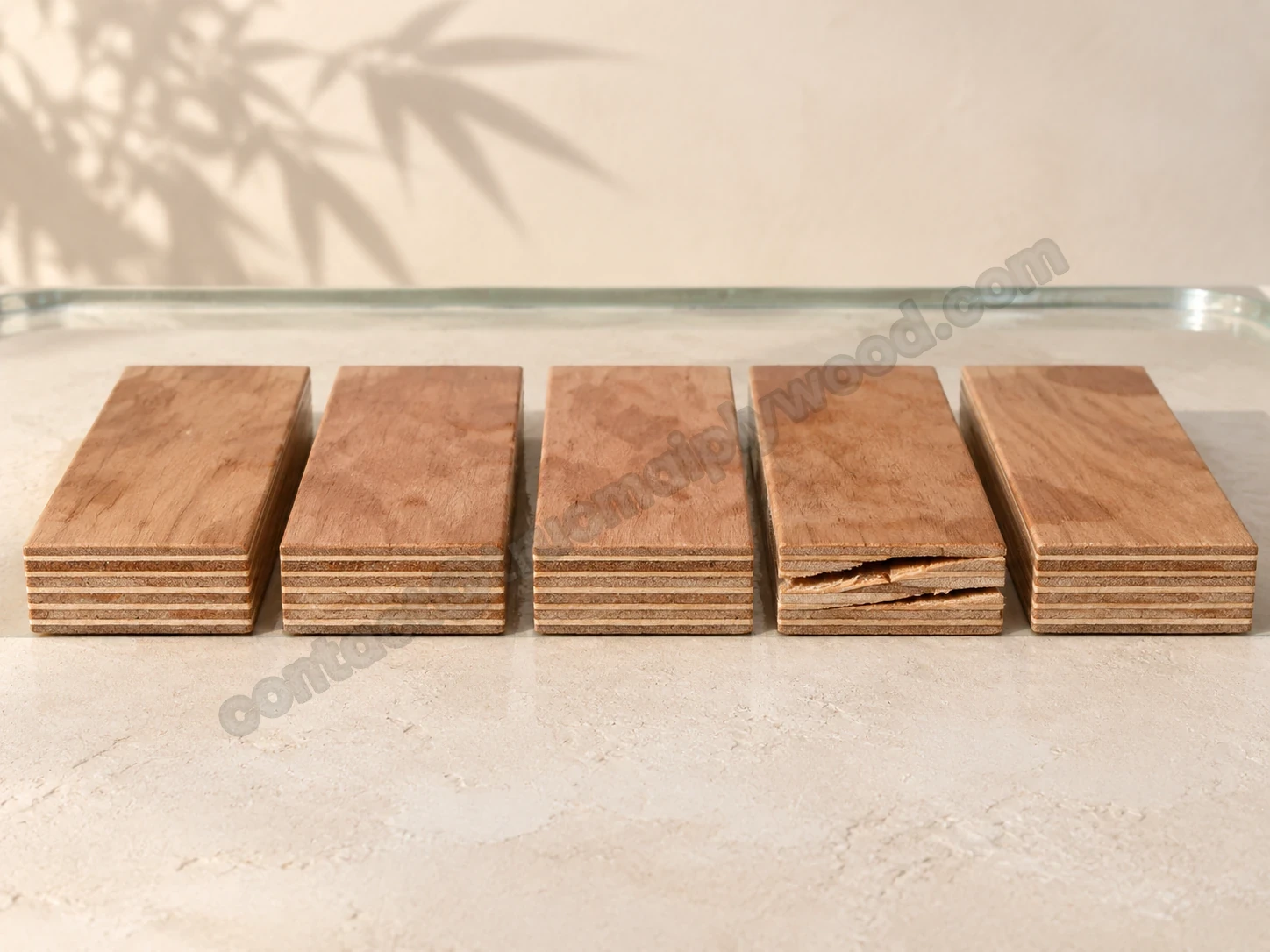
Cut a few small strips from sheets in different packs, boil them, and look at the glue lines. A melamine-fortified line should hold for twelve hours of boiling without plies lifting apart; when you force a strip open, wood fibre should tear on both sides of the line.
A simple version needs a pot, a timer and a knife. Cut small strips, a little wider than a finger, through the full thickness, boil them for the time on your order, let them cool in water, then try to split each strip along a glue line with the knife. A good bond breaks in the wood, not in the glue.
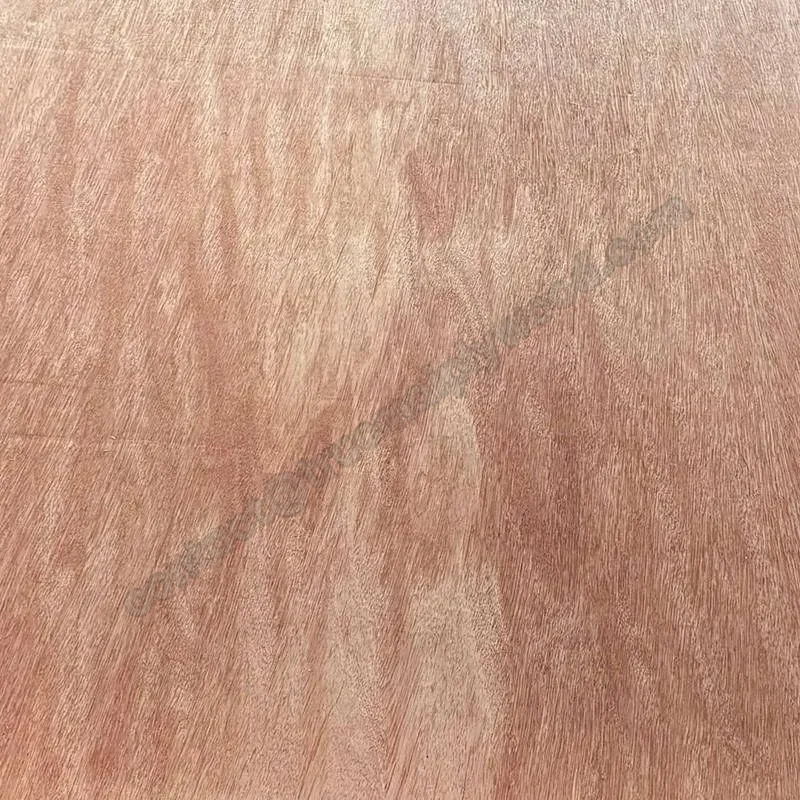
Look at the glue line colour too. Melamine-fortified UF leaves a pale to light brown line. A WBP line pressed on a phenolic resin is dark brown to almost black. If the order says one and the edge shows the other, ask before the sheets go into stock.
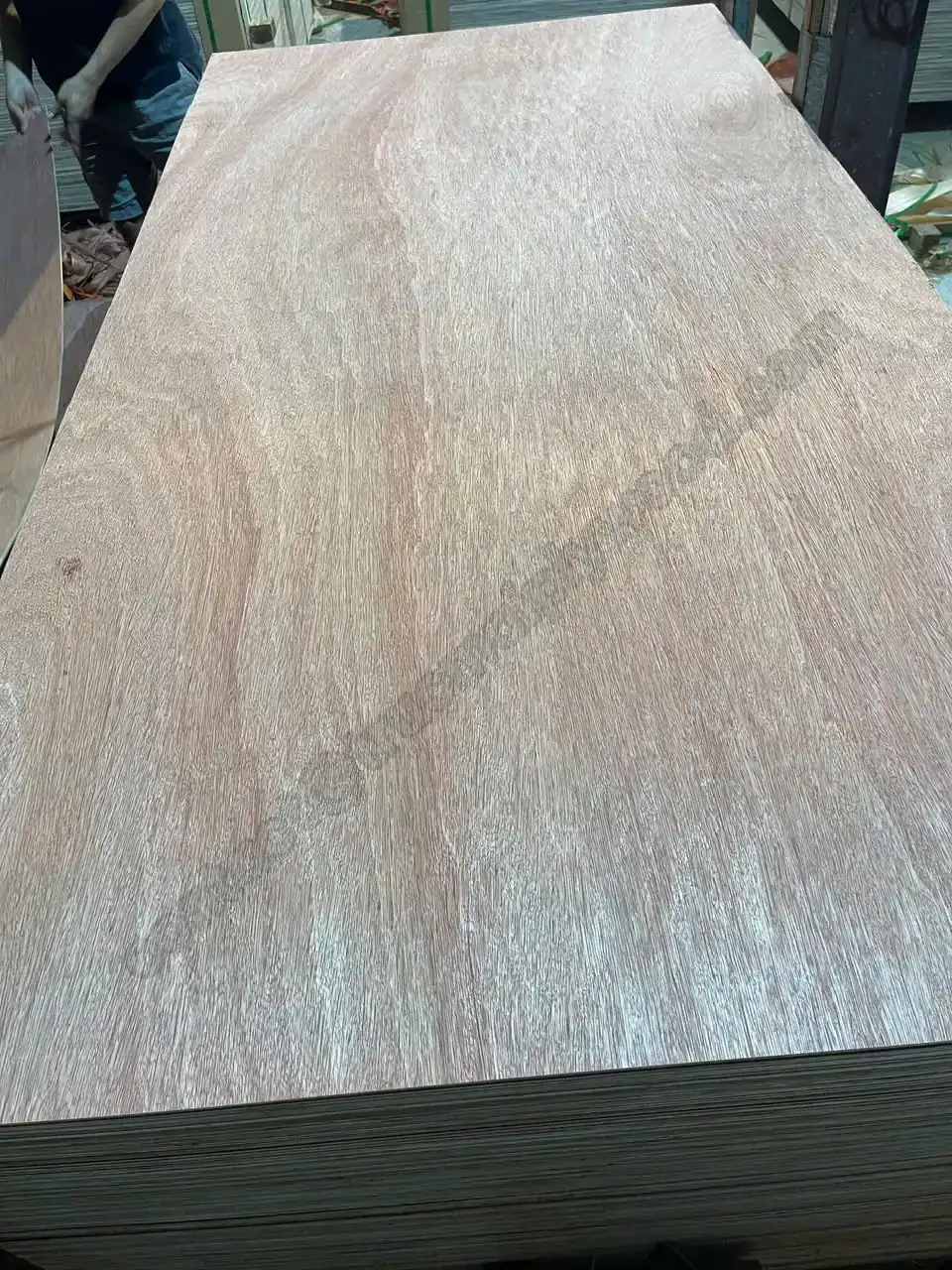
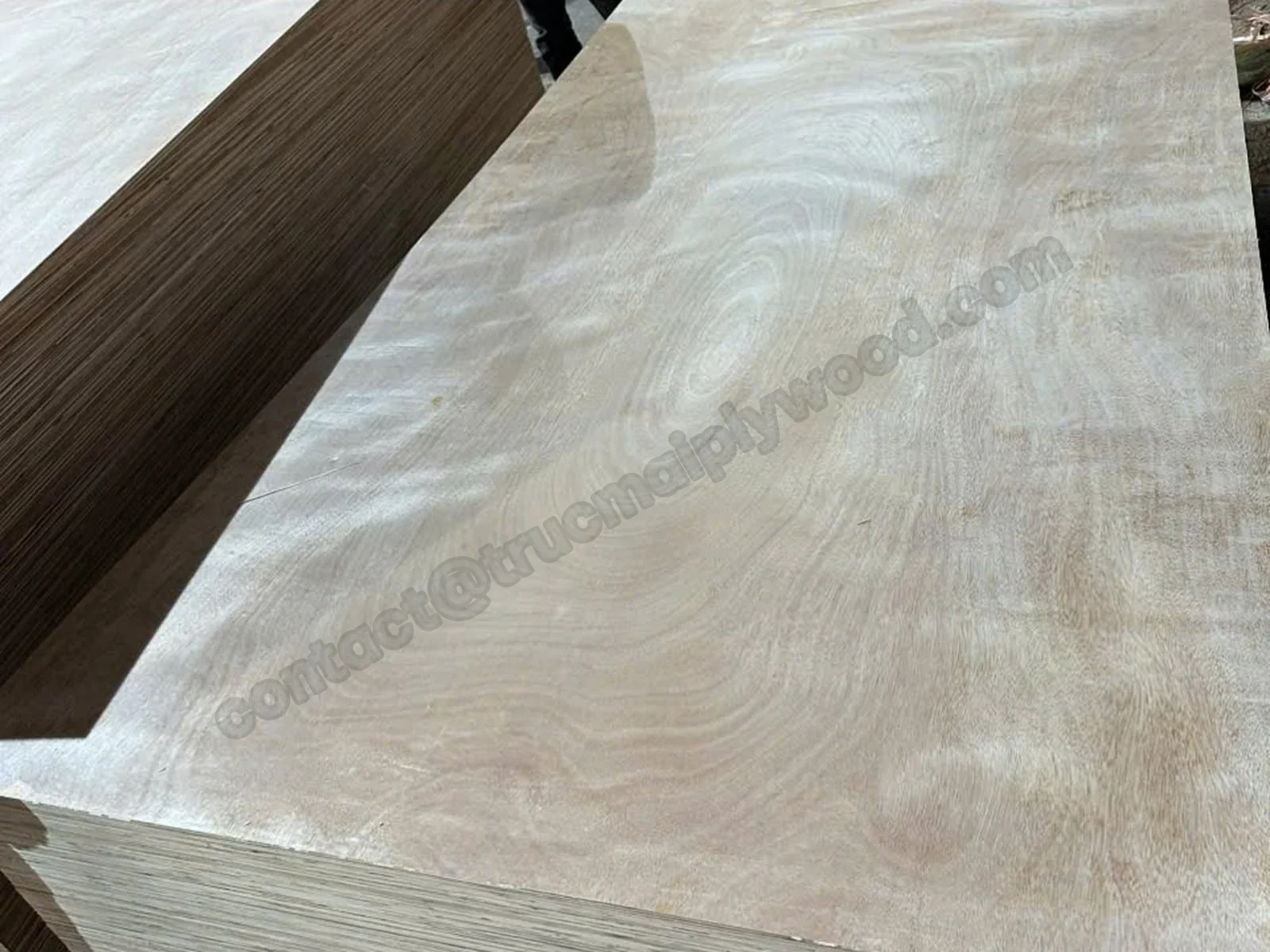
Then check the edges of the packs. Exterior panels are often stored outside in yards before sale; edges that were wet in transit and dried again show darker bands and slight swelling at the corners. That is a storage matter, not a bond failure, but it is worth a photo with the delivery note.
Specification
Exterior plywood specification: the lines that make a panel outdoor-grade
An exterior-glue panel is fixed by the same lines as any commercial sheet, plus three that matter outside: the glue line, a jointed core without open gaps, and the boil time the order is checked against.
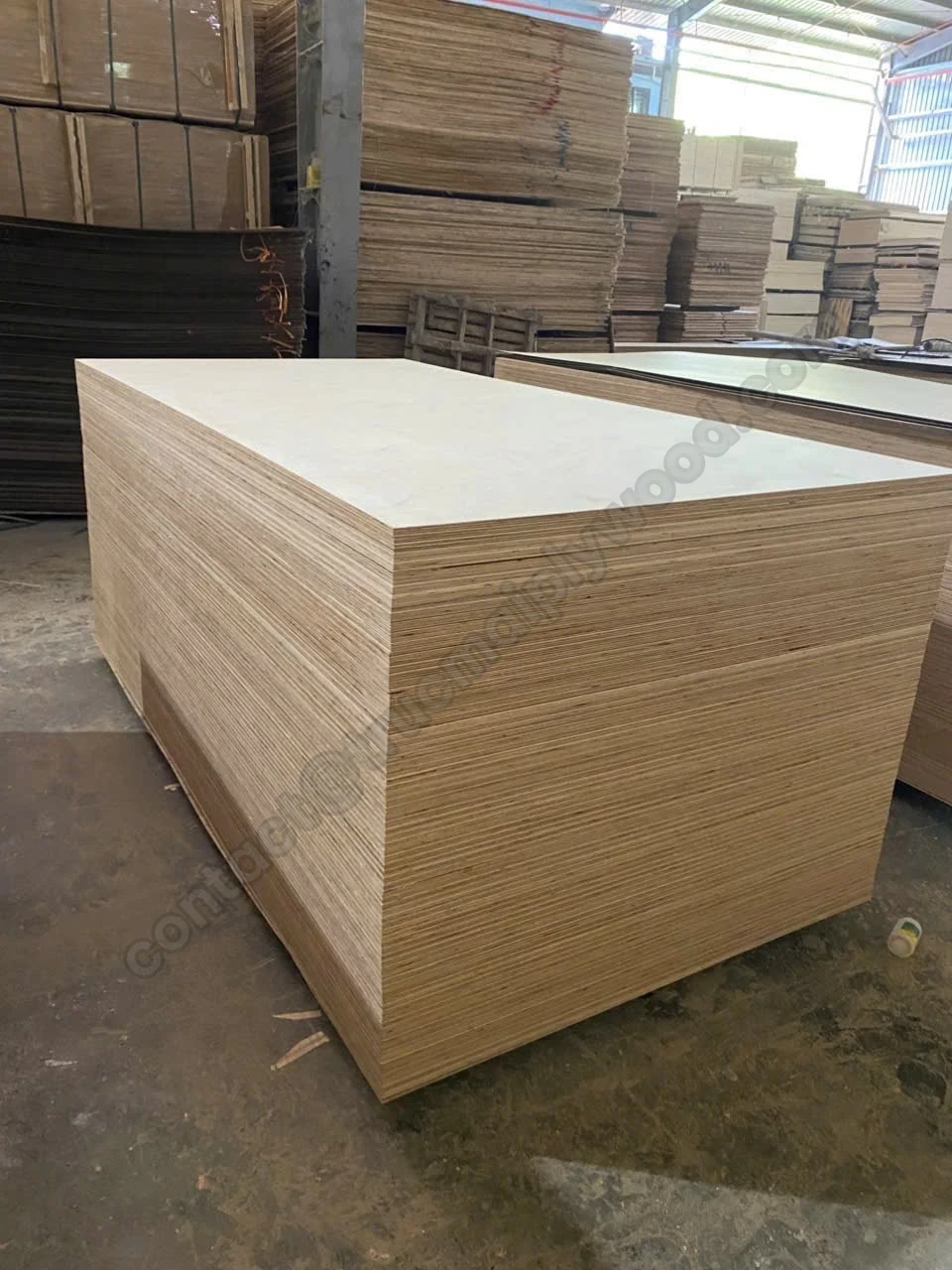
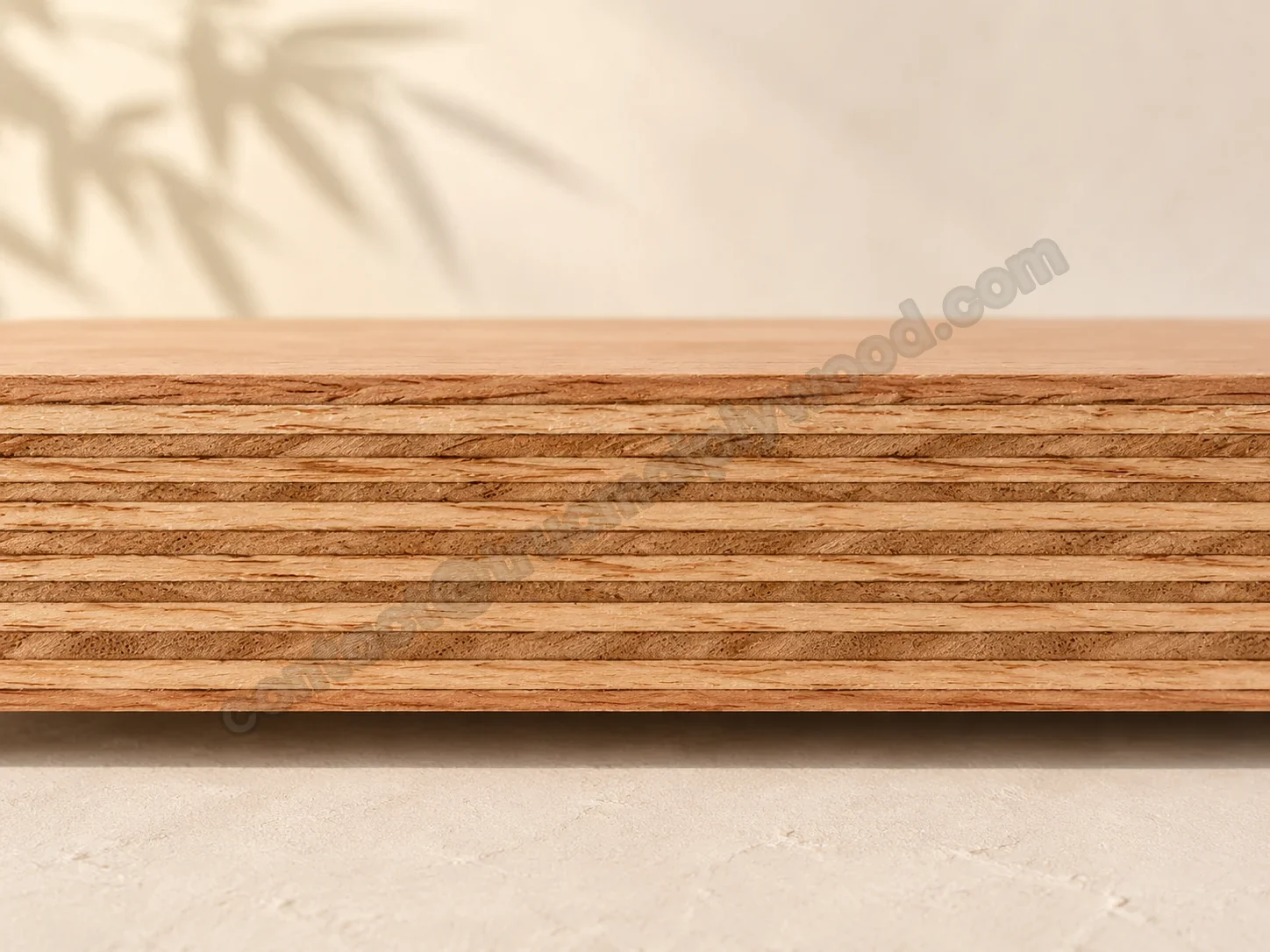
The core build matters more outside than the face. A loose-laid core leaves gaps where water sits and the panel starts to fail from inside. For exterior-glue panels the core is laid A-grade and jointed, so the glue line runs continuously from edge to edge.
WBP stands for weather and boil proof, a bond class first set out in a British standard for plywood. In the trade the letters are now used loosely: some mills write WBP on a melamine-fortified panel, others only on a phenolic one. That is why a Truc Mai order never stops at the three letters. It names the glue chemistry, the boil time and the emission class, three lines a buyer can check.
The tolerance and size lines are the same as on the commercial range, so exterior-glue sheets can share a container with interior panels of the same thicknesses.
- Glue line Melamine-fortified UF, 12-hour boil; or WBP, pressed at 130–145 °C
- Emission class A separate line: usually E1 with melamine-fortified glue; tested and written per order for WBP
- Core species Eucalyptus, Acacia or a combined core; Styrax on request for light, covered uses
- Core build A-grade core, jointed or stitched; no open loose-laid gaps
- Faces Bintangor, okoume, eucalyptus or other hardwood faces; face and back quoted as a pair
- Thickness list 3–40 mm; outdoor work mostly 9, 12, 15 and 18 mm
- Thickness tolerance Written per order at ±0.3–0.5 mm
- Sheet size 1220 × 2440 mm, 1220 × 2280 mm or 1250 × 2500 mm; length and width ±2 mm
- Surface Sanded for paint or coating; edges unsealed unless ordered
- Boil check Strips from each press load boiled for the time on the order
Face grades
Which faces and grades work on an outdoor panel
Outside, a face is chosen for how it takes paint or coating and how it moves with the weather, not only for how it looks on day one. Denser hardwood faces such as bintangor hold coatings better than soft, open faces.
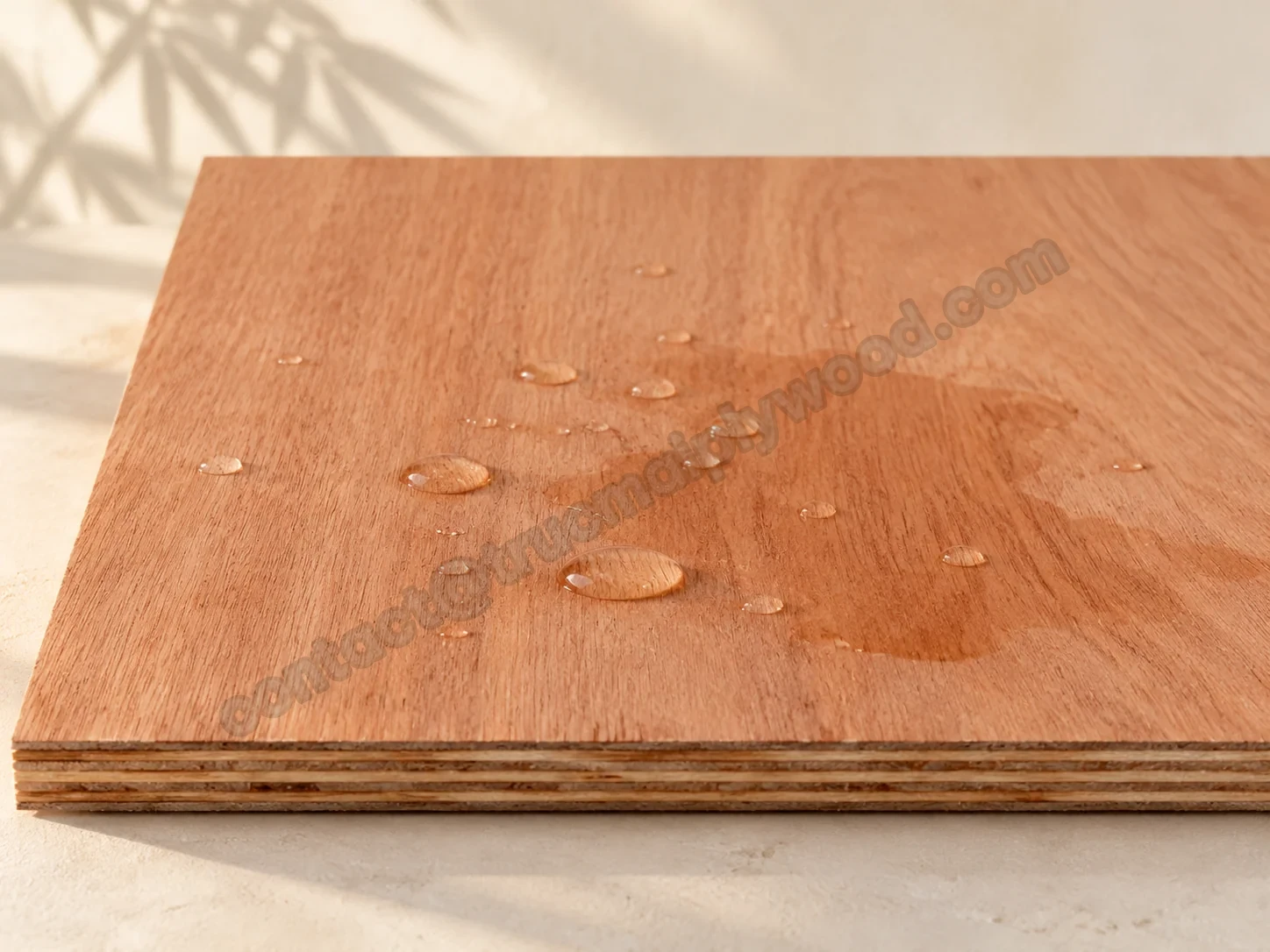
An unsealed face takes up water first through its pores and checks. Water beads on a fresh sanded face for a while, then darkens it and soaks in. Primer and paint, or a clear exterior coating, are what keep the face itself sound; the glue line only keeps the plies together.
The face pair is written on the order like any commercial panel, and the next container is sorted to the same pair. For signboards, a BB face over a CC back is the usual choice; for clear-coated work, a better face over a BB back.
 Paint-grade face (BB)
Sound face with small knots and neat patches, sanded smooth. Signboards and painted panels: the patches disappear under primer and two coats.
- Clear-coat face
Even colour, few patches, a face that looks good under a clear or stained finish. Covered outdoor furniture and kiosk fronts that stay in view.
- Utility back (CC)
Splits filled, more patches and colour spread. The hidden side of panels fixed to a frame.
Core
Which core to choose under an outdoor glue line
For exterior-glue panels choose a denser Eucalyptus or Acacia core laid A-grade and jointed; Styrax suits only light panels that stay under cover. The core decides how the panel holds screws in a frame, how much it weighs on site and how many sheets fit in a container.
Screws near the edge of an outdoor panel work loose as the panel swells and shrinks with the weather. A denser core holds them longer. Keep fixings at least a few centimetres from the edge and pre-drill, whatever the core.
Weights are planning figures from reference densities; Eucalyptus measures 650–750 kg/m³, so real sheets are weighed before loading.
Read Eucalyptus plywood for that core on its own.
| Core | Reference density | 18 mm sheet weight | Outdoor fit |
|---|---|---|---|
| Eucalyptus | 650 kg/m³ | 34.8 kg | Signboards and panels screwed to frames |
| Acacia | 580 kg/m³ | 31.1 kg | General outdoor panels, covered furniture |
| Combined | Per order | Per order | Dense outer plies, lighter inside |
| Styrax | 500 kg/m³ | 26.8 kg | Light panels that stay fully under cover |
Glue and emission
Which glue line is needed for a 12-hour boil?
A melamine-fortified UF glue line; the default UF line does not reach it.
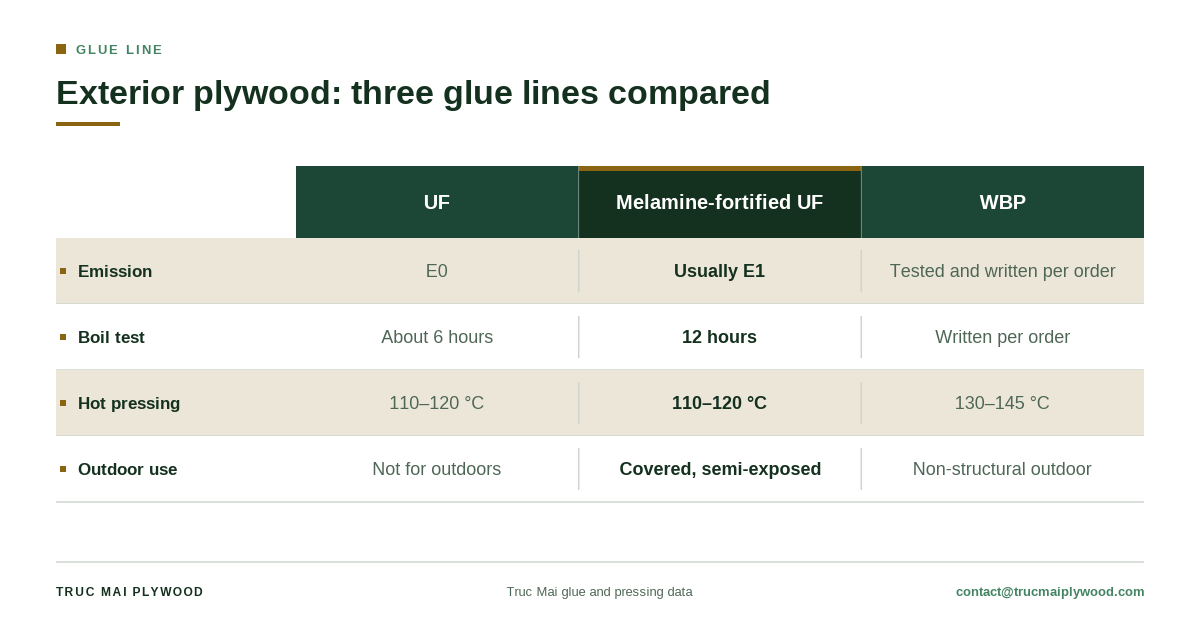
UF glue holds about six hours in a boil test; melamine-fortified glue holds twelve.
Glue type and emission class are two separate lines on the order: the default is UF glue at E0 emission, and a melamine-fortified glue for damp rooms usually gives E1.
Exterior panels from 3–25 mm can be ordered inside Truc Mai's CARB P2 and TSCA Title VI scope, number 26053. See emission class per order.
| Glue line | Emission | Boil test | Outdoor use |
|---|---|---|---|
| UF (default) | E0 | About 6 hours | Not for outdoor use |
| Melamine-fortified UF | Usually E1 | 12 hours | Covered and semi-exposed |
| WBP | Tested per order | Per order | Non-structural outdoor |
Sizes
Exterior plywood sizes, and sealing the edges you cut
Exterior-glue panels come in 1220 × 2440 mm, 1220 × 2280 mm and 1250 × 2500 mm from 3 to 40 mm, or cut to size at the mill. Every edge cut after delivery needs sealing before the panel goes outside.
Edges are where water gets in first, because end grain soaks it up along the fibres. Seal every edge with a primer or edge sealer before painting, and seal again any edge you cut or drill on site. A sealed edge darkens slightly and stays dry far longer than a raw one.
Panels cut at the mill arrive with raw edges so the coating you choose goes on first. Read panels cut at the mill for cut lists.
- 1220 × 2440 mm The 8 × 4 ft sheet for signboards and fabricators
- 1250 × 2500 mm The European format
- 1220 × 2280 mm A shorter sheet for furniture and box parts
- Cut-to-size Up to 1250 × 2500 mm; edges left raw for your own sealing
| Thickness | Typical outdoor use |
|---|---|
| 6–9 mm | Sign faces on a frame, box lids |
| 12 mm | Signboards, kiosk panels, storage box sides |
| 15–18 mm | Covered furniture, counters, stall tops |
| 21–25 mm | Heavy tops and benches under cover |
Applications
Where an exterior-glue panel belongs, and where it does not
Exterior-glue plywood suits non-structural outdoor and semi-exposed uses: signboards, covered outdoor furniture, kiosks and market stalls, garden storage. It is not sold for structural, load-bearing or marine use.
Semi-exposed means the panel gets wet and dries again, but does not stand in water and is not walked on or loaded as part of a structure. A panel that carries a building load needs a structural product with its own marking, which Truc Mai does not make.
The best outdoor result comes from three things together: the right glue line, sealed edges and a coating renewed when it wears. Leave out any one and the panel ages faster.
- Signboards and display backs
Painted 9–12 mm panels on a frame. A BB face over a CC back takes primer and paint evenly.
- Covered outdoor furniture
Tables, benches and cabinets on terraces and under roofs, clear-coated or painted, 15–18 mm on Acacia or Eucalyptus.
- Kiosks and market stalls
Wall panels, counters and shelves that get rain at the edges but stand under a roof.
- Garden storage and utility boxes
Box sides and lids, painted, with every edge sealed and the box raised off the ground.
Comparison
WBP ply vs regular interior plywood: the main difference
The main difference is the glue line: regular interior plywood has UF glue that holds about six hours of boiling; exterior-glue plywood has a melamine-fortified line that holds twelve, or a WBP line pressed hotter. Faces, cores and sizes can be the same.
WBP ply is the trade shorthand for a weather and boil proof glue line. It says nothing about the face or the core, so it is written on the order next to the face grade, the core and the emission class.
A stronger glue can change the emission class. Melamine-fortified glue usually moves a panel from E0 to E1, which is why both lines are always written. A WBP panel is tested for emission on its own order.
For an indoor kitchen or bathroom carcass, the melamine-fortified line on an interior face is often all that is needed; see 18 mm hardwood ply for the faces. For crates that stand outdoors, see packing plywood.
Truc Mai does not make film-faced, formwork, structural or marine plywood.
| Panel | Glue line | Emission | Where it goes |
|---|---|---|---|
| Interior commercial plywood | UF | E0 | Dry interiors, furniture, fit-out |
| Exterior-glue, melamine-fortified | Melamine-fortified UF | Usually E1 | Covered and semi-exposed outdoor uses |
| Exterior-glue, WBP | WBP | Tested per order | Non-structural outdoor uses |
| Packing plywood | UF, packing build | Usually E2 | Crates and pallets |
Checks
What is checked differently on an exterior-glue order
On exterior panels the extra checks are on the bond.
Records and the reference sample are kept as on repeat spec control.
Glue mix and spread are checked against the glue line on the order before lay-up.
The core is checked for open gaps, which are not allowed on this build.
Strips from each press load are boiled for the time on the order and split by knife.
Glue-line colour at the edge is checked against the glue line written on the order.
Certificates
Certificates and files for exterior plywood
FSC, CARB P2, ISO 9001 and ISO 14001, plus EU file sets.
- FSC 100% FSC-C196493 · SA-COC-014545
- CARB P2 and TSCA Title VI CARB/EPA 26053 · TPC-43
- ISO 9001:2015 W2012 · WCERT
- ISO 14001:2015 W2012E · WCERT
Packing
Exterior plywood sheets per 40HC
On the dense cores used for outdoor panels, a 40HC carries about 880 sheets of 18 mm on Acacia and 795 on Eucalyptus.
Sheet counts and weights are planning figures, not a loading record.
Exterior loads on Eucalyptus are weight-capped. They are often mixed with interior panels of the same thickness, each with its own labels. See the 40HC load calculator and loading a 40HC.
| Core, thickness | Sheets per 40HC | About m³ | kg per sheet |
|---|---|---|---|
| Acacia, 12 mm | 1,328 | 47.4 | 20.7 |
| Acacia, 15 mm | 1,056 | 47.2 | 25.9 |
| Acacia, 18 mm | 880 | 47.2 | 31.1 |
| Eucalyptus, 12 mm | 1,200 | 42.9 | 23.2 |
| Eucalyptus, 15 mm | 960 | 42.9 | 29.0 |
| Eucalyptus, 18 mm | 795 | 42.6 | 34.8 |
Terms
Terms for exterior plywood by the container
Full containers direct from the mill; these terms apply unless the contract says otherwise.
Full terms are on MOQ, payment and FOB. An exterior quote names the glue line, boil time and emission class as three separate lines.
- Minimum order One 40HC
- Production time 15–45 days after the 30% deposit, by quantity and agreement
- Payment 30% deposit; 70% against the scanned B/L by T/T, or irrevocable L/C at sight
- Delivery terms FOB Hai Phong, CFR or CIF
- Documents Invoice, packing list, B/L, certificate of origin, phytosanitary, fumigation, order certificates
- Price Quoted per order against the written specification
How to order
Ordering exterior-glue panels on a repeat specification
An exterior order starts from where the panel will stand.
Deposit, draft documents and B/L follow from enquiry to loading.
Tell us the use, how much weather the panel gets, the finish, thicknesses and monthly volume.
Receive a specification naming glue line, boil time, emission class and core build.
Boil-test sample strips yourself before you approve.
Reorders repeat the same glue, boil time and face pair.
FAQ
Exterior plywood questions
What does WBP mean in plywood?
WBP means weather and boil proof, a bond class first defined in a British plywood standard. Mills now use the letters loosely, so a Truc Mai order names the glue chemistry, the boil time and the emission class, and the thickness tolerance of ±0.3–0.5 mm, instead of relying on the three letters.
How long does a UF bond at E0 last in a boil test?
About six hours. That is enough for dry interiors but not for outdoor use, which is why exterior-glue panels move to a melamine-fortified or WBP line.
Which glue is needed for a 12-hour boil?
A melamine-fortified UF glue line. It passes twelve hours of boiling and the emission class is then usually E1. Truc Mai presses it on the same lines that make around 60,000 m³ of plywood a year, so a monthly exterior programme runs alongside the interior range.
Does a stronger glue change the emission class?
It can. Melamine-fortified glue usually moves a panel from E0 to E1. A WBP panel is tested for emission on its own order. Glue and emission are therefore always two separate lines on the order.
What is the main difference between WBP plywood and regular plywood?
The glue line. Regular interior plywood uses UF glue that holds about six hours in a boil test; WBP and melamine-fortified panels hold far longer. The faces, cores and sheet sizes can be the same.
Is plywood used only outdoors covered by the EU formaldehyde limit?
No. REACH Annex XVII entry 77 sets the limit for furniture and wood-based articles placed on the EU market, but articles used only outdoors are excluded. Panels that may also go indoors should be ordered and documented at the emission class the indoor use needs.
How thick should an outdoor signboard panel be?
Usually 9–12 mm on a frame, painted, with a BB face over a CC back. Larger boards or boards without a full frame go to 15 mm.
How can I test the bond of a delivery myself?
Cut small strips from several packs, boil them for the time on your order, cool them in water and split them with a knife. A good bond breaks in the wood, with fibre on both sides of the line.
What colour is the glue line on each type?
Melamine-fortified UF leaves a pale to light brown line; a phenolic WBP line is dark brown to almost black. The colour at the edge should match the glue line on your order.
Can exterior-glue panels share a container with interior panels?
Yes. They use the same cores, thicknesses and sheet sizes, so they share one load plan, each product with its own packs and labels.
Which core works best under an outdoor glue line?
A dense Eucalyptus or Acacia core laid A-grade and jointed, so there are no gaps for water to sit in and screws hold longer in the frame. Styrax suits only light panels that stay fully under cover.
Quotation
Request an exterior plywood quotation
Send the use, finish, thicknesses, size and monthly volume, and Lucy will reply with a written specification naming the glue line, boil time and emission class. Write to contact@trucmaiplywood.com or use the quotation form.
Melamine-fortified or WBP glue line, A-grade jointed core, 3–40 mm, for non-structural outdoor and semi-exposed uses.