
Resources · cores, glue and plies
Plywood cores and glue guides: what changes weight, flatness and m³ per container
Plywood cores and glue guides start with one fact: core species decides what a container holds. At 18 mm and 1220 × 2440 mm a 40HC takes about 53 m³ of Styrax core at about 500 kg/m³, about 47 m³ of Acacia and about 43 m³ of Eucalyptus, the last two limited by weight. Glue and emission class are two separate lines, and an 18 mm panel usually has 11 plies.
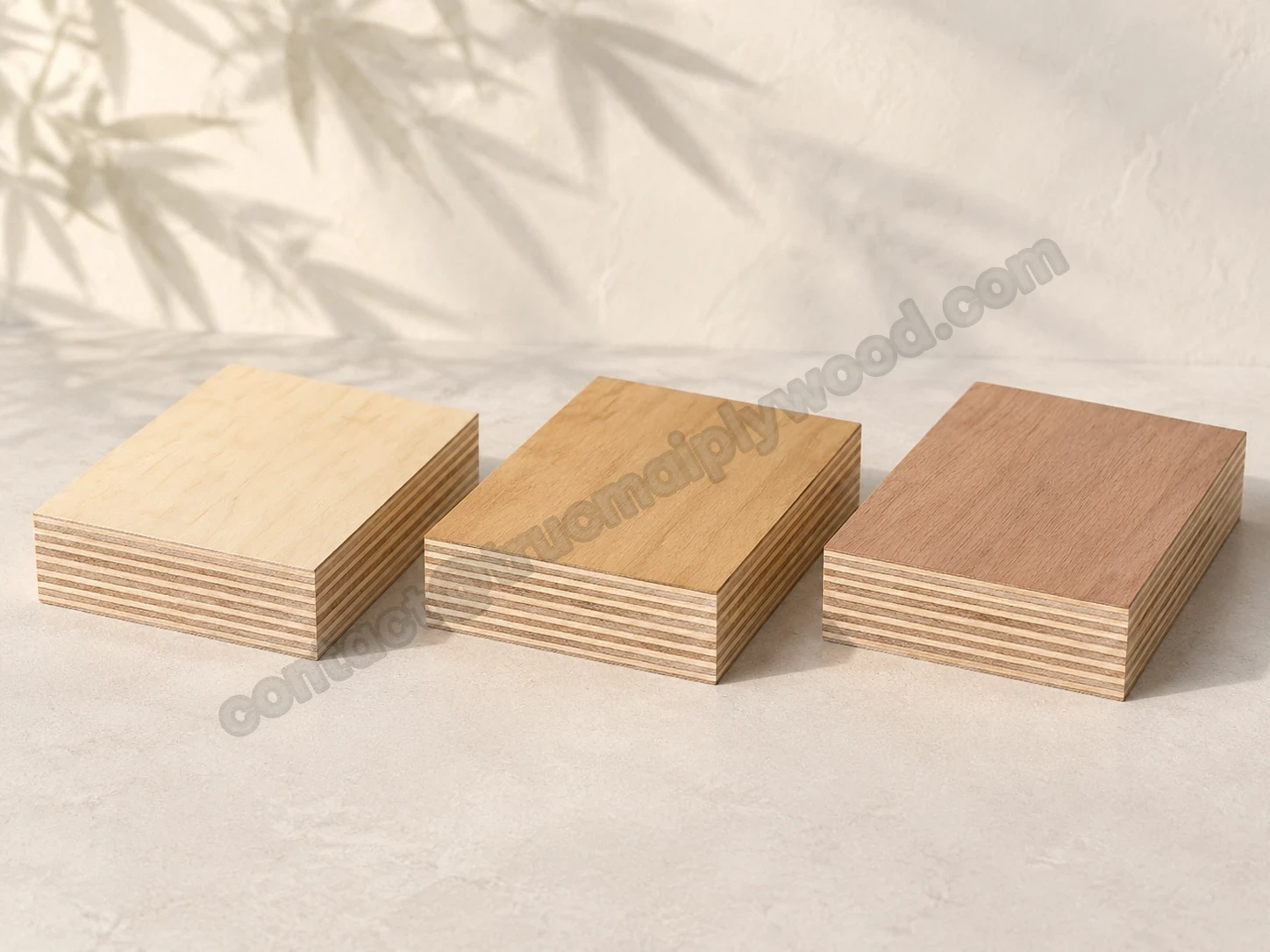
Truc Mai builds on Eucalyptus, Acacia, Styrax or Pine cores, or on combined species laid together to balance price, weight and appearance. There is no rubberwood core. This hub explains how core, glue and ply count change what a buyer receives, and links the guides that go deeper.
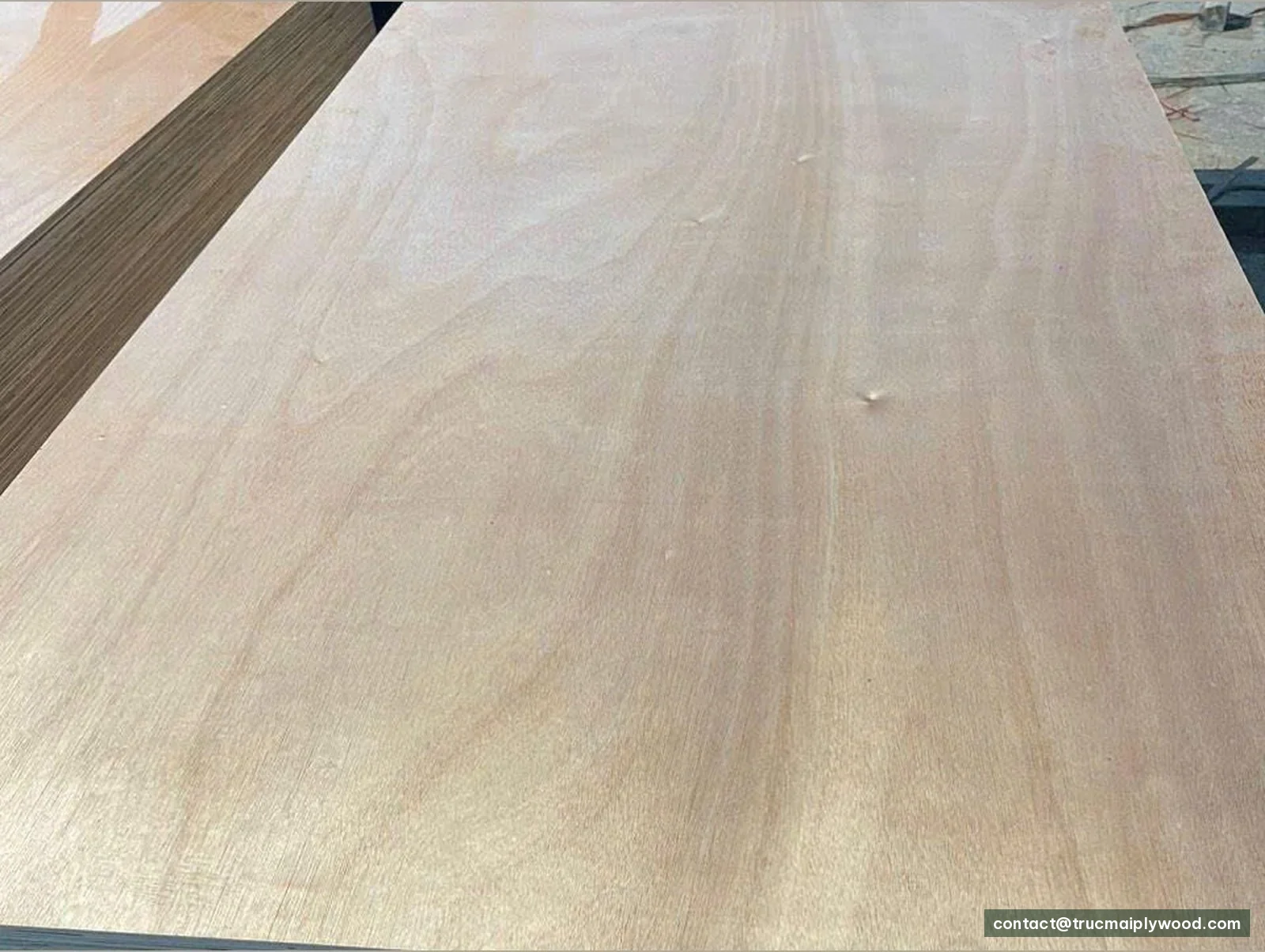
- ~500 kg/m³Styrax reference density; Acacia 580, Eucalyptus 650
- 11 pliesmost common build at 18 mm; 11–13 by order
- 110–120 °Chot-press range for UF glue
- 6 h / 12 hboil hours: UF glue and melamine-fortified glue
Sheet counts and weights are planning figures, not a loading record.
Answer and key facts
Plywood cores and glue guides: which core, which glue and how many plies?
Pick the core for the job and the freight, the glue for the room the panel ends up in, and the ply count follows thickness. Styrax is the light, high-m³ choice, Acacia a mid-weight core with good flatness, Eucalyptus the densest and heaviest.
Gurjan, okoume and bintangor are faces only: they are never core plies. Vietnamese plywood has no poplar or birch cores either, which is why a birch or poplar sheet from Vietnam is faced, not solid. A buyer who writes the core on the RFQ avoids the most common mismatch between two quotes.
Emission limits on this page follow the California Air Resources Board and the US EPA; FSC International and Regulation (EU) 2023/1115 on EUR-Lex cover the timber claim and the origin file.
| Line | What the mill offers | Why it matters |
|---|---|---|
| Core species | Eucalyptus, Acacia, Styrax, Pine, or combined species | Sets weight, flatness and m³ per 40HC |
| Glue | UF glue at E0 emission by default; melamine-fortified glue for damp rooms | About 6 or 12 hours in a boil test |
| Plies | 3–5 mm: five plies; 6 mm: by order; 18 mm: usually 11–13, most often 11 | Stability and sanding allowance |
| Core veneer | Usually 1.4–2.0 mm; 1.3 mm in 4 mm panels | Thin veneer is scarce, so 4 mm can take longer |
| Core joining | Stitched across and along; usually the outer 2–4 plies, all plies on request | Flatness on furniture panels |
Cores
Plywood core types: how species changes sheet weight and m³ per 40HC
Three cores cover most orders. The table shows the 18 mm load on the Truc Mai packing model; the same pattern holds from 3 to 40 mm, where Styrax stays near 53 m³ and Eucalyptus near 43 m³.
Sheet counts and weights are planning figures from our packing model, panels only, not a loading record; the carrier and route decide the final payload. Combination core plywood, or combined core, lays different species in one sheet. The aim is to balance price, weight and appearance, and the acceptable mix is written on the order. Finger-jointed cores save cost on some builds and fail on others; the guide below says where. Weigh real sheets before fixing a container plan, because the densities above are references, not measurements of your order.
| Core | Reference density | Sheets per 40HC | m³ | kg per sheet |
|---|---|---|---|---|
| Styrax | 500 kg/m³ | 990 | about 53 | 26.8 |
| Acacia | 580 kg/m³ | 880 | about 47 | 31.1 |
| Eucalyptus | 650 kg/m³ (measured 650–750) | 795, weight-capped | about 43 | 34.8 |
Glue
UF glue at E0 emission against melamine-fortified glue
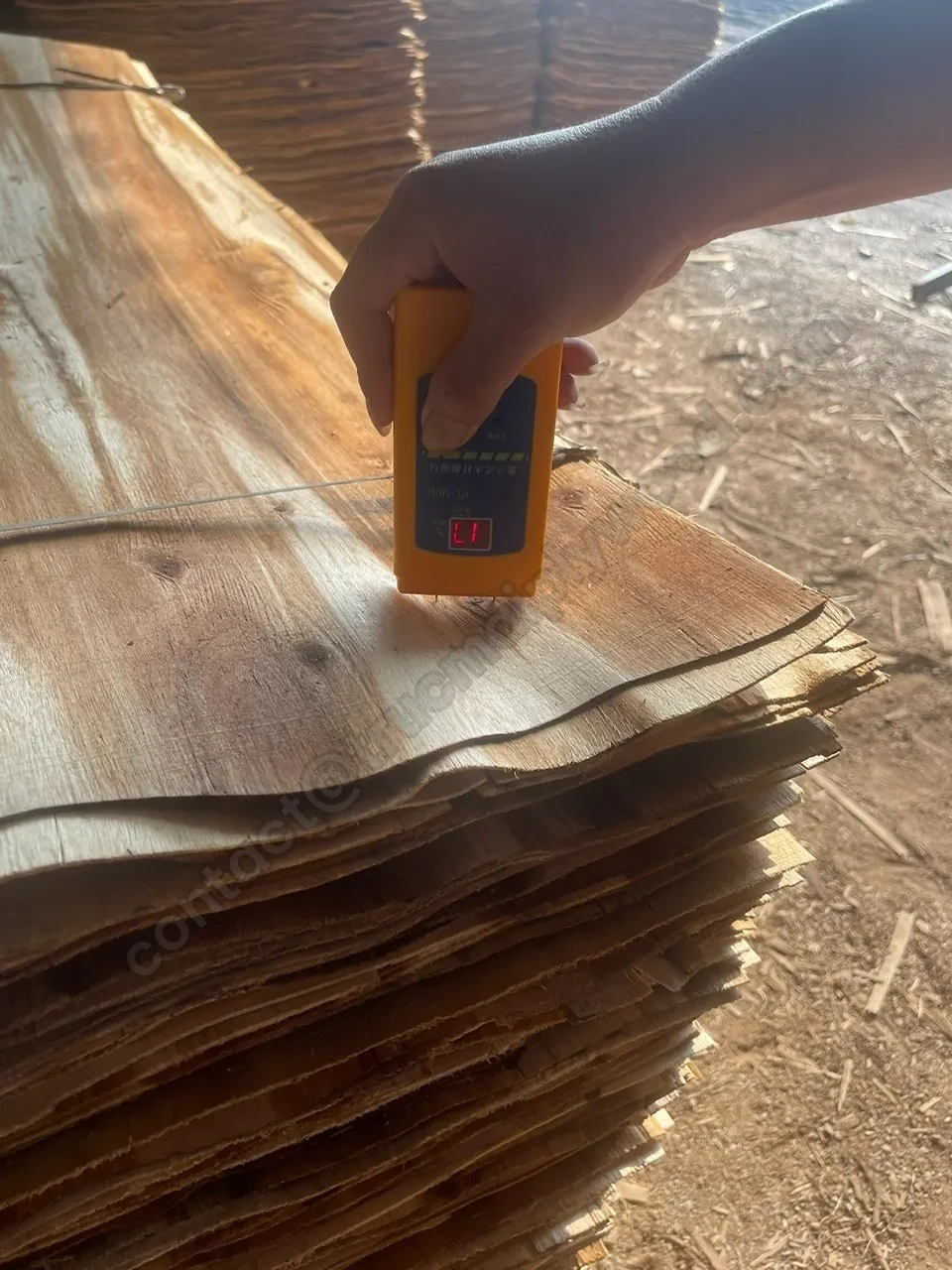
Glue type and emission class are two separate lines on the order: the default is UF glue at E0 emission, and a melamine-fortified glue for damp rooms usually gives E1. Never write "E0 glue".
UF glue holds about six hours in a boil test; melamine-fortified glue holds twelve. A 12-hour boil is what outdoor-leaning use asks for. Hot pressing runs at about 110–120 °C for MR and UF glue and at 130–145 °C for WBP. Packing panels are usually E2.
The emission class matters at the destination. CARB Phase 2 and TSCA Title VI certification covers hardwood plywood with veneer core at 3–25 mm and 3–15 plies, so 30 and 40 mm panels sit outside that scope. In the EU, REACH Annex XVII entry 77 sets a 0.062 mg/m³ limit for wood-based articles, covered on the rules and paperwork hub.
Plies
Combination core plywood and plies: how many plies does 18 mm plywood have?
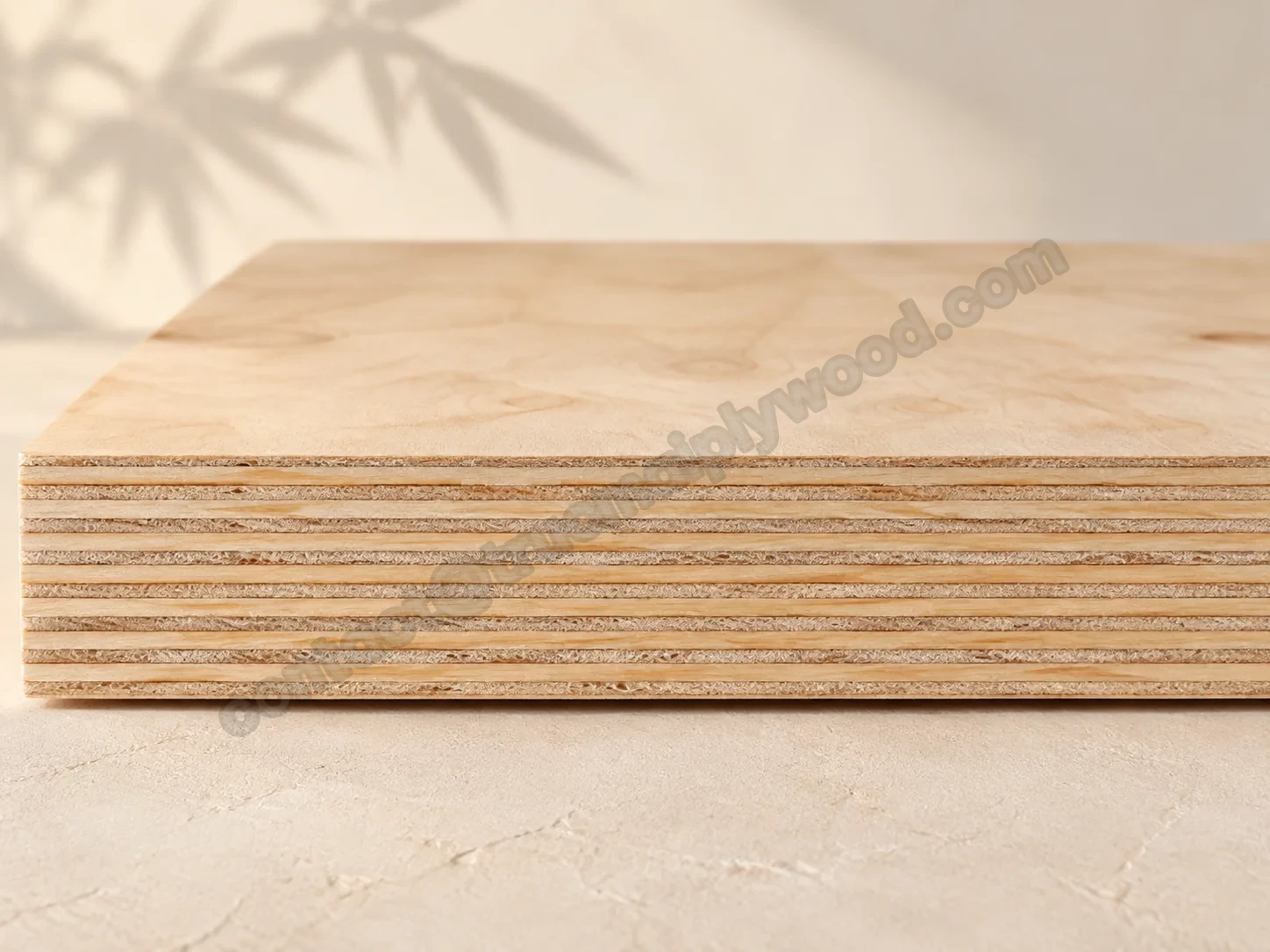
Eighteen millimetres usually has 11 plies, sometimes 12 or 13 on order. Thin panels of 3, 4 and 5 mm are always five plies; 6 mm varies by order. Core veneer is usually 1.4–2.0 mm and face veneer 0.2–0.5 mm, usually 0.3 mm for Europe.
A 3 mm panel has one core ply, two cross-bands and two faces. A 4 or 5 mm panel has three core plies and two faces, and in a 4 mm panel the core veneer is 1.3 mm. Good veneer that thin is scarce, which is why 4 mm panels can take longer to produce. Buyers who need 4 mm on a monthly container should say so early in the quote.
The ply count also decides the edge look: eleven thin layers of near-equal thickness in an 18 mm panel is what a buyer expects to see on a sample sheet.
Related pages
Core, glue and ply guides
Guides on core species, glue choice and panel construction.
- Plywood WBP and commercial panels: what the glue line is asked to do
A commercial panel order writes glue type and emission class as two lines.
- White styrax core: the light Vietnamese core and its limits
Density, colour and screw hold of styrax cores and the uses where they save freight without losing strength.
Particle board grades and densities for buyers comparing panel costs per m3 with commercial plywood.
- MR MDF or WBP plywood in wet kitchens: swelling, screw hold and 40HC cost
Where green-core MR MDF holds and where WBP-glued plywood is the safer carcass in damp rooms.
Which core a volume buyer should write per use and what each one does to weight, flatness and cost per m3.
- Combined-core ply: mixing hardwoods in one panel and when to accept it
Why combi cores keep price steady across a year of containers and what to cap in the spec.
- Which glue to order: UF, MR, MUF or WBP for each use
Glue choice written per order for furniture, interior and packing panels, and what each adds per m3.
- Finger-jointed cores: where they save cost and where they fail
The risks of finger-joint cores and when a buyer should refuse them in the spec.
- Acacia core ply: properties of Vietnam's plantation acacia
What acacia veneer gives a core and how it is graded and mixed in a high-volume mill.
What alternate and full-core mean in India, and how a Vietnamese eucalyptus or combined core matches them per m3.
- Acacia against eucalyptus cores: density, flatness, price per m3
The two dense plantation cores compared on weight per 40HC, screw hold and cost for repeat commercial orders.
The plantation timber that is peeled in northern Vietnam and what a poplar-face, hardwood-core panel means for buyers.
- Melamine explained: the resin, the paper and the faced panel
What melamine is as a resin and as a decor paper, and how it ends up on melamine-faced plywood.
- MR, BWR or BWP: choosing the glue bond for interior and packing ply
When MR glue is enough, when WBP is worth paying for, and how to write the bond class on the PI.
- Which core is best for birch plywood from Vietnam? Eucalyptus, acacia or combi by weight per 40HC
The core under a birch face decides weight, screw hold and price per m3; how eucalyptus, acacia, styrax and combi cores compare, and where a container hits payload first.
Cores and faces on each product page.
Five plies at 3–5 mm and the scarce 4 mm veneer.
The densest core and the weight cap.
UF glue, E0 and E1, and what is written on the order.
The certificate for 3–25 mm hardwood plywood with veneer core.
Peeling to the sealed container, with the number at each step.
The 18 mm build by core, plies and sheet weight.
Sheets, m³ and kg by core.
FAQ
Core, glue and ply questions
Which core species does the mill use, and which does it never use?
Eucalyptus, Acacia, Styrax and Pine, or combined species in one sheet. There is no rubberwood core. Gurjan, okoume and bintangor are faces only, and Vietnamese plywood does not use poplar or birch cores, so poplar and birch sheets are faced panels on a Vietnamese core.
How does core species change sheet weight and m³ per 40HC?
At 18 mm and 1220 × 2440 mm a sheet weighs 26.8 kg on Styrax, 31.1 kg on Acacia and 34.8 kg on Eucalyptus. A 40HC then holds 990, 880 or 795 sheets, about 53, 47 and 43 m³. Denser cores reach the 28,000 kg planning payload before the container is full. These are planning figures.
How many plies does 18 mm plywood have?
Usually 11, with 12 or 13 on order. An 18 mm panel is the most common build, and eleven thin layers of near-equal thickness is what the edge of a sample sheet should show. Thin panels of 3, 4 and 5 mm are always five plies.
What is the difference between UF glue at E0 emission and melamine-fortified glue?
UF glue at E0 emission is the default and holds about six hours in a boil test. Melamine-fortified glue holds about twelve hours and usually gives E1. Glue type and emission class are two separate lines on the order, so write both.
Can cores of different species be laid together in one sheet?
Yes. Combined cores balance price, weight and appearance, and the mix is written on the order. The sheet weight and the m³ per container then fall between the figures for the single-species cores.
Why is 4 mm plywood sometimes slower to produce?
A 4 mm panel uses 1.3 mm core veneer in three core plies, and good thin veneer is scarce. Production can therefore take longer inside the usual 15–45 days after the deposit. Say 4 mm early in the quote so the slot is planned.
Does 40 mm plywood carry the CARB P2 and TSCA certificate?
No. The certificate CARB/EPA 26053 covers 3–25 mm hardwood plywood with veneer core, 3–15 plies. Panels of 30 and 40 mm are outside that scope, so say the destination on the RFQ.
Quotation
Write the core and glue on your quotation
Send core, glue, emission class, thickness and sheet size and the reply gives sheets and m³ per 40HC.
State core species, glue type and emission class, thickness, sheet size, face and back grade and quantity. The reply carries sheets, m³ and packs per 40HC as a planning figure.