
Resources · rules and paperwork
Plywood import paperwork guides: legality, emission class, FSC and EUDR files per market
Plywood import paperwork guides start with the market. An EU-bound lot carries the FSC claim on sales documents, EUDR plot geolocation for both core and face veneer, the PPWR packaging test and EUR.1; the EU importer files its own EUDR due-diligence statement. A US lot carries CARB Phase 2 and TSCA Title VI certification at a 0.05 ppm limit. Every container carries the standard shipping set.
Paperwork is the part of a plywood import that most often delays a container. This hub lists what each market requires, what Truc Mai holds and supplies, and what remains the importer's duty. Rules change, so each point names its source.
- FSC-C196493FSC 100% licence; certificate SA-COC-014545
- CARB/EPA 26053CARB P2 and TSCA Title VI, 3–25 mm
- 0.062 mg/m³REACH entry 77 limit for wood-based articles in the EU
- W2012 · W2012EISO 9001:2015 and ISO 14001:2015
This page explains paperwork; it is not legal advice. Check the current text of each regulation.
Answer and key facts
Plywood import paperwork guides: what each market requires and what travels with every container
The EU asks who grew the wood and where; the US asks how much formaldehyde the panel gives off. Truc Mai supplies the evidence for both, and the importer carries the filing duty in its own market.
Check each rule on this page where it is published: Regulation (EU) 2023/1115 on EUR-Lex, FSC International, the California Air Resources Board and the US EPA.
| Market | Rule | What Truc Mai supplies | Importer's part |
|---|---|---|---|
| EU | EUDR, Reg. (EU) 2023/1115 | Species, quantity, country of production and plot geolocation for core and face veneer | File the due-diligence statement (DDS) before the customs declaration |
| EU | REACH Annex XVII entry 77 | Emission data for the agreed configuration | Place only compliant articles on the market |
| EU | PPWR, Reg. (EU) 2025/40 | PPWR test of the packaging materials | Meet the packaging obligations |
| US | CARB Phase 2 and TSCA Title VI | Certificate CARB/EPA 26053 for 3–25 mm hardwood plywood with veneer core | Label and import as a compliant panel |
| All | Shipping set | Invoice, packing list, B/L, certificate of origin (EUR.1 for EU lots), phytosanitary and fumigation papers | Customs entry |
EUDR
EUDR plywood requirements: who files the statement, and what does the geolocation file contain?
The EU importer of plywood is the operator and files the due-diligence statement. Truc Mai supplies the information behind it: product description, wood species with common and scientific names, quantity, country of production and the geolocation of every production plot with production dates.
The rule is Regulation (EU) 2023/1115. Coordinates carry at least six decimal digits, and plots over four hectares are given as polygons. There is no official EUDR certificate; one DDS can cover several shipments, and its reference must exist before the customs declaration. Truc Mai provides origin records and GeoJSON files for both the Vietnamese core and the face veneer. Vietnam is classed low risk, and simplified due diligence applies only when every commodity in the product comes from low-risk countries.
EUDR applies from 30 December 2026 to large and medium operators and to micro and small operators already under EUTR, which includes plywood importers; from 30 June 2027 for other micro and small operators. The deforestation cut-off date stays 31 December 2020. EUTR (Reg. (EU) 995/2010) still applies to timber produced before 29 June 2023 until the end of 2029. A downstream operator that uses plywood with a DDS does not file again, but the first downstream operator keeps the reference for five years.
Emission
What formaldehyde limit applies in the US and the EU?
In the US, TSCA Title VI and CARB Phase 2 set 0.05 ppm formaldehyde for hardwood plywood with veneer or composite core. In the EU, REACH Annex XVII entry 77 sets 0.062 mg/m³ for furniture and wood-based articles placed on the market from 6 August 2026, measured under Appendix 14 chamber conditions.
The US limit is set by the California Air Resources Board composite wood programme and the US EPA formaldehyde standards. The units are not convertible: an ASTM result in ppm is never turned into mg/m³. Truc Mai holds CARB Phase 2 and TSCA Title VI certification in its own name through an approved third-party certifier, covering 3–25 mm hardwood plywood with veneer core and 3–15 plies. Panels of 30 and 40 mm are outside that scope. Glue type and emission class are two separate lines on the order, so the destination should be stated on the RFQ.
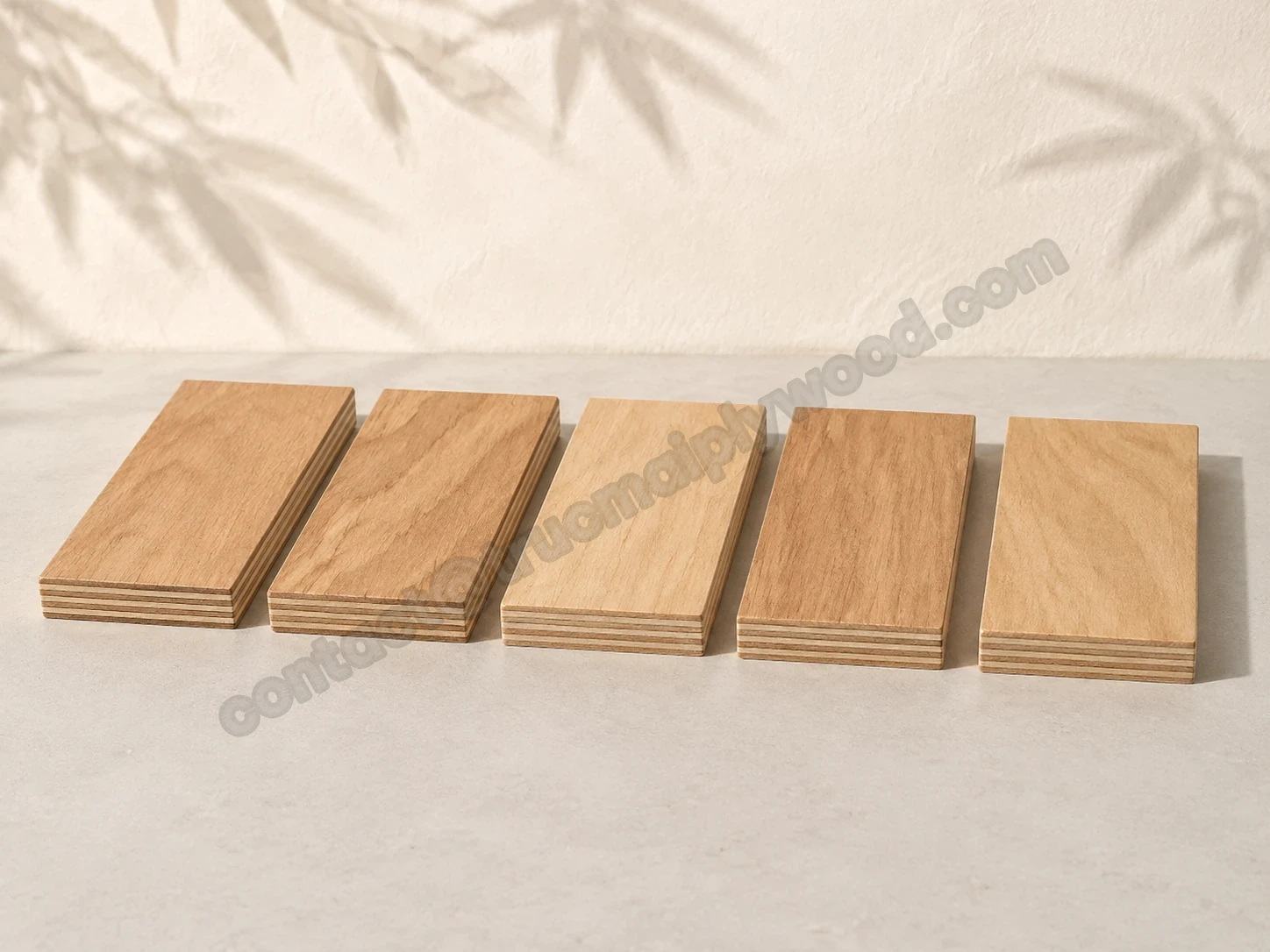
FSC, PPWR, ISPM 15
Plywood import documents: what the FSC claim, the PPWR test and ISPM 15 cover
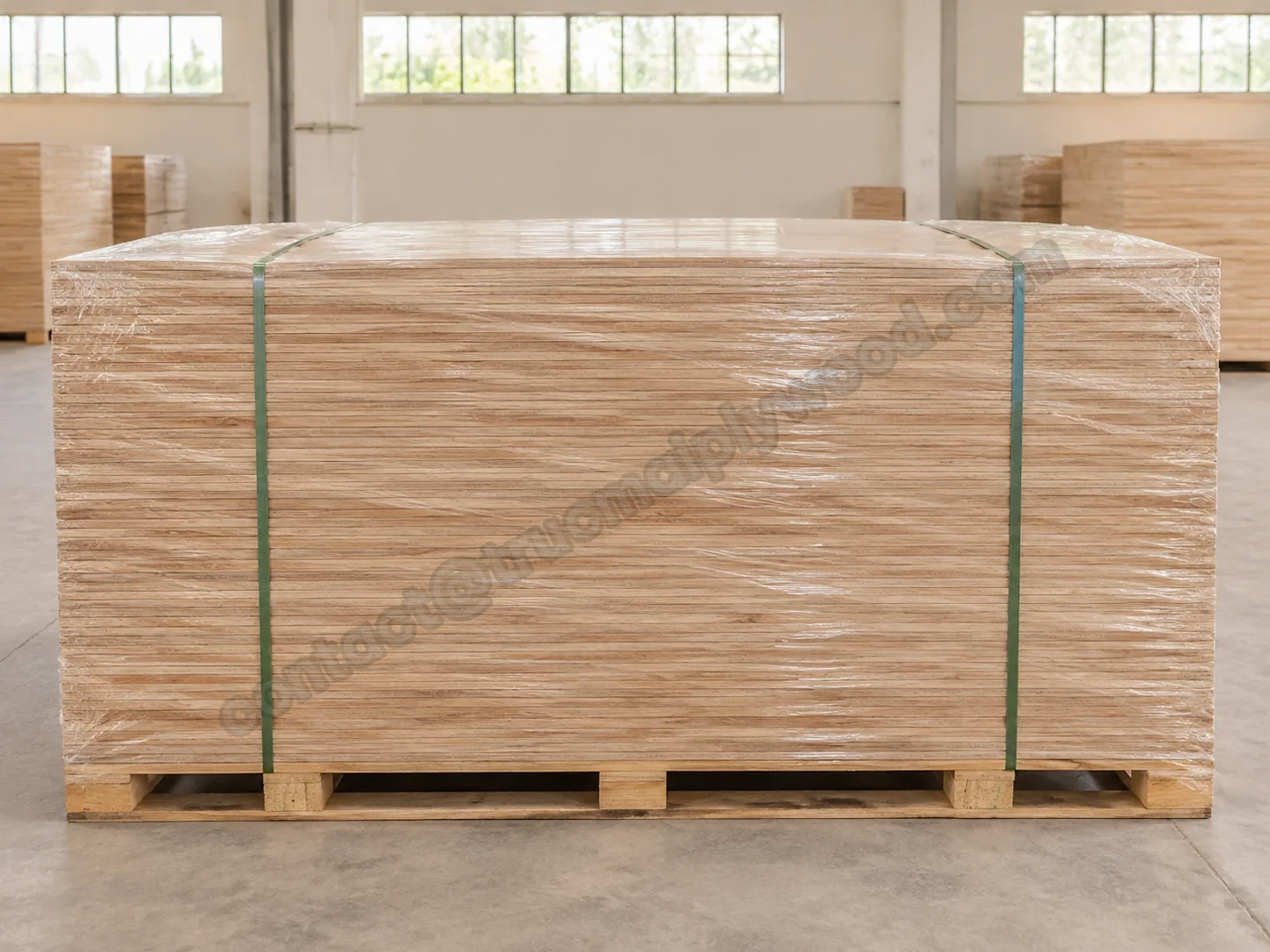
The FSC claim is stated on sales and shipping documents for eligible products on the current product schedule; it does not cover every panel automatically. A PPWR test covers the packaging materials tested, not the panel and not every PPWR obligation. Plywood itself is outside ISPM 15, but solid-wood pallets and battens shipped with it are not.
Truc Mai holds FSC 100% chain of custody only, with no FSC Mix. The PPWR regulation applies from 12 August 2026 and limits lead, cadmium, mercury and hexavalent chromium in packaging to 100 mg/kg in total. Certificate files are sent before the order is confirmed, and ISO 9001:2015 and ISO 14001:2015 certify the management system, not the panel.
Related pages
Paperwork guides by market
Guides on EU, UK and US rules, origin evidence and emission, and the pages that hold the certificates.
- Lacey Act declaration for panels from Vietnam
Species, origin and PPQ 505 data per container for US importers of hardwood plywood.
- Why plies separate: delamination causes and how orders prevent it
Glue spread, press time and moisture behind delamination, and the bond test to write into a commercial order.
- Plywood and formaldehyde indoors: what the emission class means
Explains off-gassing for furniture and interior buyers and which class to write for homes, schools and retail.
- No-added-formaldehyde ply: what buyers can order and at what cost
NAF and ultra-low emission glue options and what they add per m3 on a container order.
- UKTR for panel imports from Vietnam
What UK Timber Regulation asks of an importer of commercial plywood and the papers a mill sends.
- Fire-retardant plywood: treated cores and what a commercial mill can supply
How fire-retardant treatment works on plywood, what it changes in weight and cost, and what a buyer must specify; no rating claimed.
- The EU 0.062 formaldehyde limit: REACH 2026 for panel buyers
The 0.062 mg/m3 limit read as an order spec for furniture and interior plywood shipped to the EU.
- Vietnam's legal timber system: VNTLAS and FLEGT for plywood
The Vietnamese legality system and FLEGT VPA as they apply to a plantation-timber plywood mill.
- Origin evidence from the mill: proving plywood is Vietnamese
Mill-level evidence (log supply, peeling, pressing, COO) that a container of panels was made in Vietnam, not transhipped.
- Import rules by destination: the papers each market wants for plywood
One table per market of the import papers and panel marks a commercial panel importer is asked for.
- Fire-retardant treatment or intumescent paint on plywood
Treatment against intumescent coatings on plywood: what each changes, cost per m2 and what the buyer specifies; no rating claimed.
- Boil test hours: what a 6, 12 or 24 hour soak tells a buyer
How to read soak and boil results on a sample sheet from a commercial order and which test fits which glue.
- Prop 65 labels on plywood panels shipped to California
What the warning covers (wood dust, formaldehyde) and who labels a container of panels sold in California.
- Vietnam forestry around Ha Hoa: the plantations behind our cores
Plantation forest near Ha Hoa, Phu Tho supplies eucalyptus, acacia and styrax core wood at low cost.
Reads the 0.05 ppm Phase 2 limit for veneer-core hardwood plywood (ASTM E1333 basis) as one line on a US order.
The delay moves dates, not data.
Core and face veneer plot data for the importer's statement.
The chain-of-custody claim and its product schedule.
Third-party certification for 3–25 mm panels.
What is written on each order and why.
The packaging test for pallets, wraps and straps.
Certified quality management for plywood manufacturing.
All certificates and checks.
EUDR face veneer files: species, country of production, GeoJSON plots to six decimals, polygons over 4 ha, the face origin's risk class and the order line.
FAQ
Paperwork questions
Who files the EUDR due-diligence statement for imported plywood?
The EU importer, as the operator. Truc Mai supplies the data: species, quantity, country of production and plot geolocation for the core and the face veneer. The statement reference must exist before the customs declaration.
When does EUDR start to apply to plywood importers?
From 30 December 2026 for large and medium operators and for micro and small operators already under EUTR, which includes plywood importers. Other micro and small operators follow from 30 June 2027. The deforestation cut-off date stays 31 December 2020.
What does the EUDR geolocation file contain?
Coordinates of every production plot with at least six decimal digits, polygons for plots over 4 ha, production dates, species with common and scientific names, quantity and country of production. Truc Mai supplies origin records and GeoJSON files for the core and the face veneer.
What formaldehyde limit applies to plywood in the US?
0.05 ppm for hardwood plywood with veneer or composite core under TSCA Title VI and CARB Phase 2. Truc Mai holds certificate CARB/EPA 26053 for 3–25 mm hardwood plywood with veneer core; 30 and 40 mm are outside that scope.
Does the PPWR test cover the panel or only the packaging?
Only the packaging materials tested. It is not a test of the panel and does not cover every PPWR obligation. PPWR applies from 12 August 2026 and caps lead, cadmium, mercury and hexavalent chromium in packaging at 100 mg/kg in total.
Do plywood shipments need ISPM 15?
Plywood is processed wood and is outside ISPM 15. Solid-wood pallets, battens and dunnage shipped with it fall under ISPM 15, so a phytosanitary and fumigation paper travels with the shipment.
Which documents travel with every container?
Commercial invoice, packing list, B/L, certificate of origin (EUR.1 for EU-bound lots), phytosanitary and fumigation papers, and insurance under CIF. The order's certificate documents and the EUDR file set for EU lots join them.
Quotation
Ask for the file set before you order
State the destination market and thickness; the reply lists the files and the certificates that apply.
State the destination country, thickness, core and glue. The reply lists the certificate files and the EUDR or CARB documents that apply to the lot.