
PPWR · Packaging · Vietnam
PPWR wooden packaging requirements for plywood: what the EU rule asks and what Truc Mai supplies
Yes, Truc Mai supplies plywood packed to meet the EU packaging regulation. Regulation (EU) 2025/40, PPWR, applies from 12 August 2026, and Truc Mai has its packaging tested independently by SGS for it. The report goes with the EU file set.
- PPWRRegulation (EU) 2025/40
- 12 August 2026application
- 100 mg/kgheavy-metal limit
- SGSindependent test
- EU file setsupplied
Updated 12 November 2026
Film
This certificate in a short film
Short answer
What does PPWR mean for plywood packaging, and does Truc Mai meet it?
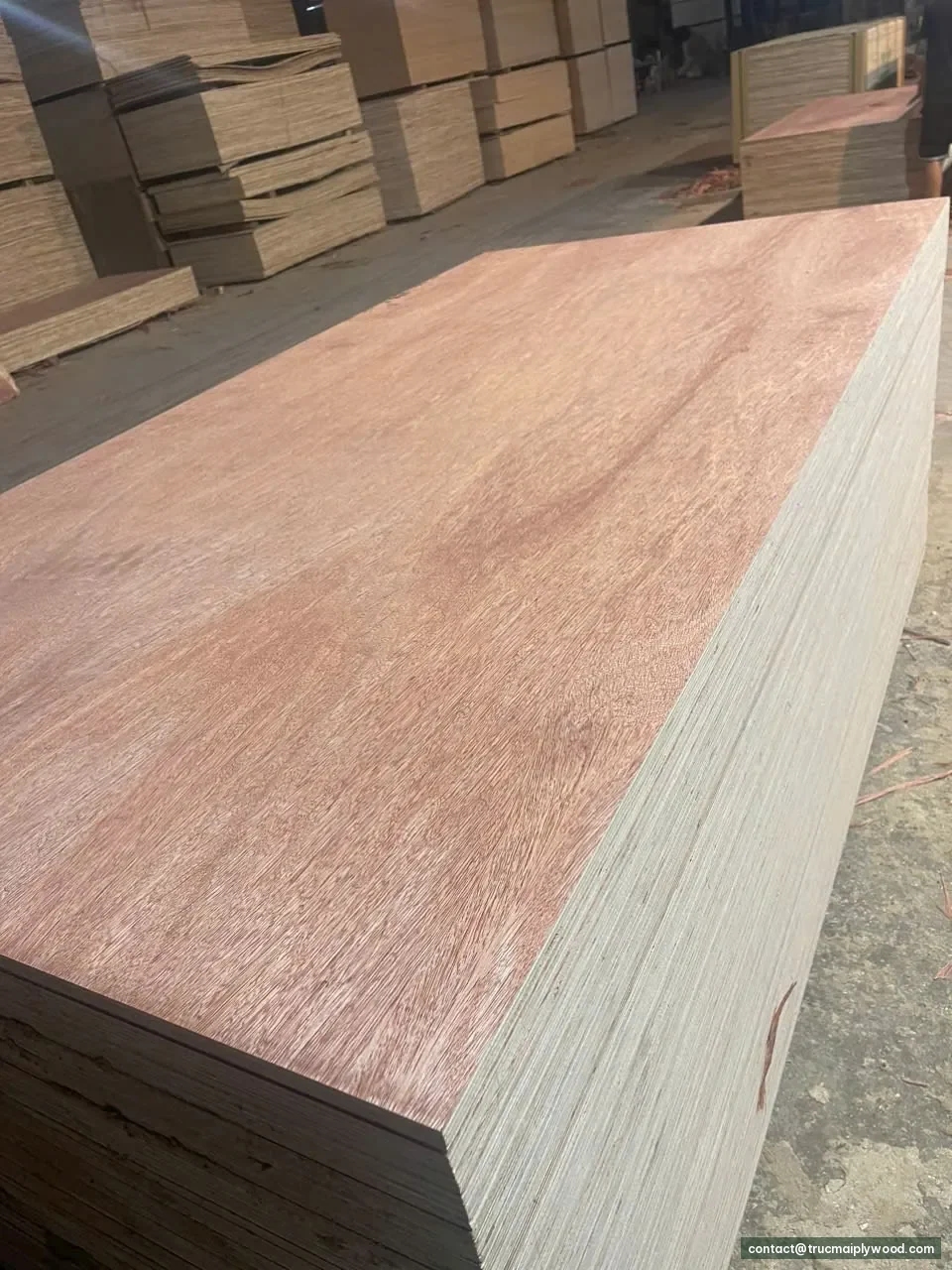
Yes. PPWR is the EU Packaging and Packaging Waste Regulation, Regulation (EU) 2025/40, and it covers all packaging placed on the EU market, including the pallets, bearers and strapping on a plywood pack. Truc Mai supplies its packaging tested independently by SGS for PPWR.
PPWR replaces the old packaging directive and applies in every member state from 12 August 2026. Its rules reach packaging of every material, wood included. The ones that matter for a plywood order are the limit on heavy metals in packaging, the duty to keep technical documents and an EU declaration of conformity, the rule that packaging must be recyclable, and the targets for reusable pallets from 2030.
The packaging of a plywood pack is the pallet or bearers under it, the strapping around it and the corner and cover protection. Under PPWR it is not the plywood. The plywood is the product, and its own rules, such as EUDR and formaldehyde, are separate.
Truc Mai is the manufacturer of the packaging it applies to the pack, and the EU importer is the importer of that packaging under PPWR. Each has duties, and the paper trail between them is the technical documentation and the test report.
This page shows what the regulation asks, who does what, what the independent test covers and how a buyer can check it.
- Regulation PPWR, Regulation (EU) 2025/40, applies from 12 August 2026
- Independent test SGS packaging test for PPWR
- Heavy metals Sum of lead, cadmium, mercury and hexavalent chromium not above 100 mg/kg
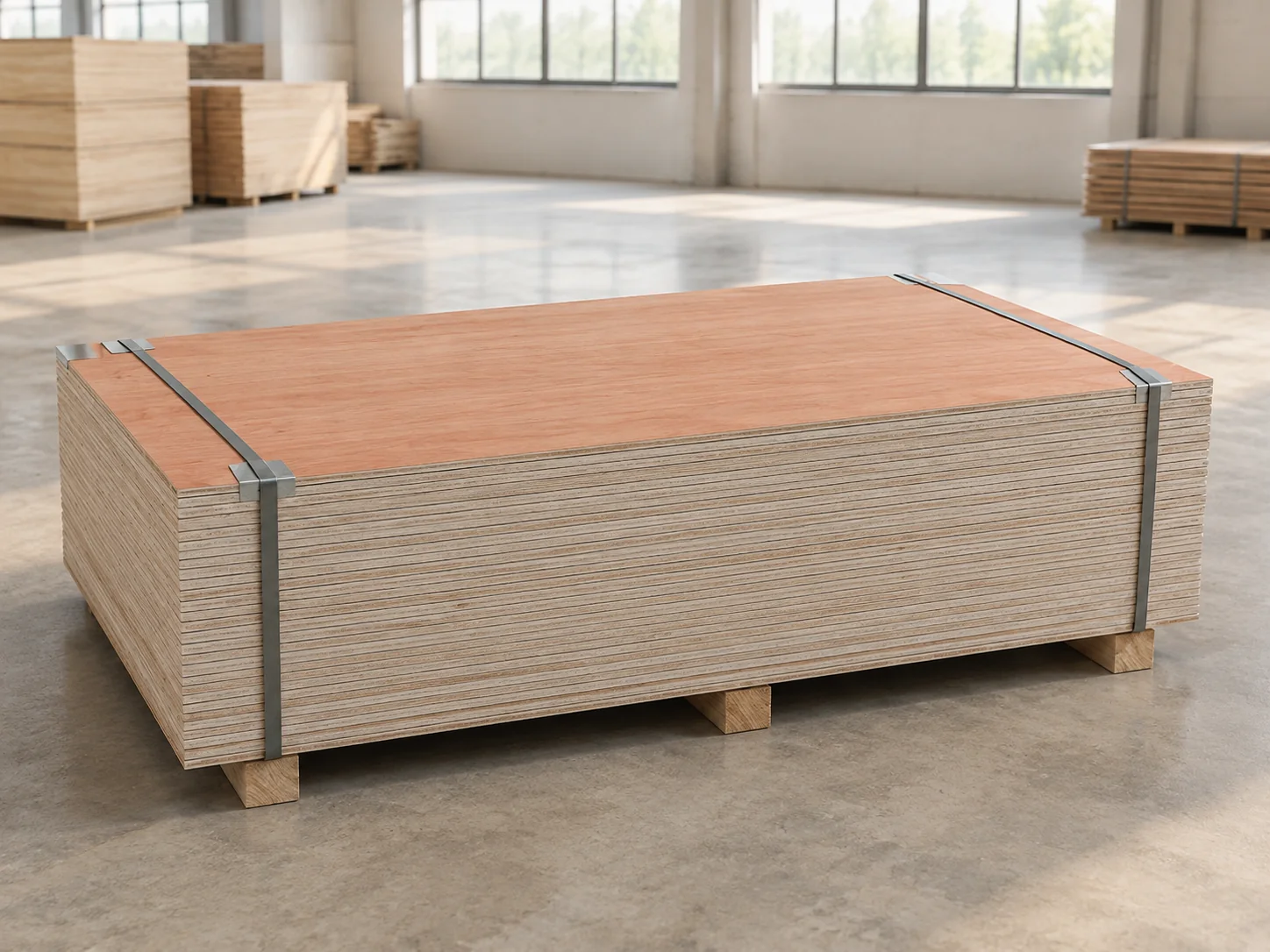
- Packaging covered Pallets, bearers, strapping and protection on the export pack
- Documents Test report with the EU file set
- Not covered here The plywood itself, which has its own EUDR and formaldehyde files
The report is supplied with the quotation for EU orders.
What we hold
What packaging documents does Truc Mai hold?
The packaging file is a test report and the declarations that go with it. The report is shared with the buyer's compliance team and is not published on this page.
- SGS packaging test
The packaging used on export packs tested independently by SGS for PPWR. The report goes out with the EU file set.
- Packaging description
The pallet or bearer type, the strapping and the protection used on your packs, listed per order line.
- Manufacturer details
Name and contact of the packaging manufacturer, and an identification of the packaging, as the regulation requires.
FSC, CARB P2 and TSCA Title VI and ISO 9001 files cover the plywood and the mill, not the packaging.
Requirements
What do the PPWR wooden packaging requirements say about heavy metals, and what is the packaging test?
PPWR sets one numeric limit that applies to packaging of every material, and a set of document duties. This table shows what the rule asks against what a plywood pack means in practice.
| PPWR requirement | What it says | Article | What it means for a plywood pack |
|---|---|---|---|
| Heavy metals | Sum of lead, cadmium, mercury and hexavalent chromium in packaging or components not above 100 mg/kg | Article 5 | Pallet, bearer and strapping are tested against it |
| Recyclable packaging | All packaging placed on the market shall be recyclable | Article 6 | Clean wood is a material with established recycling routes |
| Technical documentation | Manufacturer keeps Annex VII documents and an EU declaration of conformity, 5 years for single-use packaging | Article 15 | The mill keeps the file for each packaging type |
| Manufacturer identification | Name and postal address on the packaging or on a document with it | Article 15 | On the packing list or a document with the pack |
| Importer duties | Importer checks the conformity assessment, the documents and the label | Article 18 | The EU importer asks for the report and the manufacturer details |
| Reusable pallets | From 1 January 2030, at least 40% of transport packaging in the form of pallets and boxes used by an EU operator must be reusable within a re-use system | Article 29 | A duty of the EU operator's own pallet use |
Checked 12 November 2026 against Regulation (EU) 2025/40 and the European Commission's packaging page. The Commission is to adopt further implementing acts, such as the harmonised label, so labelling dates are set separately.
The regulation
Who does what under PPWR: mill, importer and buyer?
PPWR gives each company in the chain its own duty, and a plywood order has three of them.
| Role | Who it is | Duty under PPWR | Paper |
|---|---|---|---|
| Manufacturer of the packaging | Truc Mai, for the pallets, strapping and protection it applies | Make packaging that meets Articles 5 to 12, run the conformity assessment, keep technical documentation and the EU declaration of conformity, identify the packaging | Test report, packaging description |
| Importer | The EU company that first places the packaged goods on the market | Check that the manufacturer made the assessment and the documents, and put its own name and address on the packaging or a document | Report and declaration on file |
| Operator in the EU | Whoever moves goods on pallets and boxes inside the EU | From 2030, use reusable pallets in a re-use system for at least 40% of such packaging | Own pallet records |
Application date: 12 August 2026. Some provisions, such as labelling and recyclability criteria, apply later and depend on implementing acts.
Wooden packaging
PPWR in 2026: are wooden pallets and other wooden packaging exempt?
No. Wood is a packaging material under PPWR like any other, and a few specific points apply to it.
The heavy-metal limit applies to packaging of every material, so a wooden pallet or bearer is inside it. Treatment and coatings are the usual source of metals in wood packaging, and the test checks the finished item.
Recycling targets are set per material, and the regulation counts wooden packaging that is repaired for re-use towards the targets. Recycling is generally easy for clean wood, which is why wood packs do not face the problems that mixed plastics do.
A separate rule is the international standard for wood packaging, ISPM 15, which concerns pests and phytosanitary treatment. It is a plant-health rule and not part of PPWR, and the shipment papers cover it separately.
For a plywood pack, a buyer should therefore ask two things: has the packaging been tested for PPWR, and are the treatment papers for the wood in the file. The 2026 date matters for wooden pallets too: from 12 August 2026 a pallet placed on the EU market is packaging under PPWR, and the reuse targets for pallets that start in 2030 are built on that. A buyer who plans pallet logistics now should treat the 2026 wooden pallets rule as a documents question first and a design question second.
Markets
Does PPWR apply outside the EU?
PPWR is an EU rule. A buyer in another market has its own packaging and plant-health rules, and the same packaging file helps with them.
| Market | Packaging rule | Where the Truc Mai file helps | What Truc Mai supplies |
|---|---|---|---|
| EU | PPWR from 12 August 2026 | It is the manufacturer's file for the importer | SGS test and packaging description |
| UK | UK packaging rules and buyer policy | Supports the buyer's packaging file | Packaging description and phytosanitary papers |
| USA, Canada | No equivalent single rule; buyer policy and plant-health rules | Supports the buyer's file | Packaging description and phytosanitary papers |
| Middle East, Australia | Plant-health and import rules | Supports the importer's file | Packaging description and phytosanitary papers |
Each importer reads its own market's rules. The EU importer in particular should read Regulation (EU) 2025/40.
Scope
Which Truc Mai packs does the PPWR file cover?
The file covers the packaging on export packs of every Truc Mai line: furniture and interior panels, commercial panels and packing panels, on all three sheet sizes.
A pack is built to the thickness and sheet size. Packs are about 1,000 mm high, with the number of sheets set by thickness and weight, and sit on pallet feet or bearers that carry them to the container. The same packaging types are used across thicknesses, so the report covers the types rather than each order.
Cut-to-size orders and custom sizes up to 1250 × 2500 mm are packed in the same way. A buyer who needs a different pack, such as a private-label pack or a printed wrap, names it on the enquiry so the packaging description and the test cover it.
Packs for the EU come with the packaging description and the test report. Packs for other markets use the same packaging and the same description. The PPWR plywood packaging file is therefore one file per packaging type, and it is attached to every order that uses the type.
- Packs
About 1,000 mm high, sheets per pack by thickness and weight.
- Lines
Furniture, commercial and packing panels.
- Sizes
1220 × 2440 mm, 1220 × 2280 mm and 1250 × 2500 mm.
- Not covered
A packaging type not described on the order.
Documents
Which PPWR documents come with an EU order?
The packaging file arrives in three steps, so the importer can complete its own check before the container ships.
- Before you order A description of the packaging types and the SGS test, so your compliance team can see what is covered
- With the quotation The packaging per line, and any change such as a private-label pack
- With the shipment The test report, the manufacturer details and the packing list that names the packaging
- Importer file What your importer needs to keep for five years under Article 15 and 18 duties
- Plant-health papers Phytosanitary and fumigation papers for the wood, which are separate from PPWR
- Shipment papers B/L, certificate of origin and insurance under CIF
Verify
How do you verify PPWR packaging?
An importer can check the packaging file with the report and the regulation.
- Read the regulation
Open Regulation (EU) 2025/40 and read Articles 5, 6, 15 and 18.
- Get the report
Ask for the SGS test report and read what it covers and which limit it tests.
- Match the packaging
The packaging in the report must be the packaging on your packing list.
- Check the limit
The sum of lead, cadmium, mercury and hexavalent chromium must not exceed 100 mg/kg.
- Check the manufacturer details
Name and postal address must be on the pack or on a document with it.
- Keep the record
Keep the report and the declaration for five years, for single-use packaging.
Ask for the file: We send the packaging description and the test report with your quotation.
Common mistakes
Which PPWR claims should an importer question?
PPWR is new, and a few claims already appear that need checking.
- A PPWR certificate
There is no PPWR certificate. The regulation requires a conformity assessment and documents.
- A plywood test as a packaging test
A report on the panel does not cover the pallet and strapping.
- No manufacturer details
The name and postal address must be on the packaging or a document with it.
- ISPM 15 treated as PPWR
ISPM 15 is plant health. It does not replace the packaging file.
- An old date
PPWR applies from 12 August 2026, and some provisions apply later.
Checklist
How to order PPWR-ready plywood: checklist
Use this list before you order and again before the container ships.
- Say EU
Write EU and PPWR on the enquiry, so the packaging file is planned.
- Describe the pack
Pack height, sheets per pack, pallet or bearers, strapping, any private-label wrap.
- Ask for the report
Read the SGS report with your compliance team.
- Name the importer
Give the importer's name and address, so documents match.
- Approve the sample
Approve the panel sample and a photo of the pack build. Samples cost nothing; a new buyer's courier fee is refunded against the order.
- Check before loading
Compare the packaging on the draft packing list with the report.
Terms: MOQ one 40HC, 15–45 days after the 30% deposit, FOB Hai Phong, CFR or CIF.
FAQ
PPWR plywood packaging questions
What is PPWR?
The EU Packaging and Packaging Waste Regulation, Regulation (EU) 2025/40. It applies from 12 August 2026.
Does PPWR apply to wooden pallets?
Yes. It covers packaging of every material, wood included, and the 100 mg/kg heavy-metal limit applies to it.
Is Truc Mai packaging PPWR tested?
Yes. The packaging is tested independently by SGS for PPWR, and the report goes with the EU file set.
What is the heavy-metal limit?
The sum of lead, cadmium, mercury and hexavalent chromium must not exceed 100 mg/kg in packaging or its components.
Who is responsible, the mill or the importer?
Both. The manufacturer of the packaging makes the assessment and keeps the documents, and the importer checks them before placing the packaging on the market.
Is there a PPWR certificate?
No. PPWR requires a conformity assessment, technical documentation and a declaration of conformity.
Does PPWR cover the plywood panel?
No. It covers the packaging. The panel has EUDR and formaldehyde files.
What are the reusable pallet targets?
From 1 January 2030, at least 40% of transport packaging in the form of pallets and boxes used by an EU operator must be reusable within a re-use system.
Does ISPM 15 replace the PPWR file?
No. ISPM 15 is a plant-health rule for wood packaging. PPWR is a separate packaging rule.
How long are the documents kept?
Five years for single-use packaging and ten years for reusable packaging.
Need the packaging file? Write to Lucy at contact@trucmaiplywood.com and we will send it with your quotation.
Quotation
Request PPWR packaging documents with a quotation
Send the panel, the market and the quantity. We reply with a quotation, the packaging description and the SGS report.