
Mill · Face grading
Veneer grading: how face veneer is sorted before lay-up
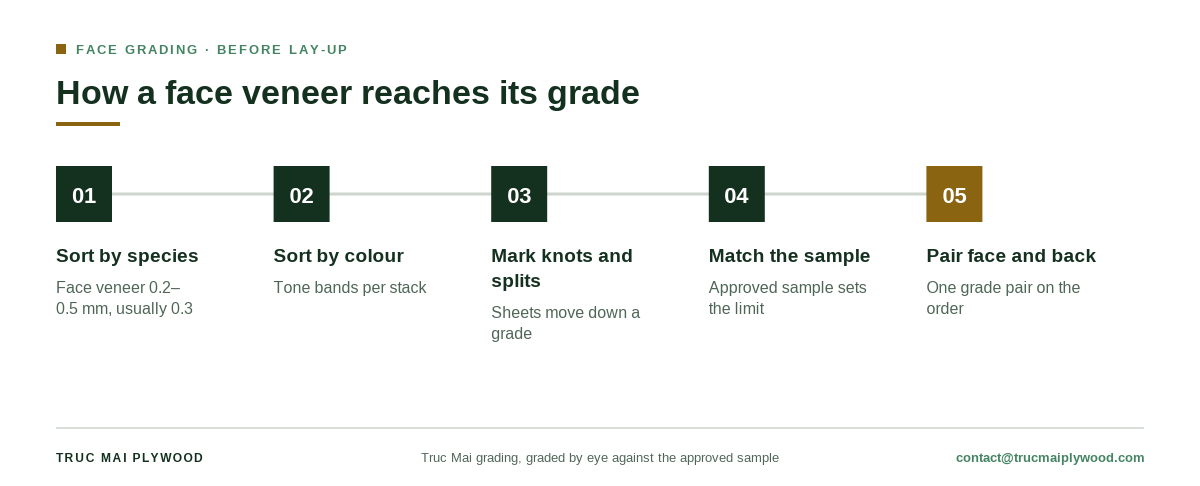
Veneer grading at Truc Mai sorts face veneer of 0.2–0.5 mm, usually 0.3 mm for Europe, by colour, knots and splits against the buyer's approved sample, before the veneer is laid up. Face and back are graded as a pair and written on the order, so the twelfth container of a spec carries the same face as the first.
This page follows a face veneer from the pile to the lay-up table. It shows how a face is sorted, what moves a sheet down a grade, why the sample and not a letter decides the limit, how EV differs from natural faces and what a buyer should write on the order. It is written for the buyer who reorders and needs the face to match what was approved last time.
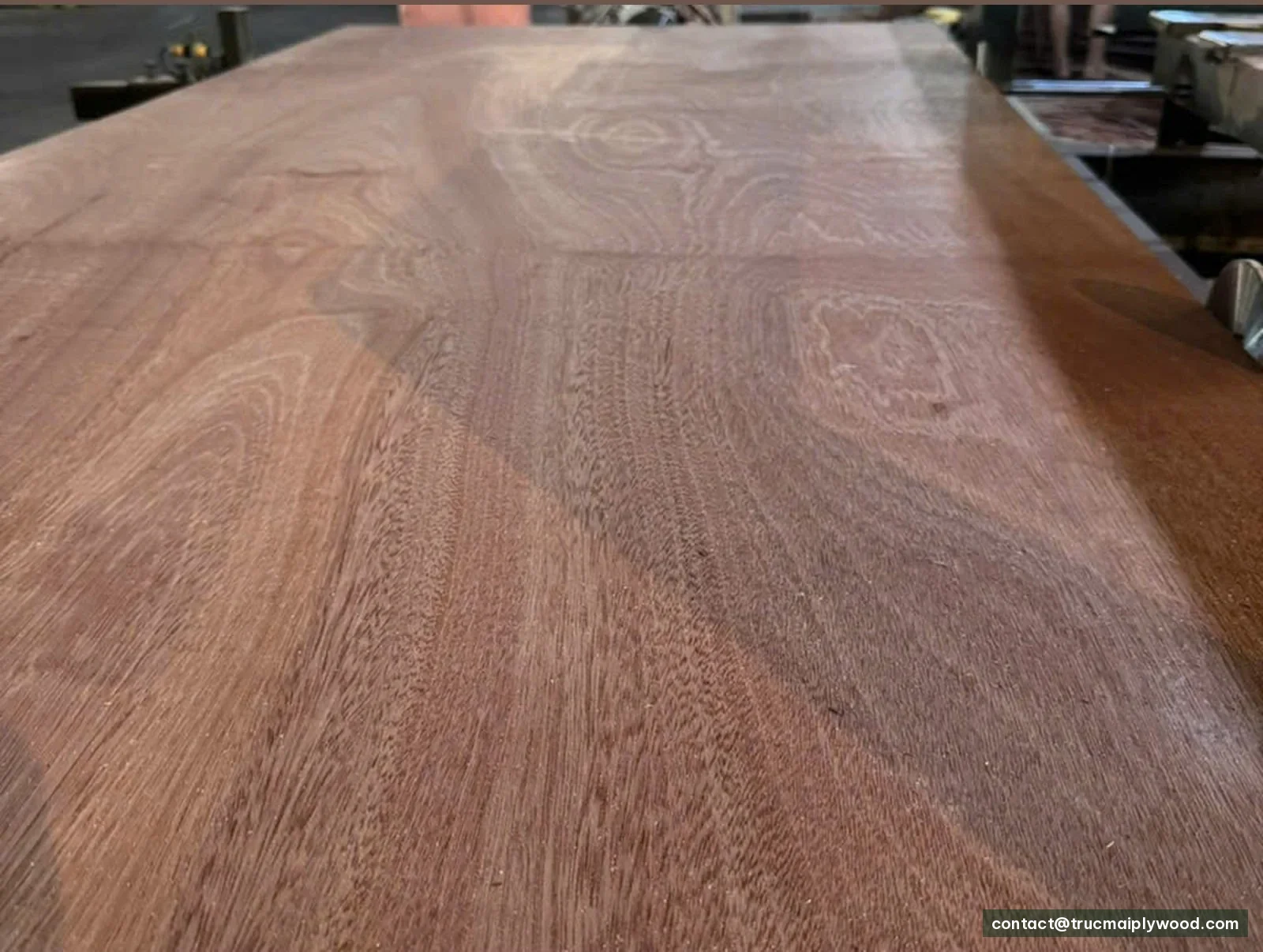
- 0.2–0.5 mmface veneer thickness, usually 0.3 mm for Europe
- 1.4–2.0 mmcore veneer thickness, graded A or AB by defects
- 1 pairface and back grade, written together on the order
- 9 facesEV, poplar, bleached poplar, birch, okoume, bintangor, pine, eucalyptus, gurjan, sapele on request
Veneer thicknesses are ranges used on the mill's panels; the sample, not the range, fixes a face on the order.
Certificates
Which certificates sit behind the faces that are graded here?
FSC, CARB P2, ISO 9001 and ISO 14001, plus EU file sets.
- FSC 100% FSC-C196493 · SA-COC-014545
- CARB P2 and TSCA Title VI CARB/EPA 26053 · TPC-43
- ISO 9001:2015 W2012 · WCERT
- ISO 14001:2015 W2012E · WCERT
The FSC code can be looked up in the FSC database, the CARB listing in the California Air Resources Board records, the federal rule in the US formaldehyde standards, and the EU file set against Regulation (EU) 2023/1115.
At a glance
What is veneer grading, and what is a face veneer graded on?
Veneer grading is the sorting of thin sheets of wood into grades before they are glued into plywood. A face veneer is graded on colour, knots, splits, patches and grain, and at Truc Mai the limit for each is set by the buyer's approved sample.
Face veneer is only 0.2–0.5 mm thick, and after sanding the face is what the customer sees, paints or lacquers. A defect that is acceptable in a core veneer of 1.4–2.0 mm is not acceptable on the face, so the face goes through its own sorting before lay-up and the core through another.
The same veneer can be a good face for one buyer and a poor one for another: a painted door tolerates colour change that a clear-lacquered cabinet does not. That is why the grade is agreed against a sample the buyer has seen, and why face and back are written as a pair.
| Stage | What is looked at | Where | Record |
|---|---|---|---|
| Intake | Species, thickness and lot of the veneer | Veneer store | Lot noted on the batch |
| Thickness and splits | Thickness against 0.2–0.5 mm; splits before sorting | Sorting table | Rejects set aside |
| Colour | Tone bands under even light | Sorting table | Stacks by tone |
| Defects | Knots, splits, patches, joints | Sorting table | Grade per sheet |
| Sample match | Sheet held against the approved sample | Sorting table | Sample reference |
| Pairing | Face grade and back grade fixed together | Lay-up table | Grade pair on the batch |
By face species
Which face species are graded, and what sets the veneer plywood grades of each?
Every face species is graded on colour first, and then on the defect that is typical of it: pin knots on birch, figure and colour on okoume, bintangor and gurjan, knots on pine, and stripe and tone on EV.
EV, engineered veneer, is reconstituted from plantation poplar, imported from China in 2500 × 1300 mm sheets of 0.3 or 0.4 mm, and has no knots by construction. It is graded on stripe regularity and tone across the sheets that will sit on one panel, which is why a repeat order is matched by colour band and not by defect count.
Birch reaches the mill as imported face veneer and is laid on a Vietnamese core, so the result is birch-faced plywood. Its grade depends on how pale and even the cream tone is and on how many pin knots the buyer will accept.
| Face | Judged first on | Then on | Note |
|---|---|---|---|
| EV (engineered veneer) | Stripe regularity and tone | Joints between veneer sheets | No knots; 0.3 or 0.4 mm; colour made to the order |
| Poplar and bleached poplar | Tone and evenness | Mineral streaks, splits | One continuous face veneer, pale |
| Birch | Cream tone and evenness | Pin knots, splits | Imported veneer, Vietnamese core: birch-faced |
| Okoume | Pink-beige tone | Figure, splits | Light, with less red than sapele |
| Bintangor | Red-brown tone | Colour streaks, splits | Tone varies between lots |
| Pine | Honey tone and knot size | Knot count, resin marks | Knots are part of the look |
| Eucalyptus | Pale pink-brown tone | Grain interlock, splits | Used as face or core |
| Gurjan and sapele | Tone and figure | Open grain, splits | Bold figure moves between sheets |
Steps
How is face veneer graded before lay-up, step by step?
Seven steps take a pile of face veneer to a graded stack ready for lay-up, and each one ends with something a buyer can compare with the sample.
- Identify the lot
Each lot is noted with its species, thickness and, for imported faces, its origin file, so that a batch of panels can be traced back to a veneer lot. Check: the lot is written on the batch.
- Check thickness and splits
Veneer is checked for thickness against the 0.2–0.5 mm range and for splits before it is sorted. Check: sheets with open splits are set aside, not graded.
- Sort by colour
Sheets are sorted by tone under even light into stacks, so that one panel is not built from two tone bands. Check: the top sheet of each stack against the sample.
- Mark knots, splits and patches
A knot, a split or a patch moves a sheet to a lower grade; the limit is the sample's, not a number in a table. Check: sheets just outside the limit are shown against the sample.
- Hold against the sample
The graded stack is compared with the approved sample for tone, figure and defects. Check: the sample reference is on the batch.
- Pair face and back
Face and back grades are fixed together for the order, so that the back is never an afterthought nor the face a surprise. Check: one grade pair is written on the batch.
- Release to lay-up
Only graded veneer goes to the lay-up table; sheets that fit no grade on this order are kept out of it. Check: no ungraded veneer is on the table.
Photos
What does graded face veneer look like beside its sample?
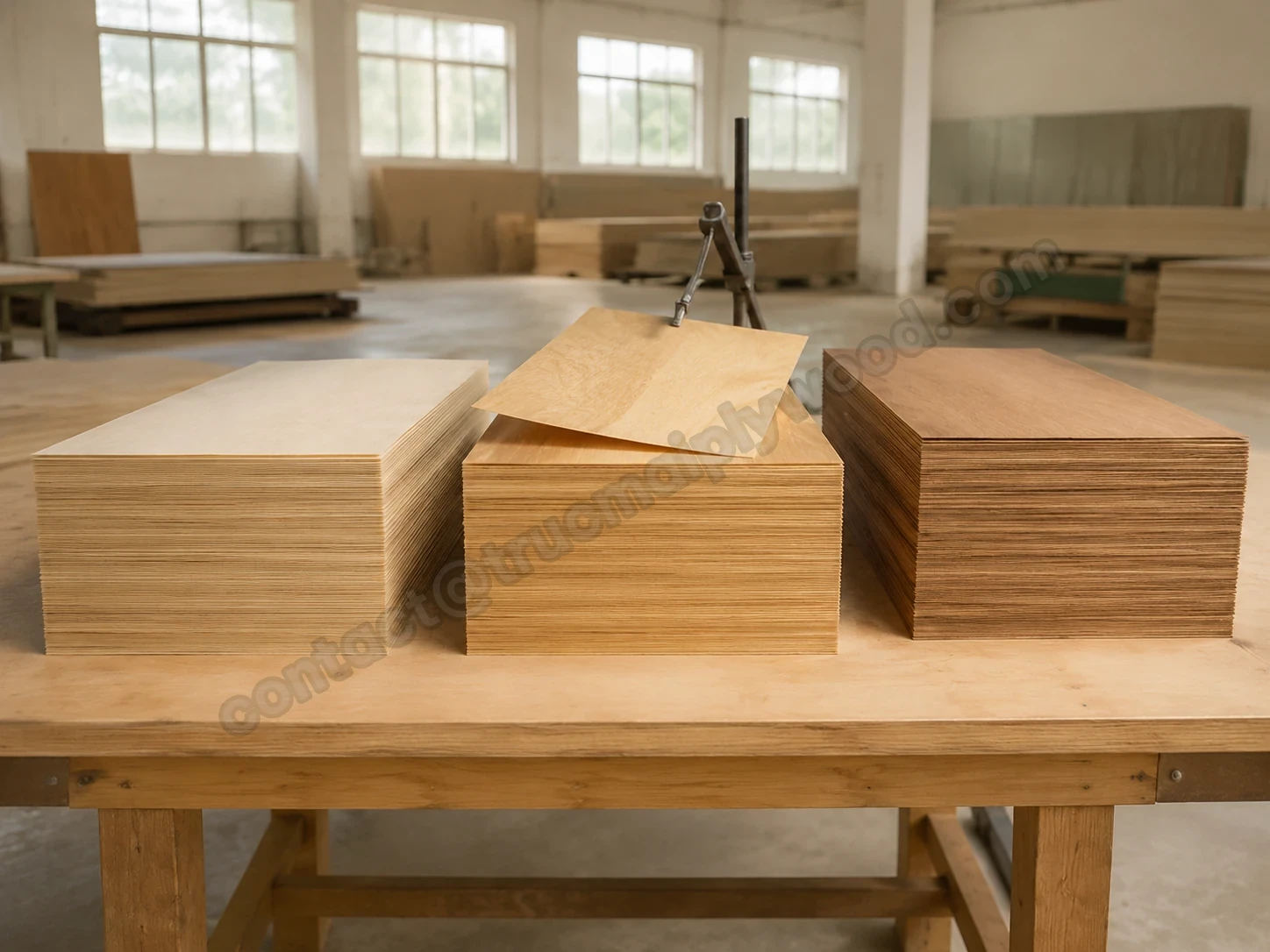
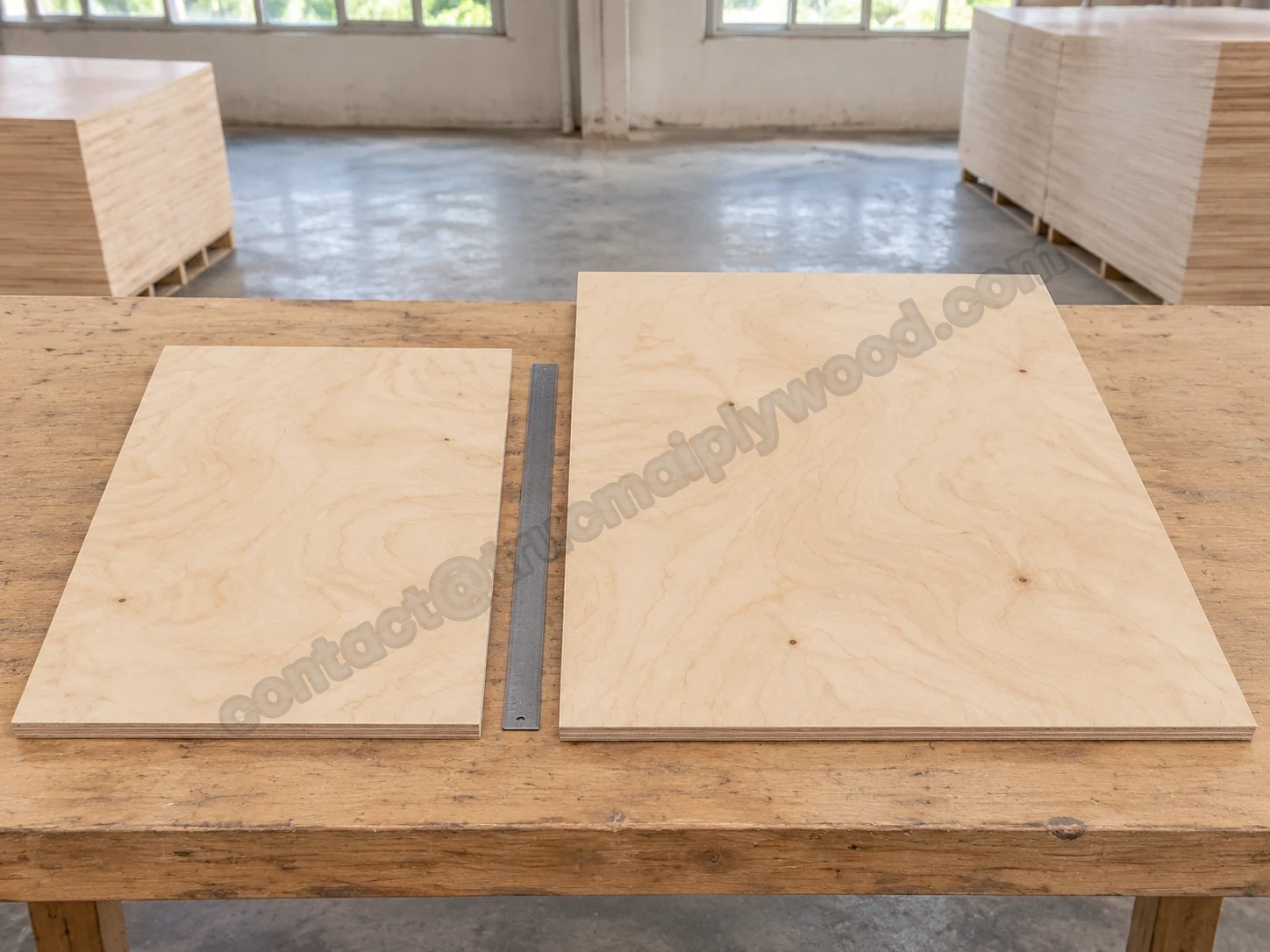
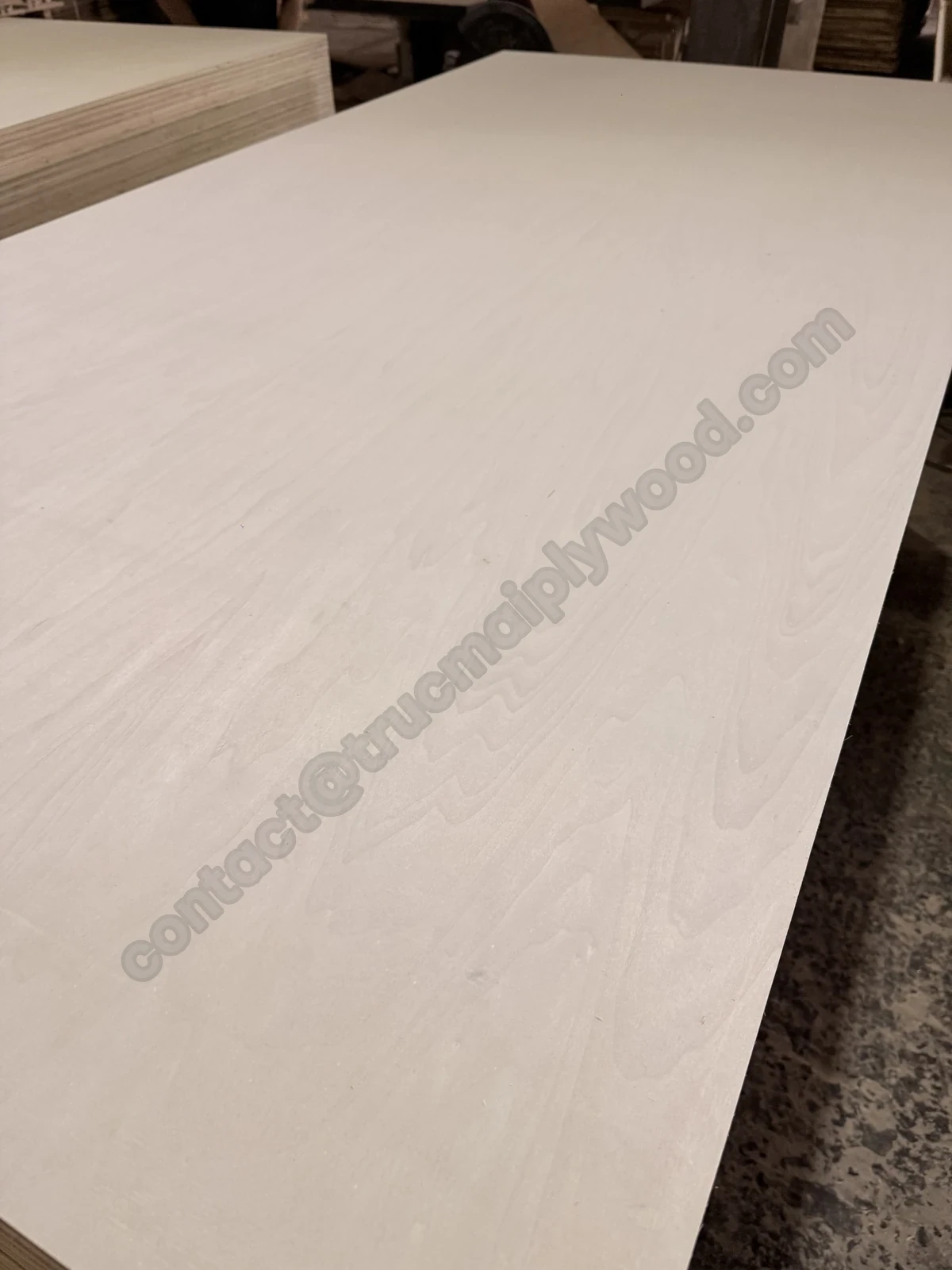
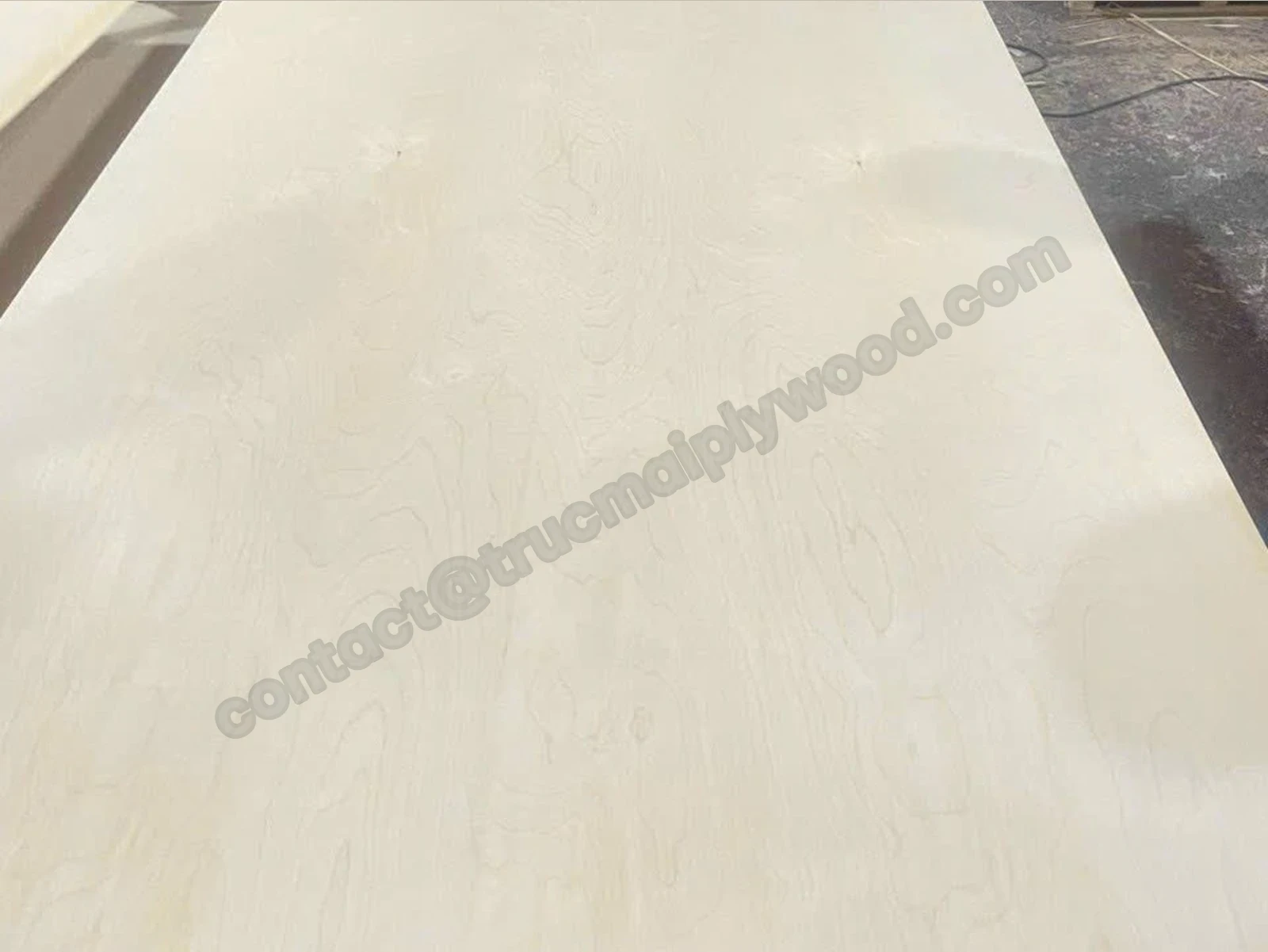
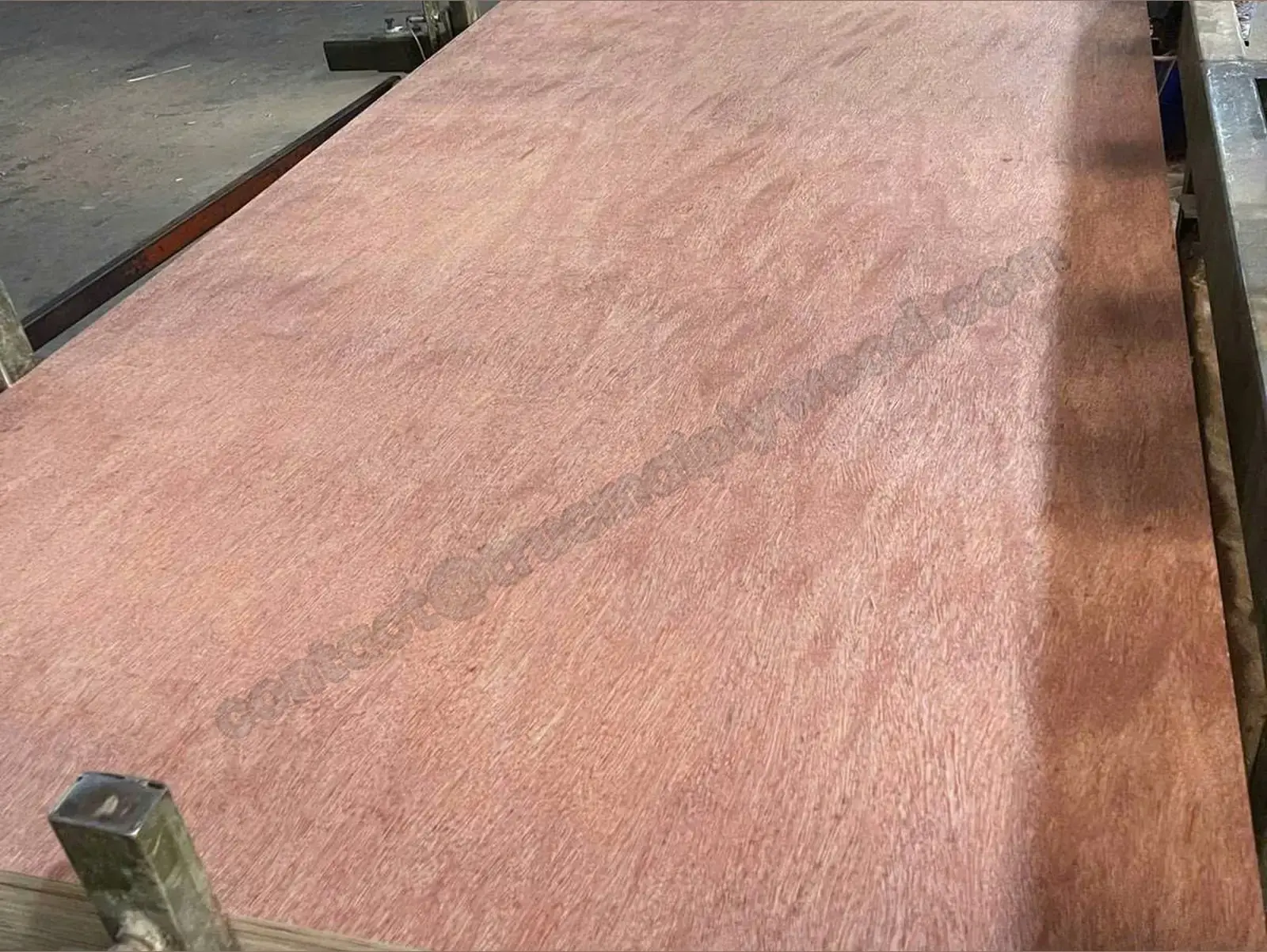
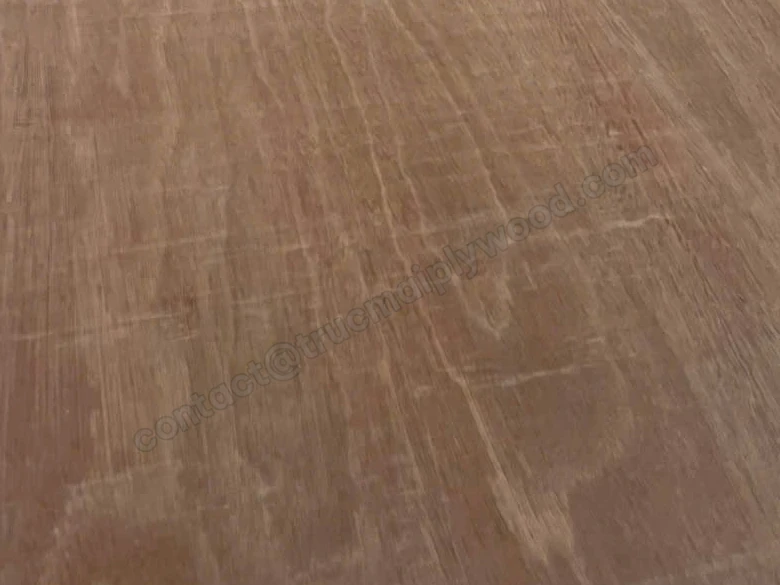
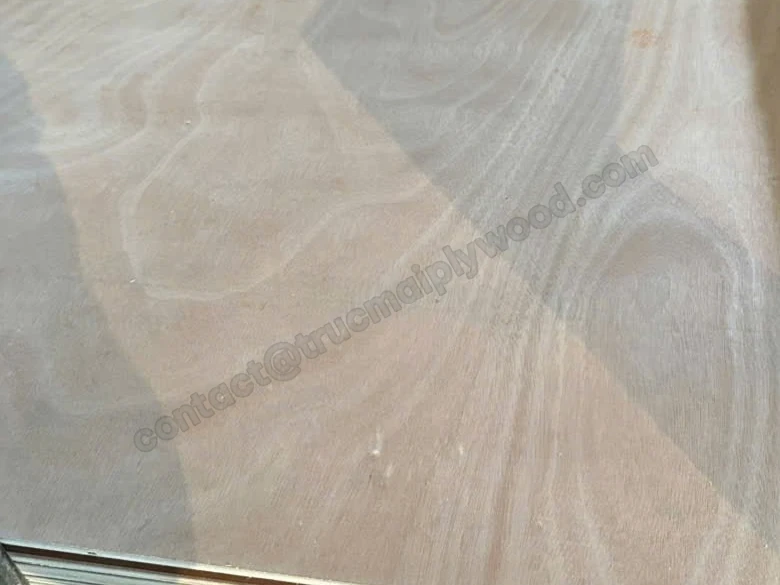
A graded face is judged beside its sample, so the photos show faces next to each other: stacks sorted by colour, a sample beside a full sheet and finished faces of different species.
The two illustrations show the sorting table and the sample-against-sheet check, AI illustrations of how such checks are done in plywood mills; the photographs show real faces of the species graded here. Compare tone first and defects second, as the grader does.
Where grading goes wrong
Which face defects decide a grade, and how are they caught?
Six face defects decide most grades: open splits, knots, patches, tone mismatch, open joints between veneer strips and sand-through. Each is caught at a known stage, and the sample fixes how much of each is allowed.
The most common cause of a face complaint is not a defect but a mismatch: two veneers each acceptable on their own but of different tone. A face is therefore sorted by colour before it is judged on defects.
| Defect | Cause | How it is caught |
|---|---|---|
| Open split | Veneer dried too fast or cut from a stressed log | Sheet set aside at intake; split checked again at the sample match |
| Knot | Natural feature of the species | Sorted by size and count against the sample |
| Patch | Repair of a knot or split with a sound piece | Allowed only where the sample shows it |
| Tone mismatch | Two lots or two bands on one panel | Colour sort before defect sort; one band per panel |
| Open joint | Veneer strips butted with a gap | Joints checked on the lay-up table, face against light |
| Sand-through | Thin face sanded too far | Face thickness checked at intake; sanding set for 0.2–0.5 mm |
Numbers and tolerances
Which numbers belong to veneer grading?
Five numbers frame a graded face: face veneer of 0.2–0.5 mm, core veneer of 1.4–2.0 mm, 1.3 mm core veneer in 4 mm panels and five plies in 3–5 mm panels. The fifth is a thickness tolerance of ±0.3–0.5 mm per order, ±0.3 mm on sanded furniture panels.
A grade letter alone has no fixed meaning between mills: hardwood plywood face classes are set out in the HPVA standard in the United States and in EN 635-2 in Europe, and a mill's own letters sit beside them. For that reason Truc Mai ties the grade to the sample and writes the numbers below next to it.
| Item | Value | Condition |
|---|---|---|
| Face veneer thickness | 0.2–0.5 mm | Usually 0.3 mm for Europe |
| EV face veneer | 0.3 or 0.4 mm | Sheets of 2500 × 1300 mm, imported |
| Core veneer | 1.4–2.0 mm | Graded A or AB by defects |
| 4 mm panel core veneer | 1.3 mm | Good thin veneer is scarce, so 4 mm can take longer |
| Thin panels | 5 plies at 3, 4 and 5 mm | 6 mm: plies per order |
| Plies in 18 mm | 11–13 | Most often 11 |
| Thickness tolerance | ±0.3–0.5 mm | ±0.3 mm sanded furniture panels, per order |
Buyer guide
How should a buyer choose a face grade and check it on arrival?
Choose the grade by the finish the panel will take, ask for a sample that shows the worst face you will accept, and on arrival compare the top sheet of a pack with the kept sample under daylight. The sample, not a letter, settles any dispute.
The finish decides how much the face can vary. An opaque paint hides tone changes and small patches; a clear lacquer or a UV coating shows all of them. Choosing the grade for the finish avoids paying for a face that will be covered and avoids a face that will show every change of tone.
| Finish | Sample should show | Tolerance for variation |
|---|---|---|
| Opaque paint | Smooth, filled face; tone does not matter | Wide on tone, tight on splits |
| Clear lacquer or UV | The tone band and figure you accept | Narrow on tone, no open knots |
| Veneered then laminated | Even, flat face under the overlay | Wide on tone, tight on thickness |
| Hidden carcass faces | The weakest face you will allow | Wide on everything but splits |
What you hold
What does a buyer hold that proves the face was graded?
A buyer holds four things that prove the grade: the kept sample, the grade pair written on the order, the face notes on the pack-check sheet and the photo of the top sheets taken at the pack stage.
- Kept sample The face the grade is measured against, with its reference
- Grade pair Face and back grade written together on the order and the batch
- Face notes Pack-check sheet entries for tone, knots and splits
- Top-sheet photos The face of the top sheets at the pack check
Documents
Which documents are tied to the face veneer?
Three records follow the face: the sample reference, the origin file of the veneer and the claim line on the invoice. They change when the face changes and not when the quantity does.
- Sample reference
The reference of the kept sample, written on the order and on the batch.
Origin records and plot geolocation for the face veneer, kept apart from the core file.
Stated for faces on the current schedule; for other faces it is confirmed at enquiry.
Volume
Does grading keep up with a monthly container?
Yes. At around 5,000 m³ an average month the mill grades face veneer for a large number of panels, and a monthly container is a small share of it, so the grading of your spec runs inside the normal flow.
What limits a repeat order is not grading speed but veneer supply: a face lot that has run out cannot be matched by eye alone, which is why a second lot is checked against the kept sample before it is used. How lead time moves with volume is on the lead-time page.
Order checklist
Which six face lines belong on a plywood purchase order?
Six lines on the order fix the face so a repeat container can be matched to it.
Face species and, for birch, the words birch-faced; for EV, the colour.
Face and back grade as a pair, against a named sample reference.
Face veneer thickness, 0.3 mm for Europe unless another is agreed.
Finish the panel will take: paint, clear lacquer, UV or overlay.
Thickness tolerance, ±0.3–0.5 mm, and the sanding it implies.
Who holds the sample and what happens when a lot runs out.
FAQ
Face grading questions from container buyers
Direct answers on thickness, species, the sample and repeat orders.
How is face veneer graded before lay-up?
Face veneer is sorted by tone under even light, then checked for knots, splits and patches, then held against the buyer's approved sample before it reaches the lay-up table. Sheets outside the sample's limit go to a lower grade or to another order.
What face veneer thickness is used on plywood for Europe?
Face veneer is usually 0.3 mm for European orders, within a range of 0.2–0.5 mm. EV faces come in 0.3 or 0.4 mm sheets of 2500 × 1300 mm.
Why are face and back grades quoted as a pair?
Because a panel is used with both faces in mind, and the grade of one is only useful beside the other. At Truc Mai the pair is agreed against the sample and written on the order and the batch.
How does a repeat order keep the same face grade?
The same sample and the same grade pair are used for every container, and a new veneer lot is checked against the kept sample before use. Buyer and mill each hold one sample, so both sides compare against the same face.
Which face species are graded at the mill?
EV, poplar and bleached poplar, birch, okoume, bintangor, pine, eucalyptus, gurjan and sapele, and others on request. Each is sorted on colour first and on its typical defect second.
Does birch-faced plywood mean the whole panel is birch?
No. Birch is an imported face veneer laid on a Vietnamese core of Eucalyptus, Acacia, Styrax or Pine, so the panel is birch-faced and the core is not birch.
Is EV veneer graded for knots?
No, because engineered veneer has no knots by construction. It is graded on stripe regularity and tone across the sheets that will sit on one panel, and on the joints between sheets.
What should the approved sample show?
The worst face the buyer will accept: the darkest tone, the largest pin knot and any patch that is allowed. A sample that shows only the best face leaves the mill and the buyer to guess the limit.
Why does a 0.3 mm face need careful sanding?
Because there is very little veneer to remove: sanded too far, the face wears through and the colour of the layer beneath shows. Sanding is set for the face thickness, and the tolerance is written per order at ±0.3–0.5 mm.
Match a face
Send a sample to match
Send the face you want matched, or the species and finish; the quotation comes back with the grade pair, the veneer thickness and the sample plan.
Face species, finish, thickness and tolerance, a photo or sample of the face to match, quantity and port.