
A plywood chair can use flat CNC-cut seats and backs or separately moulded veneer shells. For flat components, choose a stitched furniture core, an approved face veneer and a thickness tested in the finished chair. Truc Mai Plywood supplies furniture-grade sheet stock and cut-to-size panels; moulded shells require a separate forming process.
What makes a plywood chair different from a solid-wood chair?
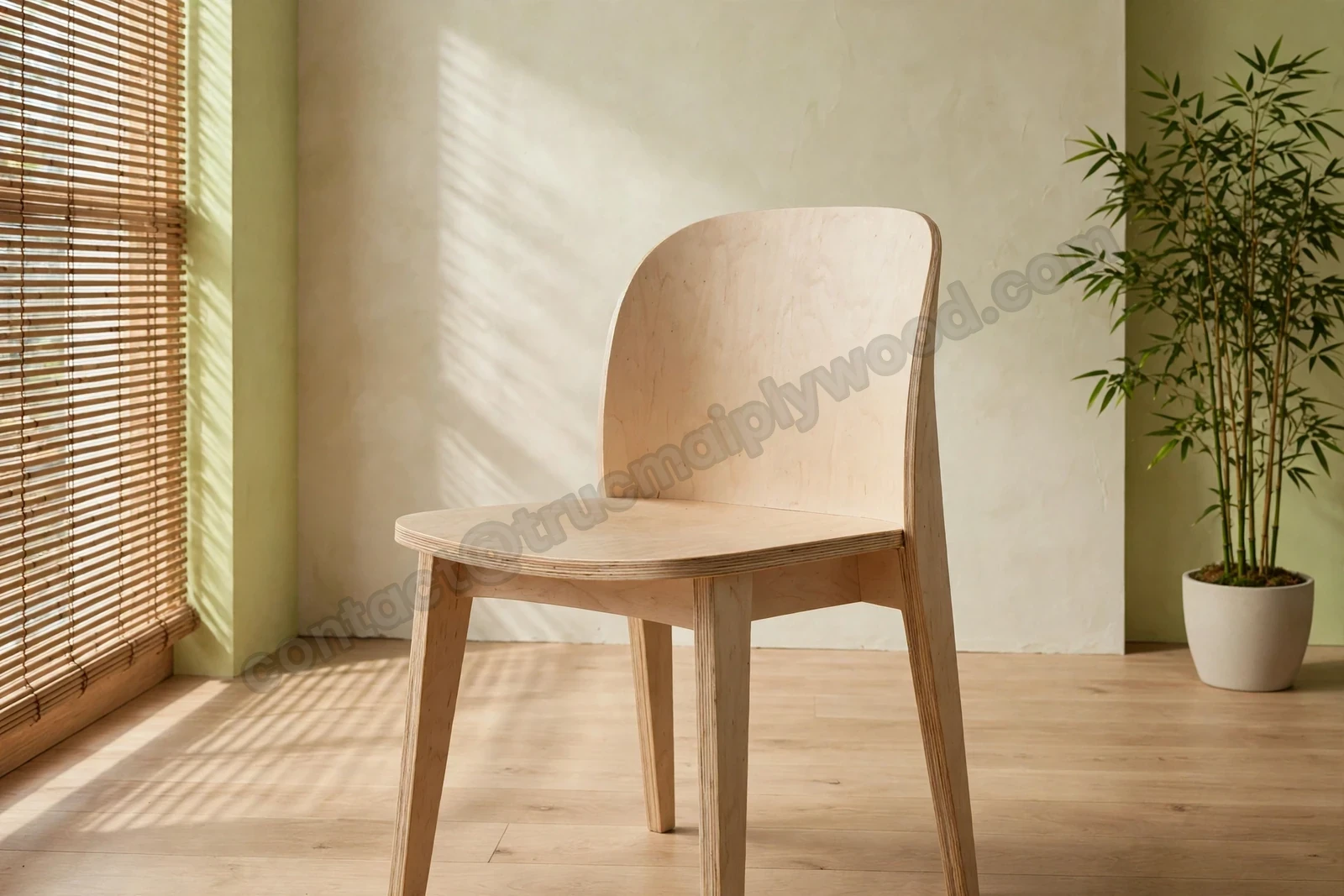
A plywood chair uses cross-laminated veneers or panels for its seat, back or other parts; a solid-wood chair uses mainly sawn timber. A plywood dining chair can expose its layered edge, cover it with banding or hide it under upholstery. Cross-grain layers improve dimensional stability, while solid wood suits narrow profiled rails and traditional joints.
For an importer, the important distinction is between a finished chair and the sheet stock from which a furniture factory makes chair parts. Furniture-grade sheet selection starts with the component drawing. A seat blank, a decorative back and a leg frame should not automatically share one panel specification. Furniture factories can combine plywood seat and back panels with solid-wood or metal frames without changing the panel’s purpose.
Which plywood chair design uses flat panels or curved shells?
Flat-panel chairs use cut and machined sheet parts; moulded-shell chairs use veneers pressed into a curved tool. A plywood modern chair can have a flat seat with a gently angled back, a separately curved seat and back, or a more complex continuous shell. The shape determines the manufacturing route before the face veneer is selected.
| Chair format | Panel form | Main purchasing question | Typical production route |
|---|---|---|---|
| Flat dining chair | Flat seat and back blanks | Cut quality and fixing locations | Sheet pressing, CNC profiling and perimeter finishing |
| Plywood stacking chair | Shaped seat and back on a stackable frame | Clearance and repeatable geometry | Formed or flat parts, fixture inspection |
| Curved lounge chair | Separate contoured shells | Tool shape and spring-back | Veneer lay-up in a matched mould |
| Upholstered contract chair | Concealed or partly visible panel | Fixings and substrate consistency | Flat or formed panel, upholstery assembly |
For a stacking programme, stack clearance is a property of the assembled chair, including the frame and bumpers. The panel supplier needs the seat profile and attachment drawing, while the chair assembler verifies that finished chairs nest without abrasion.
How is moulded plywood made?
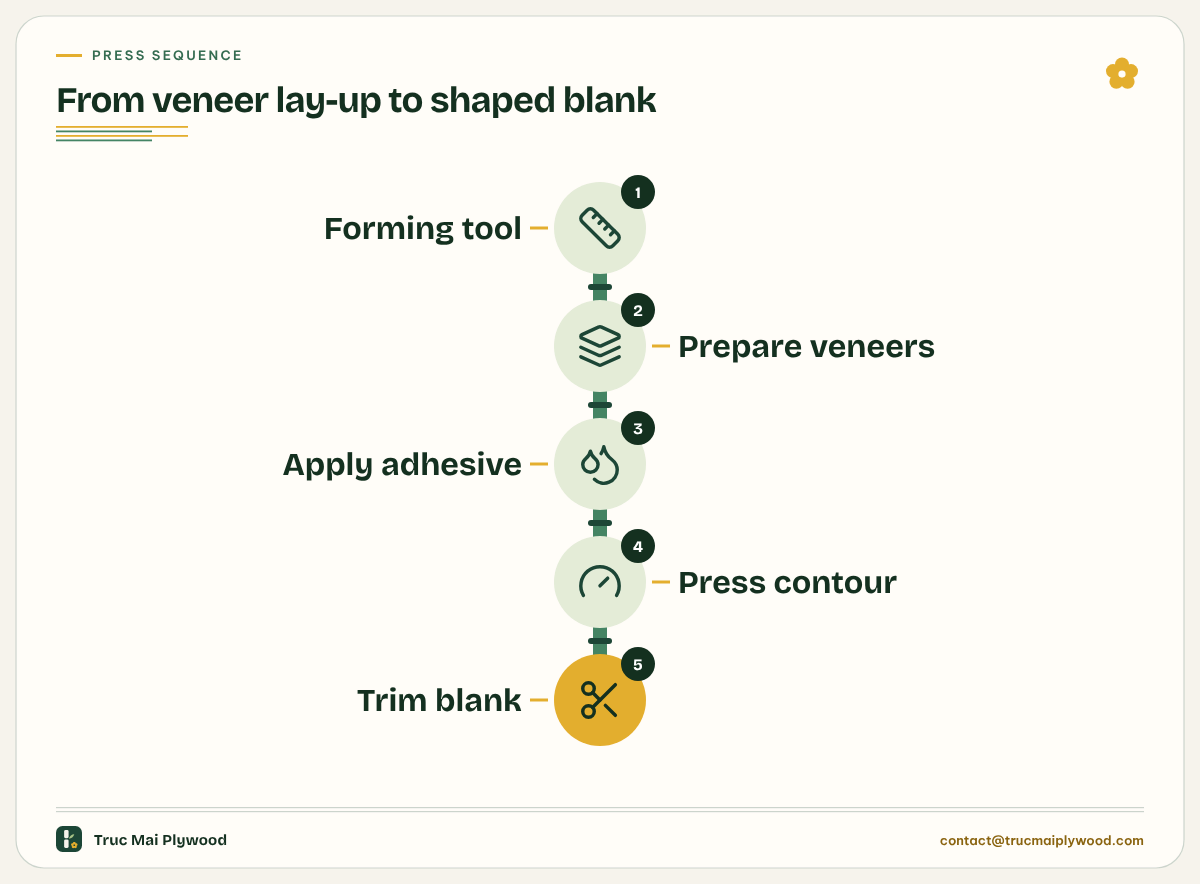
Six stages take moulded plywood from veneer preparation through shaped pressing to a trimmed, inspected shell. A flat plywood sheet cannot simply be treated as an equivalent to a purpose-made moulded shell. The process begins with a target contour, veneer selection and an adhesive system suited to the tool and service conditions.
- Develop the seat or back geometry and make a matched forming tool or suitable press fixture.
- Prepare veneer sheets, checking grain direction, splits and surface condition before lay-up.
- Spread the specified adhesive and arrange the veneers in the approved ply sequence.
- Press the lay-up to the contour under controlled pressure and temperature, then allow the bond to set.
- Release the formed blank, condition it, trim the outline and machine attachment points.
- Check the finished shell against the profile gauge, examine edges and test the chair assembly.
The US Forest Service’s 2021 Wood Handbook chapter on adhesive bond formation explains why wood surface condition, adhesive selection and pressing govern bond performance. A chair manufacturer must validate its own mould, curvature, bond and finished-chair performance. Truc Mai supplies flat furniture plywood and veneer-faced panel options; a request for a finished moulded shell should be treated as a separate manufacturing requirement.
What is the best plywood for chair seats?
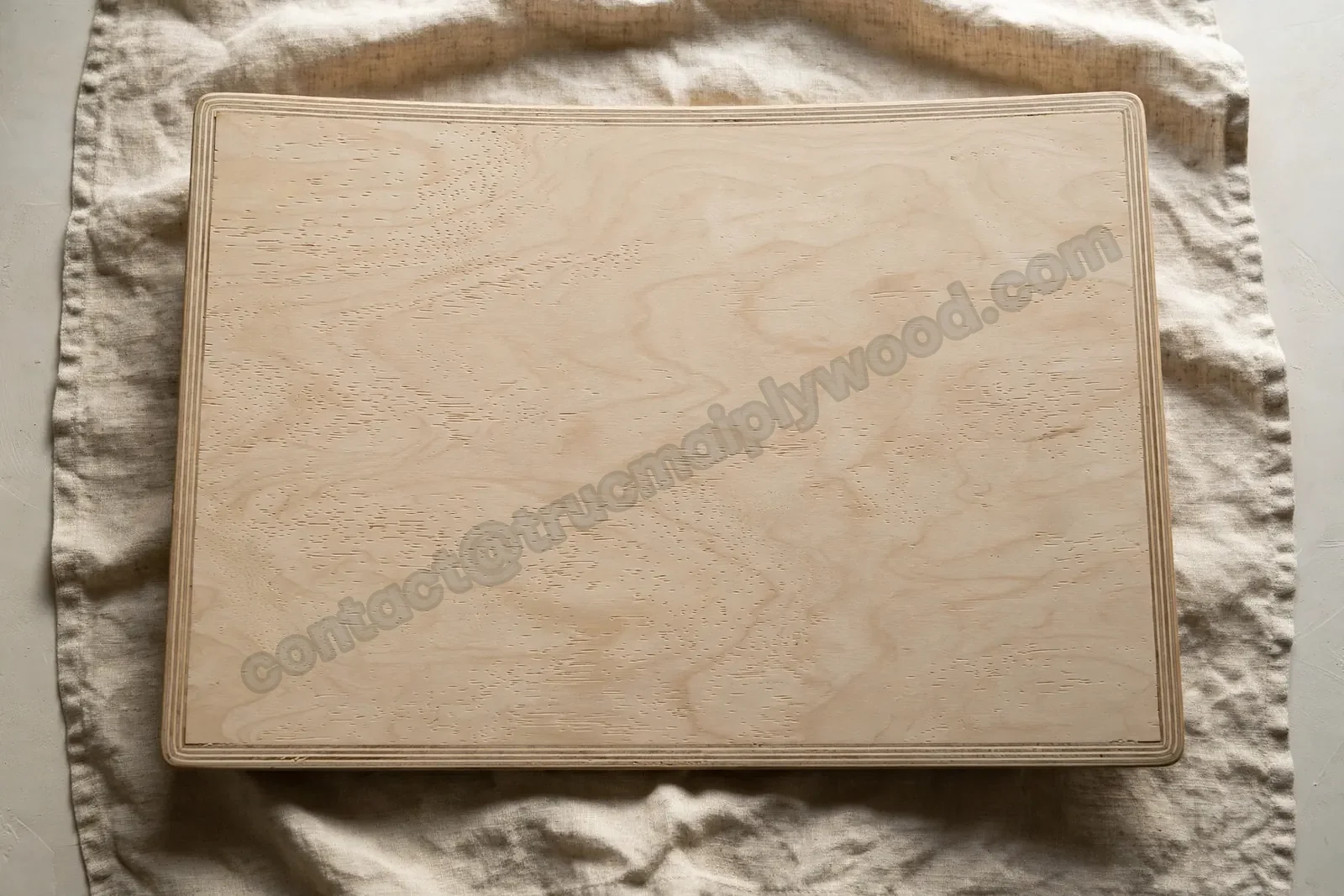
An A-grade stitched-core, sanded furniture plywood with an agreed face grade is the practical starting specification for a flat chair seat. The best plywood for chair seats is the panel that passes the chair maker’s seat-load, fixing and finish trials at the chosen geometry. Thickness alone does not establish suitability: support spacing, cantilever, fastener position and seat contour all affect performance.
For a visible seat, request an approved face sample, inspect the edges for core gaps and test the coating on that actual face. For an upholstered seat, concentrate on consistent machining, fastening and the surface under the padding. Cabinet-grade plywood selection gives a useful reference for face and core vocabulary, but the chair seat must also be checked as a loaded component.
An order can specify an A-grade stitched core with sanded and calibrated faces, a face/back pair agreed by sample, and thickness tolerance written into the drawing. A purchaser should compare sample panels from the same construction rather than selecting solely by the veneer species printed on a catalogue cover.
Which veneers suit visible chair backs?
Birch-faced plywood suits a pale, even-looking back; engineered veneer suits repeated visual patterns; okoume, pine and other natural faces offer different grain character. The visible surface and the core are separate choices. A birch face on a Vietnamese core is birch-faced plywood, not an all-birch construction.
Truc Mai Plywood offers EV, poplar, bleached poplar, birch, okoume, bintangor, pine, eucalyptus, gurjan and sapele face options. For a production run, approve the actual face and back pair under the intended stain, lacquer or laminate. A pale veneer can show glue marks or machining damage that a dark finish conceals, while a heavily figured veneer needs a sample range rather than one attractive photograph.
The birch-faced panel specification and engineered veneer panels provide two different appearance routes. Where both sides of a chair back remain visible, the reverse face deserves its own grade and colour decision.
How do core species change a chair panel?
Styrax is the lighter planning core, while Acacia and Eucalyptus are denser choices for furniture panels. The choice affects sheet weight, machining feel, fastener trials and container loading. A core name alone is not a bending-strength or screw-withdrawal rating, so the chair maker tests its chosen construction.
The mill’s furniture range uses Styrax, Eucalyptus, Acacia, Pine or combined cores. Core stitching can be applied across and along the sheet, with the outer plies commonly stitched to improve continuity beneath the face. For exposed plywood edges, examine the sample after routing: a decorative face cannot hide internal gaps at a cut edge.
A chair factory ordering multiple colourways can retain one approved core build while changing the face veneer. That keeps CNC settings and assembly fixtures more consistent. Vietnamese plywood grades explains why core joining and surface preparation belong on the order, rather than relying on a grade letter alone.
What thickness should a plywood dining chair use?
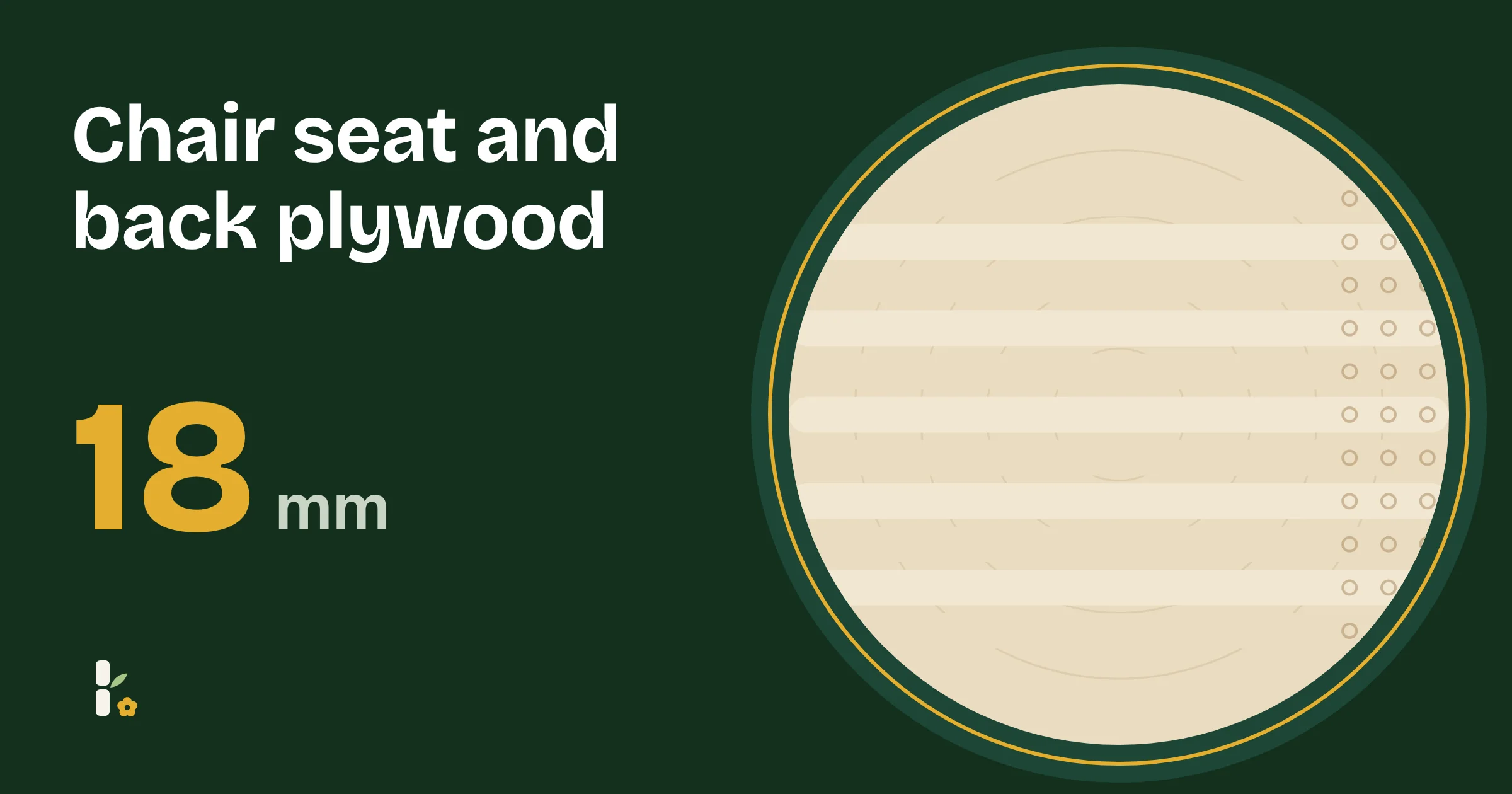
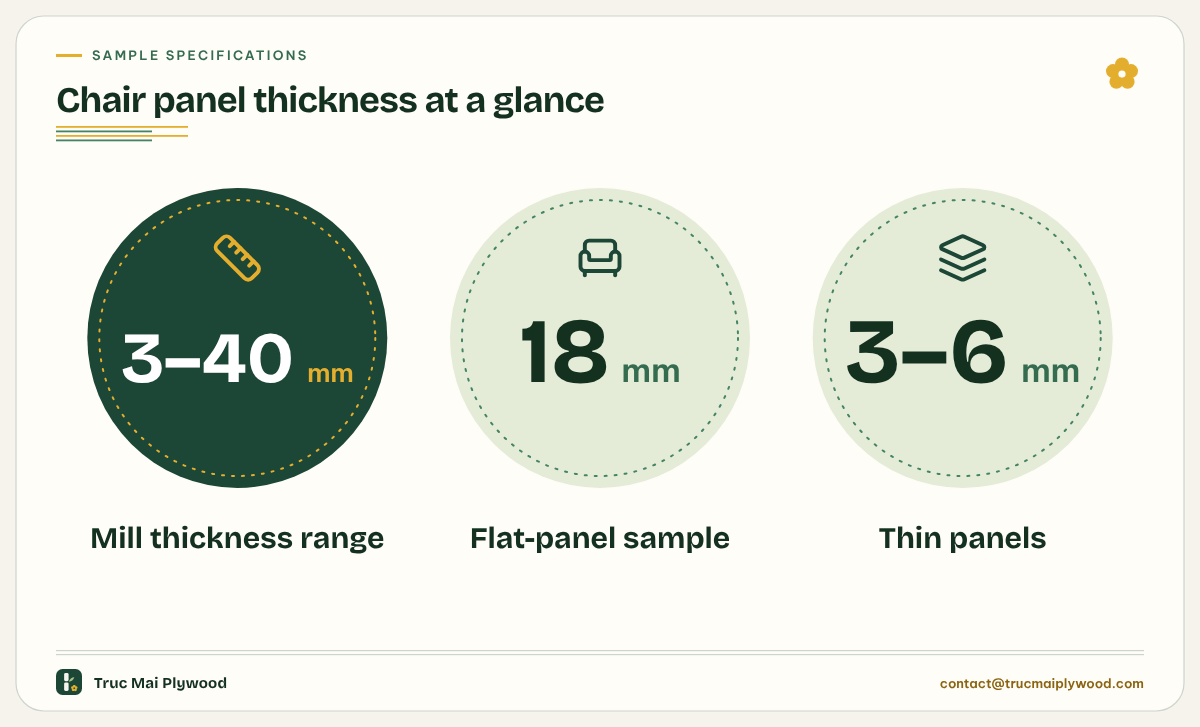
Specify seat thickness from the tested chair geometry, with 18 mm a useful flat-panel sample option and thinner veneers reserved for designs validated for their support and forming process. The mill’s standard range is 3–40 mm, including thin 3–6 mm panels. Thin stock is not automatically a finished curved chair shell.
An 18 mm furniture panel commonly uses 11–13 plies, most often 11, with the actual build agreed for the order. For thin panels, 3–5 mm constructions use five plies; the 6 mm lay-up is set by order. A maker comparing a flat seat with a curved shell should not transfer the same thickness specification without a new test. 18 mm plywood construction covers the standard sheet format and panel vocabulary.
A thickness tolerance of ±0.3 mm is an available sanded and calibrated furniture-panel specification; the order records the accepted tolerance. For a shaped seat, the final assembly also needs an agreed contour and hole-position tolerance, measured after trimming rather than inferred from flat sheet thickness.
How does a plywood stacking chair differ from a dining chair?
A plywood stacking chair needs controlled seat and back geometry so multiple completed chairs can nest without damaging the veneer. A dining chair need not meet a stacking envelope.
For repeat orders, record a master chair, stack-height check and contact-pad locations. Check the assembled frame and panel after changes to upholstery or frame fabrication.
Distinguish finished-chair clearances from the supplied panel outline on the drawing.
Can a flat plywood sheet be bent into a chair back?
A flat finished plywood sheet is suited to gentle shaping only after the chair maker validates the bend and the material; tight compound curves call for a designed veneer lay-up and mould. Bonded cross-laminations resist being forced into a shape after manufacture, particularly where the bend crosses a stiff grain orientation.
A shallow, supported backrest can instead be made as a flat CNC-cut panel set at an ergonomic angle. Another route uses separate curved supports behind a thin decorative facing. The drawing should state whether the supplier is delivering flat blanks, an assembled backrest or a moulded shell, because these are distinct products with different quality checks.
The thin plywood panel range is relevant to sample development, but thinness by itself is not evidence that a finished panel can be cold-bent to a specified radius.
How should seat and back blanks be cut at the mill?
Cut-to-size chair blanks should follow an approved nesting drawing, with part labels tied to the seat and back revisions. The mill can divide standard sheets into two, three, four or six pieces; the exact finished dimensions are agreed from the buyer’s cut list. CNC profiling, curved edges and fixing holes can then be allocated to the chair maker’s machining stage.
For example, the cutting programme can produce 610 × 2440 mm halves, 1200 × 800 mm thirds or 1220 × 610 mm quarters when those rectangles suit the customer’s process. These are sheet-cut formats, not universal chair-seat dimensions. Where a panel needs an irregular profile, the buyer should state grain direction, reference edge, saw kerf allowance and whether a rough blank or finished contour is required.
A packing label can carry the component code and drawing revision so the assembler does not mix seat and back stock. Panels cut at the mill covers the available cut-to-size route.
What makes a good chair-panel edge and fixing point?
A good chair-panel edge has continuous bonded plies, a clean machined profile and a finish compatible with repeated handling. Inspect the edge after drilling and routing, because a flat face can look sound while the machining reveals a local core gap.
Fixings should be selected through trials on the actual panel construction. Test pilot-hole size, spacing, edge distance, pull-out and repeated movement. Specify screws, inserts, bolts or brackets on the drawing.
Keep a machined-edge acceptance sample beside the approved face sample.
How should glue and emission requirements be written?
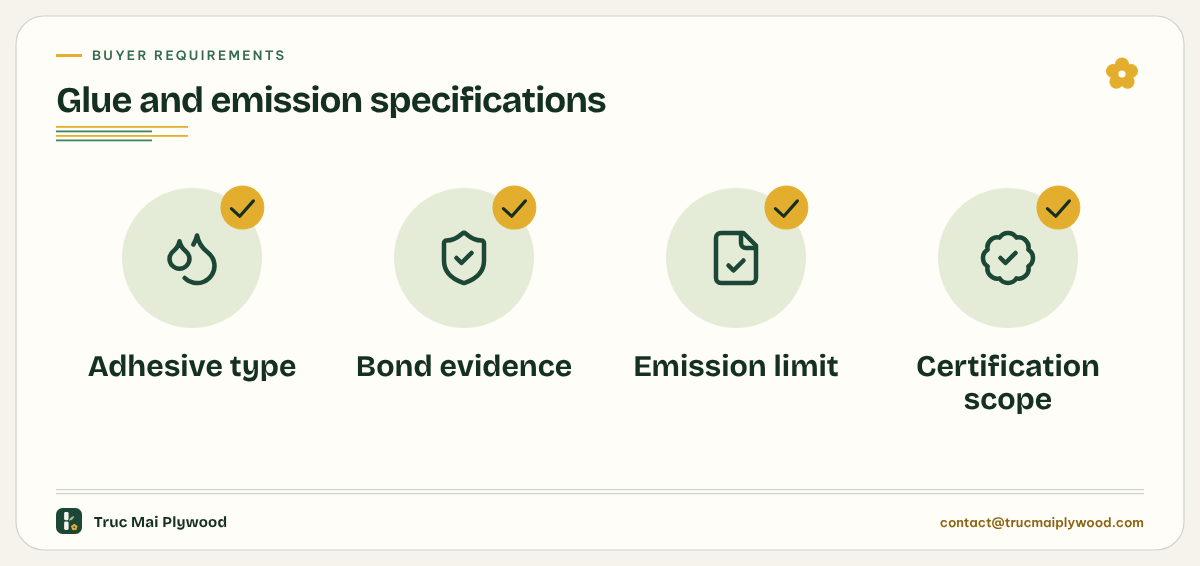
Write adhesive system, bond performance and formaldehyde emission as separate specification lines. For a dry indoor chair panel, UF glue at the agreed emission grade is one available construction. The US Forest Service 2021 adhesive reference describes UF as primarily an interior-panel adhesive with limited resistance to wetting; an alternative adhesive needs its own bond-performance evidence.
For the US, 40 CFR Part 770, checked 18 November 2026, sets the hardwood-plywood veneer-core emission limit at 0.05 ppm under the applicable testing system. Truc Mai holds CARB Phase 2 and TSCA Title VI certification for veneer-core hardwood plywood within its 3–25 mm certified scope, certificate CARB/EPA26053. Specify the certified product configuration on a US-bound order.
A finish coating, a glue trade name and a formaldehyde test are not interchangeable descriptions. For upholstered chairs, the hidden substrate still needs the relevant emission documentation.
What should a chair maker check before approving samples?
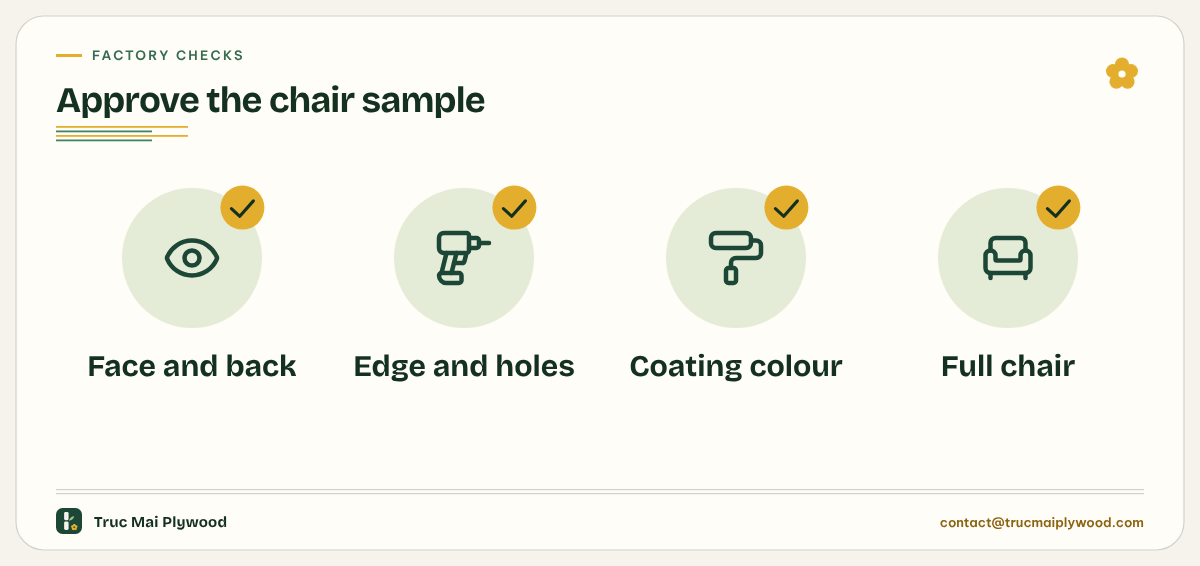
Approve a chair-panel sample only after checking appearance, machining, assembly fit and the finished chair’s loading behaviour. A small panel swatch can approve colour but cannot substitute for a seat prototype. Use the actual cutting tool, finish and fastener system that production will use.
- Compare face and back with the signed colour and defect samples under the factory’s inspection lighting.
- Route an edge and drill representative holes to inspect ply continuity and tear-out.
- Finish the face with the intended coating and check colour after curing.
- Assemble a full chair and check seat flex, back movement, joint behaviour and repeated use.
- Record the approved panel build, drawing revision and packing label for repeat orders.
Where the design uses a moulded seat, include a contour gauge and post-press profile check. Where the seat is flat, check bow and panel thickness before CNC cutting. Ordering plywood samples provides the sampling route for a first production specification.
How do plywood and hardwood compare for chair manufacture?
Plywood is useful for broad seat and back surfaces cut repeatedly from sheet stock; hardwood is useful for shaped rails, legs and traditional joints. Neither material replaces the finished-chair test. A furniture programme can use both materials in one design.
| Buyer criterion | Plywood panel | Solid hardwood component |
|---|---|---|
| Broad seat blank | Cut from a sheet | Built from joined boards or shaped stock |
| Visible edge | Layered construction | Continuous wood grain |
| Curved shell | Purpose-made veneer moulding | Steam-bent or machined component |
| Repeat cutting | Sheet nesting and CNC files | Board selection and machining fixtures |
| Fixings | Test edge distance and ply construction | Test grain direction and joint geometry |
For a plywood chair design, an exposed laminated edge can be a deliberate modern detail. For a traditional dining chair, hardwood may better suit slender legs and carved joints. The purchasing decision follows the component’s function, not a blanket material ranking.
How do buyers document veneer origin and repeat quality?
A repeat chair-panel order should identify the face, core, adhesive, dimensions, finish preparation and traceability documents in one approved specification. Truc Mai’s FSC chain-of-custody licence is FSC-C196493, with certificate SA-COC-014545; eligible FSC 100% products carry the relevant claim on sales documents. The FSC Chain of Custody standard, clause 5.1 requires the certificate code and product claim on those documents.
For EU procurement, origin files can cover both core and face veneer, including plot geolocation and supporting records. Face veneer origin documentation shows the documentation topic separately from surface appearance. A buyer can use a repeat-order sample panel, labelled cut list and document schedule to compare incoming containers against the same approved specification.
A clear purchase order avoids replacing an approved face with a visually similar species or changing core joining without a recorded revision. That matters for chair parts whose machined edges remain exposed.
How should a furniture factory request a plywood chair quotation?
Send a chair-component drawing and a specification for each seat and back panel, rather than requesting a generic chair sheet. The quotation can then address the same construction that will be tested on the furniture line. A factory supplying flat panel stock needs different tooling information from a business quoting a completed moulded shell.
Write the RFQ in this order: application (flat seat, back or moulding trial); core and core joining; adhesive and emission requirement; face/back veneer and approved appearance; sheet or cut-part size with tolerance; packing, labels and quantity. Include destination port and the intended finish or upholstery system. For a container programme, ask for the packing configuration alongside the material specification.
The standard minimum order is one 40HC. Container volume planning helps the buyer compare sheet-stock loads by core, while writing a plywood RFQ provides a purchasing checklist. Send the drawing and specification to contact@trucmaiplywood.com for a quotation and sample discussion.
Send your specification to contact@trucmaiplywood.com or through the quotation form.
Questions buyers ask
Can I order plywood chair seats already upholstered?
The plywood order covers panel stock or agreed cut parts. Upholstery and final chair assembly belong in the furniture maker’s production specification.
Is birch-faced plywood the same as Baltic birch?
No. Birch-faced plywood describes the outer veneer; the core species and ply construction must be specified separately.
Can both sides of a plywood chair back be decorative?
Yes. Specify the face and back veneer grades as a pair and approve both surfaces against samples.
Does a thicker seat always make a stronger chair?
No. Seat support, joint design, core construction and the finished assembly test determine performance alongside thickness.
Can a chair factory order labelled cut panels?
Yes. Provide a cut list, component codes and agreed finished sizes for labelled cut-to-size panels.
What is the minimum order for furniture plywood?
The standard minimum order is one 40HC container, with the product mix agreed on the order.
Are FSC claims shown on every plywood sheet?
Eligible FSC 100% products carry the appropriate claim and certificate code on sales documents. The claim is tied to the specified product.
Do I need a separate sample for a painted chair back?
Yes. Test the intended paint or coating on the actual veneer face and inspect the edge after machining.
What drawings should accompany the first enquiry?
Send the seat and back outlines, grain direction, fixing locations, thickness, finish requirements and packing quantities.