
No. Does plywood need fumigation for export? Manufactured plywood is exempt from ISPM 15 wood-packaging treatment, but solid-wood pallets, skids and dunnage used with it are regulated. A buyer may still request a fumigation certificate for a particular destination or shipment. Specify the packaging materials before the container is booked.

Does plywood need fumigation?
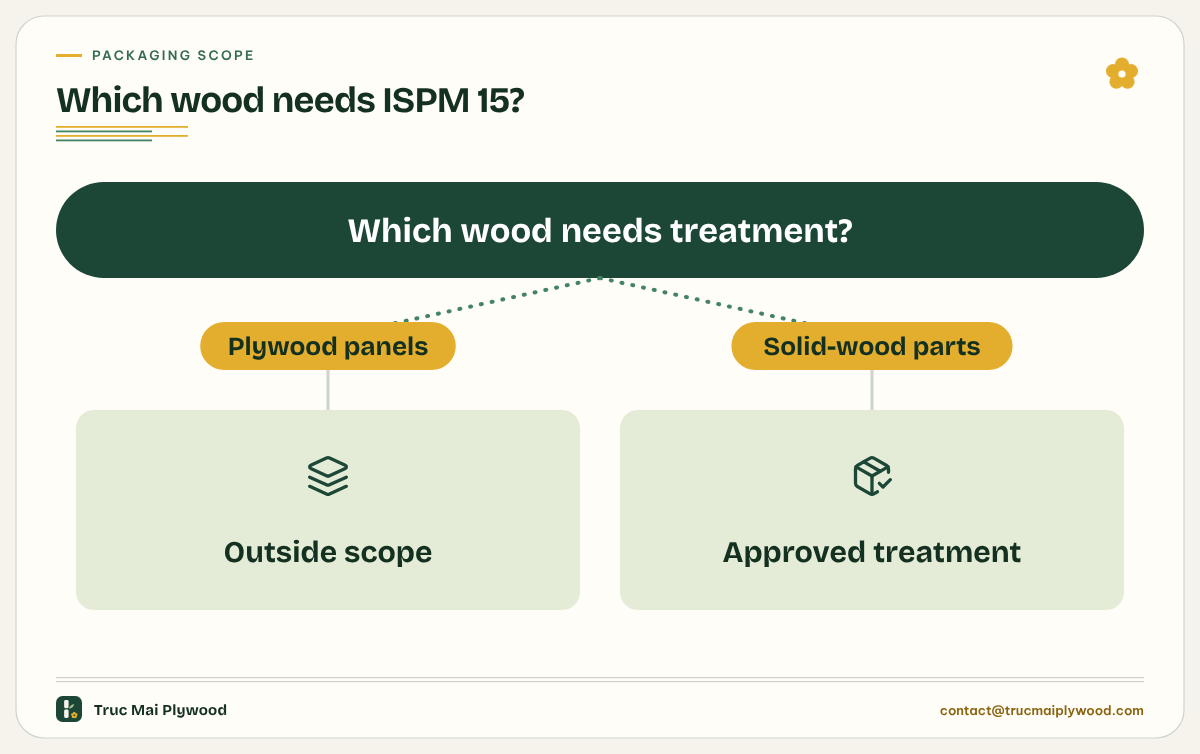
No. Plywood made by bonding veneers with adhesive, heat or pressure is processed wood, so it is outside the wood-packaging treatment requirements of International Standard for Phytosanitary Measures No. 15 (ISPM 15). The International Plant Protection Convention (IPPC) standard explicitly exempts wood packaging manufactured wholly from plywood and similar processed boards.
The distinction is between the product and the transport equipment. A bundle of furniture plywood is a manufactured panel product. A raw timber bearer placed underneath the bundle is wood packaging. Inspect the two separately rather than treating every wooden item in a container as one category.
For import planning, start with the Vietnam plywood import guide and list the actual packing materials on the purchase specification. The plywood grade, veneer species and adhesive specification describe the product; the pallet, skid and dunnage description tells the forwarder which phytosanitary packaging rules to apply.
Which pallet components require ISPM 15 treatment?
No, when the entire pallet is manufactured from processed plywood; yes, regulated solid-wood components need approved ISPM 15 treatment. A pallet with plywood decking and untreated sawn-wood feet is a mixed-material unit. Its solid-wood parts bring it within the standard’s packaging controls.
Australia’s Department of Agriculture, Fisheries and Forestry lists wholly processed plywood packaging as exempt and raw timber pallets, skids and packing blocks as regulated. The same source explains that compliant timber packaging carries the prescribed treatment mark.
| Shipping item | ISPM 15 position | Buyer instruction |
|---|---|---|
| Plywood sheet sold as cargo | Manufactured product, outside wood-packaging rules | Specify the panel and import commodity requirements |
| Pallet made entirely from processed plywood | Exempt packaging | Record all-plywood construction |
| Solid-wood pallet or skid | Regulated wood packaging | Request compliant treatment and visible mark |
| Plywood deck with sawn-wood feet | Mixed packaging with regulated wood | Check treatment and marking of the assembly |
| Solid-wood battens inside container | Regulated dunnage | Include in packaging inspection |
| Plywood separators only | Exempt processed-wood packaging | Identify material on packing instruction |
A photograph of the underside is often more useful than a generic statement that the pallet is wooden. It shows whether the load rests on laminated board, sawn timber or a combination. The packing plywood range can be specified separately from the supporting transport frame.
When does a buyer still ask for a fumigation certificate?
A buyer requests a fumigation certificate when a destination, contract, carrier arrangement or inspection instruction specifically calls for documentary evidence of treatment. The request can concern the container cargo, the packaging or both. Establish the scope in writing before booking any treatment.
A certificate should identify what was treated and which shipment it belongs to. For a plywood shipment, a buyer may want evidence that a port treatment provider attended the container, even though the panels themselves fall outside ISPM 15 wood-packaging controls. The buyer’s document request and the legal packaging exemption answer different questions.
Ask for the exact document name, issuing authority or accepted provider, consignee details and timing. If the request is for ISPM 15 compliance of solid-wood pallets, a compliant mark is the standard evidence; an additional fumigation document is a separate commercial request. See the documents per container checklist for how the certificate sits beside invoice, packing list and transport documents.
What does ISPM 15 actually regulate?
ISPM 15 regulates wood packaging made from raw wood that can carry quarantine pests. It covers crates, cases, pallets, dunnage, load boards and similar materials used to carry or protect cargo. Its exemption is based on processing of the packaging material, not on the nationality of the plywood exporter.
The IPPC text of ISPM 15 also exempts packaging made entirely from wood no thicker than 6 mm. That is a separate exemption from the rule for wholly processed plywood. A thick plywood crate remains processed wood; a thick solid-wood crate remains regulated.
Import officers may inspect the packaging after arrival. An ISPM 15 mark addresses approved treatment of regulated wood packaging at the time of treatment. Clean packing, sound materials and a clear loading record help avoid confusion between a treated pallet and an unrelated piece of loose timber.
How do heat treatment and fumigation differ?
Heat treatment uses controlled temperature; fumigation uses an approved gaseous treatment. Both are treatment routes described by ISPM 15 for regulated packaging. They are not alternative names for the plywood manufacturing process.
The IPPC ISPM 15 standard specifies conventional heat treatment at a wood-core temperature of at least 56 °C for at least 30 continuous minutes. Its official ISPM 15 guidance identifies HT for conventional heat treatment, DH for dielectric heating, MB for methyl bromide and SF for sulphuryl fluoride. A treatment provider selects an authorised method within the applicable rules.
Plywood production already combines adhesive, pressure and heat to make a processed panel. That manufacturing history explains the processed-wood exemption; it does not mean that every pallet beneath the plywood has undergone a recognised packaging treatment. Specify the treatment of the packaging, not an assumed treatment of the whole load.
What should an ISPM 15 mark show?
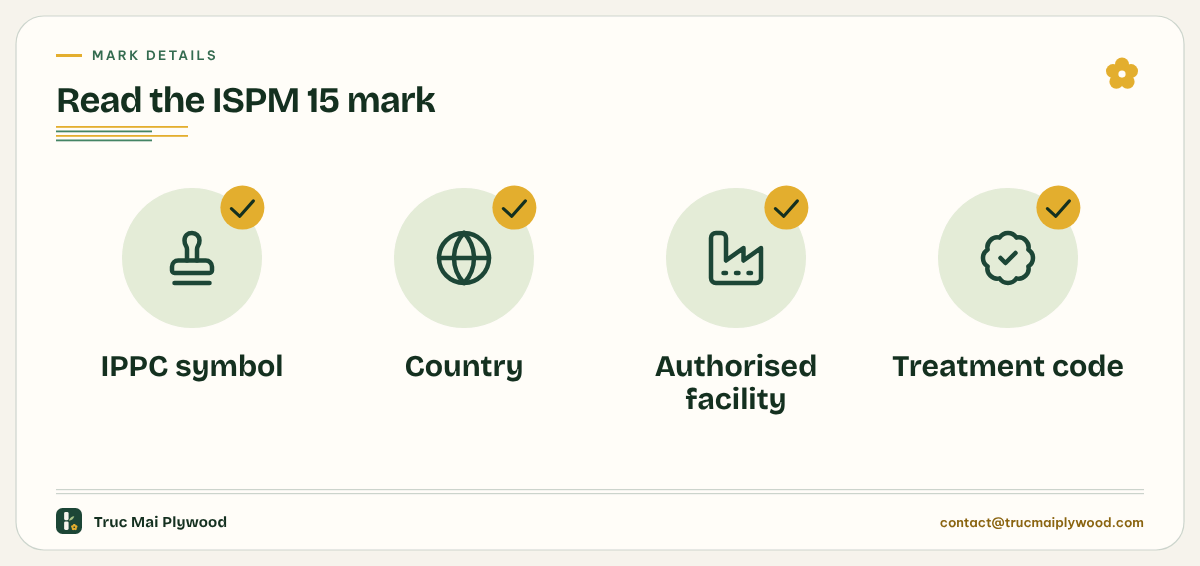
A valid ISPM 15 mark identifies the IPPC symbol, country, authorised facility and treatment code. Inspect a legible mark on the regulated packaging itself. The mark is a traceability and treatment identifier, not a decorative shipping stamp.
The US Department of Agriculture’s APHIS import guidance tells importers to check the mark and look for pest evidence, including exit holes, frass and visible infestation. The provider code links the treatment to an authorised operator under the exporting country’s plant protection system.
For mixed pallets, request a photograph that shows both the mark and the construction. A mark photographed on one loose pallet does not describe every piece of dunnage in the same container. A loading checklist should match the packaging actually used.
Which destination rules matter for plywood shipments?
The destination’s import conditions govern the cargo, while ISPM 15 governs regulated wood packaging. For the United States, APHIS requires compliant, marked regulated wood packaging and lists plywood as an alternative material outside those wood-packaging controls. The US import steps cover the wider documentation sequence.
For Australia, the agriculture department accepts ISPM 15-compliant timber packaging and sets out declaration and documentation conditions for non-commodity timber in containerised cargo. Its BICON system is the place to check the precise import case. For European buyers, the EU import steps help separate customs and product documentation from pallet treatment.
Singapore, Hong Kong and India buyers may use their own broker or inspection instructions when ordering. Obtain the destination-specific wording from the importer rather than copying a certificate requirement from a different route. In particular, ask whether the instruction applies to raw timber packaging, the panel commodity or an additional buyer-requested container service.
How is fumigation arranged at the export port?
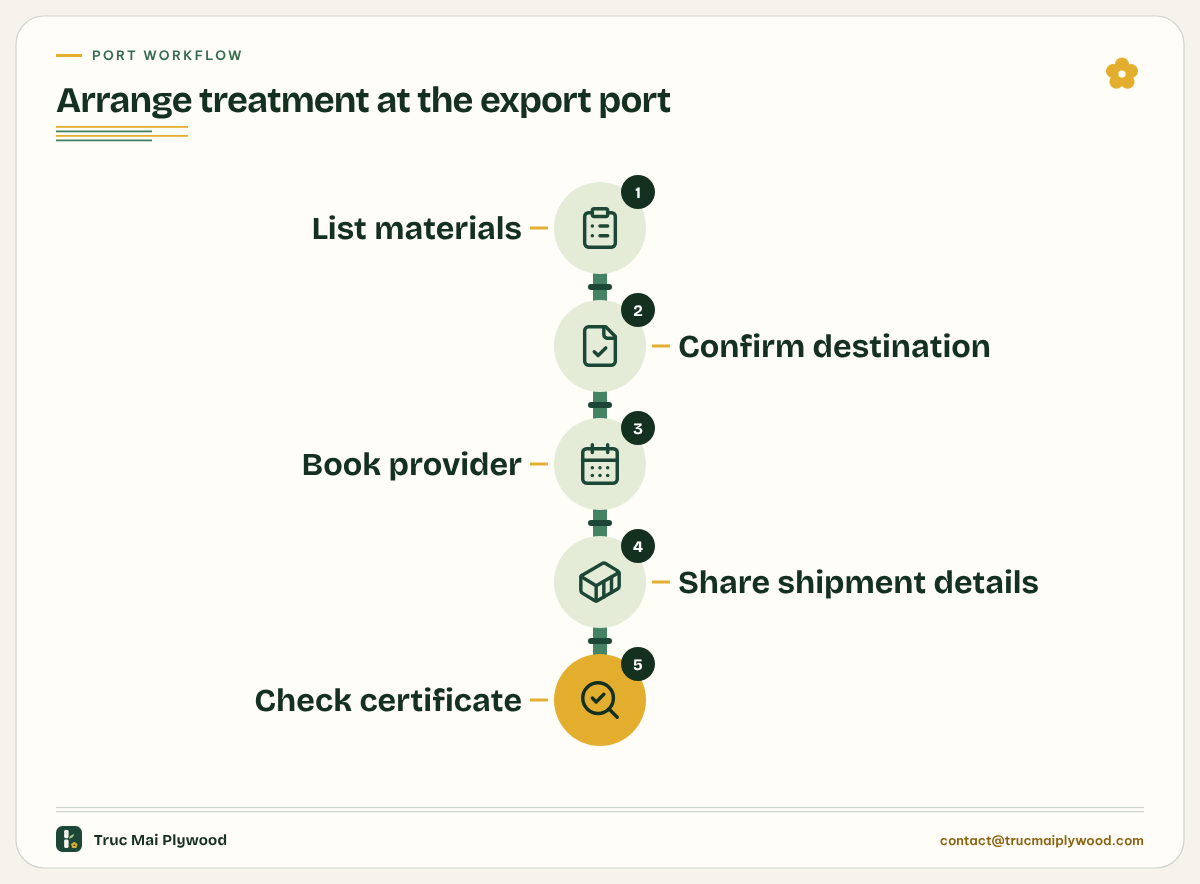
The exporter and forwarder book an authorised treatment provider against the shipment instruction. The useful sequence begins before the container is sealed, because the provider needs the treatment scope and access arrangements.
- Identify the materials. List plywood cargo, solid-wood pallets, timber battens, crates and other supports separately.
- Obtain the requirement. Ask the importer or broker for the exact destination condition and document wording.
- Choose the service. The forwarder arranges an authorised provider and agrees the location, treatment method and timing.
- Match the documents. Give the provider the booking reference, container number when available, cargo description and consignee details.
- Check the issued record. Compare the certificate’s shipment identifiers, scope and treatment details with the packing and transport paperwork.
- Release the file set. Send the buyer the agreed treatment record with the draft shipping documents for review.
For exports moving through Hai Phong, put this instruction into the freight booking rather than leaving it as a note to the warehouse. The plywood RFQ checklist is a practical place to record the packaging and certificate requirement before the quotation is agreed.
What information belongs on a fumigation certificate?
A useful fumigation certificate identifies the treated subject, treatment details and shipment. Buyers should be able to match it to the commercial paperwork without guessing which container or packing units were covered.
Check the shipper and consignee identifiers, cargo description, container or seal reference where applicable, treatment location and date, method, authorised provider details and any recorded treatment parameters required by the issuing scheme. The exact certificate format follows the destination and provider’s accepted procedure.
Do not confuse the certificate with an ISPM 15 stamp or a phytosanitary certificate for a regulated commodity. The first records a specified treatment service, the second identifies treated wood packaging under the international marking scheme, and the third is issued within plant-health import controls for the goods to which it applies. Ask the buyer which one their customs broker will present.
How can a buyer avoid unnecessary treatment bookings?
Start by separating exempt plywood packaging from regulated raw timber. A clear material list allows the forwarder to quote the correct service and avoids booking container fumigation merely because the shipment contains wood-based panels.
Photograph a typical pack from the side and underneath. Record whether the base is plywood, solid timber or mixed. Add the material description to the packing instruction and keep the buyer’s destination rule in the order file. When an importer requests treatment, obtain the exact scope rather than assuming that a generic certificate will answer the requirement.
Truc Mai Plywood manufactures furniture/interior and commercial panels in Ha Hoa, Phu Tho, Vietnam. The order can specify packing plywood, cut-to-size labelled panels and the supporting pack construction separately. The mill verification checklist helps buyers check that the written specification and actual shipment preparation match.
What does container loading change about the decision?
Container loading changes the amount and arrangement of packaging, not the processed-wood exemption for plywood. The number of packs affects how many supports and restraints are needed, which is why packaging should be reviewed with the load plan.
The following are the supplied 40HC planning-model figures, panels only, for 1220 × 2440 mm sheets. Basis: Styrax 18 packs, Acacia 16 packs and Eucalyptus 15 packs; pack height 1,000 mm; sheets per pack rounded down from height divided by thickness and then weight-capped; densities Styrax 500, Acacia 580 and Eucalyptus 650 kg/m³; planning payload 28,000 kg. These are calculated planning figures rather than loading records; carrier and route set the permitted payload.
| Core | Thickness (mm) | Sheet size (mm) | Packs | Sheets/pack | Weight-capped | Sheets | Volume (m³) | kg/sheet | Total kg |
|---|---|---|---|---|---|---|---|---|---|
| Styrax | 12 | 1220 × 2440 | 18 | 83 | No | 1494 | 53.4 | 17.9 | 26680 |
| Acacia | 12 | 1220 × 2440 | 16 | 83 | No | 1328 | 47.4 | 20.7 | 27510 |
| Eucalyptus | 12 | 1220 × 2440 | 15 | 80 | Yes | 1200 | 42.9 | 23.2 | 27860 |
| Styrax | 15 | 1220 × 2440 | 18 | 66 | No | 1188 | 53.0 | 22.3 | 26520 |
| Acacia | 15 | 1220 × 2440 | 16 | 66 | No | 1056 | 47.2 | 25.9 | 27350 |
| Eucalyptus | 15 | 1220 × 2440 | 15 | 64 | Yes | 960 | 42.9 | 29.0 | 27860 |
| Styrax | 18 | 1220 × 2440 | 18 | 55 | No | 990 | 53.0 | 26.8 | 26520 |
| Acacia | 18 | 1220 × 2440 | 16 | 55 | No | 880 | 47.2 | 31.1 | 27350 |
| Eucalyptus | 18 | 1220 × 2440 | 15 | 53 | Yes | 795 | 42.6 | 34.8 | 27690 |
| Styrax | 21 | 1220 × 2440 | 18 | 47 | No | 846 | 52.9 | 31.3 | 26440 |
| Acacia | 21 | 1220 × 2440 | 16 | 47 | No | 752 | 47.0 | 36.3 | 27270 |
| Eucalyptus | 21 | 1220 × 2440 | 15 | 45 | Yes | 675 | 42.2 | 40.6 | 27430 |
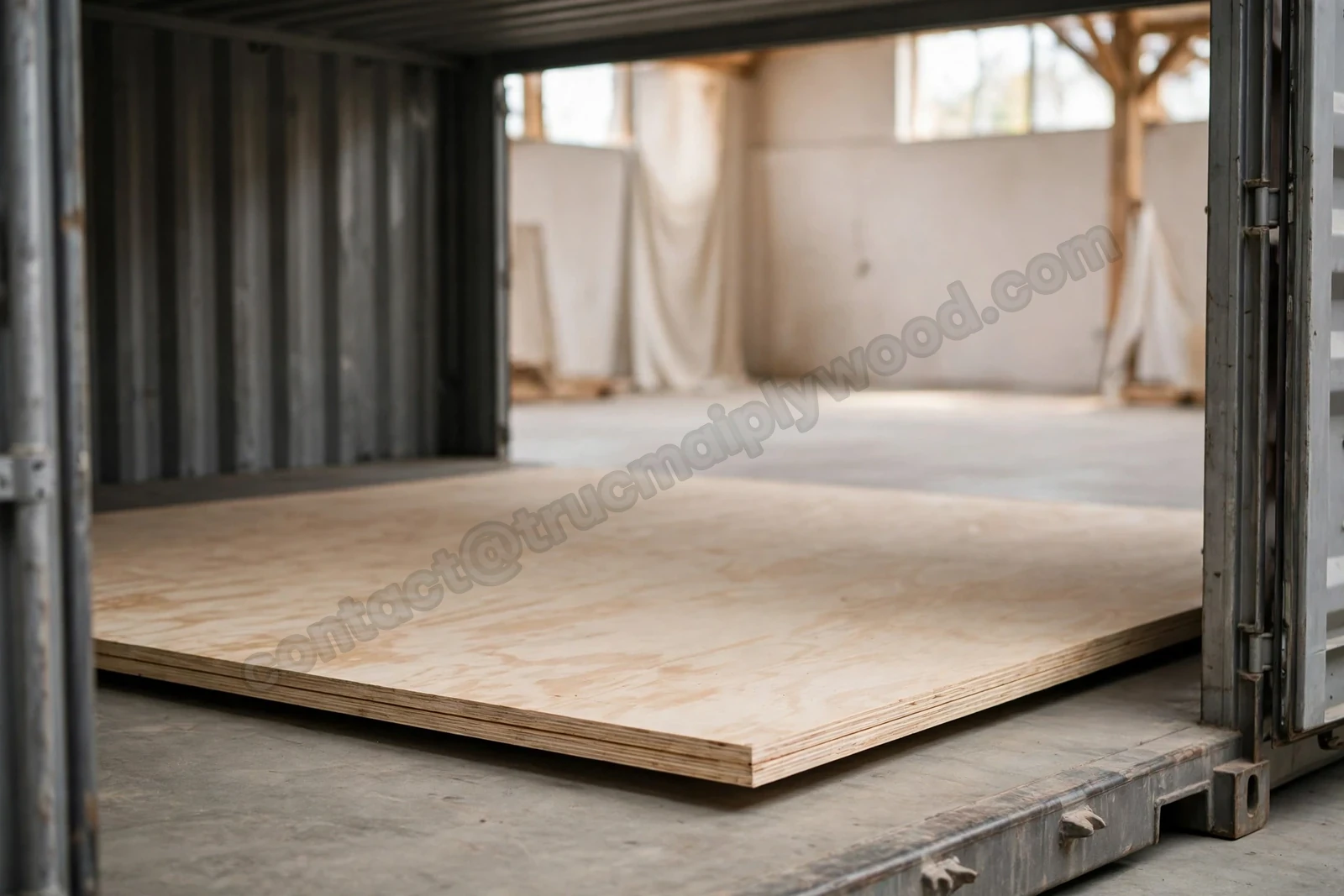
These figures describe the panel load, not the timber used under it. A full container can use plywood packing components or regulated sawn-wood supports. Record those separately, and weigh the real packed cargo before final loading. The 18 mm loading specification explains how the core changes the load plan.
What happens if inspectors find non-compliant wood packaging?
Import authorities can order corrective action against non-compliant wood packaging under ISPM 15. APHIS import guidance explains that a US shipment with non-compliant regulated packaging can face an Emergency Action Notification, with responses that include safeguarding, treatment, destruction or re-export under official direction.
For Australia, the agriculture department describes treatment, export or destruction of non-compliant timber packaging. These actions concern the import inspection finding, not an automatic requirement to fumigate every plywood panel. The best preventive record is a material-specific packing instruction, visible marks on regulated wood and a matching set of shipment documents.
What should the purchase order say about fumigation?
The purchase order should identify the packaging construction and the exact certificate required. Use separate lines for panel specification, supporting materials, destination and documents so that the factory and freight agent can act without interpreting a broad phrase such as “fumigate all wood”.
A practical wording is: “Plywood panels packed on [specified base construction]; any regulated solid-wood packaging to comply with ISPM 15; provide [named treatment certificate] for [defined scope] when required by the buyer’s destination instructions.” Fill in the brackets before signing the order.
The purchase specification should also identify the panel face, core, thickness, sheet dimensions, quantity and packing configuration. This makes the request usable by production, warehouse and forwarding teams. Send the cut list and destination port with the RFQ so the packing design and document plan are agreed together.
Send your specification to contact@trucmaiplywood.com or through the quotation form.
Questions buyers ask
Can I use an untreated plywood crate?
A crate made entirely from processed plywood is exempt from ISPM 15. Check any attached solid-wood runners, braces or feet separately.
Is an ISPM 15 stamp needed on a plywood box?
No ISPM 15 mark is required for packaging made wholly from exempt processed plywood. A mixed plywood and solid-wood box needs compliant regulated wood components.
What does HT mean on a pallet?
HT identifies heat treatment on an ISPM 15 mark. The mark also carries a country code and the authorised producer or treatment-provider code.
What does MB mean on a pallet?
MB identifies methyl bromide treatment on an ISPM 15 mark. It describes the packaging treatment, not the plywood cargo.
Do I need to fumigate a container with plywood inside?
The presence of plywood alone does not trigger ISPM 15 fumigation. Check the destination’s cargo rules and the solid-wood packaging used to secure the load.
Can an old stamped pallet be reused?
An intact, compliant ISPM 15-marked pallet can be reused under the standard. Repaired or remanufactured units have separate marking and treatment rules.
Does a phytosanitary certificate replace an ISPM 15 mark?
For regulated wood packaging, the recognised ISPM 15 mark is the normal evidence of approved treatment. Cargo-specific phytosanitary paperwork is a separate import-document question.
Are plywood spacers treated like solid-wood battens?
Plywood spacers made wholly from processed wood are exempt from ISPM 15. Sawn solid-wood battens used as dunnage are regulated.
Who arranges treatment at the export port?
The exporter or forwarder books an authorised provider when the shipment specification calls for treatment. The booking should identify the cargo, packaging and certificate recipient.