
Quality · LVL checks
LVL inspection at the mill: moisture, straightness and glue lines on non-structural LVL
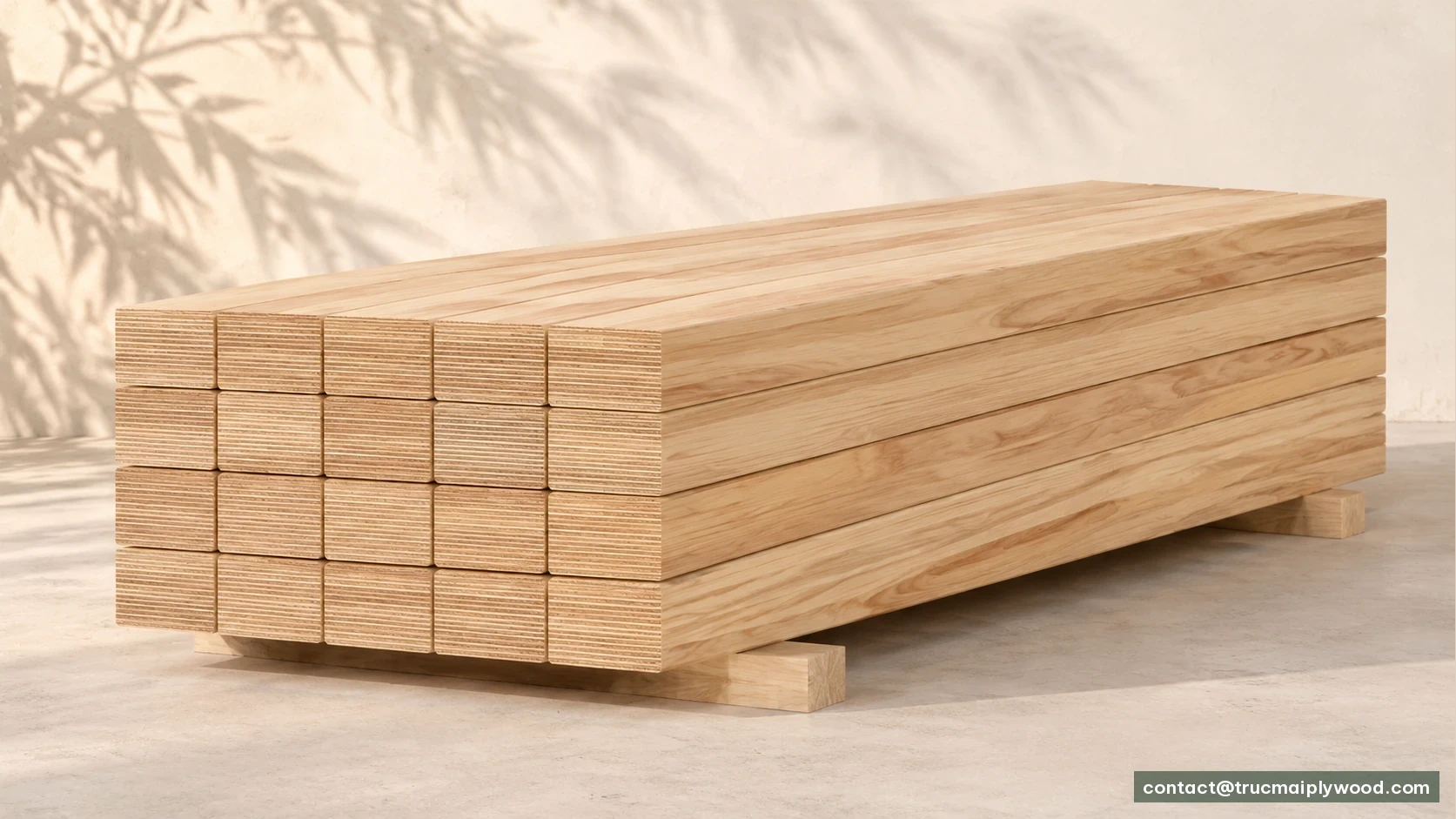
LVL inspection at Truc Mai checks non-structural LVL stock for furniture parts, door and frame stock and bed slats against the written order. Thickness is held to ±0.3–0.5 mm, length and width to ±2 mm, and the glue is UF at E0 emission. Each piece must be straight along its length with closed glue lines, and the buyer receives the check record before loading.
LVL is built with every veneer running the same way, so it fails in different places from cross-laid plywood: along its length, at the veneer joints and at the edges. This page covers those checks; sheet plywood is covered on batch checks, and the products themselves in the LVL range.
- ±0.3–0.5 mmthickness tolerance written on each LVL order
- ±2 mmlength and width tolerance on cut LVL stock
- ~6 hoursboil resistance of the default UF glue line
- 3 usesfurniture parts, door and frame stock, bed slats; no structural grade
Truc Mai LVL is sold for non-structural parts only. It carries no structural grade, and it is never offered for beams, joists or other load-bearing use.
Certificates
Which certificates sit behind the LVL checks?
FSC, CARB P2, ISO 9001 and ISO 14001, plus EU file sets.
- FSC 100% FSC-C196493 · SA-COC-014545
- CARB P2 and TSCA Title VI CARB/EPA 26053 · TPC-43
- ISO 9001:2015 W2012 · WCERT
- ISO 14001:2015 W2012E · WCERT
The check table
What is LVL inspection, and what does an LVL quality check cover at each station?
LVL inspection is the set of checks that confirm a laminated veneer lumber piece is straight, sound and to size along its full length. At Truc Mai an LVL batch passes five stations before it is packed.
The order of stations matters. Moisture and joints are fixed before the press, because neither can be corrected once the billet is glued; size and straightness are checked after ripping, because that is where a billet becomes the part the buyer will machine.
| Station | What is checked | Tool or record | Measured against |
|---|---|---|---|
| Veneer sort | Splits, holes, dryness and thickness of each veneer | Visual sort, hand meter, caliper | Veneer grade for the order |
| Lay-up | All veneers parallel, joints staggered along the length | Lay-up sheet per billet | Build on the order |
| Press and glue line | Glue spread, temperature; boil sample of the glue line | Press log, boil test record | Glue type and emission class on the order |
| Ripping and sizing | Thickness, width and length; square ends | Caliper, tape, square | ±0.3–0.5 mm thickness, ±2 mm width and length |
| Straightness and face | Bow, spring and twist along the length; face sanding | Straightedge or string line on a flat bench | Use written on the order |
By use
Which uses does the non-structural LVL range cover, and what is checked hardest for each?
Three uses, three different critical checks. The order names the use, and the use decides which check releases the batch.
For door and frame stock, a piece that springs sideways cannot be pulled straight by the hinge side, so straightness decides release. For LVL slats for beds, thickness from slat to slat matters more than any one slat, because a bed base is only as level as its thinnest slat.
Plywood and LVL share veneer and glue, but not the check list. Sheet plywood is checked on the batch checks page; Truc Mai does not make film-faced, formwork, structural or marine plywood.
| Use | What the buyer makes | Check that decides release | Typical spec line |
|---|---|---|---|
| Door and frame stock | Door stiles, frames and jambs, often veneered or wrapped | Straightness over the full length; no open joint at the edge | Thickness and width tolerance; square ends |
| Bed slats | Flat slats for bed bases | Even thickness between slats; no split at the ends | Slat thickness, width and length; sanded faces |
| Furniture parts | Rails, frames and hidden structure in sofas, cabinets and beds | Glue lines closed along the length; size | Section size and length; glue and emission class |
Step by step
How is an LVL batch inspected from veneer to pack?
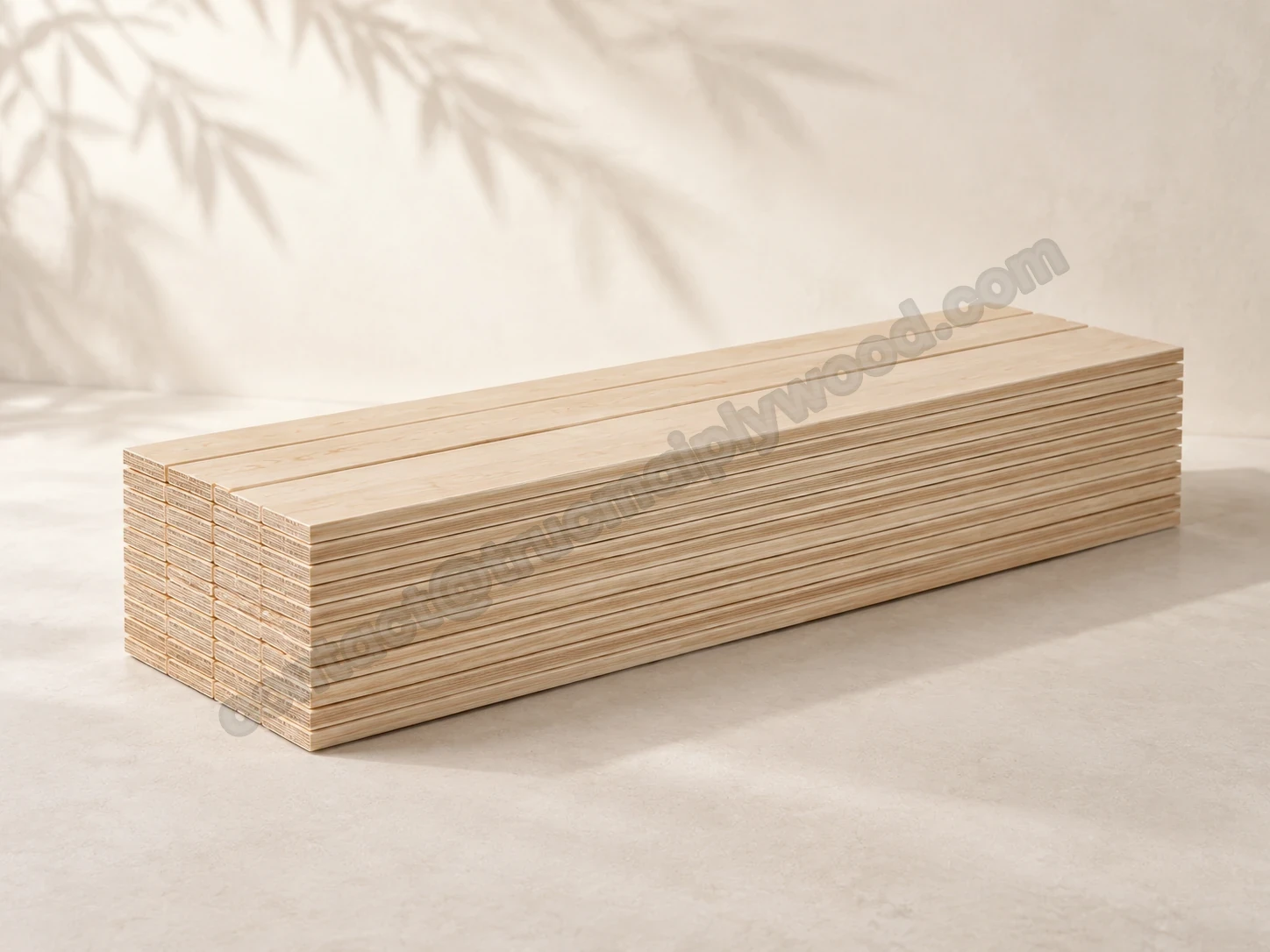
Six steps, in the order the wood meets them. Each one names what is measured and the check list the station works from.
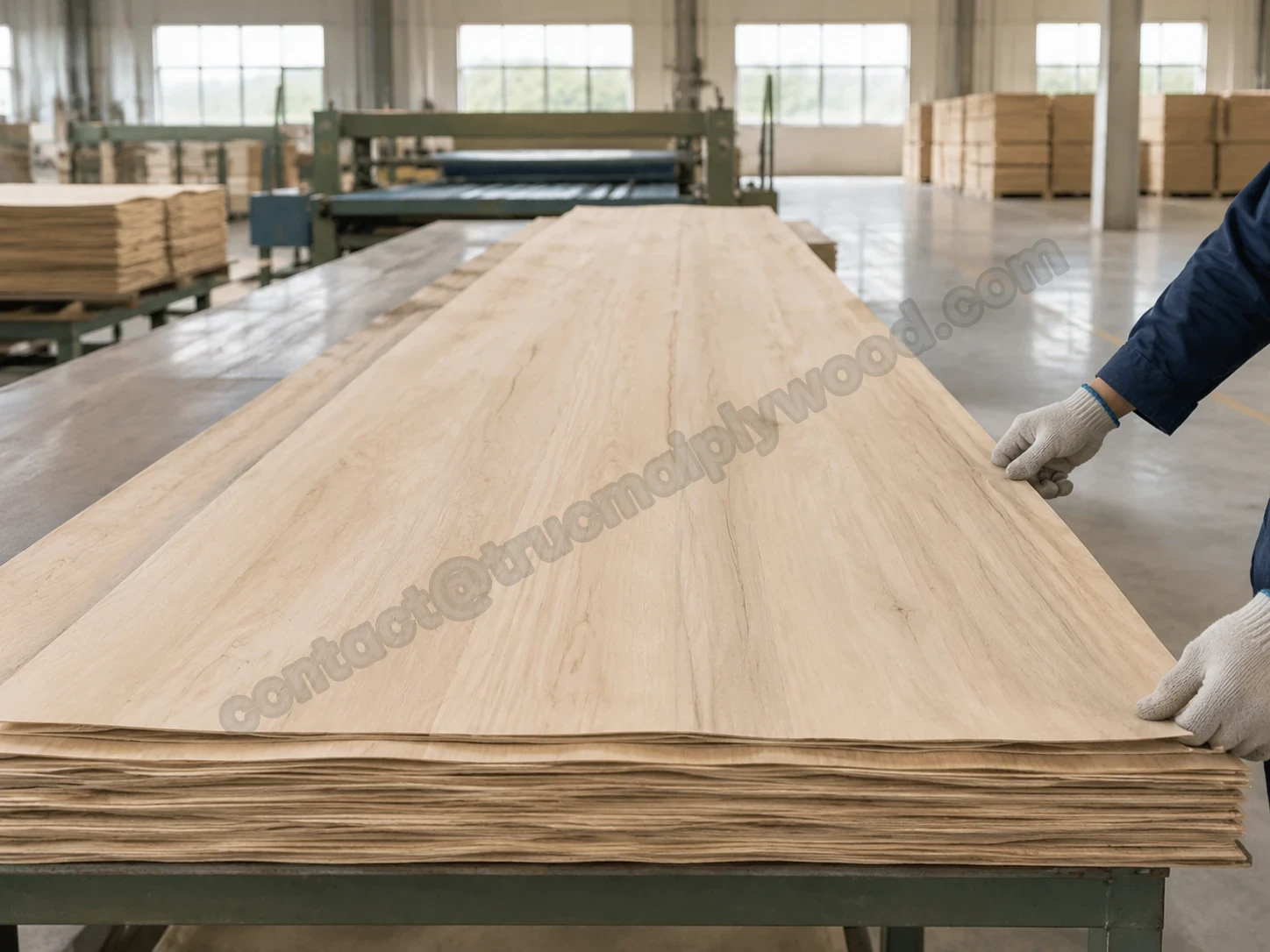
- Sort and dry-check the veneer
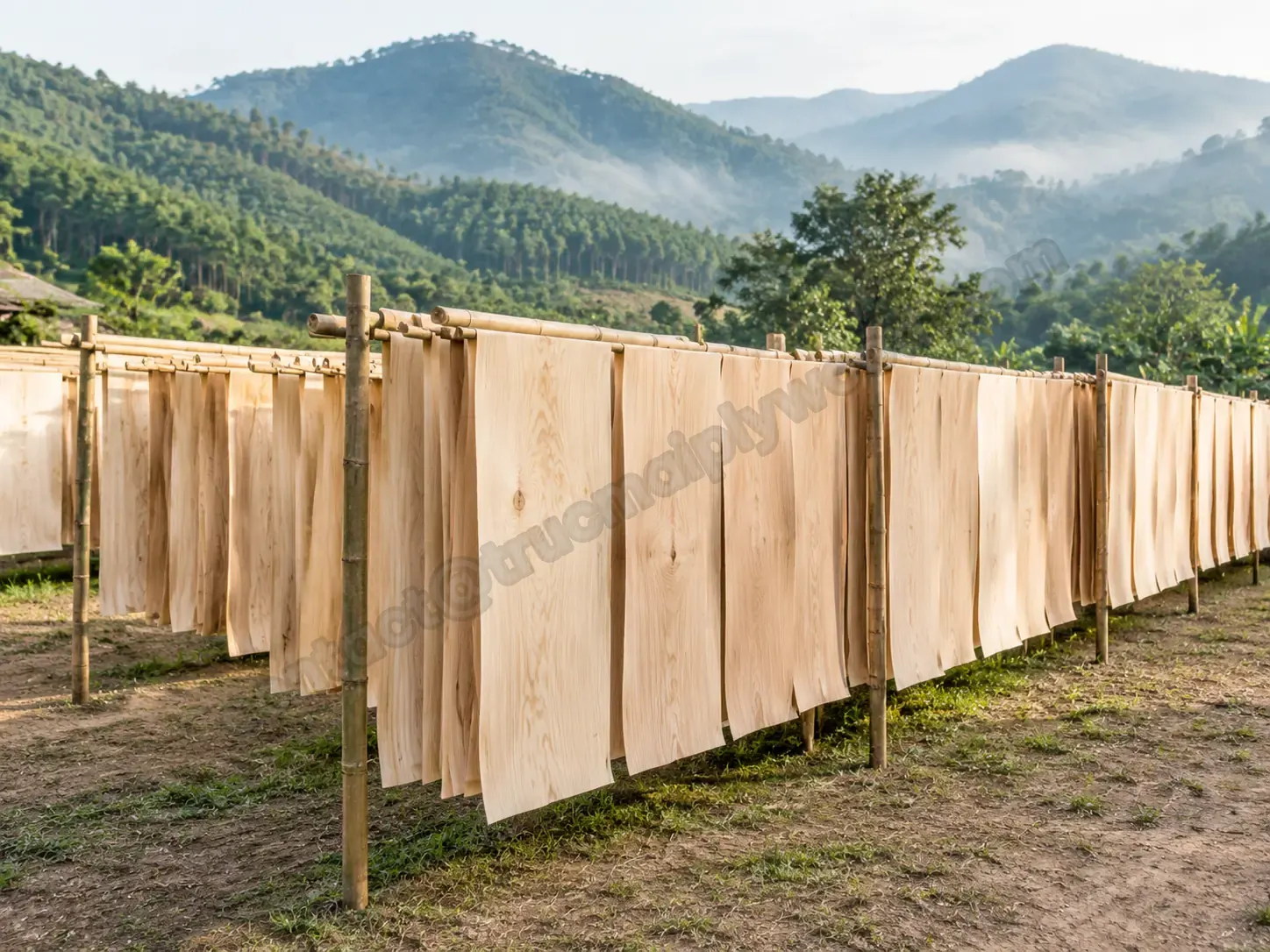
Each veneer is sorted for open splits, holes and thin spots, and checked for dryness before the glue spreader. In LVL every veneer runs along the length, so a split veneer is not crossed by the next layer the way it is in plywood; it is pulled at this step. Check list: no open split, no hole through the sheet, even thickness, dry to the touch and to the meter.
- Lay up with staggered joints
Veneers are laid with the grain all in one direction, and the end joints of neighbouring layers are staggered along the billet so no two joints line up. A joint stack is the main weak point of an LVL piece. Check list: grain direction the same in every layer, joints staggered, layer count against the order.
- Press and boil-test the glue line
The default is UF glue at E0 emission, pressed at about 110–120 °C. A sample from the batch is boiled: a UF glue line holds about six hours. Check list: press log complete, boil result recorded against the batch, no glue starvation at the edges.
- Rip and size
Billets are ripped to the order's section and cut to length. Thickness is measured with a caliper along the piece, not only at the ends, against ±0.3–0.5 mm; width and length are held to ±2 mm and the ends are cut square. Check list: readings at both ends and the middle, width at three points, ends square.
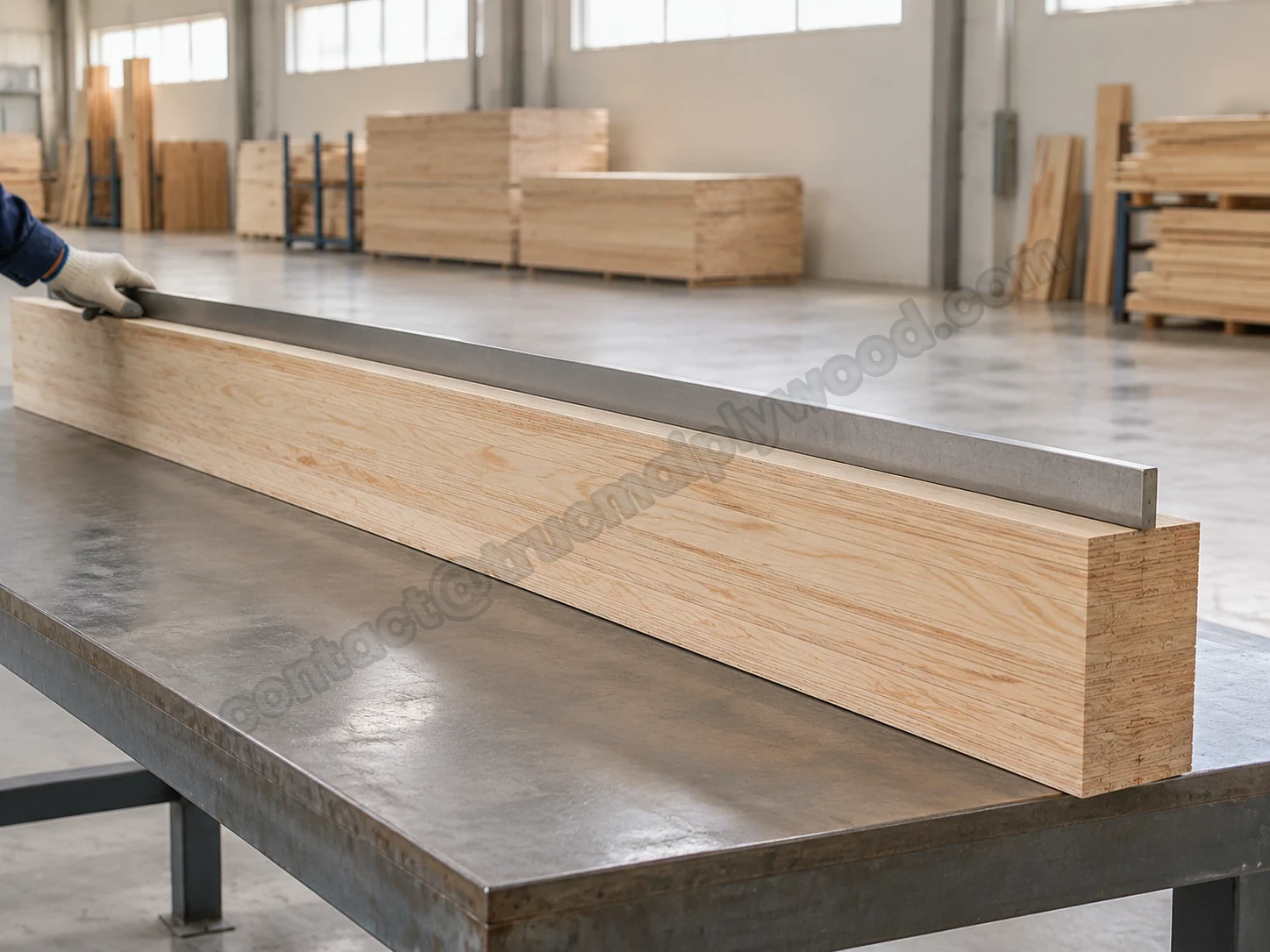
- Check straightness along the length
Each checked piece is laid on a flat bench and read with a straightedge or string line for bow (along the face), spring (along the edge) and twist. Check list: piece lies still on the bench, no visible spring along the edge, no rocking at the corners.
- Check the faces, pack and record
Visible faces are sanded where the order asks for it and checked for open joints and edge splits. Pieces are packed by size, and the check record goes to the buyer with the draft documents before loading. Check list: face as ordered, pieces of one size per pack, count against the pack list.
What the checks look at
What does a sound LVL edge look like?
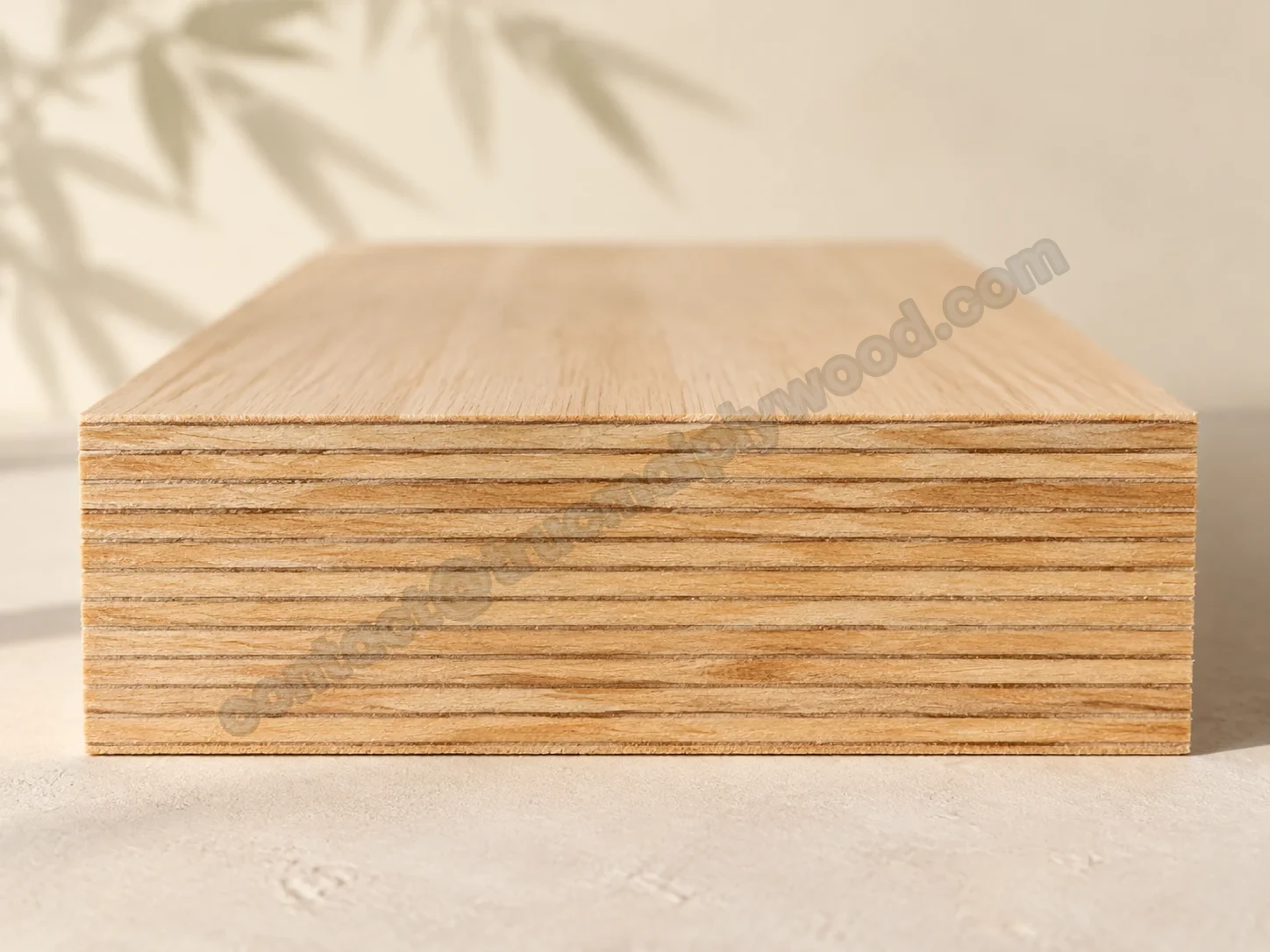
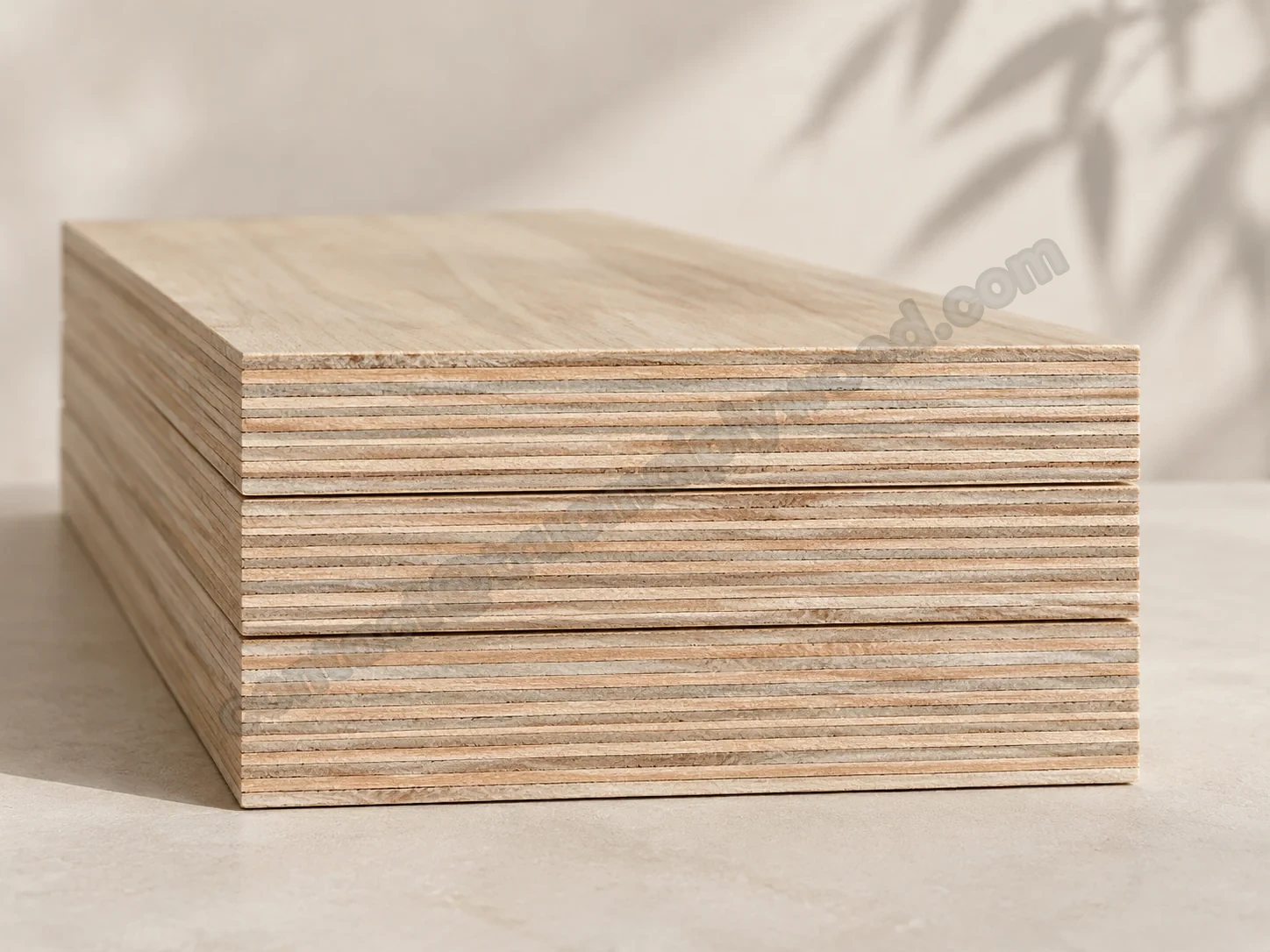
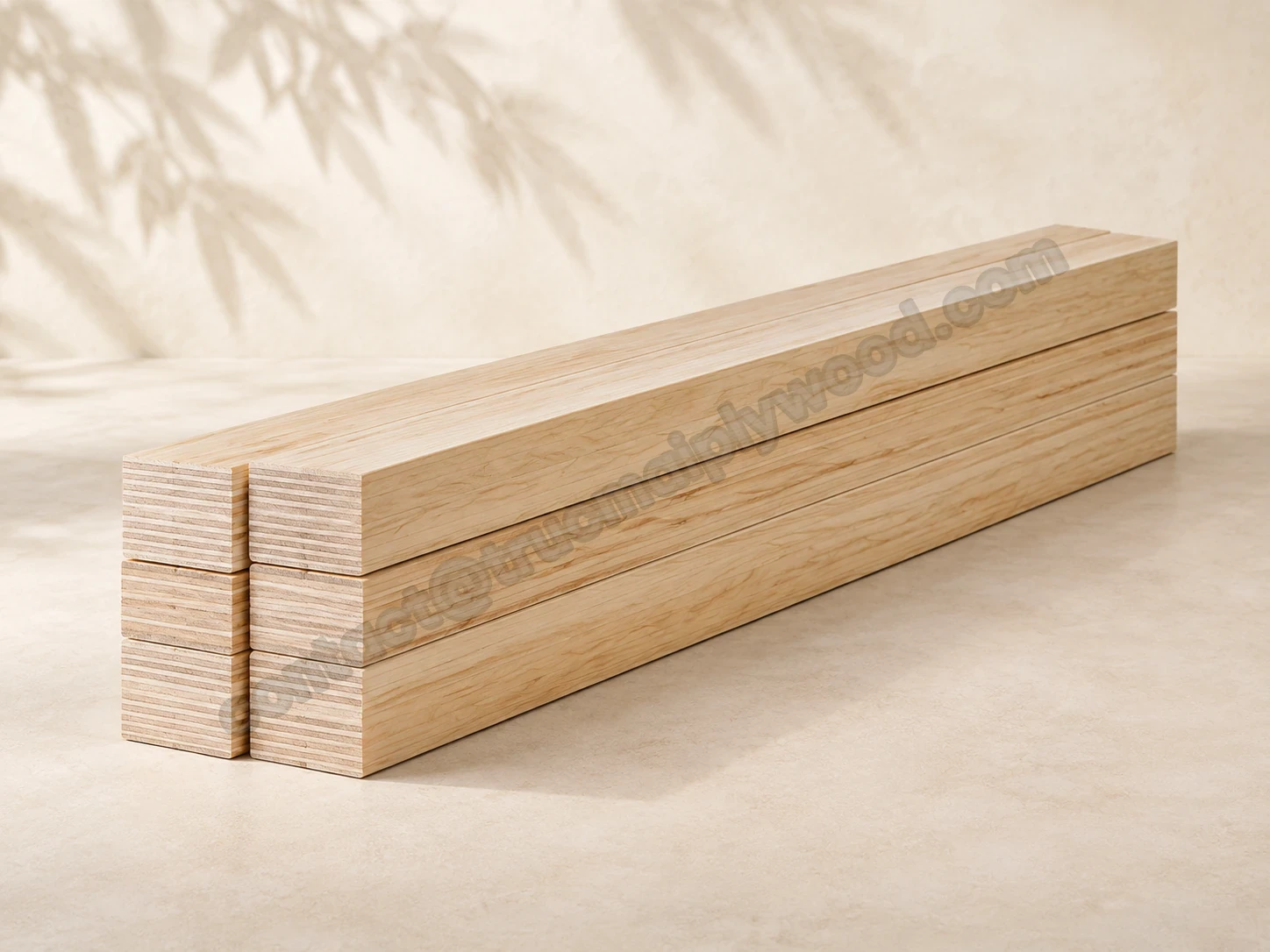
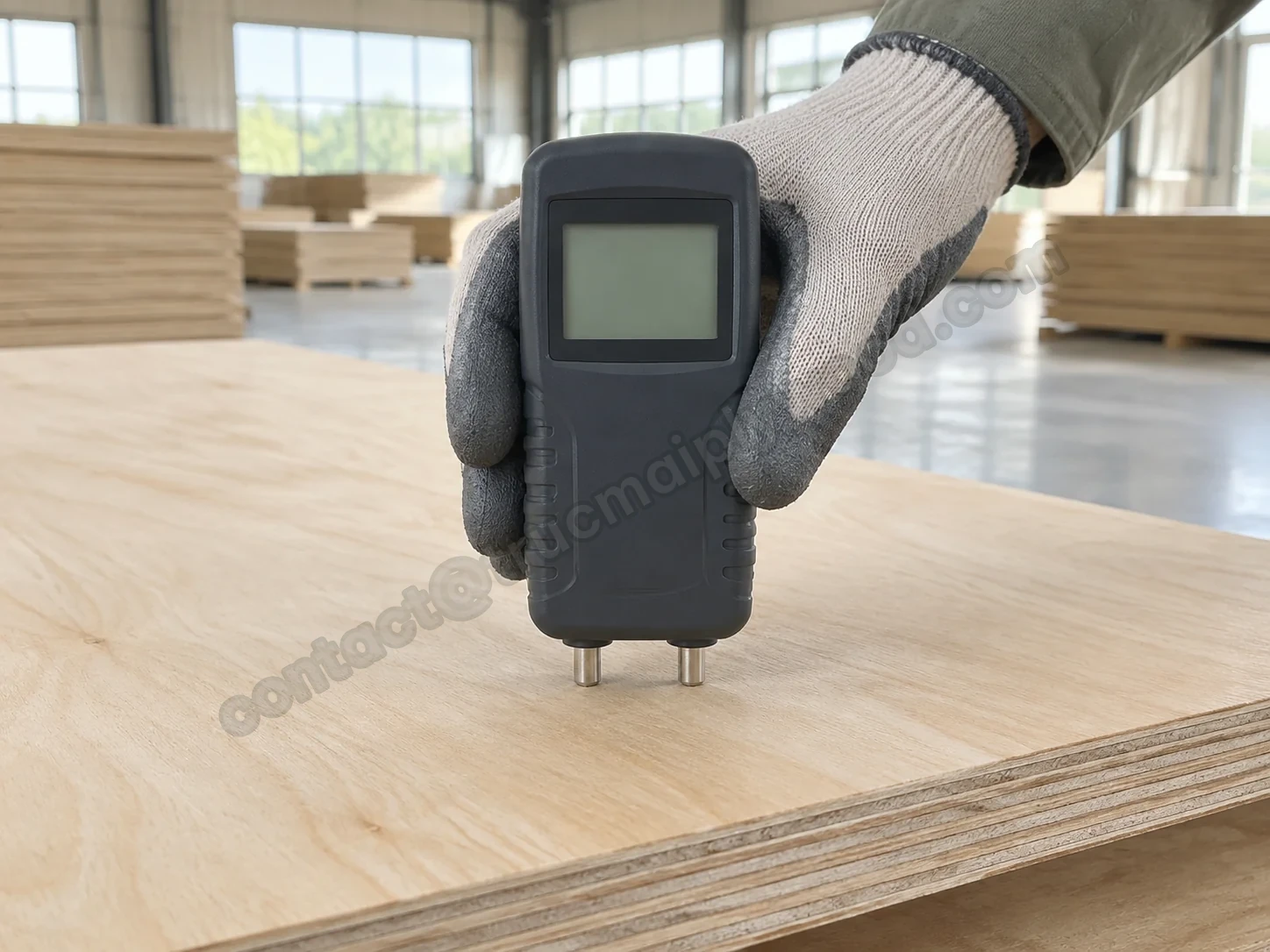
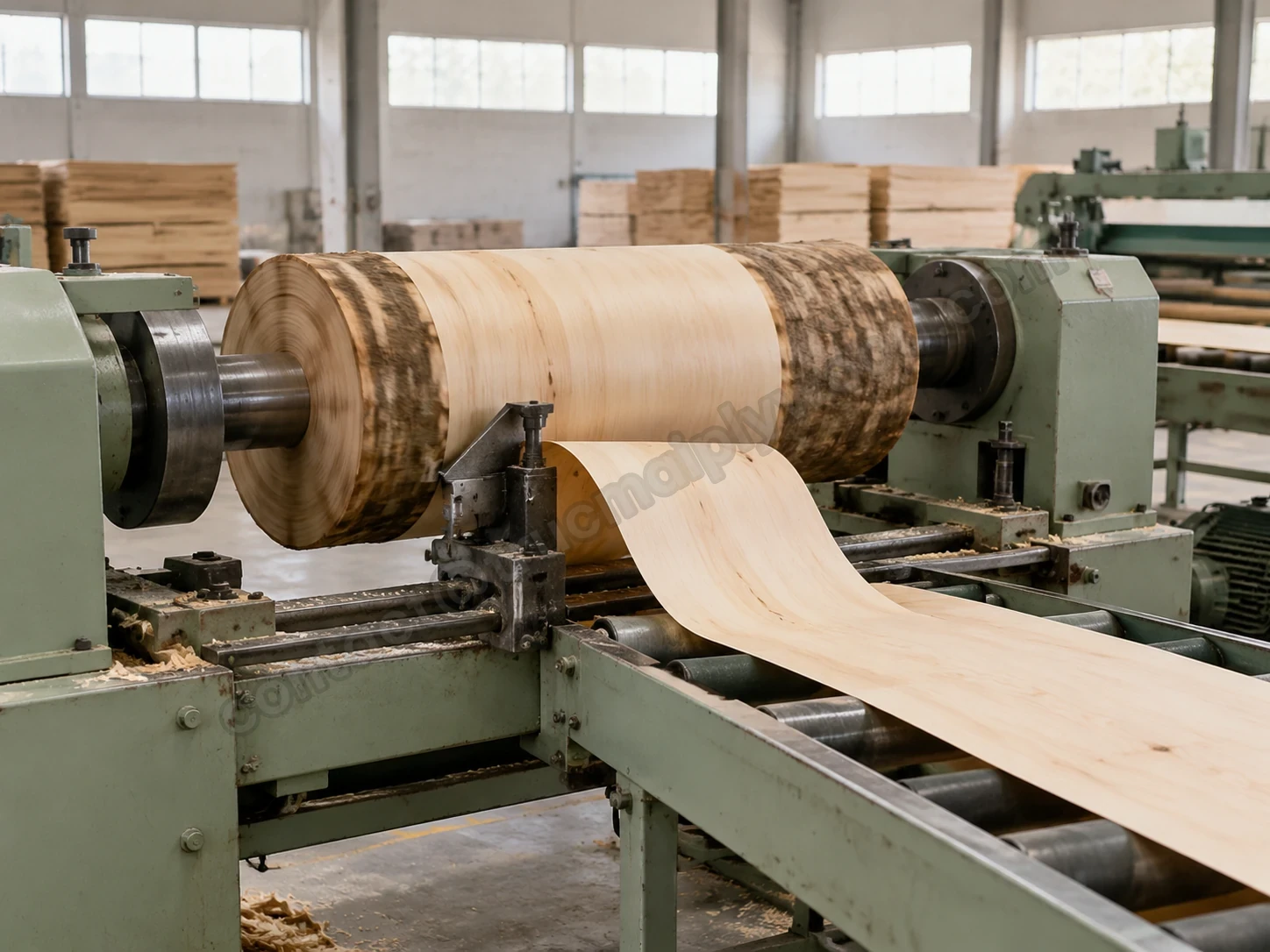
Read an LVL edge before measuring anything: thin layers all running lengthwise, glue lines continuous and closed, no layer standing proud.
An open glue line on the edge of an LVL piece is the start of a delamination in the part; an open joint at the face is where a screw will split it. Both are easier to see on a freshly sawn edge than on a sanded face, which is why the edge is read first.
Defects
What are the common errors when inspecting LVL, and which defects do they miss?
Most LVL inspection errors come from checking it like a sheet of plywood. The table pairs each defect with its cause, the station that catches it and the mistake that lets it through on arrival.
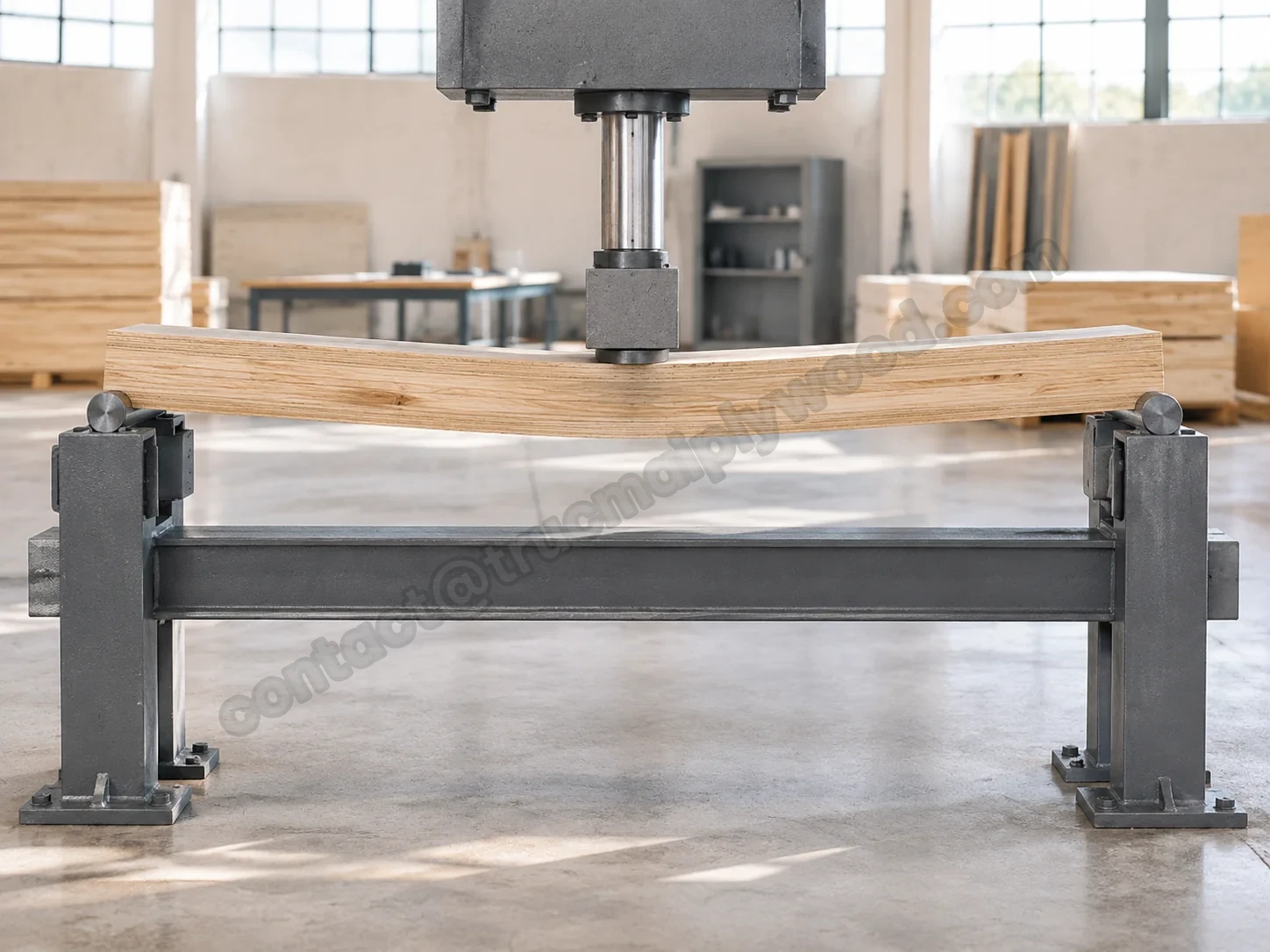
Where LVL is weaker than cross-laid plywood: with all veneers parallel it can split along the grain near an edge, and it moves more across its width. These are not faults; they are the reason LVL suits long parts and plywood suits panels. Research on how veneer products behave is published by the US Forest Products Laboratory.
| Defect | Usual cause | Caught at | Inspection error that misses it |
|---|---|---|---|
| Spring along the edge | Uneven moisture or unbalanced lay-up | Straightness on a flat bench | Checking on an uneven floor, or only by eye |
| Bow along the face | Moisture difference between faces | Straightedge along the face | Measuring short pieces only |
| Open glue line on the edge | Glue starvation, wet veneer | Boil sample; edge read after ripping | Looking only at the sanded face |
| Joint stack (joints lined up) | Lay-up without stagger | Lay-up sheet | Not cutting a test piece through a joint |
| Thickness off in the middle | Uneven veneer or press pressure | Caliper along the length | Measuring only at the ends |
| End split | Rough cutting, dry ends | Sizing and end check | Missing it under end wax or wrap |
The numbers
Which thickness, length and glue numbers are written for LVL stock?
The numbers below are the defaults; the order can tighten or change them, and then the order wins. Section sizes and lengths are set per order, not from a list.
Glue type and emission class are two separate lines on the order: the default is UF glue at E0 emission, and a melamine-fortified glue for damp rooms usually gives E1. How each class is chosen is on emission class per order.
| Item | Value | Condition |
|---|---|---|
| Thickness tolerance | ±0.3–0.5 mm | Written per order; ±0.3 mm on sanded parts |
| Width and length tolerance | ±2 mm | Cut stock |
| Glue, default | UF glue at E0 emission | Interior furniture use |
| Glue, damp rooms | Melamine-fortified glue, usually E1 | When the order names it |
| Press temperature, UF | 110–120 °C | Batch press log |
| Boil resistance | About six hours UF; twelve melamine-fortified | Batch sample |
Before CNC
How should a buyer check LVL before CNC cutting?
Check five pieces from different packs before the first CNC run. Fifteen minutes on a flat bench saves a day of rejected parts.
Choosing between the two materials for a part is covered in LVL or plywood; moisture limits are explained in limits and moisture of LVL.
| Check | Pass | If it fails |
|---|---|---|
| Straightness | Piece lies still, no edge spring | Record the pack number and send photos with a straightedge |
| Section | Inside the written tolerance | Record readings per piece |
| Test part | Clean edges, no tear-out at the joint | Keep the part and photograph the edge |
| Glue line | Closed on the fresh cut | Send a photo of the cut edge |
- Let the stock settle
Open the packs in the workshop and let the pieces stand before cutting, so their moisture meets the room.
- Read straightness
Lay each test piece on a flat bench and check bow, spring and twist over the full length.
- Measure the section
Measure thickness at both ends and the middle, and width at three points, against the order.
- Cut a test part through a joint
Machine one part across a veneer joint and drill it near the edge, as the real part will be.
- Read the cut edge
Look for open glue lines or a layer that tears out on the fresh edge.
Proof
What does a buyer receive that proves an LVL batch was checked?
The LVL check record, sent with the draft documents before the balance is paid.
- Before production Written spec lines: use, section, length, glue and emission class, tolerance, face
- Check record Thickness, width and length readings, straightness result and boil test of the batch
- After loading Photos of packs and edges, pack list with pieces per pack, draft invoice, packing list and B/L
- With the shipment Originals, with glue and emission class written as on the order
Records
Which records come out of an LVL batch check?
The records sit in the ISO 9001 system, certificate W2012, and the buyer's own inspector can see the checks at the mill before loading.
- Lay-up sheet
Layer count, grain direction and joint stagger per billet.
- Press log
Glue type, temperature and press time per load.
- Boil test record
Result of the glue-line sample against the glue on the order.
- Size readings
Thickness along the piece, width and length against the order.
- Straightness result
Bow, spring and twist read on the checked pieces.
- Pack list
Pieces per pack by size, and the pack count for the container.
Volume and loading
Can LVL and plywood share one 40HC?
Yes. A container usually carries one or two products, and three to six by agreement, so LVL stock can travel with the plywood panels it is used beside.
LVL is packed by size, one size per pack, and loaded with plywood packs under the same weight check before loading. The mill produces around 60,000 m³ a year across all lines, and an LVL order runs inside the usual 15–45 days after the deposit. The minimum is one 40HC in total, not one container of each product; terms are on MOQ, payment and FOB, and how packs are stowed is on loading a 40HC.
For the order
Which six lines belong on an LVL purchase order?
Write these six lines and each LVL station has a number to check against.
Use: furniture parts, door and frame stock or bed slats, and that it is non-structural.
Section size and length of each item.
Thickness tolerance, inside ±0.3–0.5 mm, and ±2 mm on width and length.
Glue type and emission class, as two separate lines.
Face: sanded or not, and which faces will be visible.
Straightness: what the part can accept over its length, stated for the use.
FAQ
LVL inspection: buyer questions
Short answers, each with the number the mill works to.
What are common errors when inspecting LVL?
Checking it like plywood: measuring thickness only at the ends, reading straightness on an uneven floor, looking only at the sanded face and never cutting a test piece through a veneer joint. LVL faults run along the length, so the check has to as well.
Which uses does the non-structural LVL range cover?
Furniture parts, door and frame stock and bed slats. Truc Mai LVL carries no structural grade and is not offered for beams, joists or any load-bearing use.
What thickness and length tolerance is written for LVL stock?
Thickness is written per order inside ±0.3–0.5 mm, with ±0.3 mm on sanded parts. Width and length are held to ±2 mm, and ends are cut square.
Which glue and emission class goes into furniture LVL?
UF glue at E0 emission by default, which holds about six hours in a boil test. For damp rooms the order can name melamine-fortified glue, which holds about twelve hours and usually gives E1.
Can LVL and plywood share one 40HC?
Yes. A container usually carries one or two products and three to six by agreement, so LVL stock can be loaded with plywood panels. The minimum is one 40HC in total.
How should a buyer check LVL before CNC cutting?
Let the packs settle in the workshop, then check five pieces from different packs on a flat bench for bow, spring and twist, measure the section at three points, and machine one test part through a veneer joint.
What are the disadvantages of LVL compared with plywood?
With all veneers parallel, LVL can split along the grain near an edge and moves more across its width than cross-laid plywood. It is the better choice for long straight parts, and plywood for panels.
What does the lay-up sheet record for an LVL billet?
The layer count, the grain direction and how the veneer end joints are staggered along the billet. Joints that line up through the thickness make a weak cross-section that bends or breaks at that point. The lay-up sheet records the stagger, and a test part cut through a joint shows it on arrival.
Does the buyer get the LVL check record before loading?
Yes. Size readings, straightness and the boil test of the batch go to the buyer with the draft documents and pack photos, before the 70% balance is paid.
Quotation
Send the six LVL lines with your RFQ
Use, section, length, tolerance, glue and emission class, and face: with these lines the quotation and the LVL checks use the same numbers.
Send the six lines and a drawing or sample of the part. The reply confirms each line, the pack plan and the production window.