
Mill · Monthly output
Vietnam plywood factory production capacity: around 60,000 m³ a year, 5,000 m³ a month
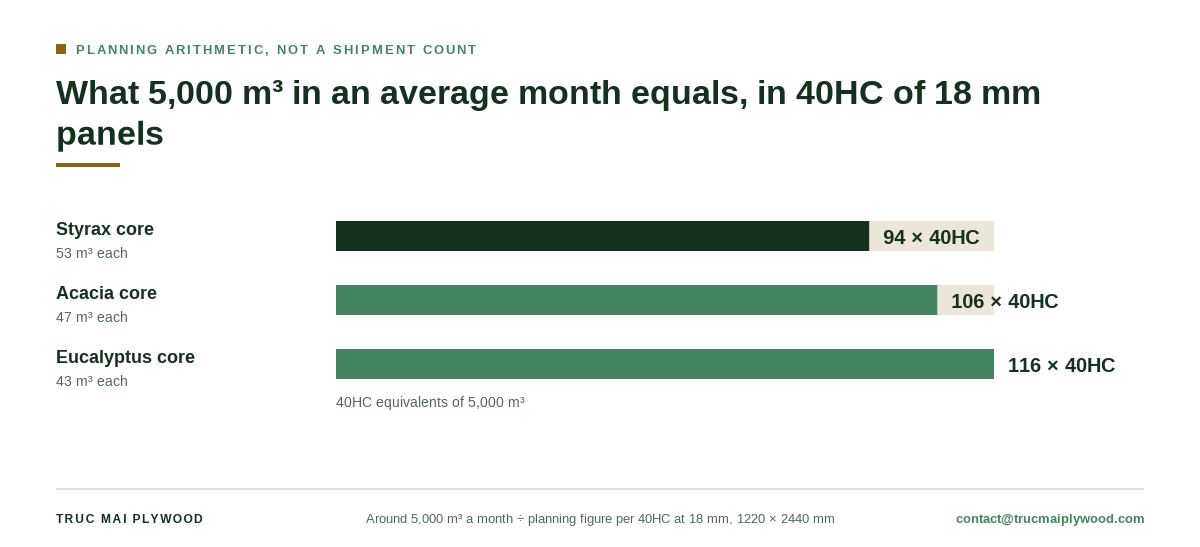
Truc Mai produces around 60,000 m³ of plywood a year in Ha Hoa, Phu Tho, Vietnam, about 5,000 m³ in an average month. On the planning model that volume equals about 94 loads of 18 mm Styrax-core panels in 40HC containers (53 m³ each), 106 on Acacia core and 116 on Eucalyptus core, shared across the furniture and interior, commercial, packing and non-structural LVL lines.
This page is for the buyer who needs to know whether a Vietnamese plywood mill can fill containers every month, and how to check that the supplier is the factory itself. It gives the output in m³ and in containers, says which lines share it, names what limits it, and is honest about what is not published: the split by line and the peak months are confirmed in the quotation. The programme that turns output into a reserved slot is on monthly container programmes.
- 60,000 m³a year, around
- 5,000 m³in an average month, around
- About 9440HC loads of 18 mm Styrax core in an average month, planning figure
- 3–40 mmthickness range, 12 thicknesses
Planning figure: output in m³ divided by the m³ of one 40HC of 18 mm, 1220 × 2440 mm panels from the packing model; it is arithmetic, not a count of shipments.
Certificates
Which certificates are held by the mill that makes the panels?
FSC, CARB P2, ISO 9001 and ISO 14001, plus EU file sets.
- FSC 100% FSC-C196493 · SA-COC-014545
- CARB P2 and TSCA Title VI CARB/EPA 26053 · TPC-43
- ISO 9001:2015 W2012 · WCERT
- ISO 14001:2015 W2012E · WCERT
Scale is easier to trust when the papers match: the FSC database lists the licence, the California Air Resources Board holds the formaldehyde listing next to the US formaldehyde standards, Regulation (EU) 2023/1115 defines the EU file, Regulation (EU) 2025/40 the packaging rule and ISO 9001 the system standard.
At a glance
Vietnam plywood factory production capacity: how much does Truc Mai produce a year, and what is that in containers?
Truc Mai produces around 60,000 m³ a year, about 5,000 m³ in an average month. One 40HC of 18 mm panels is about 53 m³ on Styrax core, 47 m³ on Acacia and 43 m³ on Eucalyptus, so an average month is the equivalent of about 94, 106 or 116 such containers.
The container figures come from the mill's packing model and are planning figures, panels only; the real count depends on thickness, sheet size and the weight of the core on the day. They are given to turn a number in m³, which suppliers quote differently, into the unit a buyer actually loads. The full per-thickness table is on the 40HC load calculator.
| Measure | Value | How it is derived |
|---|---|---|
| Per year | Around 60,000 m³ | Mill figure |
| Per average month | Around 5,000 m³ | The yearly figure spread evenly |
| Per average month, in 18 mm Styrax-core 40HC | About 94 | 5,000 ÷ 53 m³, planning figure |
| Per average month, in 18 mm Acacia-core 40HC | About 106 | 5,000 ÷ 47 m³, planning figure |
| Per average month, in 18 mm Eucalyptus-core 40HC | About 116 | 5,000 ÷ 43 m³, planning figure |
| One container as a share of an average month | About 1% | 53, 47 or 43 m³ of 5,000 m³ |
Product lines
Which product lines share the monthly output?
Four lines share the output: furniture and interior plywood, commercial plywood, packing plywood and non-structural LVL, with veneer, UV-ready, melamine, HPL and paper-overlay faces on the first two. The split in m³ per line is not published; it is confirmed in the quotation for the month.
Each line is built differently, which is why a total in m³ says little about the panel a buyer wants. Furniture and interior panels use an A-grade core, a stitched core and sanded faces; commercial panels use an AB core, loose-laid or jointed, unsanded or lightly sanded; packing panels use an AB loose-laid core, usually at E2 emission. LVL is non-structural: furniture parts, door and frame stock, bed slats and packing.
| Line | Build | Thickness tolerance | Typical use |
|---|---|---|---|
| Furniture and interior | A-grade stitched core, sanded faces | ±0.3 mm sanded and calibrated | Cabinets, wardrobes, shelving |
| Commercial | AB core, loose-laid or jointed, unsanded or lightly sanded | ±0.5 mm | General panel use |
| Packing | AB loose-laid core, usually E2 emission | ±0.5–1.0 mm | Packing and crates |
| LVL, non-structural | Laminated veneer lumber | Per order | Furniture parts, door and frame stock, bed slats, packing |
Checking the claim
Plywood factory, Vietnam: how do I know the supplier is the factory itself?
Six checks separate a mill from a trader. The papers are in the supplier's own name, the FSC code is on the public database and the core logs can be traced to plots. The pack check can be attended, the mill can be visited and the spec names the core as well as the face.
- Certificates in the supplier's own name
The FSC, CARB/TSCA, ISO 9001 and ISO 14001 certificates should name the producing company, with numbers that match the issuer. Check: the scope reads manufacture of plywood.
- FSC code on the public database
Look up licence code FSC-C196493 in the FSC database. Check: the holder and the product group match the offer.
- Plot data for the core
A mill can name where the core wood came from; the EUDR file set carries plot geolocation for both the Vietnamese core and the face veneer. Check: coordinates and plot papers, not a general statement.
- A pack check you can attend
A producer can let the buyer's inspector watch the count and the thickness readings. Check: the inspector is welcome before loading.
- A visit to Ha Hoa
The mill is in Ha Hoa, Phu Tho, and a visit before a deposit is the strongest check. Check: agree beforehand what the visit covers, such as the presses, the sanding line and the pack yard.
- A spec that names the core
A producer quotes core species, glue and emission, not only the face. Check: Styrax, Acacia, Eucalyptus, Pine or a combination is named on the quotation.
What sets the pace
Which stages set the pace of a plywood mill?
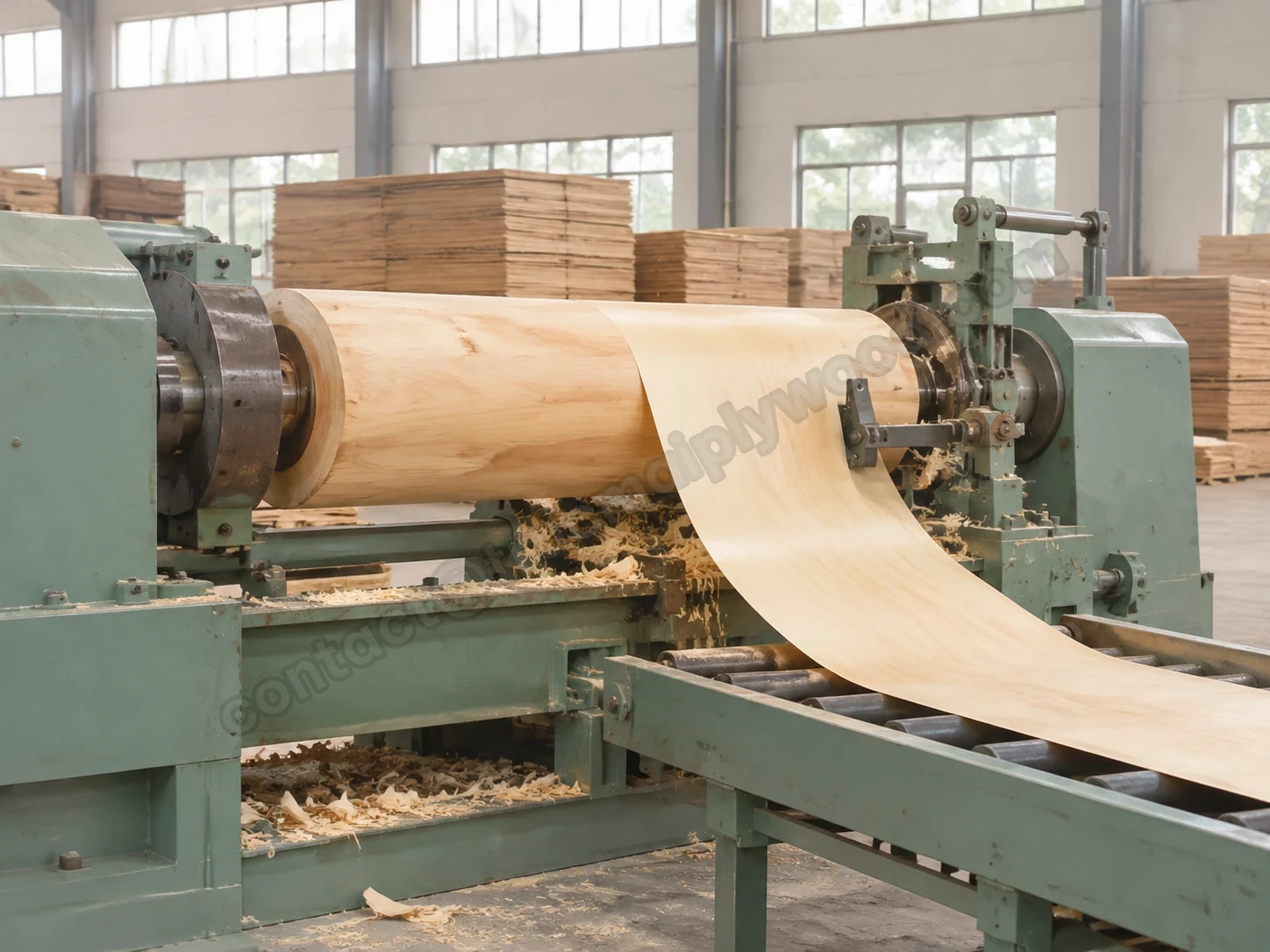
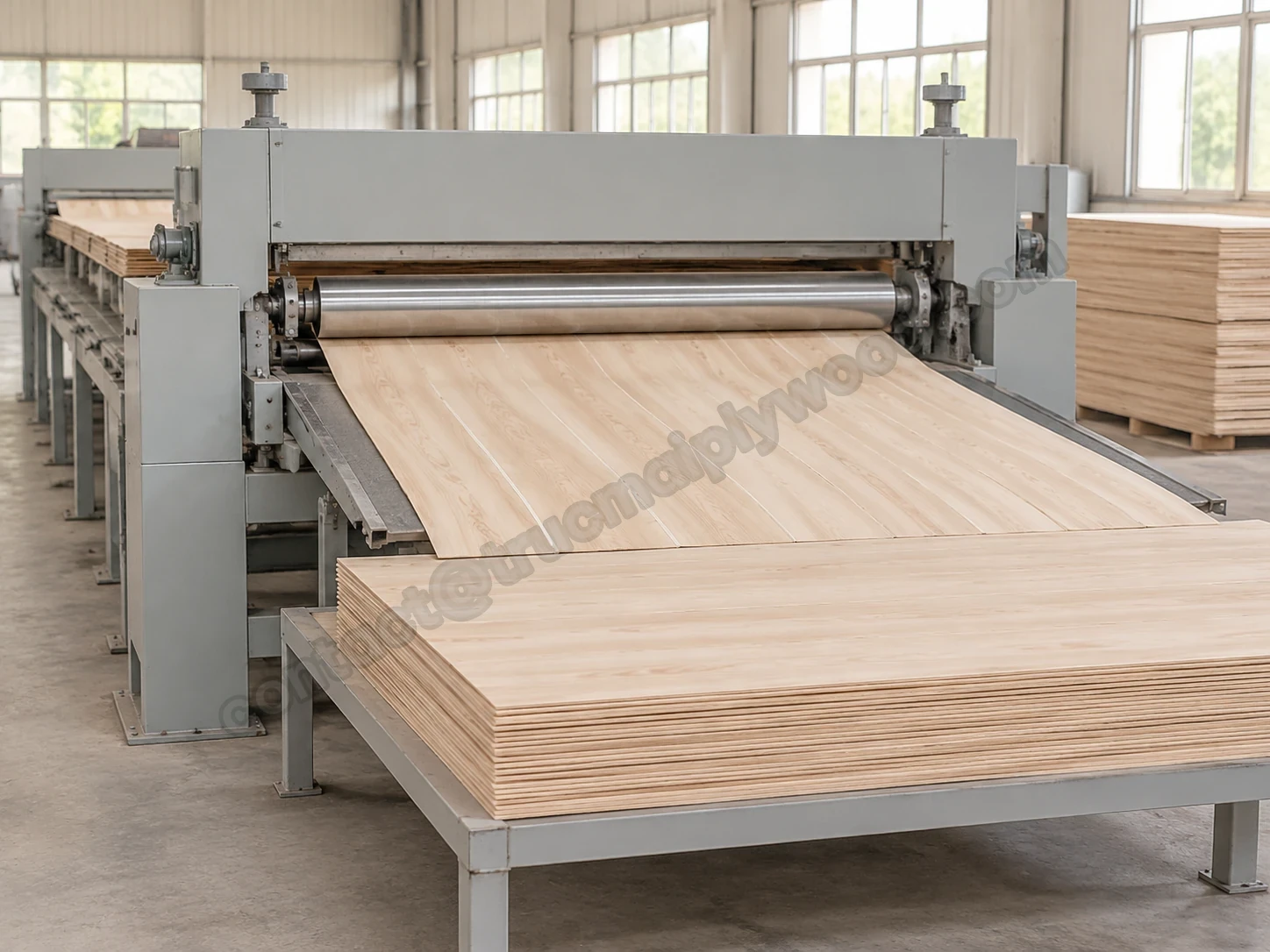
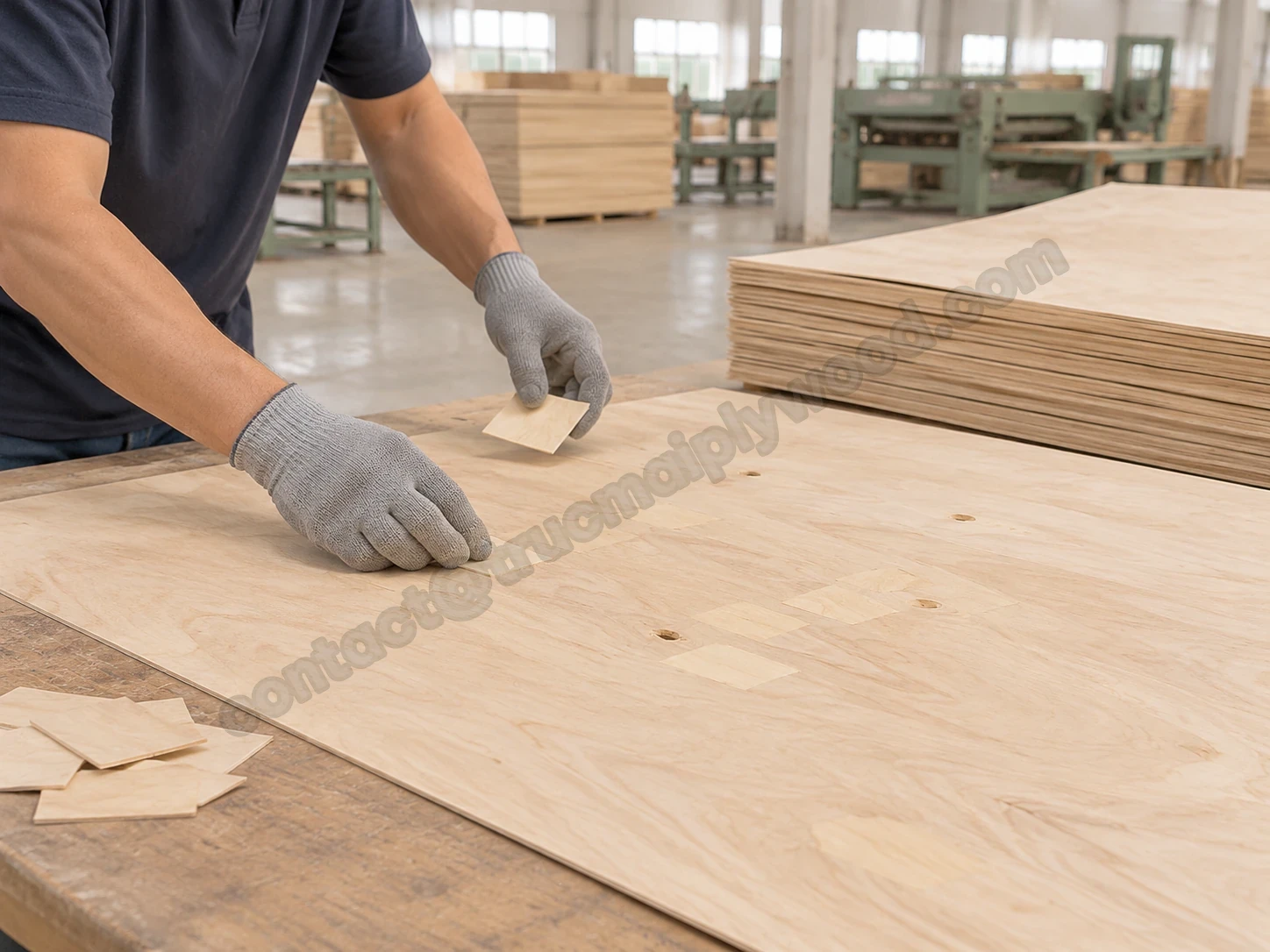
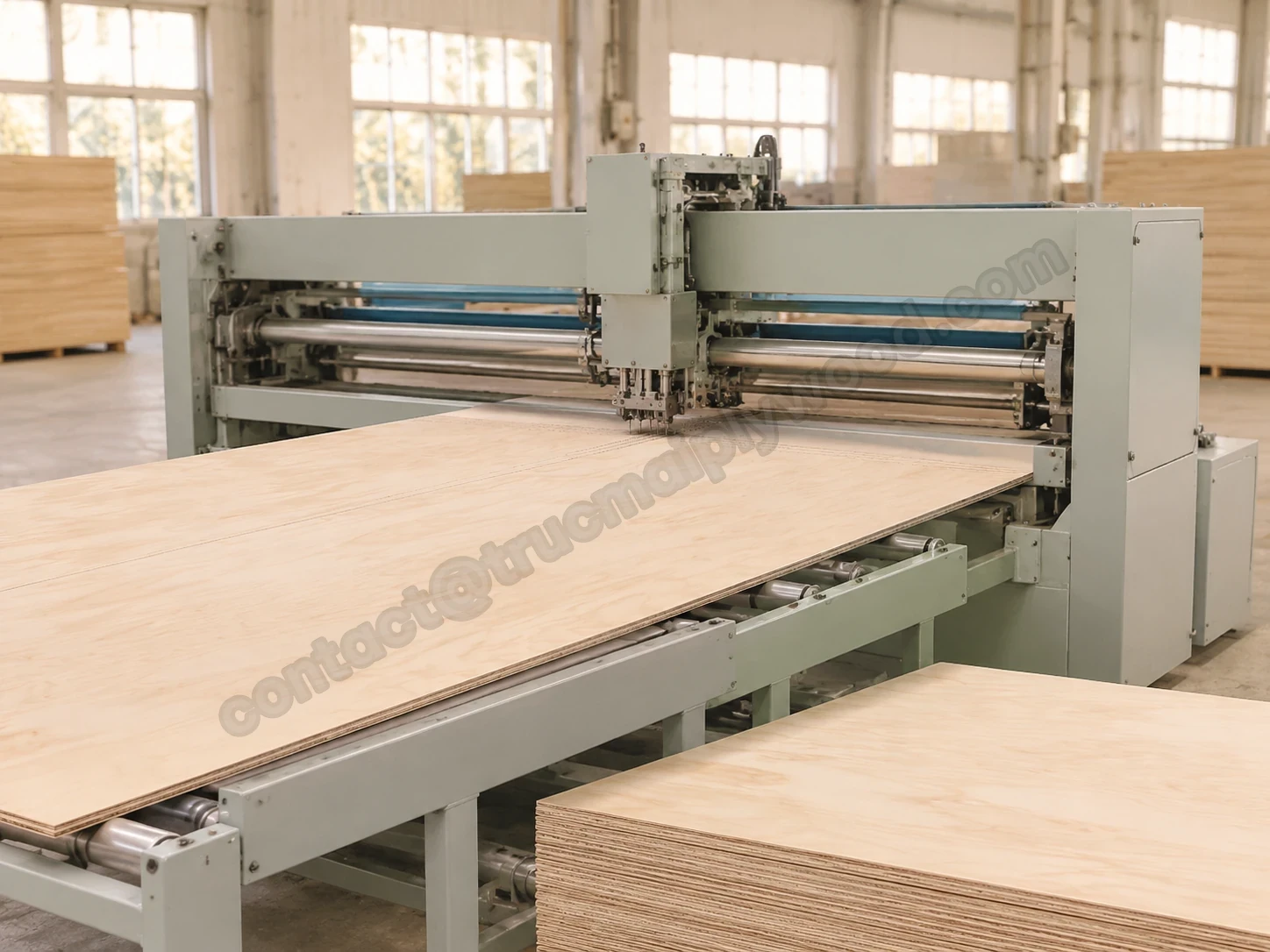
Output is set by the slowest stage in the chain: veneer drying, hot pressing, sanding and the pack check each handle a fixed number of panels at a time, and the mix of thickness and face decides which one limits a given week.
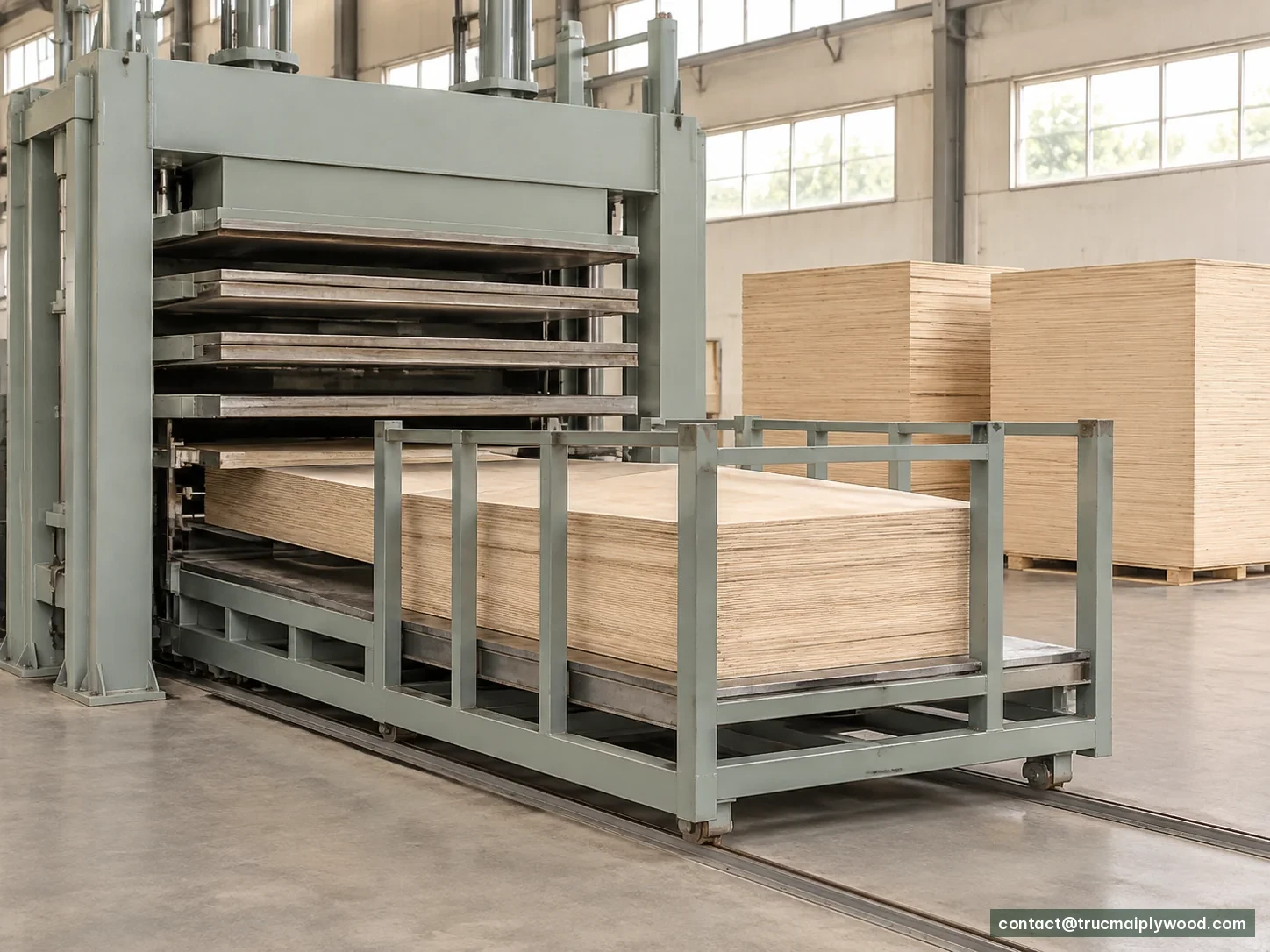
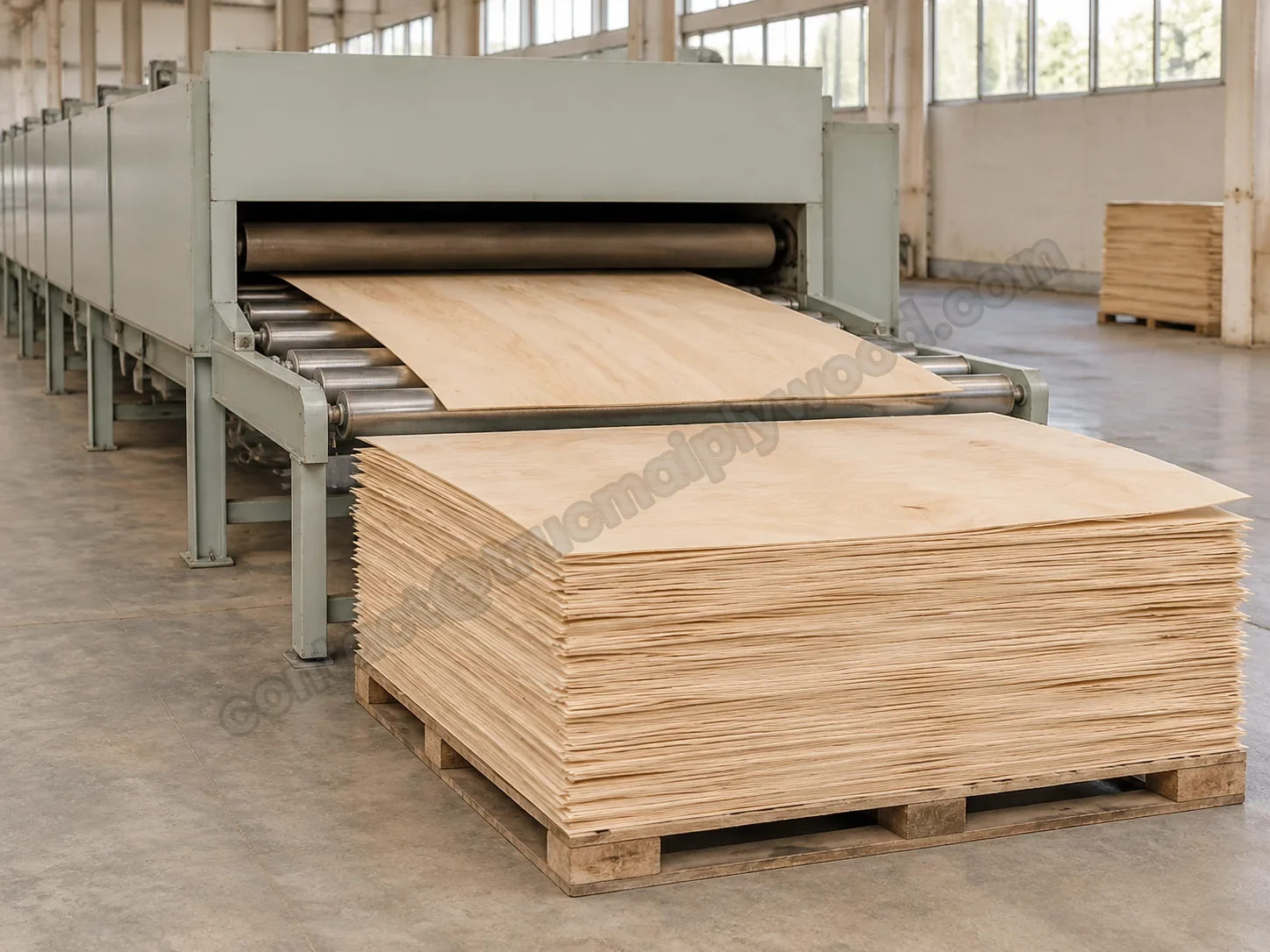
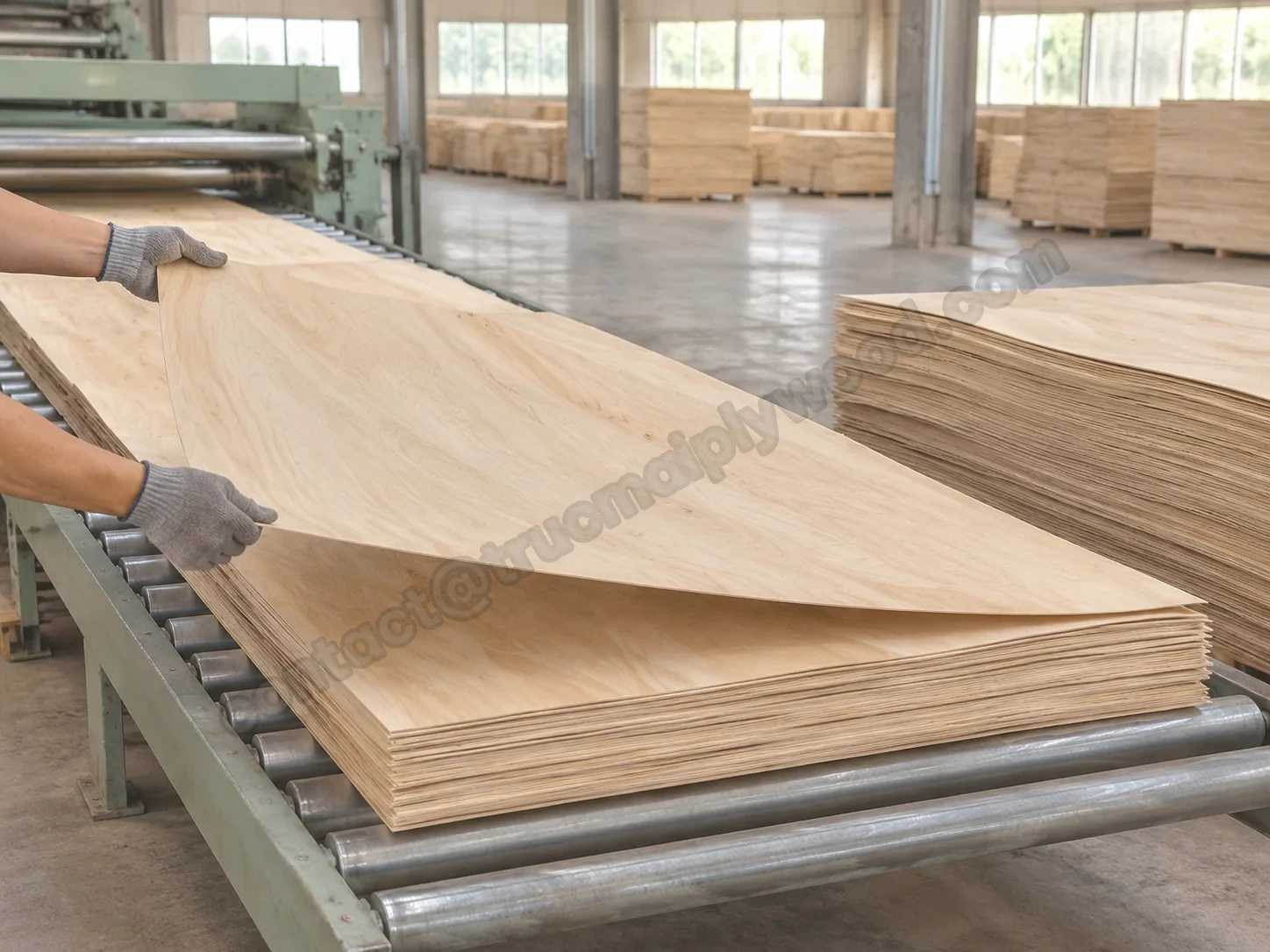
Core veneer leaves the roller dryer as flat dried sheets stacked on pallets, and the press then takes glued lay-ups a load at a time through a loading cage. A 3 mm panel and a 40 mm panel use very different amounts of veneer, so the same press-hours give very different numbers of sheets; that is why a mill states output in m³ and not in sheets.
Limits
Plywood production capacity, Vietnam: what limits monthly output, and what does it mean for a buyer?
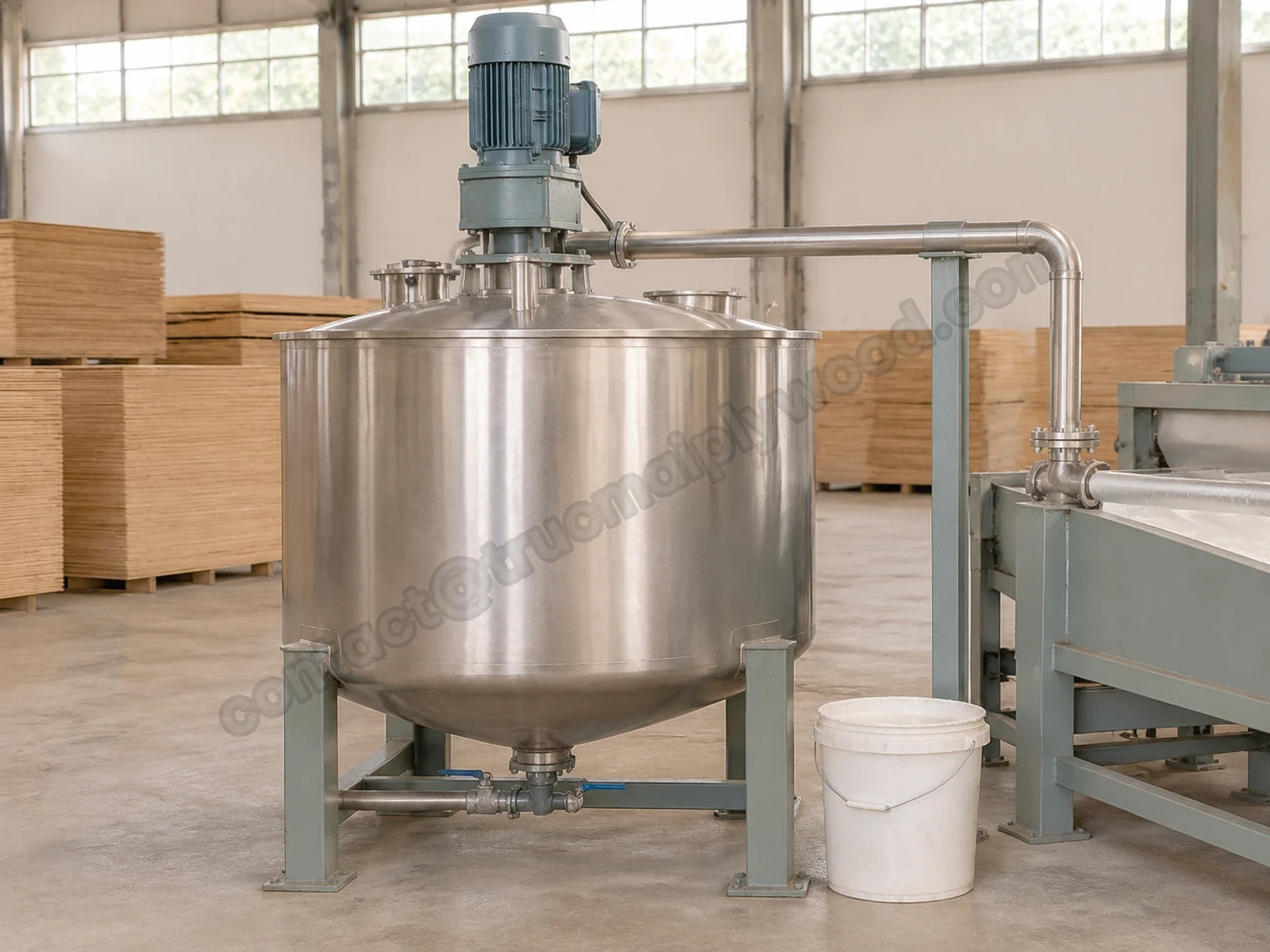
Four things limit output on a given month: the supply of good thin veneer, the supply of imported face veneer, the share of thick panels in the mix and the number of products in a container. None is a reason to expect a refusal; each is a reason to plan the order with the mill early.
| Limit | Why | What the buyer does |
|---|---|---|
| Good thin veneer | 4 mm panels use 1.3 mm core veneer, and sound thin veneer is scarce | Order 4 mm panels early |
| Imported face veneer | EV faces come as 2500 × 1300 mm sheets of 0.3 or 0.4 mm veneer imported from China; birch veneer is imported | Say which face on the first RFQ so the face supply is planned |
| Thick panels | A 30 or 40 mm panel uses far more veneer per sheet than a 9 mm panel | Plan thick panels as their own line |
| Many products per container | Each product is a separate run | One or two products per container; up to six by agreement |
Numbers
Which numbers describe the mill's output and range?
The output and the range come down to a short list of numbers with their conditions; the panels are 3–40 mm in 12 thicknesses, in three standard sheet sizes.
| Item | Value | Condition |
|---|---|---|
| Output per year | Around 60,000 m³ | Mill figure |
| Output in an average month | Around 5,000 m³ | Yearly figure spread evenly; peak months not published |
| Thickness | 3–40 mm | 3, 4, 5, 6, 9, 12, 15, 18, 21, 25, 30 and 40 mm |
| Standard sheet sizes | 1220 × 2440, 1220 × 2280 and 1250 × 2500 mm | Custom sizes up to 1250 × 2500 mm; nothing larger |
| Cores | Eucalyptus, Acacia, Styrax, Pine or combined | No rubberwood core |
| Thickness tolerance | ±0.3–0.5 mm | Written per order |
| One 40HC at 18 mm, 1220 × 2440 mm | About 53, 47 or 43 m³ | Styrax, Acacia, Eucalyptus; planning figure |
Sheet counts and weights are planning figures, not a loading record.
Buyer guide
How should a buyer read a plywood capacity figure when comparing suppliers?
A capacity figure is only comparable when its unit, its period and its basis are stated: m³ or containers, a year or a month, an installed capacity or what is actually produced.
Suppliers quote capacity in m³ a year, in containers a month or in pieces, and often without saying whether the number is what the presses could make or what the mill makes. The figure on this page is what the mill makes in a year, spread evenly for the monthly figure, and the container conversion is shown so a buyer can repeat it.
| Claim | Ask |
|---|---|
| Capacity of N m³ a year | Is that produced or installed, and for which product lines? |
| N containers a month | 40HC or 20GP, which thickness, which core? |
| Peak capacity | Which months, and is the container slot still bookable? |
| We can fill any order | What is the slot, in days, for this spec and quantity? |
What you can verify
What can a buyer verify about the mill's output?
A buyer can verify four things without taking the number on trust: the certificates, the FSC code, the plot data for the logs and the pack check.
- Certificates Numbers FSC-C196493, SA-COC-014545, W2012 and W2012E, checked with the issuers
- FSC database Licence code FSC-C196493, matched to the holder and product group
- Plot data Geolocation for the core and the face veneer on EU lots
- Pack check Counts and thickness readings, attended by the buyer's inspector if wanted
Records
Which records show that the output is real?
Four records tie a container to the mill: the certificates, the file set for EU lots, the pack-check sheet and the loading record.
The order's certificate files in the mill's own name.
Origin records and plot geolocation for core and face veneer.
Counts, thickness readings and face notes before loading.
Container, seal and pack count on the day.
Share of the month
What share of the month does a buyer's programme take?
A buyer's programme is a small share of an average month: one 40HC is about 1% of the around 5,000 m³, three containers about 3% and ten about a tenth.
That small share is why a reserved slot does not strain the mill, and also why size alone rarely decides a slot: what decides it is the spec, the mix and the production days, which are on lead times by volume. A programme of any of these sizes is written on the programme sheet described on monthly container programmes.
| Programme | m³ on Styrax core, 18 mm | Share of 5,000 m³ |
|---|---|---|
| One 40HC a month | About 53 | About 1% |
| Three 40HC a month | About 159 | About 3% |
| Ten 40HC a month | About 530 | About a tenth |
Capacity checklist
Which six lines should you ask any plywood supplier about capacity?
Six lines turn a capacity claim into something a buyer can compare.
Produced or installed capacity, in m³ per year.
The unit for monthly numbers: 40HC, with the thickness and core they assume.
The product lines that share the output.
The slot, in days, for this spec and quantity.
Which months are not bookable.
Who holds the certificates: the supplier or a third party.
FAQ
Output and capacity questions from container buyers
Direct answers on m³, containers and how to check a supplier.
How many containers a month can a Vietnamese plywood mill ship?
That depends on the mill's output and the panels in the container. Truc Mai produces around 5,000 m³ in an average month, which on the planning model equals about 94 40HC of 18 mm Styrax-core panels, 106 on Acacia and 116 on Eucalyptus. These are planning figures, not a shipment count.
How much plywood does Truc Mai produce in a year?
Around 60,000 m³ a year, in Ha Hoa, Phu Tho, Vietnam. The average month is around 5,000 m³.
How many m³ fit in a 40HC by core?
At 18 mm and 1220 × 2440 mm, about 53 m³ on Styrax core, 47 m³ on Acacia and 43 m³ on Eucalyptus. They are planning figures; the full table is on the 40HC load calculator.
Which plywood supplier in Vietnam can fill full containers every month?
One that quotes a slot, not only a capacity. Truc Mai writes a monthly programme with the number of 40HC, the spec and the call-off date, and each container takes 15–45 days after the 30% deposit.
How do I know a Vietnam plywood supplier is the factory itself?
Check that the certificates are in the supplier's own name, look up the FSC code FSC-C196493 on the FSC database, ask for plot data for the core logs, attend the pack check and visit the mill in Ha Hoa.
Which product lines share the monthly output?
Furniture and interior plywood, commercial plywood, packing plywood and non-structural LVL. The split in m³ per line is not published and is confirmed in the quotation.
Does this page rank Truc Mai against other mills?
No. It gives the output in m³ and the conversion to containers so a buyer can compare mills on the same basis.
What limits output in a given month?
The supply of good thin veneer, the supply of imported face veneer, the share of thick panels and the number of products in a container. They are planned with the mill when the order is placed.
Are peak months published?
No. The monthly figure is the yearly figure spread evenly. Which months are tight is confirmed in the quotation.
What share of the mill's month does one container take?
About 1% for one 40HC of 18 mm panels, on any of the three cores.
Ask for a slot
Send the monthly volume you need
Send the eight RFQ lines and the number of 40HC you expect each month; the quotation comes back with the planning load, the slot and the delivery term.
Spec lines, monthly 40HC number, product mix and destination port.