
Plywood childrens furniture should start with a sanded furniture-grade panel, documented formaldehyde performance and edges designed for frequent handling. Truc Mai Plywood supplies veneer-core panels with selectable faces and cut-to-size options. Schools and furniture factories should approve the panel construction, finished edge and market-specific product testing before ordering production quantities.
Which plywood childrens furniture panels should a factory specify?
For nursery cabinets, classroom shelves and children’s desks, start with a sanded furniture-grade veneer-core panel, then specify its emission evidence, exposed-edge treatment and finished-product tests. A good purchase specification separates panel manufacture from the furniture maker’s assembly, coating and safety checks. Truc Mai Plywood manufactures furniture and commercial plywood in Ha Hoa, Phu Tho, Vietnam, with capacity around 60,000 m³ a year.
A school storage carcass has different demands from a climbing toy or an infant cot. Shelves need predictable machining and fastening; table tops need a clean surface; accessible corners need deliberate shaping. A buyer should select the panel for its component duty rather than buy a generic sheet described only as children’s plywood. The project sheet choice overview helps position the application before the cutting list is prepared.
What formaldehyde class for school furniture?
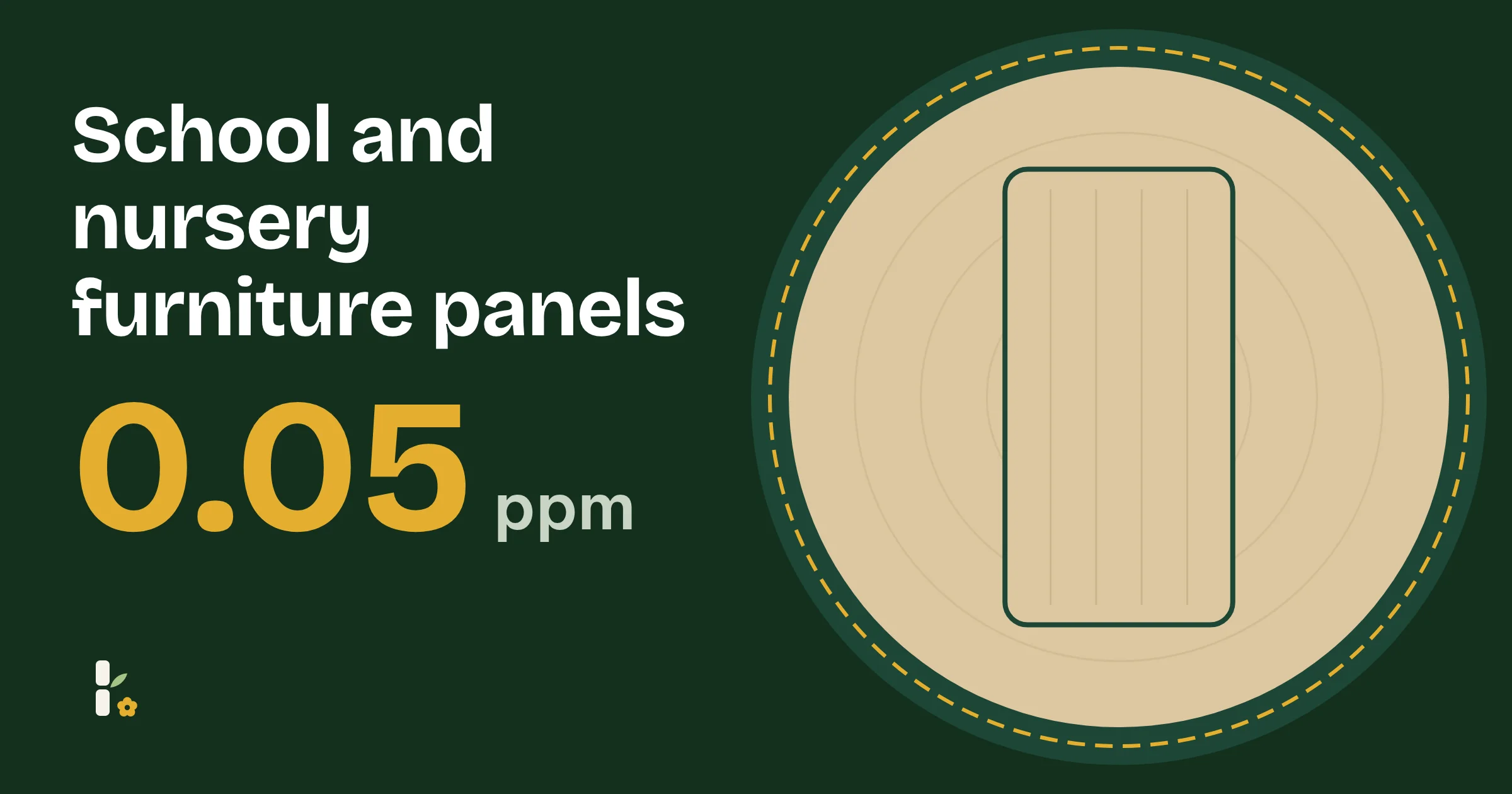
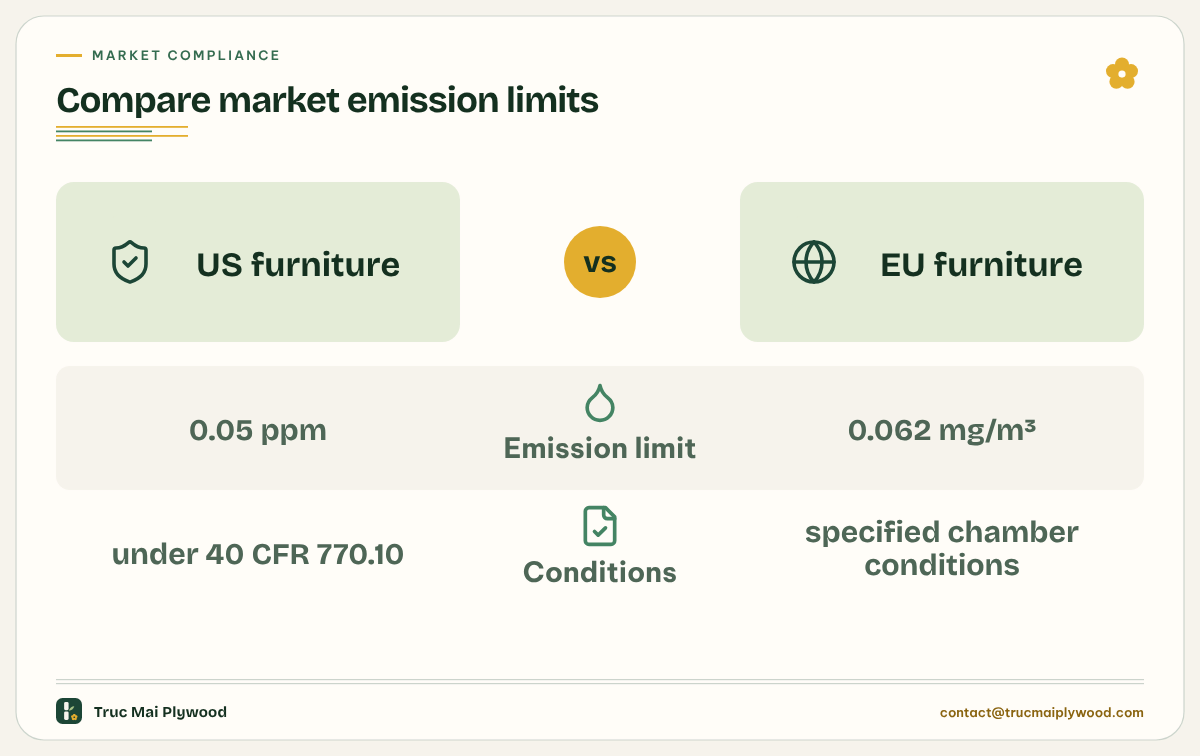
For US school furniture made with hardwood plywood veneer core, specify CARB Phase 2 and EPA TSCA Title VI certification, with the 0.05 ppm emission limit under 40 CFR 770.10. The US regulation covers regulated composite wood products and finished goods containing them. Ask for the product type, mill identification and third-party certification details, not merely the word “low-emission”.
For EU furniture, the European Commission’s formaldehyde restriction sets 0.062 mg/m³ for furniture and wood-based articles under its specified chamber conditions, applying from August 2026. A panel’s E1 class has a different test basis and must be recorded separately. “E0” without a named method and limit is incomplete. The Phase 2 formaldehyde limits page explains the US paperwork.
The manufacturer’s CARB/EPA 26053 certificate covers hardwood plywood with veneer core from 3–25 mm. An order outside that thickness scope needs a separate emissions route rather than extending the certificate wording. Keep the panel report beside the finished-furniture compliance file.
Is plywood safe for toys?
Yes, plywood can be used for toys when the finished toy meets the applicable safety requirements for its market and age group. A panel’s emission certificate addresses one material hazard; the toy maker must assess accessible edges, coatings, small parts, fasteners and foreseeable use. A nursery storage unit and a wooden pull toy should not share a blanket “toy-safe” declaration.
For a toy cut from sheet stock, begin with an approved panel sample and a complete bill of materials. Record every adhesive, paint, varnish and attached fitting used after the sheet leaves the mill. Examine the final cut parts for splinters and exposed voids. Make the toy-specific tests on the finished design, including any applicable mechanical and chemical requirements, rather than transferring a plywood certificate to the entire toy.
A request for “wood for toy making” should therefore include the age group and whether the part is handled, mouthed or merely forms an inaccessible structural backing. Those distinctions change what the downstream manufacturer needs to test.
Which edge finish for kids furniture?
Use a smooth, rounded and fully sealed edge for accessible children’s furniture components. An exposed laminated edge can be an intentional design feature, but the cut layers must be free of splinters and open defects before the finishing operation. The furniture maker sets the final radius and coating system against the product’s age group and use.
An edge-banding option conceals the ply lines and can match a melamine face; a clear sealed edge retains the layered appearance. In both cases, inspect corners after routing, check for lifting along the glue lines, and repeat the inspection after coating and assembly. On tables and cubbies, edges receive frequent contact and cleaning, so the finishing specification belongs on the drawing rather than in a general material note.
Request sample components showing the routed profile, the coating sequence and the finished edge. A flat sheet sample alone cannot show how a narrow strip behaves after machining.
How should plywood compare with solid timber and MDF?
Plywood is often the practical choice for broad cabinet sides and shelves because its cross-laid veneers help control movement across the sheet. Solid timber can suit narrow rails and shaped details; MDF offers a uniform machined surface but requires its own moisture and fastening assessment. The decision belongs to the part, not the material name.
| Buying criterion | Veneer-core plywood | Solid timber | MDF |
|---|---|---|---|
| Large flat components | Sheet format with cross-grain construction | Requires joining narrower stock | Uniform fibre panel |
| Visible edge | Layered veneer edge | Continuous wood grain | Fibre edge normally covered |
| Machining check | Inspect inner plies and voids | Inspect grain and knots | Inspect dust and edge finish |
| Specification evidence | Face, core, bond and emissions | Species, moisture and finish | Grade, emissions and finish |
A plywood face may be birch, poplar or engineered veneer while its core uses a different species. For the mill’s birch-faced plywood, the face name should never be read as an all-birch construction.
Which face veneer works for a nursery classroom?
Choose a face by the appearance and finishing process: birch-faced for a pale natural grain, bleached poplar for a light appearance, or engineered veneer for a repeatable decorative pattern. A paper-overlay or melamine surface can suit production furniture where a uniform decorative finish is wanted. Record the face and back separately because hidden cabinet backs do not require the same appearance as a desk top.
The mill can supply eucalyptus, acacia, styrax, pine or mixed cores beneath its decorative faces. The face veneer is thin compared with the complete panel; it does not determine the core’s weight, screw-holding performance or the finished product’s emission status. Specify the sample grade, face thickness and any sanding requirement in the order.
For painted panels, inspect the sample after the intended primer and topcoat, especially where the veneer joins or the edge has been filled. For a natural finish, compare the approved sample under the lighting used in the classroom.
What core construction should a buyer inspect?
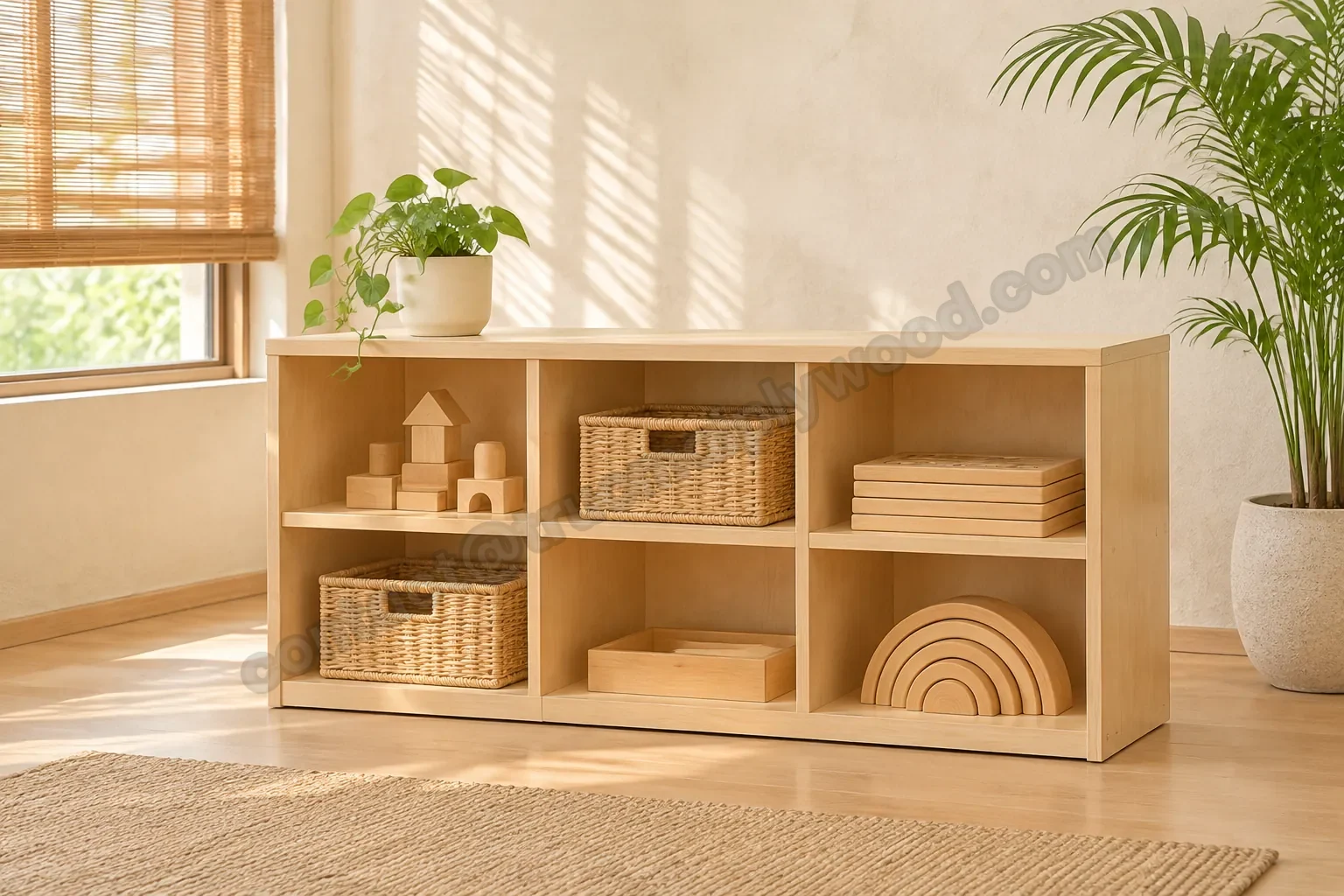
An A-grade stitched core is the starting construction for furniture/interior panels. The outer core plies are typically stitched across and along the sheet to reduce gaps beneath the decorative faces. A school furniture buyer should inspect the exposed edge of the sample and check for overlaps, open joints and local thickness changes before approving production.
The choice between styrax and denser eucalyptus or acacia cores affects handling and shipment weight. It also affects how a narrow component behaves during routing and drilling. Compare the actual approved constructions by cutting identical shelf strips and drilling the intended fixing pattern. The core species alone cannot replace that shop-floor trial.
For parts with exposed edges, request a cut sample from the production lay-up. A face-only photograph hides the information the joinery team needs.
Which thickness and tolerance belong on the drawing?
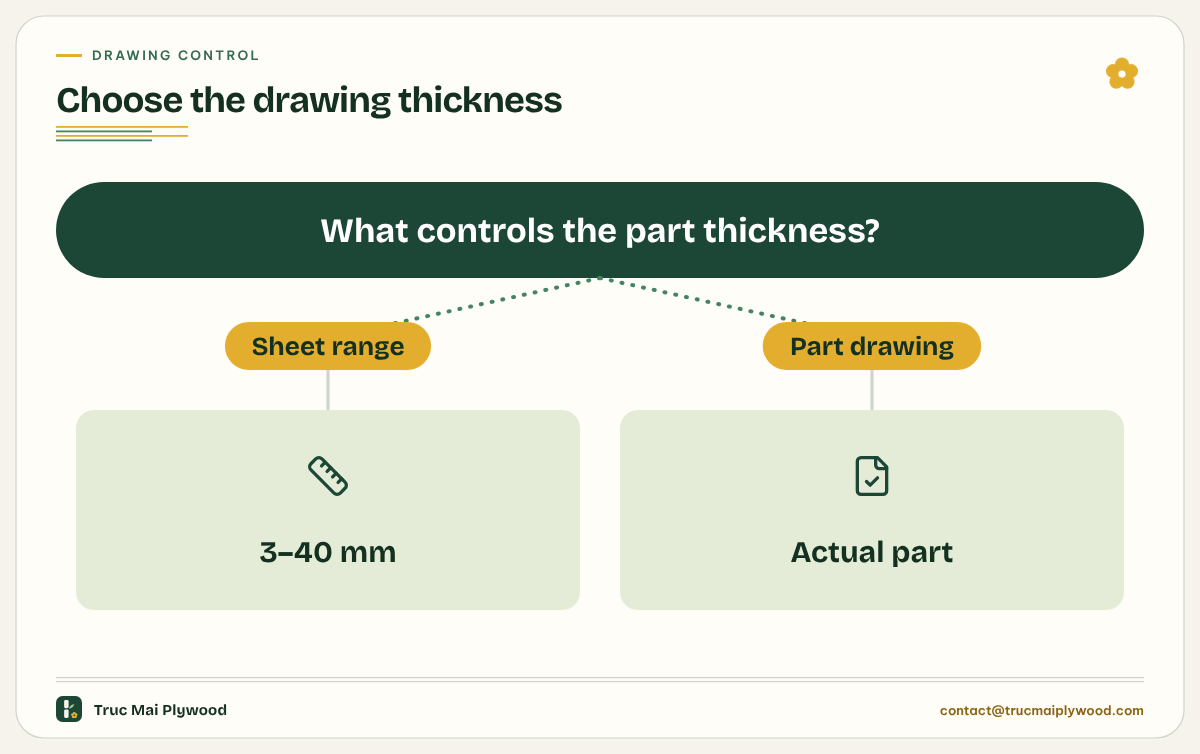
Specify thickness from the component’s span, loading and fixing design, then put the accepted tolerance on the purchase order. The mill’s furniture panels commonly use ±0.3 mm on sanded and calibrated work; other order lines can use ±0.3–0.5 mm. Standard sheet thicknesses run from 3–40 mm.
| Component | Drawing decision | Inspection at receipt |
|---|---|---|
| Cabinet side | Thickness and hinge drilling | Measure at multiple points |
| Desk top | Span, support and edge profile | Check flatness and finish |
| Shelf | Load and support spacing | Trial the loaded assembly |
| Drawer base | Groove and fit | Check actual fit after cutting |
Thickness alone is not a shelf load rating. A school furniture maker must validate its own span, fixings and support arrangement. The 18 mm plywood reference provides a separate purchasing example, while the furniture drawing controls the actual part.
How should factories test machining and fasteners?
Run a pilot batch with the exact router tools, drill bits, fasteners and assembly sequence before releasing the container order. Cut samples across and along the face grain, then inspect edge tear-out and delamination. Drill near corners where assembly stresses are most likely to expose defects.
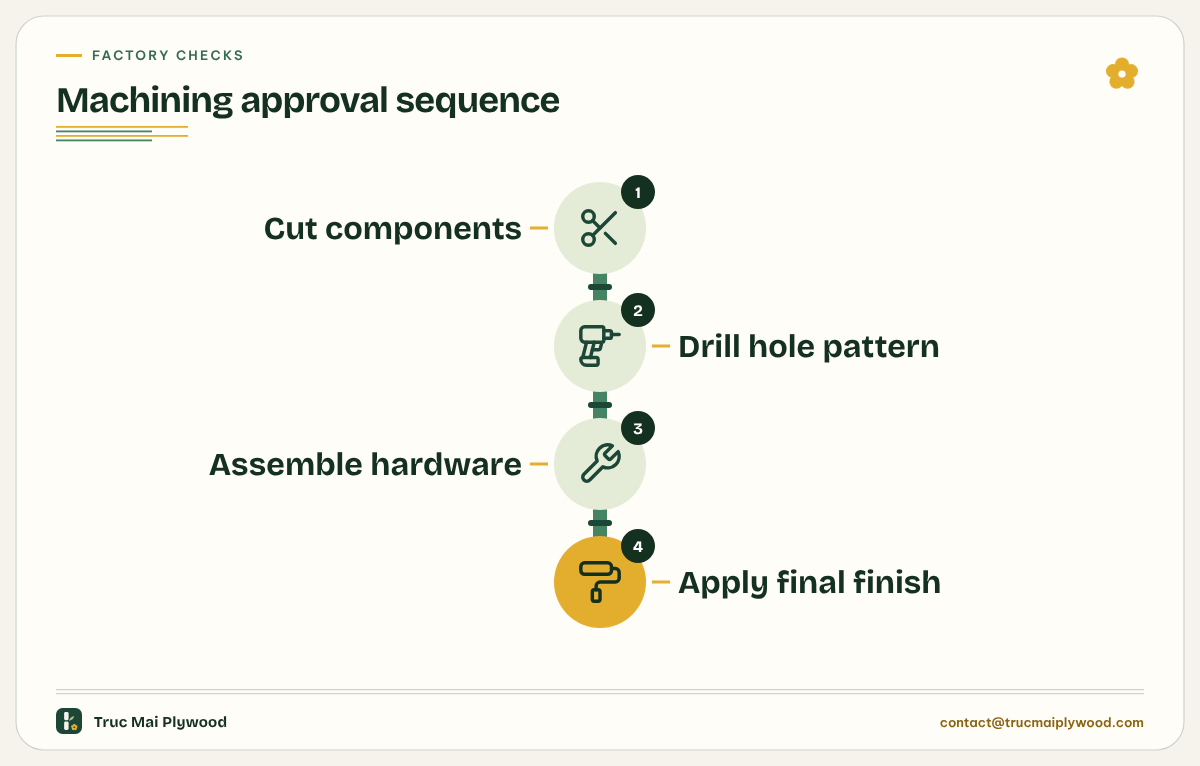
Use a numbered check sequence: 1. Cut the reference components. 2. Drill the production hole pattern. 3. Assemble with the intended hardware. 4. Apply the final finish. 5. Inspect after normal handling and cleaning. Record rejects by component type rather than averaging them into a vague overall grade.
A mill sample can establish the incoming panel construction. The factory trial establishes whether that construction works with the actual tooling and product design.
How do coatings and cleaning affect the panel choice?
Specify the finished surface against the school’s cleaning routine, then test the complete coating and substrate combination. A smooth decorative face helps with wipe-down, while unsealed edges can absorb cleaning liquid and show swelling or staining. The coating supplier’s instructions should determine the application and curing process.
UV-ready plywood means prepared faces for the furniture maker’s own UV coating; it does not mean the mill has already applied a coating. For melamine or HPL-faced constructions, assess the laminate edge, bonding and the cut-out details after machining. A high-wear table top needs a different surface trial from a dry classroom cupboard.
Ask the production team to clean a finished trial component using the site’s intended products. Look at seams, exposed fastener holes and corners as closely as the flat face.
Can the mill cut and label classroom furniture parts?
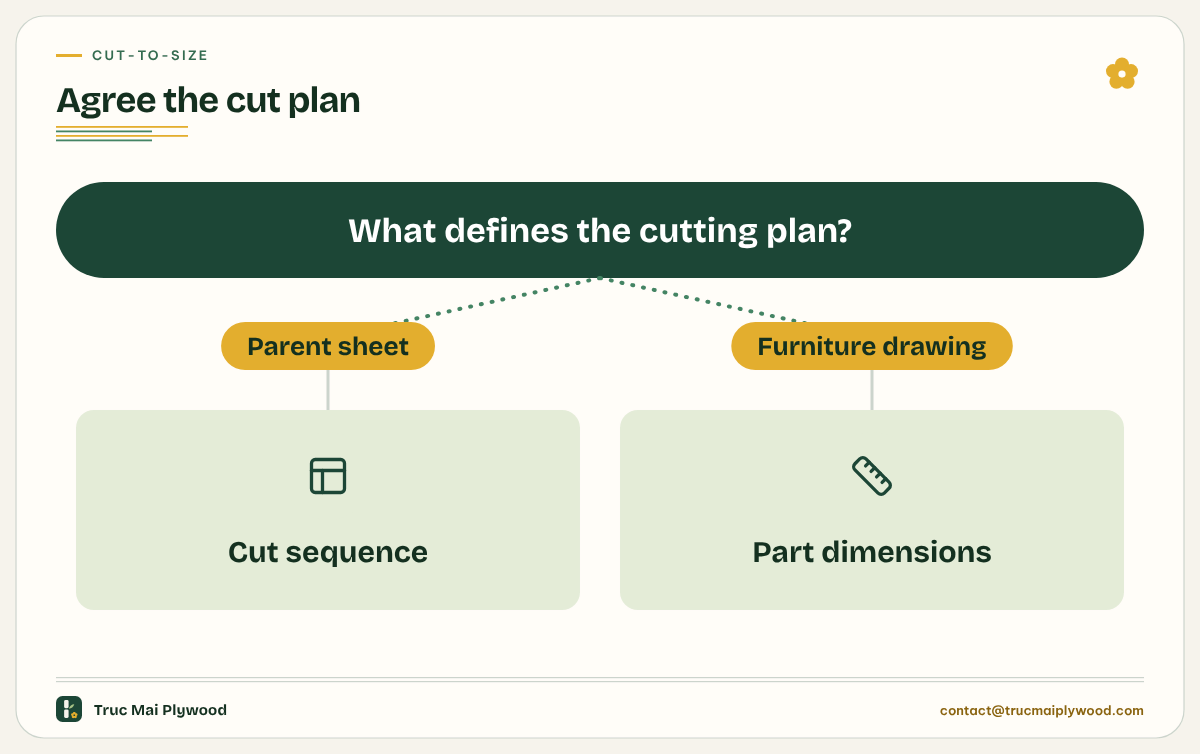
Yes. Cut-to-size plywood can be supplied as labelled components against an agreed cutting list. Common layouts include halves at 610 × 2440 mm, thirds at 1200 × 800 mm, and quarters at 1220 × 610 mm; the exact parts and cut sequence are agreed from the parent sheet and drawing.
A purchasing file should list part ID, finished dimensions, grain direction, quantity, edge treatment and packing group. The cutting list should distinguish finished component size from the mill’s raw cut size where subsequent trimming or routing occurs. This prevents a drawer base and a cabinet side with similar dimensions from being packed under one identifier.
The cut-to-size panels route describes the available service. A pilot cut list helps the buyer check nesting orientation and labelling before repeating the same classroom furniture programme.
What documentation belongs in a school furniture order?
Request the panel specification, the relevant emissions certificate, a signed sample reference and the lot’s shipping papers. For US hardwood plywood veneer core, identify the certifier and covered thickness; for EU projects, request the relevant emission evidence for the finished article’s compliance programme. Keep the paperwork matched to the actual product line rather than a generic company brochure.
For eligible FSC 100% orders, the FSC chain-of-custody standard requires the seller’s certificate code and product claim on sales documents. The mill’s licence is FSC-C196493 and its chain-of-custody certificate is SA-COC-014545. The FSC licence verification resource explains the buyer’s check.
A practical document pack groups the purchase order, approved sample, inspection record and shipment paperwork under one order reference. That lets a furniture manufacturer trace a defect report back to the panel construction used.
How should a buyer compare samples from two mills?
Compare samples to the same written construction and cutting trial, not just to a similar-looking face. Ask each mill for the core species, joining method, face/back grade, adhesive and emission specification, tolerance and packing method. Mark each sample with its source and date before sending it to the production floor.
A useful acceptance sheet has separate rows for visual defects, thickness readings, edge integrity, finish adhesion after the buyer’s coating, and machining results. The inspector should record a measurement or a photograph for each rejected feature. This makes the comparison reproducible when the next container arrives.
Use ordering samples to set the sample request. The sample should represent the intended production grade, not a specially selected decorative piece.
How should panels be packed for repeat school orders?
Pack each specification and component group under a clear identifier so receiving staff can reconcile the shipment with the furniture bill of materials. For full sheets, identify thickness, face/back pair, core and quantity on the pack list. For cut parts, add the component reference and orientation where grain direction matters.
A mixed container normally carries one or two products, with more lines possible by agreement. The loading plan must take core weight and the booking payload into account. Packaging protects decorative faces and corners during handling, but receiving staff should still inspect the outer packs before opening them.
For a repeat programme, keep the approved sample, cutting list and pack labels stable between orders. Record any agreed change as a new revision rather than silently substituting a different face or core.
What should the quotation request include?
Send one specification line per panel or component: school or nursery application, core species and construction, glue type and emission requirement, face/back finish, sheet or cut size, edge treatment, packing method and quantity. Add the destination port and the required document set. The plywood RFQ checklist can be used to assemble those lines.
A useful opening request might be: “Nursery storage cabinet sides; stitched furniture core; UF glue at E0 emission with stated test method; pale veneer face/back pair to approved sample; sanded and calibrated; labelled cut parts; protective packing.” Attach the drawing and identify the market where the finished furniture will be sold.
Request a sample and a quotation through the quotation process. The buyer can then approve the material and machining trial before fixing the repeat-order specification.
Send your specification to contact@trucmaiplywood.com or through the quotation form.
Questions buyers ask
Can a nursery cabinet use a melamine face?
Yes. Specify the melamine surface and substrate separately, then test the finished cabinet for its intended market and cleaning regime.
Is birch-faced plywood the same as all-birch plywood?
No. Birch-faced plywood identifies the face veneer; the core can use another wood species.
Can the mill supply small labelled components?
Yes. Cut-to-size panels can be labelled to an agreed cutting list and packed by component reference.
Do I need the same face on both sides?
Specify a face/back pair according to which surfaces remain visible after assembly. An approved sample establishes the appearance standard.
Can I order an FSC 100% plywood line?
FSC 100% is available for eligible products under certificate SA-COC-014545. The sales documents must carry the applicable product claim.
Which sheet formats are available?
Regular formats include 1220 × 2440 mm, 1220 × 2280 mm and 1250 × 2500 mm. Cutting dimensions are agreed from the component list.
Can one order mix thicknesses?
A mixed container can carry multiple agreed products. Give each thickness and construction its own packing-list line.
Does a pale veneer mean low formaldehyde?
No. Veneer colour does not measure emissions; request the relevant test or certification for the specified panel.
Are UV-ready faces already coated?
No. UV-ready panels have prepared faces for coating by the furniture manufacturer.
How do I request a sample for a school desk?
Send the intended use, face/back appearance, thickness, core, emissions requirement and edge treatment so the sample represents the production specification.