
To varnish plywood for furniture, choose a clear polyurethane or compatible interior varnish, then test it on the actual veneer grade. Poplar, okoume and pine faces absorb and colour differently. Truc Mai Plywood supplies sanded, calibrated, UV-ready panels for buyers who apply their own finishing system.

What varnish to use on plywood for furniture faces?
A water-based clear polyurethane is a practical first trial for pale indoor furniture faces; an oil-based varnish is worth testing where a warmer amber appearance is wanted. Choose the actual coating product against the intended cleaning regime, sheen and veneer colour, rather than ordering by the word varnish alone.
The USDA Forest Products Laboratory’s 2021 wood-finishing chapter identifies appearance and cleanability as central requirements for indoor wood finishes. A factory buyer should therefore ask for a finish sample that shows the appearance after full cure, not just the wet coating. The coating supplier’s technical data sheet sets application thickness, recoat window and cure schedule.
For a first order, send a face-grade sample and a finished reference panel together. A clear coat leaves grain, repairs and sanding marks visible. Furniture and interior plywood can be specified with prepared faces for the buyer’s coating line.
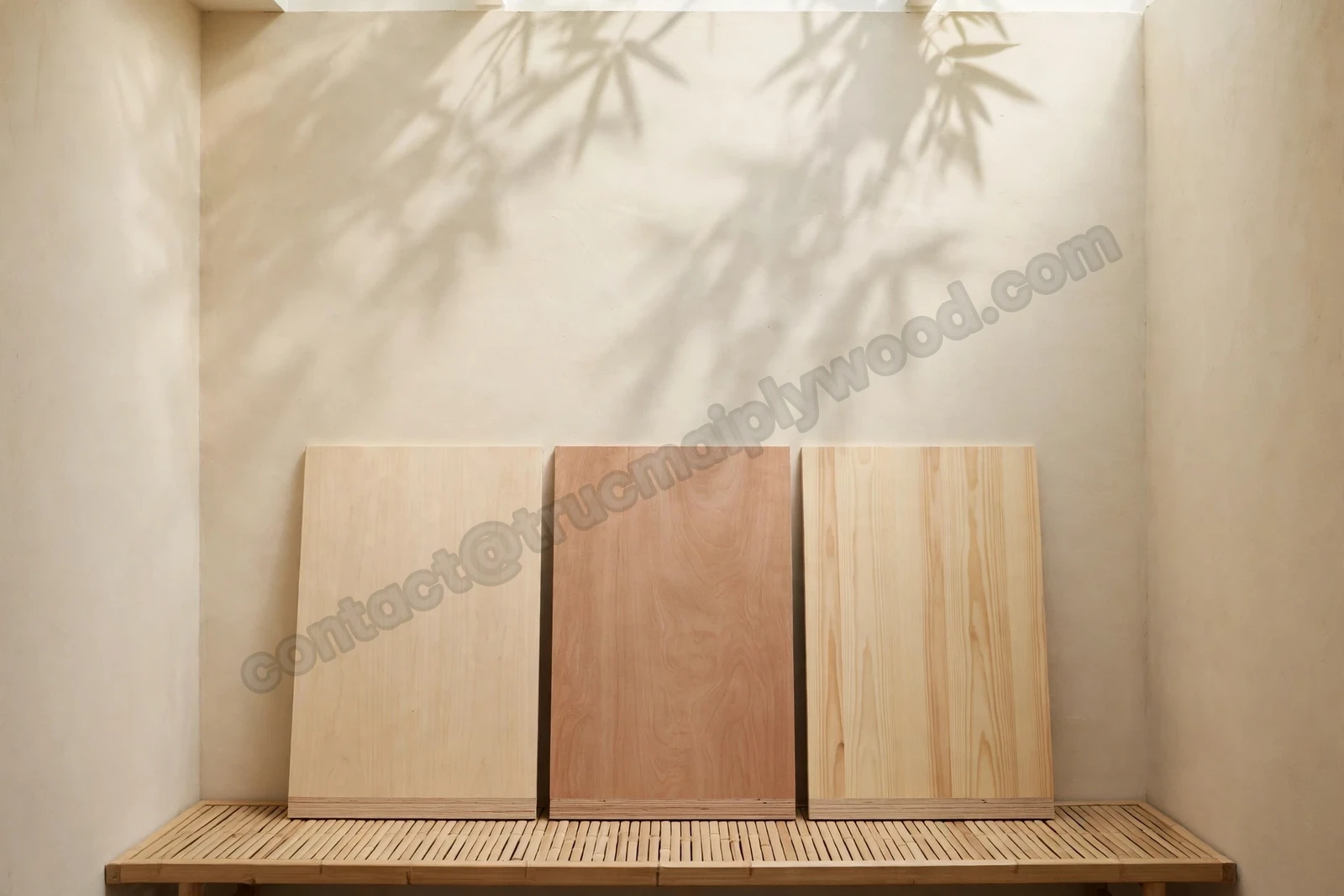
How do poplar, okoume and pine look under clear coat?
Poplar generally gives a pale, quiet background; okoume brings a warmer reddish tone; pine shows more prominent grain and possible resin-related colour variation. The buyer’s approved coated sample is the colour standard for each face, because clear film changes the visual contrast of the wood.
| Face veneer | Visual starting point | Coating-trial focus | Suitable buyer decision |
|---|---|---|---|
| Poplar or bleached poplar | Pale, subdued figure | Blotch and colour uniformity | Light cabinet interiors |
| Okoume | Warm, visible grain | Darkening and patch visibility | Decorative doors and panels |
| Pine | Pronounced grain and knots | Resin, uneven absorption and knot appearance | Character-led furniture |
| Birch face | Light, relatively fine grain | Yellowing and sanding marks | Pale furniture surfaces |
| Engineered veneer | Repeated decorative figure | Batch-to-batch colour and coating wetting | Repeatable decorative programmes |
A face species is a veneer selection, not a promise about the core. Poplar-faced plywood and okoume-faced plywood can be compared on identical core, thickness and coating specifications. For a purchasing decision, request the same sheen on every sample so gloss differences do not disguise colour differences.
Polyurethane vs varnish on plywood: which finish fits?
Polyurethane is a family of coating chemistries, while varnish is a broader finish name; a polyurethane varnish can be both. For an indoor cabinet, compare the named products by film hardness, cleaning resistance, colour shift and the supplier’s application instructions, rather than treating the terms as opposing standards.
A single-component water-based polyurethane often suits a light-colour trial; a solvent-borne varnish may deepen the wood tone. Two-component industrial systems introduce a separate mixing and handling procedure. These are selection categories, not interchangeable formulas. The USDA finishing reference discusses how finish performance depends on both coating and wood substrate.
Ask the finishing contractor for cured sample panels, adhesion observations and the cleaning agents used in the intended furniture application. A coating that looks excellent on a flat face still needs an edge and machining trial.
Stain vs varnish: what changes on a veneer face?
Stain changes the colour of the veneer; varnish forms a protective clear film. A stain can sit beneath a compatible clear coat, while a clear varnish alone leaves more of the wood’s original tone visible. The sequence matters because stain uptake can exaggerate uneven grain and repairs.
For a pale poplar order, begin with an unstained clear-coated control. For a darker okoume target, compare a transparent coat with a stained-and-coated board under the same light. For pine, include knot areas in the sample rather than using only clear-grain offcuts. A buyer who wants a uniform painted colour should specify a different face-preparation and coating brief.
Wood stain and varnish should be purchased as a tested system: stain compatibility, drying and adhesion are determined by the coating supplier’s instructions. Colour approval belongs on a labelled, fully cured production sample.
Is wax enough to protect plywood in a cabinet?
No, wax alone is a poor primary choice for a frequently cleaned cabinet surface. Wax can give a soft touch and subdued sheen, but a film-forming clear coat is the stronger starting point for surfaces exposed to regular wiping and occasional spills.
Wax also changes subsequent refinishing choices: a coating line must remove wax contamination before attempting to apply another film. For a decorative, low-contact panel, a wax sample may be considered as a finish in its own right. For a kitchen door or shelf, compare the proposed coating against the cleaning procedure in the furniture specification.
The Forest Products Laboratory’s finishing guidance separates appearance, protection and cleanability. Those are useful acceptance headings for a coated-panel sample.
Why does varnish plywood sometimes look blotchy?
Uneven absorption, mixed veneer colour, glue residue and inconsistent sanding can produce blotchy clear-coated plywood. The correction starts with sorting and preparing the face, not adding more topcoat over an already uneven surface.
Check whether the marks follow the grain, veneer joints, repaired patches or sanding direction. Grain-following variation may be a natural feature; a straight line near a joint points the inspection towards veneer matching or adhesive contamination. Compare a dry raw panel, a wetted trial and the cured coating before deciding where the defect began.
For repeat container orders, define the visible face grade against a signed sample. A/B or similar trade grade names alone do not describe every acceptable colour change. A photograph helps communication, but a physical reference board shows the actual finish response.
What sanding preparation should the mill specify?
A sanded, calibrated face with a documented finish trial is the right starting specification. The face should be even enough for the intended coating build and free from torn grain, dust, glue spots and handling marks.
Truc Mai’s furniture panels can be ordered with a thickness tolerance of ±0.3 mm on sanded and calibrated material; commercial panels use a different tolerance line. Specify the face and back as a pair, and agree the veneer grade against a sample. Sanding grit is best recorded in the coating-line trial rather than copied from an unrelated product, since veneer thickness and finish chemistry affect the acceptable preparation. The Architectural Woodwork Standards, Section 5 (2014) calls for final sanding and cleaning before sealer or finish application.
Thin decorative faces need careful re-sanding after receipt. A buyer should ask the fabricator to record the preparation sequence on the approved trial board, especially around repaired areas and veneer joints.
How does moisture affect a clear-coated panel?
Moisture movement can disturb the finish through swelling, shrinkage and changes at joints or edges. The USDA Forest Products Laboratory’s 2021 moisture-relations chapter explains how wood exchanges moisture with surrounding air. Condition the panels to the finishing environment and check their moisture state before coating.
The USDA’s 2021 chapter on drying and dimensional change explains that wood exchanges moisture with surrounding air and that storage and handling affect dimensional stability. This is why a container should be unpacked and stored under controlled workshop conditions before finishing begins.
A moisture reading is meaningful only alongside the instrument, species setting, measurement location and agreed acceptance method. Avoid turning a generic workshop target into a claim about a particular shipment. Record the trial’s readings and compare them with the coating manufacturer’s instructions.
How should exposed plywood edges be finished?
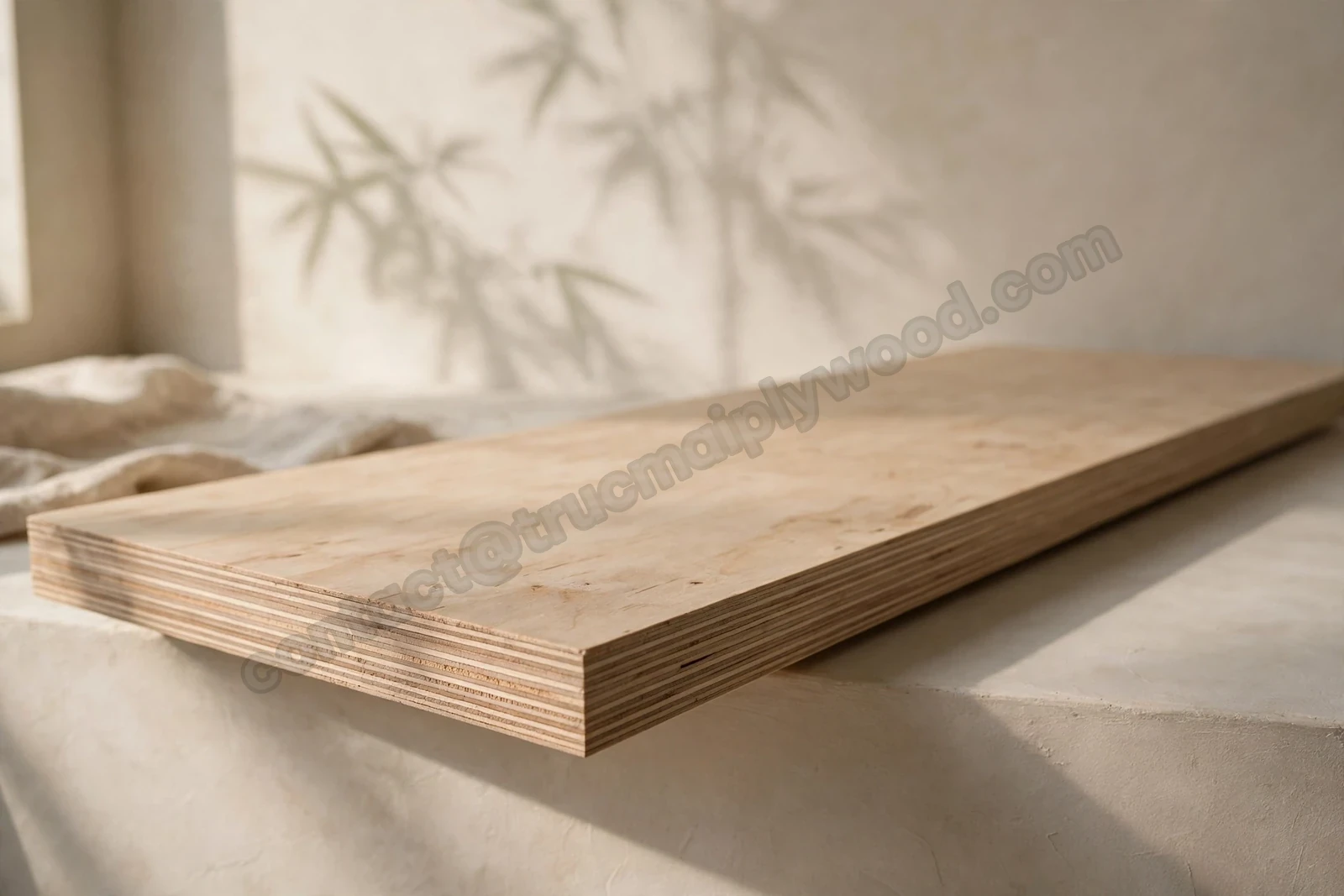
Exposed edges need their own sealing schedule because end grain and glue lines absorb finish differently from the face. The specification should identify whether the design shows the layered edge, covers it with veneer tape or uses a separate edging material.
On a visible layered edge, sand without rounding the face excessively, remove dust and test the clear coat for pinholes. On an edge that will be concealed, a suitable edge treatment may be chosen for machining and cleaning performance rather than appearance. Freshly cut pieces require attention at the new edges even when the parent sheet arrived prepared.
For a furniture programme, compare edge banding for veneer plywood with a visible clear-coated edge before locking the cut list. The finishing contractor should approve the edge treatment on the same panel construction used in production.
What coating sequence should a furniture factory test?
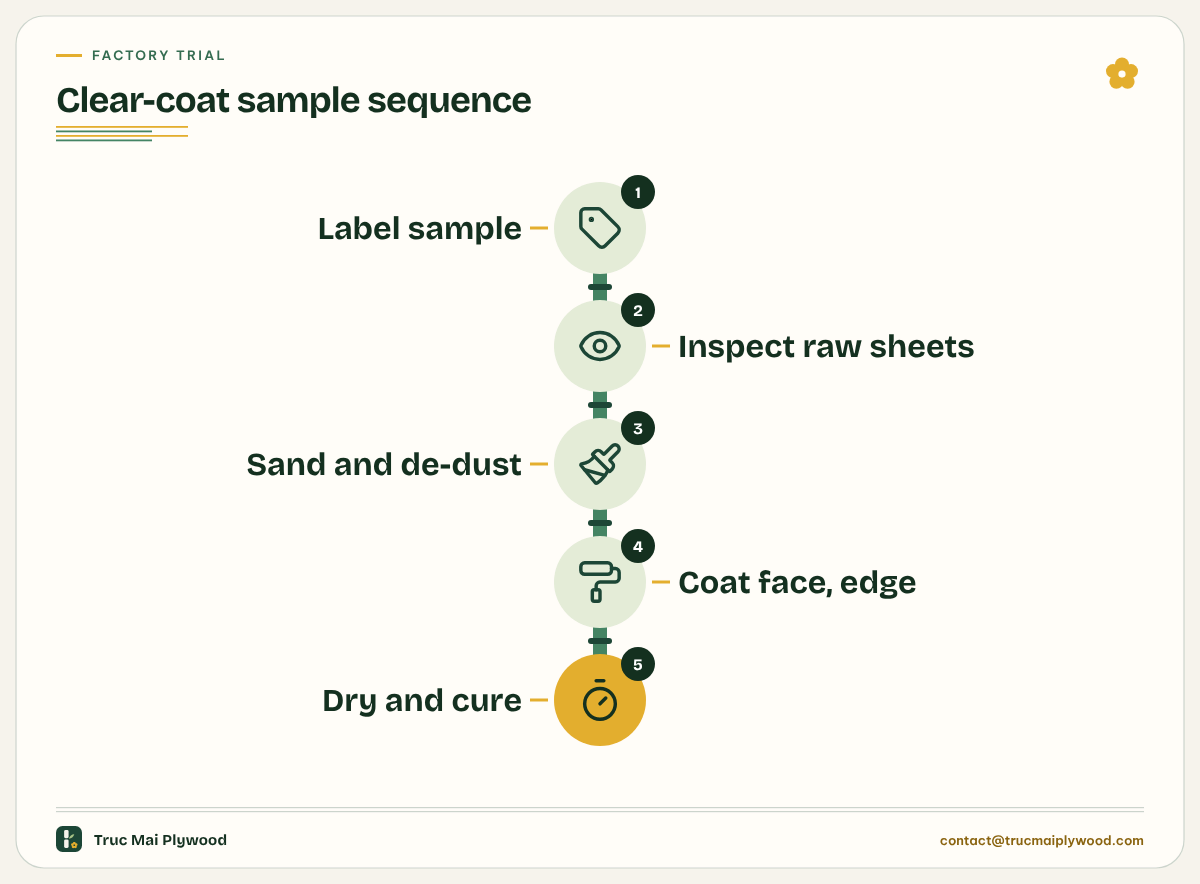
Use a numbered sample process: inspect the face, prepare it, coat it and inspect the cured result. The sequence makes it possible to identify which operation caused a visible defect.
- Identify the veneer species, face grade and intended sheen on the sample label.
- Inspect raw sheets under the intended lighting and reject visible glue contamination.
- Sand and remove dust using the coating supplier’s recommended preparation.
- Apply the selected coating system to the face and a representative edge.
- Observe the supplier’s drying and recoat instructions, then allow the sample to cure.
- Inspect colour, sheen, touch, edge coverage and cleaning response against the agreed reference.
Keep the coated sample with the order specification. If the furniture factory changes the varnish product, repeat the coating trial before changing the acceptance standard for incoming veneer.
Should a buyer order UV-ready or pre-varnished plywood?
Order UV-ready plywood when the buyer will apply its own UV or other clear coating; order pre-varnished material only from a supplier whose quotation explicitly includes the coating operation. UV-ready describes face preparation, not an already cured UV film.
Truc Mai supplies sanded and calibrated faces prepared for the buyer’s finishing line; the mill does not apply the UV coat. This distinction belongs in the purchase order because a sample of raw UV-ready veneer cannot stand in for a finished decorative surface.
A factory comparing coating routes should separate substrate inspection from coating-line acceptance. Sealers for plywood is a separate selection question; the finishing specification here concerns clear coats and the veneer beneath them.
How should face grade and core be specified together?
Specify the visible veneer and its approved grade separately from the core species and core construction. The clear coat reveals the face; the core influences panel weight, machining and the behaviour of cut edges.
Furniture and interior panels can use stitched, sanded constructions. Truc Mai offers Styrax, Eucalyptus, Acacia, Pine and combined cores, with face options including poplar, okoume, pine and birch-faced veneer. The order should name the face/back pair, core, adhesive and emission specification, rather than assuming that a decorative face identifies the whole board.
The face grade should be judged on the coated sample. The core specification should be judged on the panel edge and agreed construction, especially where hinges, grooves or exposed edges are part of the furniture design.
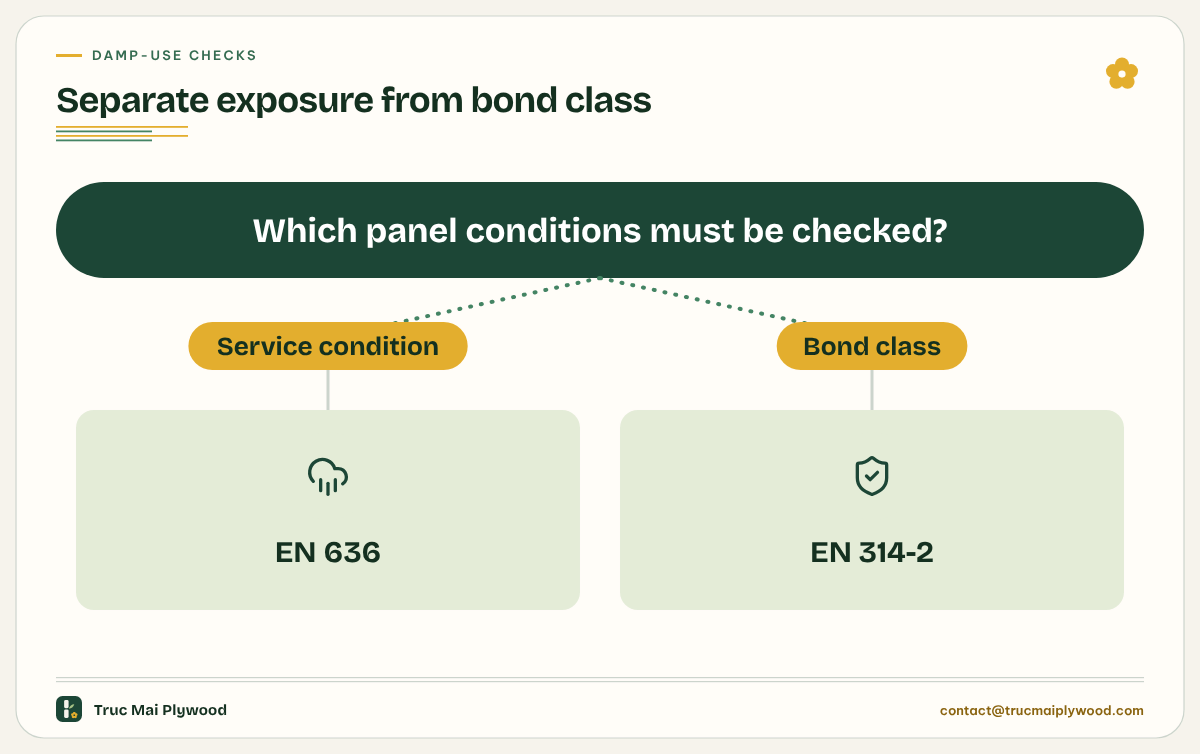
Can varnish make an unsuitable plywood bond suitable for damp use?
No. A surface finish does not replace the plywood’s adhesive and service-condition specification. The bond performance and the appearance coating are different purchase decisions.
The EN 636 preview distinguishes dry, humid and exterior service conditions. The EN 314-2 preview addresses plywood bond classes. Neither classification can be assigned merely because a panel has been varnished.
For interior furniture, write the intended room conditions into the order and select the adhesive system on that basis. Then specify the clear coat for appearance and cleaning. The finished sample should show both the face and the edge treatment.
How do transparent finishes affect defect inspection?
Transparent finishes make many face variations more visible, so inspection should use a coated reference rather than a raw veneer photograph alone. The buyer should distinguish natural figure from defects that exceed the agreed grade.
Look for sanding swirls in raking light, veneer patches in frontal light and pinholes on coated edges. Compare the same areas before and after coating. A defect that appears only after the first coat may point to absorption or preparation; a mark visible before coating belongs in the incoming face inspection.
A sample set should include a normal face, a joint, a repaired area and a cut edge. That selection is more useful for an import programme than one flawless display offcut.
How can a buyer keep repeat batches visually consistent?
Keep one approved face-grade reference and one cured coating reference for each specification. Record the coating name, sheen, veneer species, core and sanding preparation on the sample label.
For a repeat container programme, the buyer can ask the mill to sort veneer faces against the reference and pack the same specification together. A different veneer source or a changed coating product calls for a fresh comparison before accepting a revised colour standard.
A batch photograph records obvious changes, but it cannot fully convey sheen and tactile finish. The ordering plywood samples process gives the buyer a way to assess the actual face before confirming the production order.
What should a clear-coat plywood quotation include?
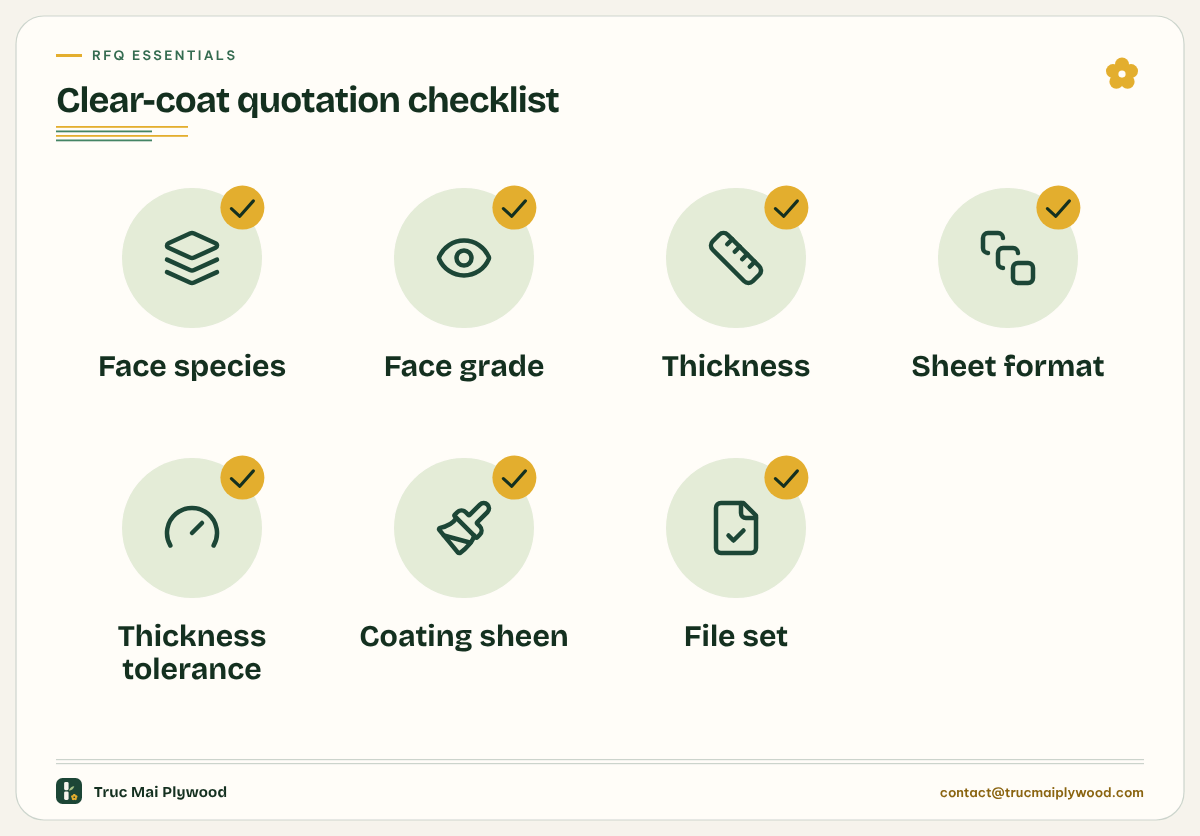
A useful quotation identifies the substrate the finishing line will receive: application, face/back veneer, core, adhesive and emission specification, thickness, size, sanding, packing and quantity. It should also say whether the requested surface is raw, UV-ready or coated by a separate finishing contractor.
For example, a furniture door programme can specify an okoume face on a Styrax core, a sanded and calibrated panel, and a coated approval sample supplied by the buyer’s finisher. The buyer then compares like-for-like boards rather than treating different face grades as the same product.
Available regular sheet formats include 1220 × 2440 mm and 1250 × 2500 mm. Cut-to-size can be agreed against a labelled cut list. Send the finished reference, intended use, destination and packing instructions with the quotation request or email contact@trucmaiplywood.com.
Questions buyers ask
Can varnish be applied directly to a sanded plywood face?
Yes. Remove dust, check the face for glue contamination and trial the chosen coating on an offcut before running the production batch.
Will clear varnish hide a veneer patch?
No. Transparent finishes tend to reveal colour and grain differences, so approve the face grade on a coated sample.
Can both sides of a plywood panel be coated?
Yes. Specify the coating schedule for both faces and the exposed edges so the fabricator can plan handling and drying.
Is a water-based clear coat always colourless?
No. The final colour is affected by the veneer, the formulation and the film build. Compare cured sample boards under the intended lighting.
Can a clear coat cover exposed plywood edges?
Yes, with suitable preparation and sufficient film build. Edge porosity makes the coating schedule different from a smooth face.
Does a glossy finish mean a stronger plywood panel?
No. Gloss describes the surface appearance; panel construction, adhesive and face quality are separate purchasing specifications.
Can varnished plywood be cut after finishing?
Yes, but fresh cut edges need their own finish treatment and visible faces should be protected from marking during machining.
Should buyers request a coated sample or a raw sample?
Request both. A raw sample shows veneer and sanding quality, while a coated sample reveals colour, absorption and surface defects.
Can I use the same finish on poplar and pine veneer?
Use the same finish only after separate sample approval. The species differ in grain, resin and colour response.
What should a coating trial record?
Record the veneer grade, sanding preparation, coating product, application method, drying conditions and approved appearance.